Warehouse storage facilities are an essential part of the modern supply chain and operations. They have a direct impact on order fulfillment, inventory accuracy and operational cost. The global warehousing market surpassed five hundred billion dollars with the growth of e-commerce. Issues such as inefficient space utilization, system integration, and scalability are some of the challenges businesses encounter. In this article, decision makers will be walked through design, compliance, costs and vendor selection. It assists enhance ROI-driven and effective storage choices procedures.
What Is a Warehouse Storage Facility?
A facility of warehouse storage is a building designed or adapted to receive, hold and dispatch goods operations. There are different functions for distribution centers, fulfillment centers and cold storage plants, each of which has temperature control requirements. Some of the components are receiving docks, racking systems, pick-and-pack areas, dispatch bays, offices, safety components, and so on. The difference is significant in B2B contracts, insurance coverage and regulatory compliance requirements by industry.
Types of Storage Facilities in a Warehouse
1. Public Warehouses
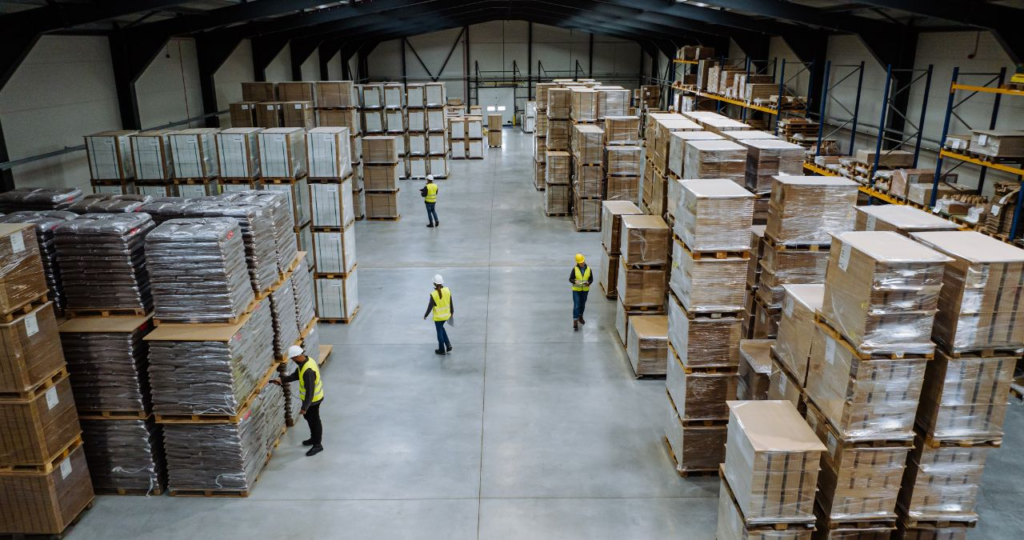
Public warehouses offer a multi-tenant storage solution for several companies with flexible leases. Public warehouse storage facilities provide cost savings, scalability and flexibility for inventory fluctuations during the season. Shared staffing easy access, suitable for SMEs and retailers, growth features.
2. Private Warehouses
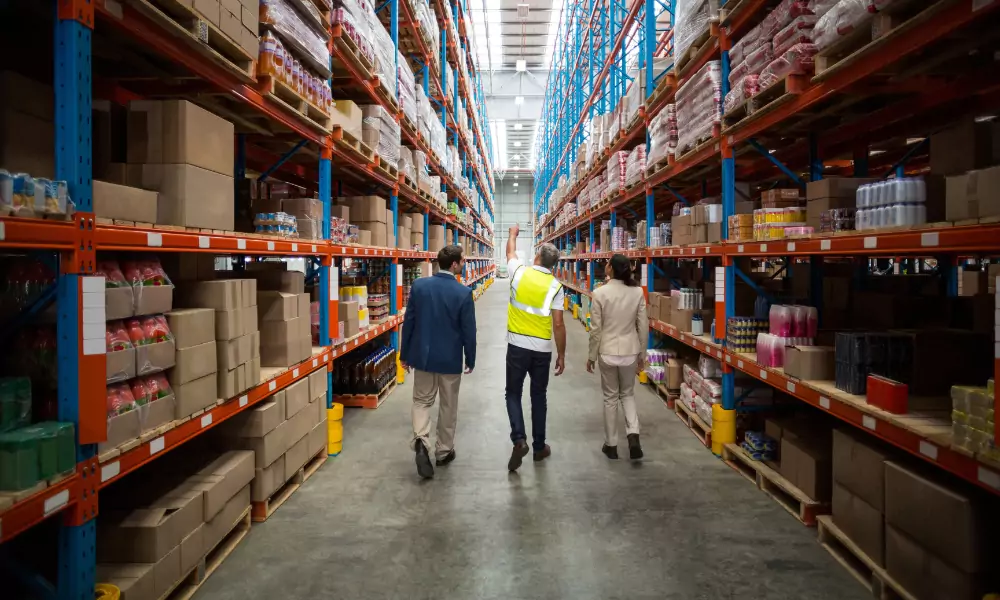
Private warehouses are warehouses that are owned and/or operated by a specific company. Full control, increased security and maximum efficiency for large enterprises. High capex, offers customization, is ideal for long term business stability.
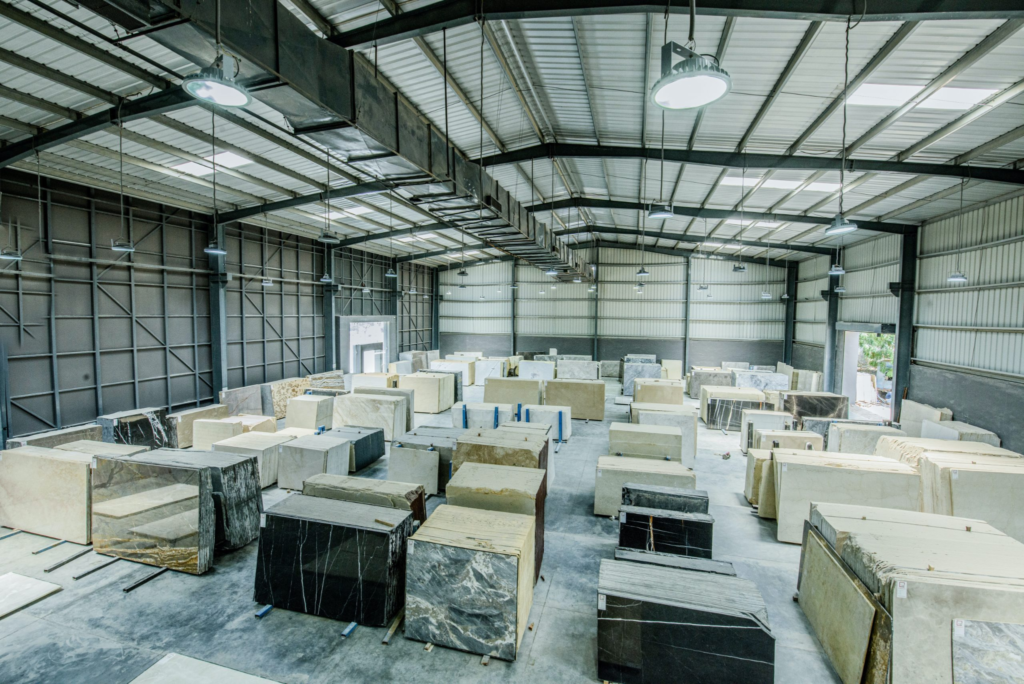
3. Contract Warehouses
Contract warehouses are warehouses that are used under a long-term contract with a 3PL provider. Contract warehouse storage facilities provide balance flexibility with control, minimising risk and enhancing supply chain efficiency performance. Solutions for scalable operations, warehousing outsourcing and cost efficiency needs.
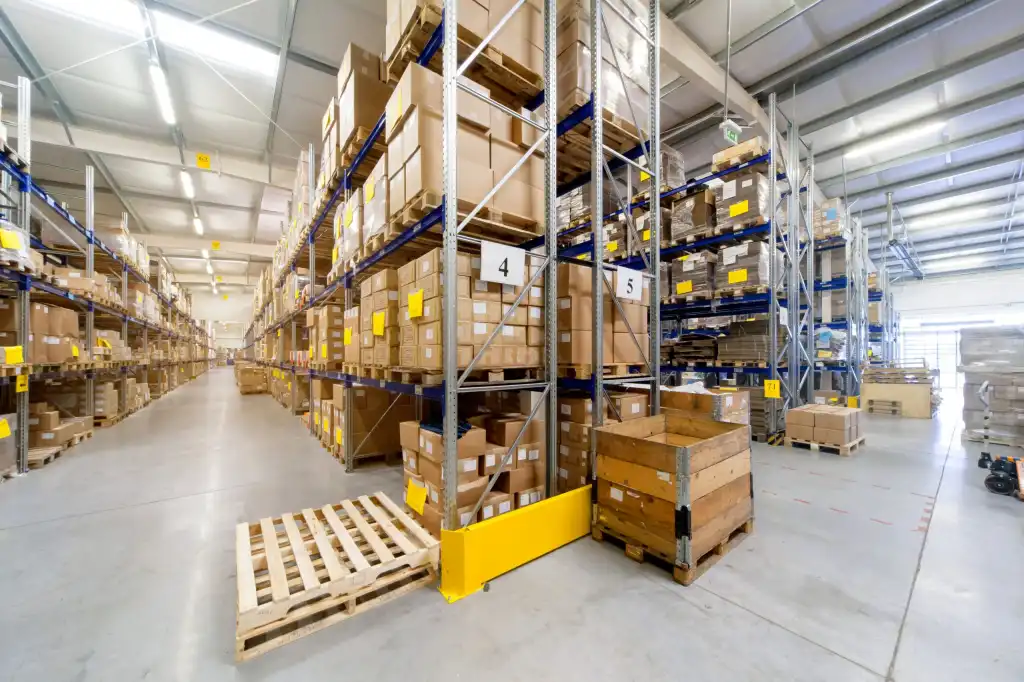
4. Distribution Centers
Distribution centers are not designed to serve storage purposes but are designed to move product quickly. Act as logistics centres for quick order fulfilment and last mile delivery. High throughput design, minimal holding time, ideal for e commerce networks.
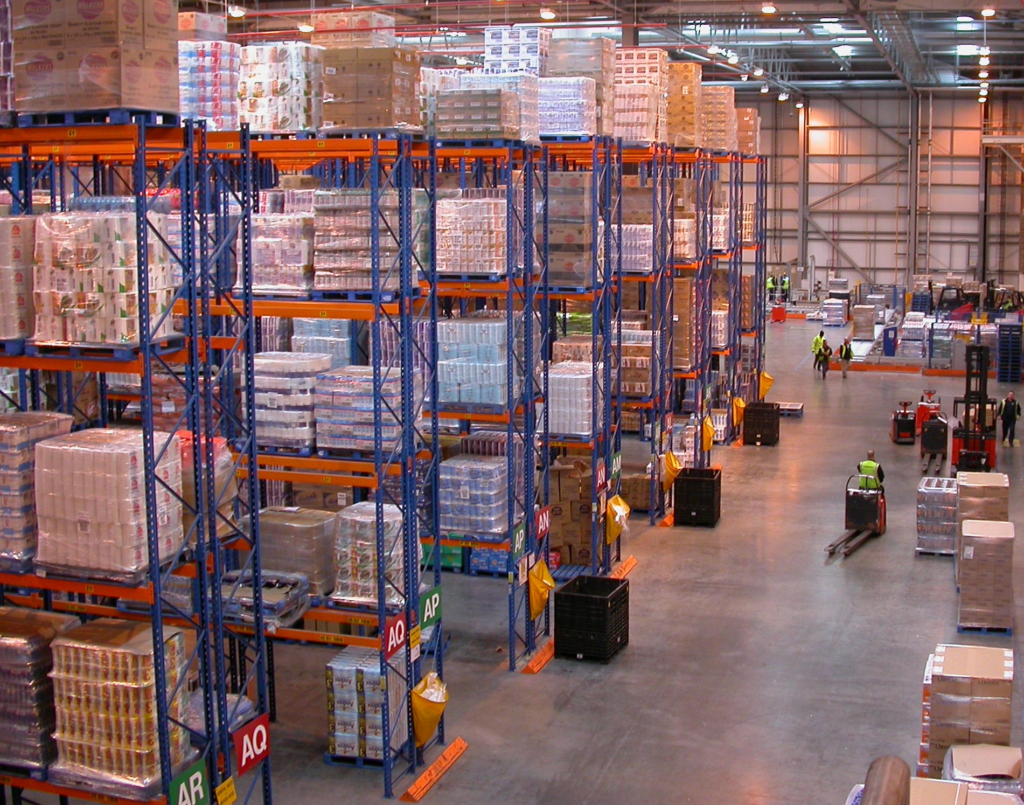
5. Cold Storage Warehouse Facility
Cold Storage Warehouses are designed for goods that require controlled temperature environments for sensitive goods preservation requirements. For pharmaceutical, food and biotech applications where precise temperature control is essential. Helps maintain the safety of the product, minimize spoilage and meet regulatory requirements around the world.
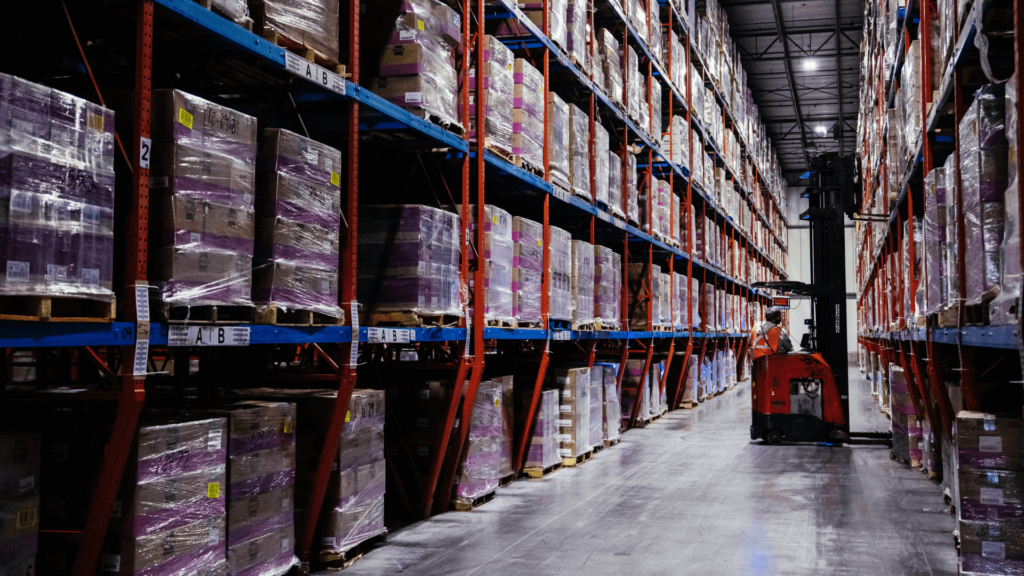
6. Bonded Warehouses
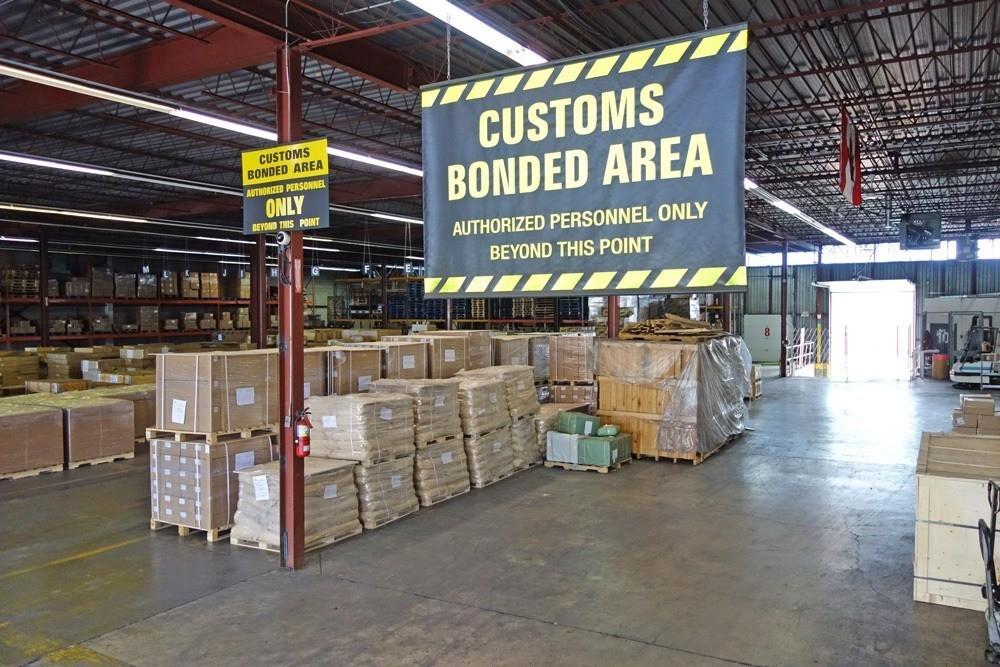
Goods imported into bonded warehouses are not subject to duty until they are removed. Bonded warehouse storage facilities efficiently support importers to defer taxes, enhance cash flow, and simplify import procedures. Essential for trade compliance and international logistics operation management systems.
7. Automated / Robotic Warehouses
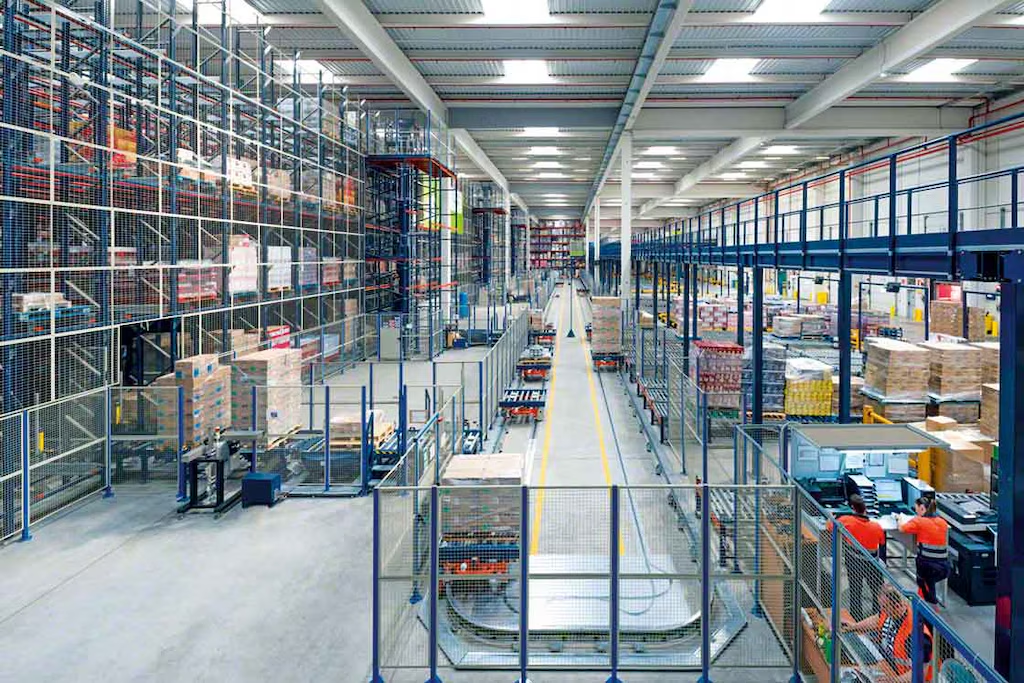
Automated warehouses are based on robotics, ASRS systems, and AI-based inventory management solutions. At scale, increase efficiency, cut labor expenses and enhance order accuracy dramatically. Requires high capital investment and provides good ROI in big operations environment.

8. Hazmat / Specialty Storage Facilities
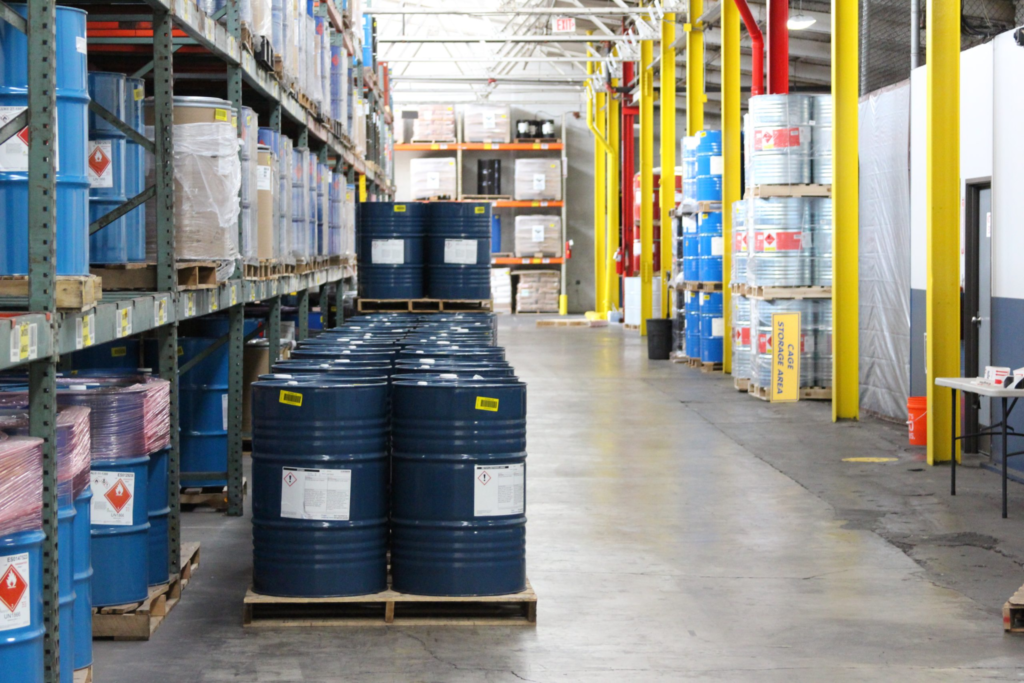
Hazardous materials that are stored in a Hazmat warehouse storage facilities are stored under strict regulatory compliance standards requirements enforced. For chemicals, flammables, dangerous goods which need to be safely contained, standards for procedures to be followed. Promotes safety, protection of the environment and adherence to global regulations protocols.
Comparison of Warehouse Storage Facility Types for Decision-Makers
| Facility Type | Ownership Model | Typical Lease Term | Best For | Avg. Cost Range (per sq ft/year) | Scalability | Regulatory Complexity |
| Public Warehouse | Third-party | Month-to-month | SMBs, seasonal demand | $6–$12 | High | Low |
| Private Warehouse | Owner-operated | Owned asset | High-volume, stable demand | $4–$9 (capex) | Low | Moderate |
| Contract / 3PL | Third-party | 1–5 years | Mid-to-large enterprises | $7–$14 | Moderate–High | Moderate |
| Distribution Center | Third-party / own | 3–10 years | Retail, e-commerce fulfillment | $8–$16 | Moderate | Moderate |
| Cold Storage | Third-party / own | 1–7 years | Food, pharma, biotech | $15–$35 | Moderate | High |
| Bonded Warehouse | Government-licensed | Variable | Importers, exporters | $10–$20 | Low | Very High |
| Automated Warehouse | Owner / 3PL | Long-term | High SKU, high volume ops | $18–$40+ | Very High | Moderate |
| Hazmat Facility | Specialized operators | 1–5 years | Chemicals, flammables | $20–$50+ | Low | Very High |
Key Components of a Modern Warehouse Storage Facility
Structural & Physical Infrastructure
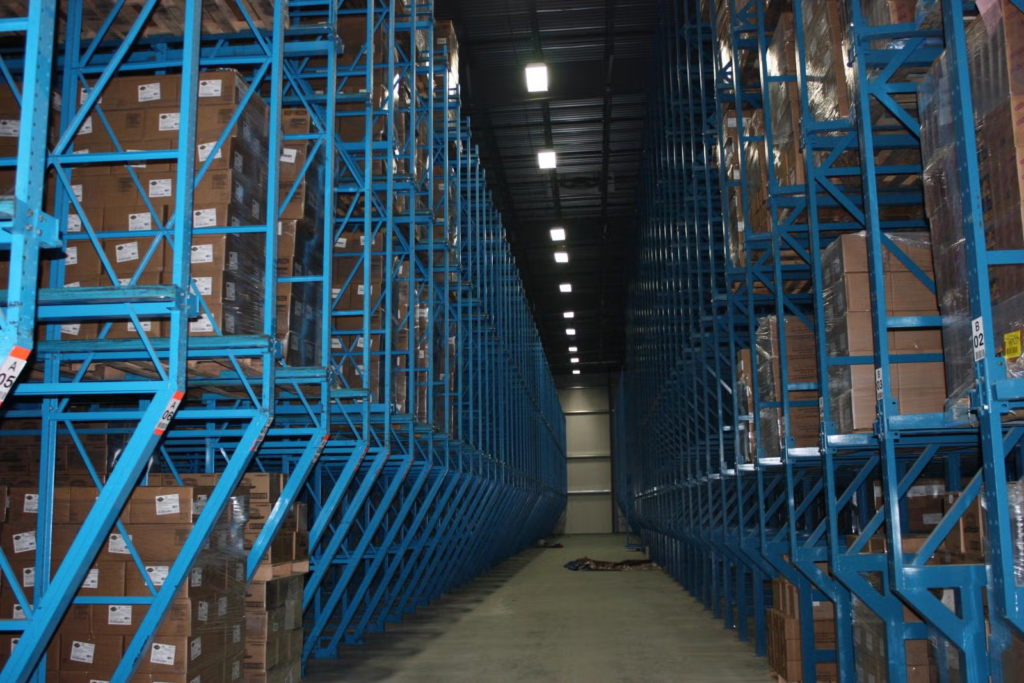
Clear heights of 32-40ft are needed for modern facilities so vertical storage can be optimised. The floor load capacity is normally 3,000–6,000 lbs. per sq.ft. industrially. The spacing between columns and bay depth directly affect the configuration of the racks and the forklift maneuverability. The standard industry practice of one dock door for 5,000–10,000 sq ft still exists.
Racking & Storage Systems
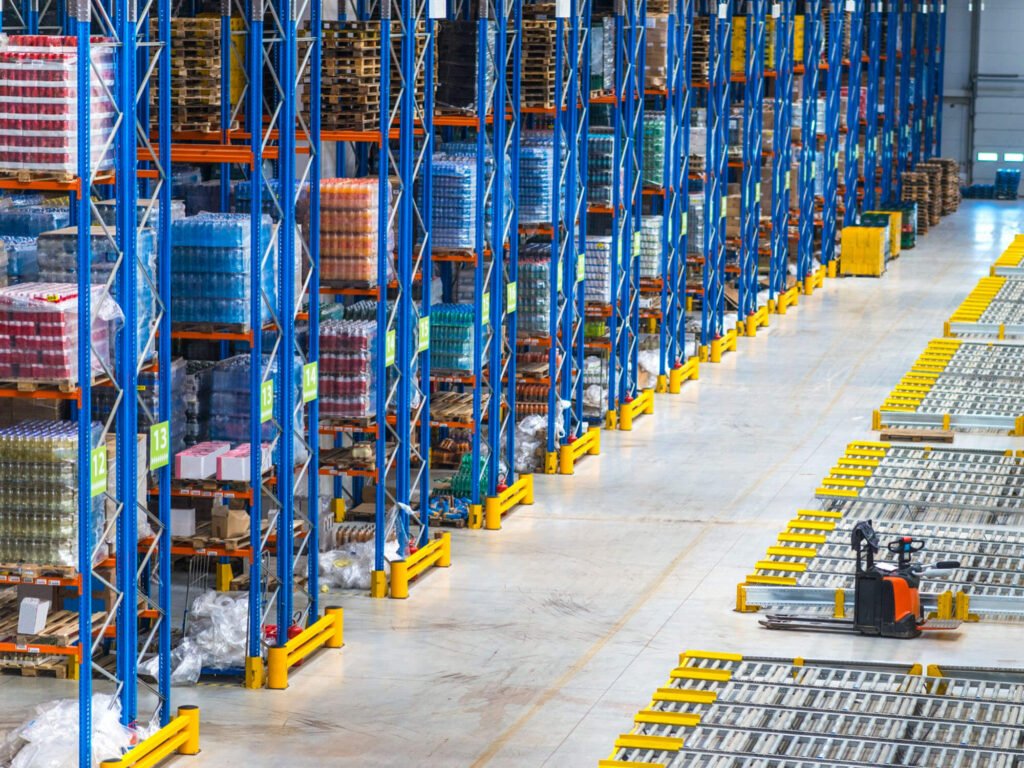
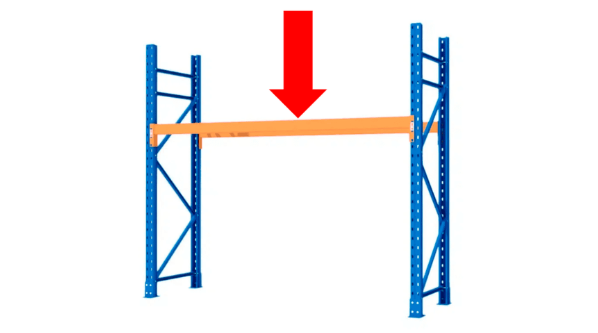
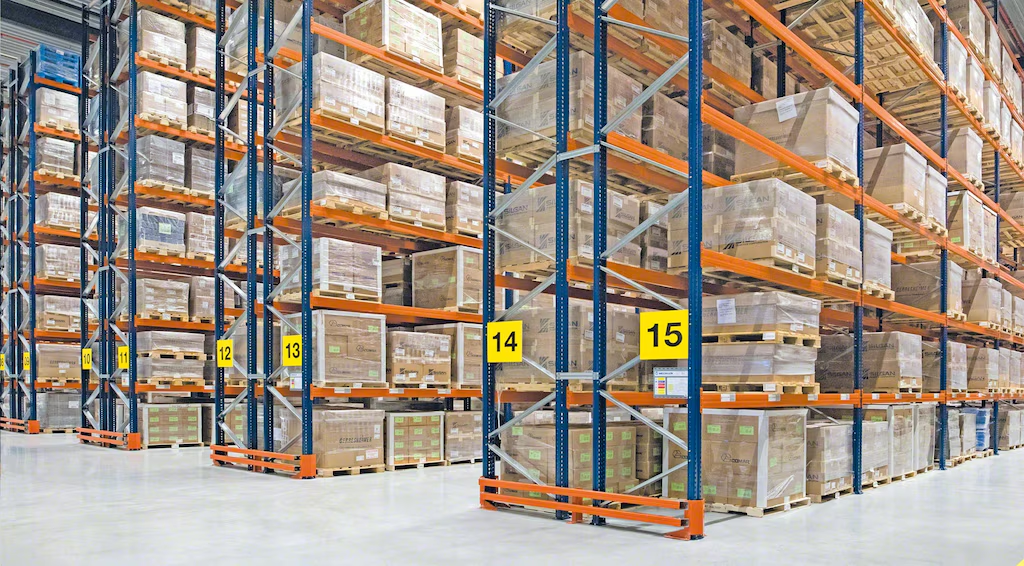
Selective pallet racking provides 100% selectivity and is the most common system used. Drive-in racking is extremely dense, and it is highly non-selective. Push-back racking is a LIFO retrieval system that will store 2-6 pallets deep. Pallet flow racking is ideal for FIFO operation for perishables. Cantilever racking is efficient for holding pipes, lumber and other non-regular, long pieces. For broader industry guidance, consult MHI’s material handling resources.
Material Handling Equipment
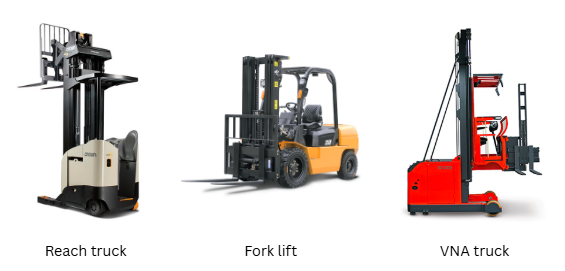
Different aisle widths and heights require counterbalance forklift, reach trucks, and VNA trucks. In a high volume operation, conveyor systems and sorters significantly boost throughput. AMRs and AGVs minimize human reliance and enhance picking accuracy and flexibility.
Warehouse Management Systems
WMS solutions provide real-time visibility of inventory from all storage locations at once. WMS warehouse storage facilities seamlessly integrate with ERP, TMS and OMS systems. Labor management modules measure productivity, streamline task assignment, and minimize operation inefficiencies.
Safety & Compliance Infrastructure
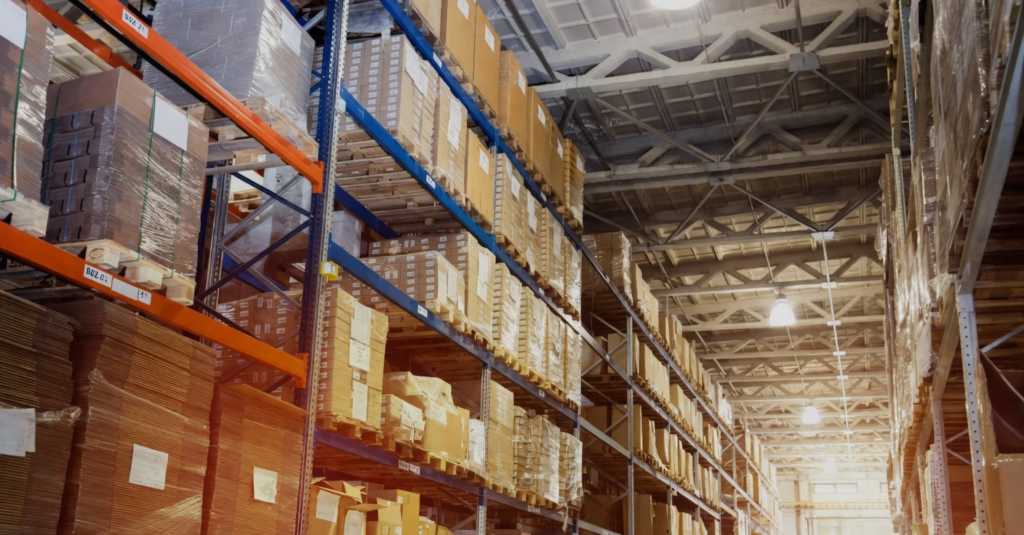
ESFR sprinkler systems are high challenge fire suppression systems for tall racking applications. CCTV and access control are effective in protecting inventory and limiting entry of unauthorized people in the facilities. Aisle widths are designed to be OSHA compliant and clear signage helps to prevent forklift-pedestrian accidents and ensure compliance.
Critical Factors You Must Evaluate When Selecting a Warehouse
Location & Proximity
Being close to suppliers, ports, rail yards and end customers has a direct impact on transportation costs. The last mile delivery radius plays a key role in the speed of fulfillment and level of customer satisfaction. This is why many businesses start their evaluation by searching for warehouse storage facilities near me to reduce freight expenses and improve delivery performance. Staffing reliability and wage competitiveness are heavily dependent on regional availability of labour. Intermodal hub access facilitates the speedy and cost-effective multimodal freight movement.
Facility Specifications
Gross Leasable Area may be greater than actual usable storage area, once operational zones are deducted. Racking systems are determined by clear height, column spacing and FF/FL floor flatness ratings. For cold storage operations and warehouse automation infrastructure, adequate power capacity becomes a critical factor.
Lease Structure & Flexibility
Triple Net Leases pass through taxes, insurance and maintenance to tenants. Gross leases include these costs and make budgeting easier, but are generally more expensive overall. Before entering into a warehouse lease, discuss expansion clauses, early termination clauses and clear CAM expenses.
Technology Readiness
WMS compatibility and seamless ERP data integration capability avoid costly disruptions later. IoT sensor infrastructure is used for compliance and loss prevention and monitors temperature, humidity, and motion. Real-time warehouse operations and automation performance are achieved with reliable fiber connectivity and 5G readiness.
Scalability
Facilities need to cope with seasonal volume peaks, such as retail peaks of up to 10 times normal volumes. Rack reconfiguration flexibility enables operators to change storage configurations without significant capital reinvestment. Consider vertical expansion and extra dock space prior to signing a long-term lease.
Regulatory & Compliance Fit
Pharmaceutical and food-grade warehouse storage operations must comply with FDA cGMP requirements. ISO 9001 and ISO 22000 standards indicate that food safety management systems and quality standards have been verified. Duty deferral is a cash flow benefit for importers that comes from customs bonding status.
Total Sum of Cost
TCO includes everything from base rent to utilities, MHE cost, labor, WMS licensing and insurance. This is usually 30%-50% over base rent figures alone. An accurate TCO calculation will help to avoid budget shortfalls and allow realistic comparison between warehouse facility options.
Warehouse Storage Costs: A Detailed Breakdown
| Cost Category | Description | Typical Range | Frequency |
| Base Rent / Lease | Per sq ft charge for occupied space | $6–$40/sq ft | Annual |
| Common Area Maintenance (CAM) | Shared facility upkeep costs | $1–$4/sq ft | Annual |
| Utilities | Electricity, water, HVAC (esp. cold storage) | $1.50–$8/sq ft | Monthly |
| Labor | Warehouse associates, supervisors, managers | $18–$28/hr (U.S. avg.) | Monthly |
| Racking & MHE | Capital or rental cost of equipment | $25,000–$500,000+ | One-time / Annual |
| WMS Licensing | Software subscription or license fees | $10,000–$150,000/yr | Annual |
| Insurance | Property, liability, cargo coverage | $0.25–$1.50/sq ft | Annual |
| Security | CCTV, access control, guards | $500–$5,000/month | Monthly |
| Compliance & Certifications | Audits, third-party certifications | $5,000–$50,000/yr | Annual |
| Handling Fees (3PL model) | Inbound/outbound per pallet charges | $8–$25/pallet move | Per transaction |
Technology Transforming Warehouse Storage Facilities
- Warehouse Management Systems (WMS): A WMS platform is the workhorse of modern warehouses. Globally, Manhattan Associates, Blue Yonder and SAP EWM are the leaders for enterprise-grade deployments.

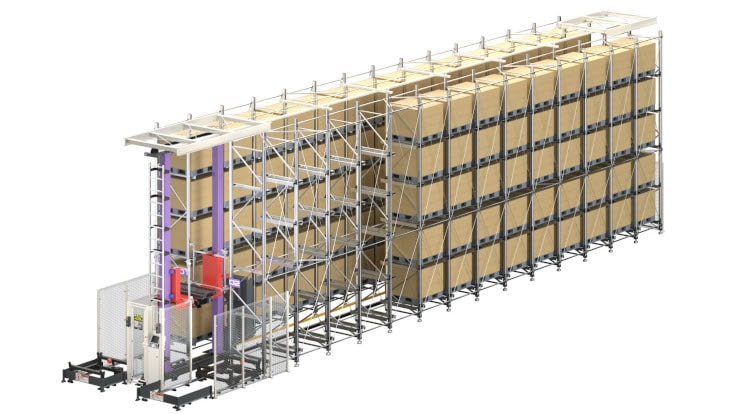
- AS/RS System: It provides high-density storage and retrieval in high-bay applications. AMRs provide flexible and reprogrammable operation and Goods-to-Person systems reduce picker travel time by 70%.
- IoT & Real-Time Monitoring: Smart sensors continuously monitor temperature, humidity and shock conditions critical for pharma and food. Operational savings from costly unplanned equipment downtime are avoided with predictive maintenance alerts on MHE.

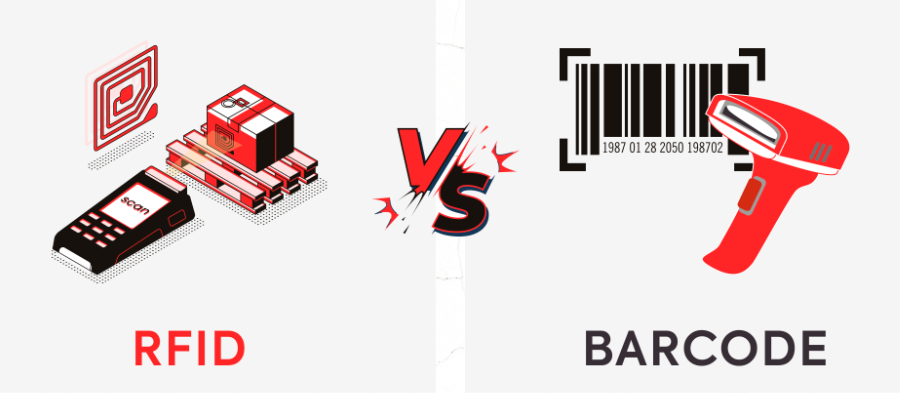
- RFID & Barcode Systems: RFID technology is one among the warehouse storage facilities that maintains an inventory accuracy of 99.9% compared to the accuracy of barcode systems, which is approximately 95%. Manual counts are eliminated and shrinkage is significantly minimized with real-time location tracking.
- AI & Predictive Analytics: AI-powered demand forecasting allows for better positioning of inventory and tangible decrease in carrying costs. Algorithms for slotting optimization and labor planning make a substantial contribution to the productivity of a warehouse.

- Digital Twins: Digital twins involve the development of virtual replicas of facilities, which can be used for modeling scenarios without interrupting the actual operation. Operators simulate throughput changes, redesign layouts and validate automation investments prior to physical installation.
Compliance, Safety, and Risk Management in Warehouse Storage Facilities
Structural Compliance and Racking Compliance
All racking to be compliant with ANSI MH16.1 (North America) or EN 15512 (Europe). Racks shall be inspected annually by qualified inspectors and the results shall be recorded. If forklift damage occurs to any rack, it should be taken out of service for professional evaluation of forklift damage repair. Operations are vulnerable to significant risks of structural failure if they do not comply.
Fire Safety and Suppression
The product type dictates suppression density requirements for warehouse sprinkler systems per NFPA 13. The entire fire protection design is determined by the commodity classification from Class I–IV to Group A plastics. Hazardous commodities in high bay racking have to be protected by in-rack sprinkler installation throughout.
Workplace Safety (OSHA Standards)
The OSHA 1910.178 standard provides guidelines for the operation, maintenance and required certification of forklift operators. All maintenance operations on powered equipment are covered by OSHA 1910.147 lockout/tagout procedures. Forklift-pedestrian collisions are effectively prevented with physical barriers, pedestrian walkways and enforcing speed limits.
Environmental Compliance
If a facility is large, it must obtain EPA NPDES stormwater discharge permits before legally operating. HazMat storage must meet EPA requirements (40 CFR Part 265) and local spill prevention regulations. EPA Section 608 and OSHA PSM standards apply to cold storage refrigerants, such as HFCs and ammonia.
Insurance & Liability Considerations
Property, casualty and product liability coverage must be exactly proportional to inventory value and risk. Operators can face multimillion-dollar liability exposure as a result of rack collapse or fire incidents on a regular basis. Inspection documentation, training records and consistent incident reporting all measurably lower the insurance premiums.
Emerging Trends Reshaping Business Warehouse Storage
- Nearshoring & Reshoring: The disruptions in the supply chain caused by the pandemic fueled a huge surge in demand for warehouses domestically, particularly in North America. Companies are bringing manufacturing jobs back home, increasing absorption rates of industrial real estate.
- Urban Micro-Fulfillment Centers: Last-mile delivery pressure is driving the demand for 10,000-30,000-sq.-ft. urban infill facilities known as urban micro-fulfillment centers. These are small, automated facilities that locate inventory nearer denser consumer and B2B delivery areas.
- Sustainability & Green Warehousing: LEED certified facilities, rooftop solar panels and EV dock charging are becoming commonplace. A growing number of enterprise procurement contracts include sustainability criteria as mandatory vendor qualification.
- Multi-Story Warehouses: In markets like Singapore, Tokyo and urban United States, multi-story construction of warehouses is being driven by land scarcity. Now, high density storage is provided on a small urban footprint with three to five story buildings that feature an internal truck ramp.
- Warehouse-as-a-service for B2B operators: Flexe, Flowspace and others have developed On-Demand Warehousing Platforms. Companies benefit from flexible and scalable storage solutions without the burden of long-term leases or capital investments.
- Co-Warehousing: Co-Warehousing with common labor pools and equipment can greatly cut down the fixed overheads. Mid-market companies gain the most as they can gain enterprise class infrastructure without having to bear the burden of the full operational costs themselves.
How to Build a B2B RFP for Warehouse Storage Services
Define Your Operational Scope Clearly
First, record the number of SKUs you have, the number of pallets you need and the number of SKUs that go through your business each day. Make sure value added services such as kitting, labelling or repackaging are included in the scope definition. The inability to compare vendors accurately happens when scope statements are too vague and provide inconsistent proposals.
Specify Compliance Requirements Upfront
Know any regulations that may apply prior to sending out your RFP, such as FDA, FSMA, or bonded warehouse requirements. Once the contract is signed, compliance gaps identified in the process result in high costs due to disruption of operations and legal liability. Upfront certification requirements remove the non-compliant vendors from your evaluation process.
Define SLA Commitments and Performance Standards
Put a specific and measurable performance requirement in the RFP response from vendors. Ask for minimum accuracy percentage for orders, on-time shipment and inventory accuracy. If a service is promised without a number, it is not contractually binding and thus operationally unreliable.
Evaluate Technology Stack and WMS Integration
Ask for in-depth information about the vendor’s WMS platform, version, and integration capabilities. Before shortlisting, ensure it is compatible with your current ERP, TMS and OMS. Without proper technology alignment, there are data silos, inventory inaccuracies and fulfillment delays, which negatively impact customer relationships.
Require Full Pricing Transparency
Request detailed pricing that includes per pallet position, per transaction, and per labor hour. Warehousing contracts invariably have hidden fees which add up to the overall cost of the contract. Transparent pricing makes it easy to compare the total cost of ownership of different competing vendors.
Assess Financial Stability of the Operator
An unstable 3PL poses significant continuity threats to your business. Ask for audited financial statements, credit references and years in business in advance. Financially healthy operators continually invest in maintenance of facilities, new technologies, and a stable workforce.
Partner With a Trusted Warehouse Racking Manufacturer
Established in 2008, Lracking, located in Dongguan, China, is a manufacturer of certified pallet racking, mezzanine flooring, cantilever racking and automated storage systems, delivering reliable warehouse storage solutions for businesses worldwide. They are ISO, CE and AS4084 certified and have a client base in Fortune 500 companies in 70+ countries. Lracking provides end-to-end procurement support from free layout design, accurate quotations for secure shipping and installation, to guidance. Call Lracking today for competitive prices to fit your warehouse storage needs.
Conclusion
Today, warehouse storage facilities are no longer passive cost centers, but are rather active competitive assets that can help to improve supply chain performance. Companies that match the facility type, technology, location and compliance attitude to their supply chain strategy, always outperform their competitors in terms of costs, speed and resilience. While the decision is still quite complicated, it can be handled through clear structure, reliable benchmarks and structured RFP processes. Perform warehouse network audit, measure existing TCO and compare with automation, on-demand, and micro-fulfillment options against demand forecast for the next 3-5 years.