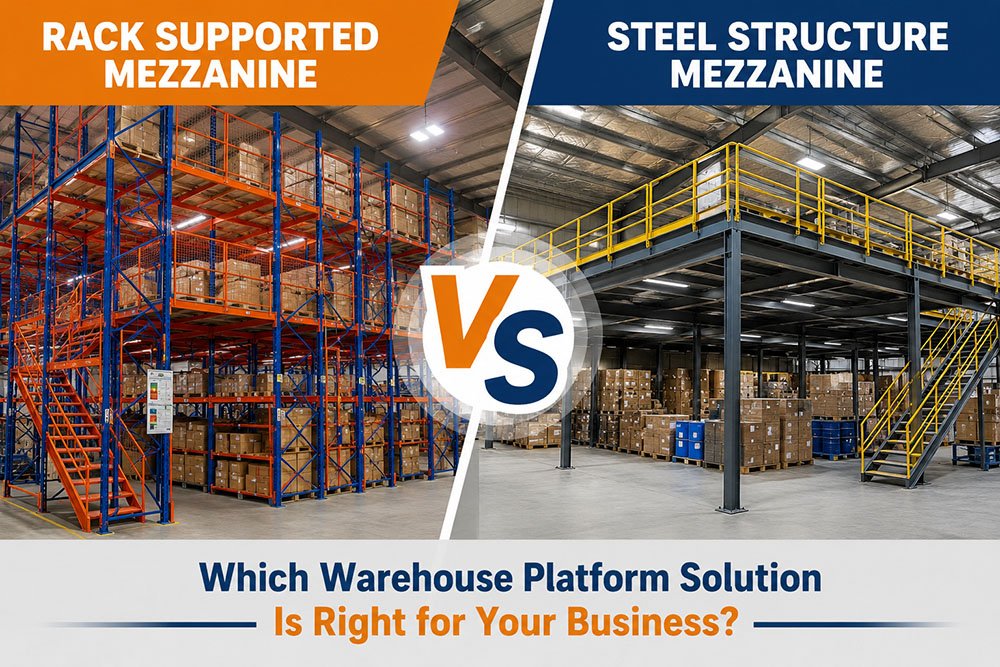
The warehouse space often decreases more quickly than most operations teams expect, especially during growth spurts. When fixed floor space is a reality, businesses have no choice but to make informed choices about vertical storage from the get-go. Choosing between a rack-supported mezzanine vs. steel structure mezzanine is not just a construction preference, but a serious capital investment. Mezzanine floors and multi-story warehouses have both been used to address density issues, but there are various operational needs. The wrong decision has a huge impact on your budget, scalability, and productivity. This article delves into the structural disparities, load capacity, cost considerations, best use cases, and a practical decision matrix for making informed choices. Let’s get started!
What Is The Definition of a Structural Mezzanine?
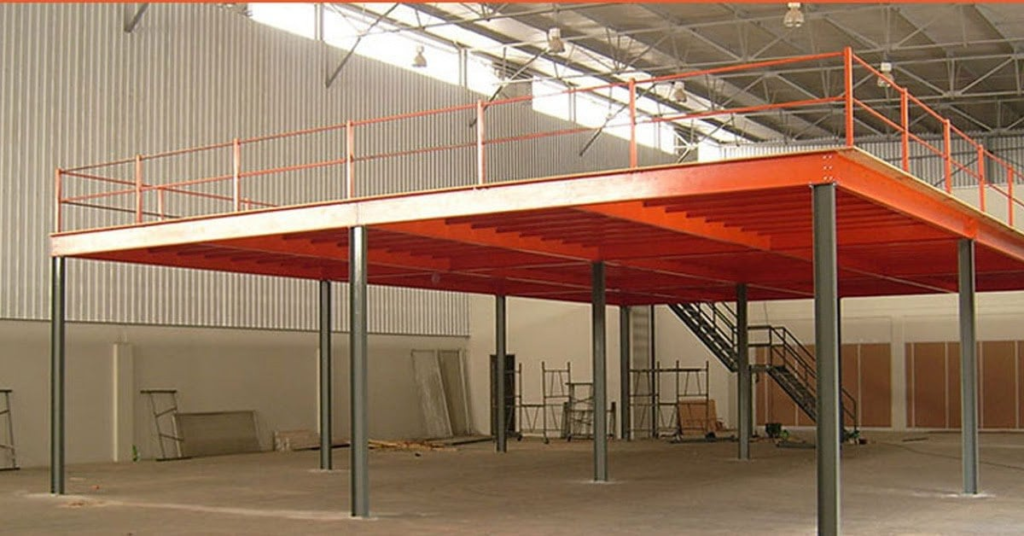
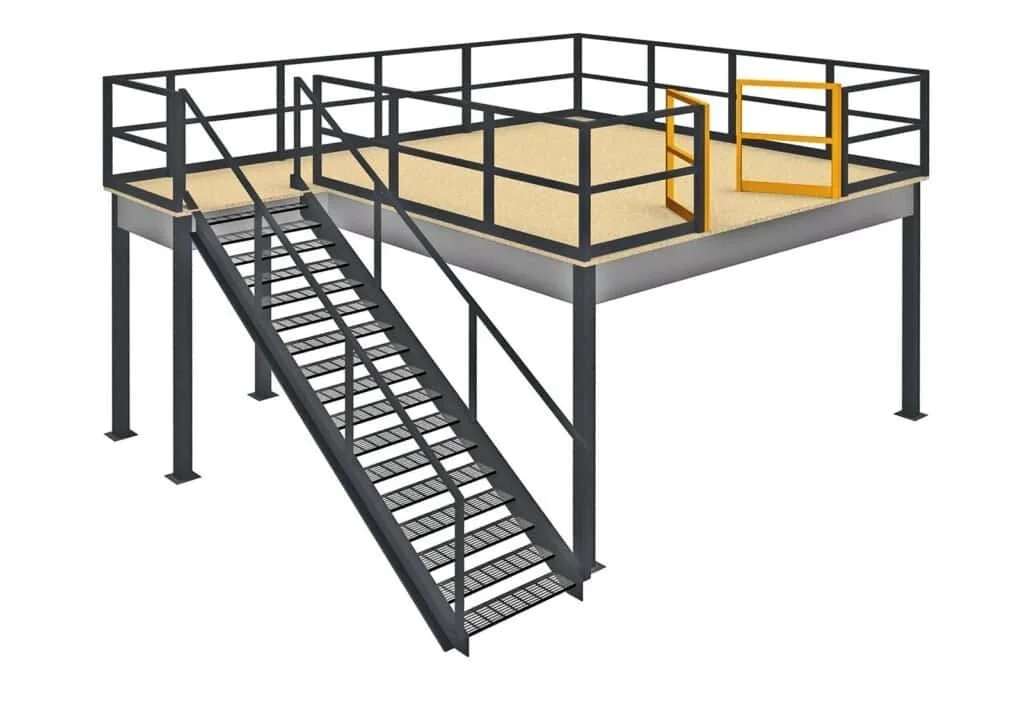
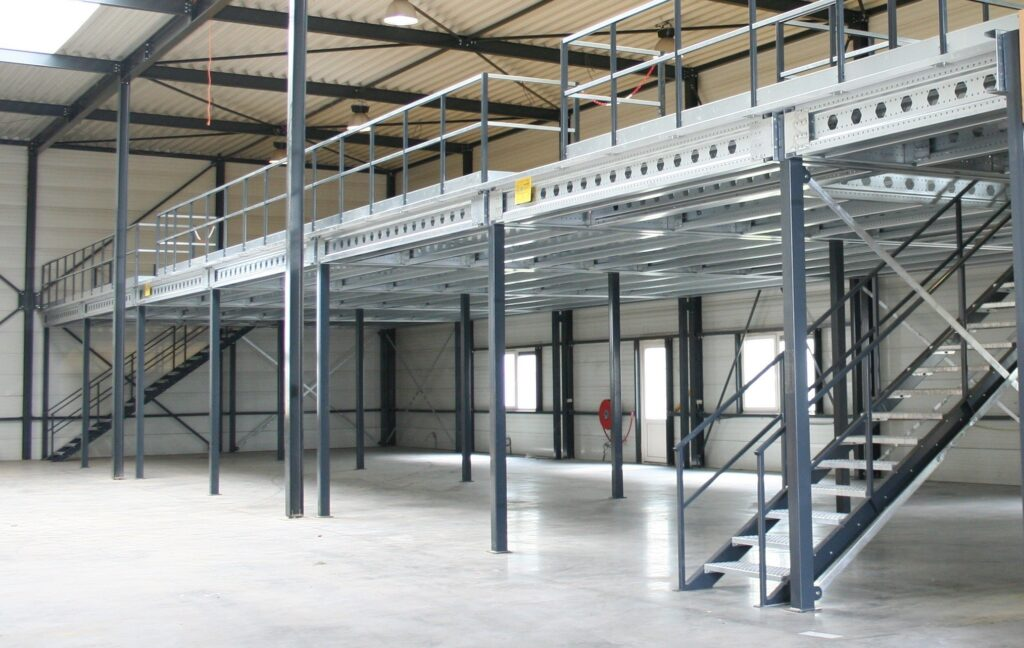
A steel structure mezzanine is an independent steel column support platform that is raised above the ground. These columns are secured directly to the building floor to ensure the most robust structure. No existing walls, racking, or shelving to support the design. Mezzanines are permanently or semi-permanently installed in facilities to provide additional space for use.
Key Structural Components
- Vertical Steel Columns: Vertical steel columns are bolted directly into the concrete slab, providing maximum stability. They safely conduct all overhead loads to the foundation. The spacing of the columns is a direct determinant of bay size and, therefore, load capacity.
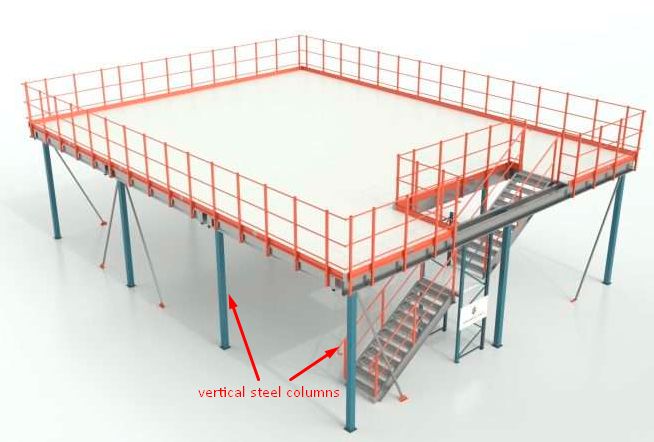
- Horizontal Main Beams and Secondary Joists: The mezzanine’s main horizontal structure consists of beams that span between columns. Secondary joists are placed perpendicularly and evenly load the whole structure. They are combined to establish safe floor load ratings for your operations.
- Decking Surface Options: Concrete decking is appropriate for heavy loads and offers great acoustic dampening between floors. The steel plate is durable, and the bar grating enhances ventilation and drainage below. The operational needs will dictate which decking material is best.
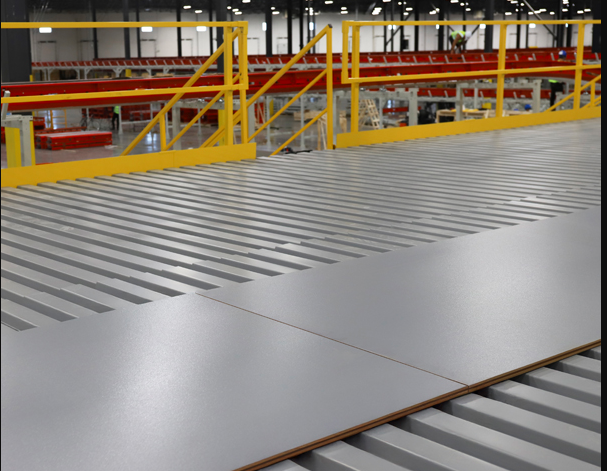
- Integrated Stairways, Guardrails, and Toeboards: Stairways, guardrails, and toeboards are required structural elements by occupational safety codes, which are part of the stairway system. Toeboards are used to stop equipment from slipping off the edges, and guardrails are used to prevent falls. All compliant mezzanines incorporate these features in the initial design and installation of the structure.
Primary Engineering Characteristics
The independent load ratings of steel structure mezzanines are directly supported by the building foundation. They are designed to support concentrated point loads and dynamic loads from forklift or vibrating equipment. This means that you can create a large open span without having to install any intermediate columns that will hinder your floor operations. The structures are designed to reliably meet the long-term industrial needs of a high-utilization environment.
What Is a Rack Supported Mezzanine?
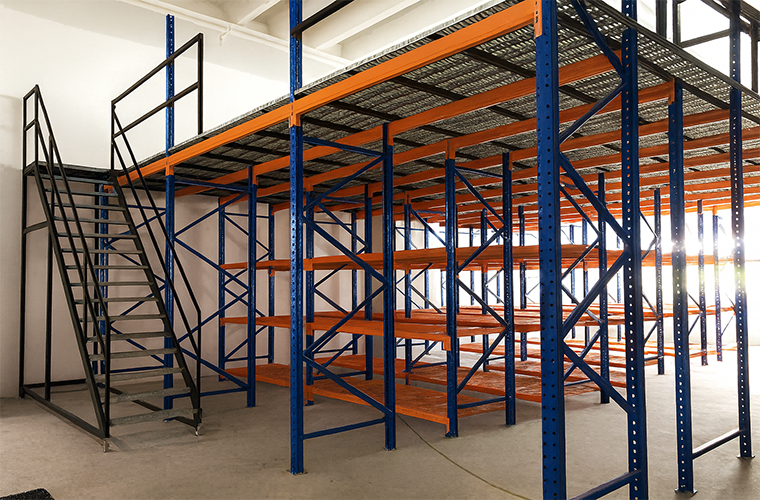
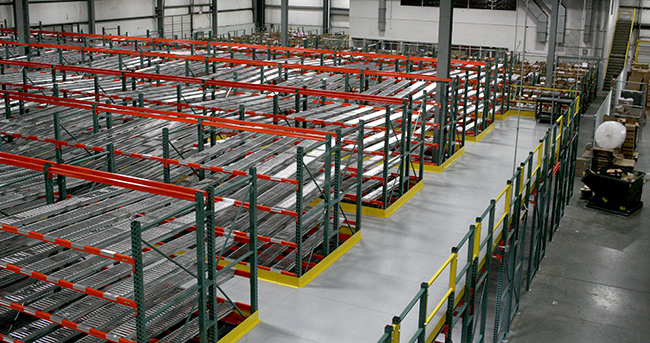
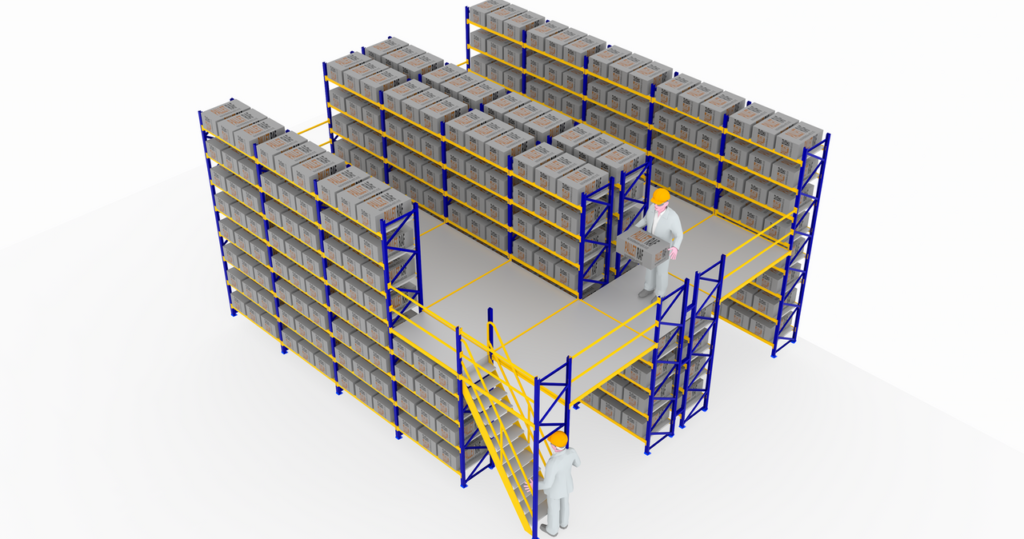
A rack-supported mezzanine is based on the existing pallet racking or shelving. The racking system serves two purposes: to store items below and to support the raised platform. In a rack-supported mezzanine vs. steel structure mezzanine comparison, rack-supported systems are valued for their modularity, cost efficiency, and high-density storage capabilities. The semi-permanent, modular design enables layouts to be reconfigured without major reconstruction costs. Vertical space is created for the business without the need for cost-prohibitive standalone structural construction.
Key Structural Components
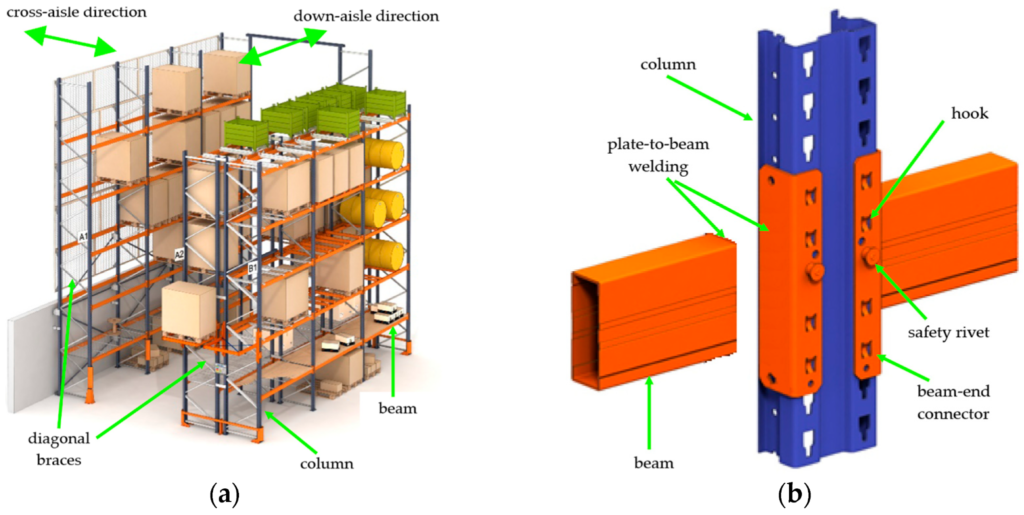
- Pallet Racking Uprights and Frames: The existing pallet racking uprights and frames will be the main structural elements of the mezzanine. They simultaneously carry storage loads and platform loads. When uprights are used to support combined weight, proper load rating verification ensures safe and reliable uprights.
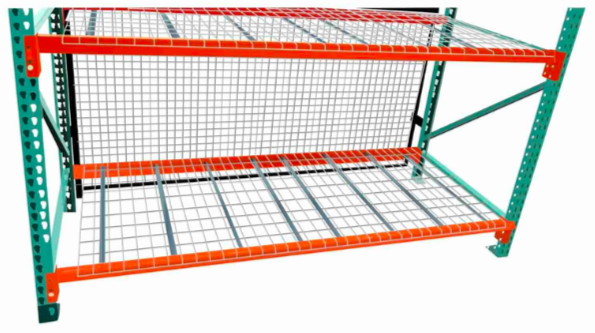
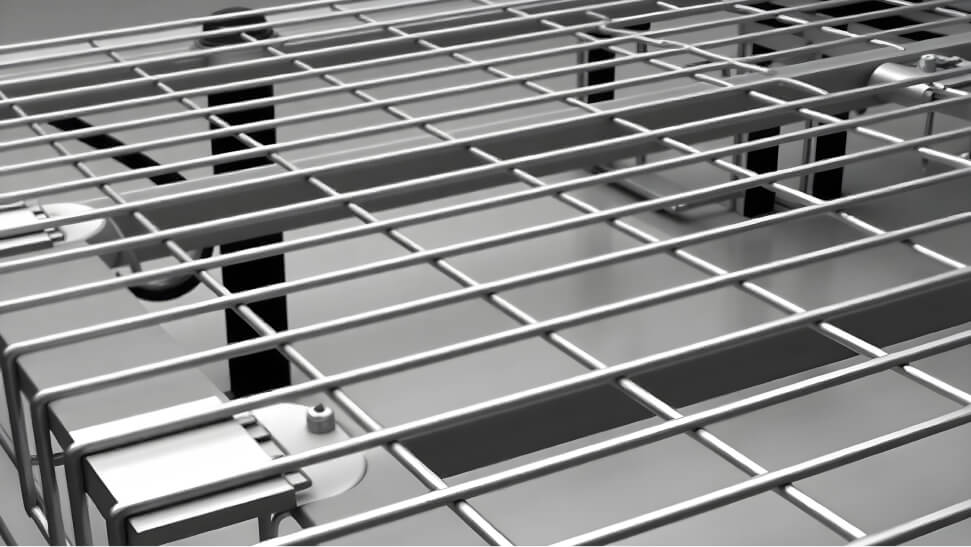
- Mezzanine Decking Materials: Decking is placed on top of one or more racking beams with timber, wire mesh, corrugated steel, or open steel planking. The load capacity, visibility, and ventilation are different for each material. Choose a decking type based on operational requirements, product type, and safety requirements.
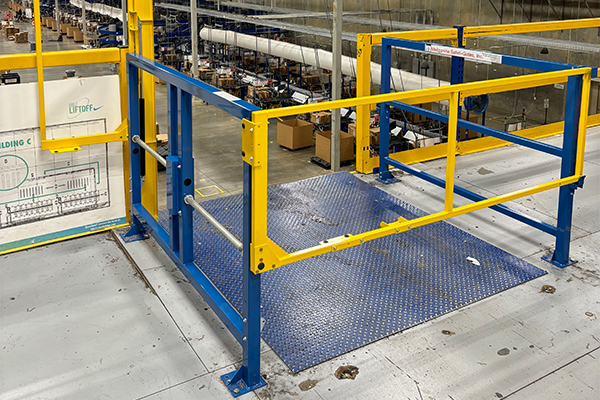
- Safety Gates for Material Transfer: Safety gates control the flow of material from the ground level to the mezzanine level. Different space and operation requirements can be accommodated by swing, sliding, pivot, or lift-out gates. Make sure to install gates at all openings to effectively prevent dangerous fall incidents.
- Integrated Pick Aisles: Integrated pick aisles between the rack rows allow for direct order picking at elevated levels. Mezzanine areas can be fully platform decked for continuous working surfaces. This design will allow for maximum storage density while keeping picker movement efficient during operations.
Primary Engineering Characteristics
Shelving supported mezzanines are rated for load capacity based on the load capacity of the racking system they are built on. They work best with even loads such as boxed inventory, cartons, and light pallets. They can be easily reconfigured or moved to a new location when your business changes. These structures have no independent support columns, allowing valuable space below to be saved.
Head-to-Head Comparison: The 7 Critical Factors
When evaluating rack-supported mezzanine vs. steel structure mezzanine side by side, these seven critical factors consistently separate the two systems and determine which solution fits your operation best.
Factor 1: Structural Independence
- Steel structure: Steel mezzanines are completely self-supporting, that is, they stand on their own without depending on any existing structure, providing facilities with absolute structural freedom and long-term stability, regardless of the surrounding systems.
- Rack-supported: Rack-supported mezzanines rely solely on racking integrity and, upon installation, cannot be modified independently of the racking, which makes it difficult to make changes and can affect the elevated platform system as a whole.
Factor 2: Load Capacity
- Steel structure: Steel mezzanines can support up to 250 to 500 lbs/sq ft, and are designed to withstand heavy concentrated loads such as industrial machinery, bulk pallets, or dynamic equipment weight, while maintaining high steel structure performance under heavy load conditions.
- Rack-supported: Rack-supported systems are usually limited to 5 kPa uniformly, and load ratings are limited by the weakest part of the racking system; they are appropriate for lighter, evenly distributed loads of inventory.
Factor 3: Design Flexibility and Customization
- Steel structure: Steel mezzanines can be customized to accommodate a variety of column layouts, span sizes, floor heights, and mixed-use configurations, all within a single, unified structure, which can include offices, production areas, and storage.
- Rack-supported: Rack-supported systems are less flexible for facilities that require a variety of operational areas since the design is limited by the current racking layout and open-span configurations, and mixed-use applications are not possible.
Factor 4: Time of installation and disruption of operation
- Steel structure: Steel mezzanines come with a long installation timeline because of the need for a separate foundation, structural complexity, and floor strengthening, which can result in significant disruption of operations during the construction process.
- Rack-supported: Rack-supported mezzanines are pre-engineered, bolt-together, and coordinate with existing racking, allowing faster installation times and greatly reducing downtime during installation.
Factor 5: Cost – Upfront & Long-Term
- Steel structure: Steel mezzanines result in higher initial capital costs, but lower long-term maintenance costs, making them a solid return on investment for permanent, heavy-duty, high-throughput facility applications.
- Rack-supported: Rack-supported systems are more affordable, but can be more expensive if racking upgrades are required to meet actual operational load requirements.
Factor 6: Relocatability and Future Flexibility
- Steel structure: Steel mezzanines are generally permanent structures and can be quite labor-intensive and costly to move if your business expects to move or expand facilities.
- Rack-supported: Rack-supported mezzanines are modular and dismantlable, so that they can be completely moved to a new facility, providing businesses with real flexibility when facility changes, expansions, or operational restructuring are required.
Factor 7: Dedicated space below the Mezzanine
- Steel structure: Steel mezzanines bring a whole new level of openness to the floor space below, allowing machinery, wide aisle storage, vehicles, and active production areas to operate without any structure in the way to hinder the ground level’s operational efficiency.
- Rack-supported: This type of racking uses up all of the space under the mezzanine, leaving no clearance and prohibiting the use of the ground floor for activities that require unrestricted vehicle traffic or equipment storage.
Comprehensive Comparison Table
The table below summarizes the rack-supported mezzanine vs. steel structure mezzanine across all key criteria to help you make a faster, more confident decision.
| Criteria | Steel Structure Mezzanine | Rack-Supported Mezzanine |
| Structural Support | Independent steel columns anchored to the floor | Existing pallet racking uprights |
| Load Capacity | 250–500 lbs/sq ft; point & dynamic loads | Up to ~500 kg/m² (uniformly distributed) |
| Best Load Type | Heavy machinery, bulk pallets, dynamic equipment | Boxed goods, cartons, light inventory |
| Installation Time | Longer (weeks to months) | Shorter (days to weeks) |
| Upfront Cost | Higher | Lower |
| Long-Term ROI | High for permanent heavy-duty use | High for cost-sensitive, flexible operations |
| Design Flexibility | High — open spans, mixed-use levels | Moderate — constrained by rack layout |
| Space Below | Open and freely usable | Occupied by racking |
| Relocatability | Difficult and costly | Relatively easy; modular disassembly |
| Flooring Options | Concrete, steel plate, bar grating, checker plate | Timber, wire mesh, corrugated decking, grating |
| Ideal Environment | Manufacturing, heavy industrial, multi-use | High-density warehousing, distribution, e-commerce |
| Maintenance Complexity | Regular structural inspections; protective coatings | Racking inspection + decking integrity checks |
| Permanence | Semi-permanent to permanent | Semi-permanent; reconfigurable |
| Regulatory Compliance | OSHA requires a structural engineering certification | OSHA, racking load certification required |
Flooring and Safety Options: What Businesses Need to Know
Flooring choice plays a significant role in the rack-supported mezzanine vs. steel structure mezzanine decision, as each system supports a different range of decking materials suited to distinct operational environments.
Steel Structural Mezzanines Flooring Options
- Reinforced Concrete: Provides superb load-bearing strength and durability, suitable for heavy machinery, long-term installations, and facilities that need vibration dampening under high-traffic industrial floors.
- Checker Plate Steel: Offers an anti-slip surface texture and solid structural strength; typically found in warehouses with heavy foot traffic, equipment movement, and tough industrial working conditions.
- Open Bar Grating: Permits full natural light and ventilation; suitable for facilities that require the highest level of ventilation, visibility below mezzanine, and lower structural dead load overhead.
- Composite Decking: A combination of steel and concrete layers to balance strength and flexibility; provides enhanced fire resistance, acoustics, and adaptability in mixed-use commercial mezzanine surroundings.
Rack Supported Mezzanine Floor Options
- Timber Boards: Low cost, natural acoustical dampening properties, ideal for office adjacent or noise sensitive warehouse mezzanine installations to reduce noise transfer between levels.
- Wire Mesh: Provides the greatest amount of visibility and ventilation between mezzanine floors and permits supervisors to oversee activity on the lower floor while keeping air flowing through the system, ideal for pick-and-pack fulfillment.
- Corrugated Steel Decking: Lightweight with high structural capacity to support distributed loads; installed fast over rack-supported spans, thus lowering labor costs and overall completion times of mezzanine projects.
- Open Steel Planking: Provides ventilation while providing solid underfoot support; highly resistant to corrosion, is efficient at supporting moderate loads, and is appropriate for facilities where drainage and ventilation are a priority.
Safety and Compliance Requirements
OSHA requires guardrail systems to be installed on all open edges that are 4 feet or more above lower levels. Toeboards must extend 3 ½” vertically and be able to endure 50lbs of force. British Standard BS 6399 Part 1 sets loading benchmarks from 2.4 kN/m² for light storage up to 10 kN/m² for heavy industrial applications. Whether comparing a rack-supported mezzanine vs. steel structure mezzanine, both systems must be engineering-certified before commissioning . Rack-supported systems provide swing, sliding, and safety pivot gates to help workers move materials safely between levels.
Industry Use Cases: Matching the Right Solution to Your Operation
Understanding real-world applications is one of the most practical ways to resolve the rack-supported mezzanine vs. steel structure mezzanine question for your specific industry.
Mezzanine Steel Structure – Ideal Industry Scenarios
| Industry/Operation | Why Steel Structure Works |
| Automotive manufacturing | Supports heavy assembly equipment and dynamic machinery loads |
| Cold storage facilities | Withstands environmental stress; independent structure unaffected by racking changes |
| Food and beverage processing | An open floor below is needed for production lines and cleaning equipment. |
| Multi-use warehouses | Mixed levels: office above, vehicle/forklift operations below |
| Heavy engineering/fabrication | Concentrated point loads from presses, CNC machines, or test rigs |
Shelving Supported Mezzanines — Ideal Industry Scenarios
| Industry/Operation | Why Rack-Supported Works |
| E-commerce fulfillment centers | Fast installation, high pick-rate storage density, vertical space maximization |
| Pharmaceutical distribution | Organized, tiered inventory access; lighter SKU weights |
| Retail distribution | Cost-effective space expansion without major construction investment |
| Third-party logistics (3PL) | Modular system adapts to changing client inventory requirements |
| Building materials wholesale | Multi-tier shelving for long goods or boxed inventory in a limited footprint |
Maintenance and Longevity: What to Expect Post-Installation
Steel Structure Mezzanine Maintenance
Have semi-annual structural inspections to identify early signs of fatigue, corrosion, or misalignment. On the coast or in high pollution areas, inspect every three months. Replace and lubricate bolts and joints at six-month intervals to ensure that the load-bearing integrity is maintained. Surface debris that can trap moisture is cleaned on a regular basis, directly preventing rust formation on steel members. Apply protective coatings again if peeling, thinning, or surface oxidation is noticed. With regular maintenance, your mezzanine can last for many more years than the 30-year warranty with reliability.
Shelving supported mezzanines Maintenance
Shelving supported mezzanines are subject to regular maintenance to keep them structurally sound for their 15–25 year useful life. Check racking upright posts, beams, and connectors frequently for signs of damage, bending, or displacement. Special care must be taken with timber decking, as over time it will absorb water and weaken under load. Repeated load cycling – check all bolt connections for secure tightness. Test safety gates regularly to ensure they work smoothly and reliably. The maintenance frequency directly influences the maximum life of your structure.
Decision Framework: How to Choose the Right Solution
Choosing between a rack-supported mezzanine vs. steel structure mezzanine ultimately comes down to five operational realities specific to your facility, budget, and long-term business plan.
Choose a Mezzanine Steel Structure if:
- Heavy Machinery and High Load Capacity: Steel Mezzanines make no compromise when it comes to heavy machinery and high load capacities, supporting concentrated loads of over 500 kg/m2. They are able to hold heavy equipment, bulk pallets, and dense equipment with great reliability. This load-bearing strength is unrivaled and raw, compared to any other type of mezzanine.
- Open Floor Space Requirements Below: Under the steel structure, there is a wide open space because there are fewer supporting columns. Forklifts, production lines, and big machinery move freely without obstructions. This clearance directly enhances the efficiency of the work and the safety of operations below.
- Long-Term Facility with Strong TCO: Durability of steel helps with permanent facilities that will be in use for 10+ years. Steel is low-maintenance and will last for decades. Steel is the better long-term investment, due to lower lifetime costs.
- Multi-Purpose Level Integration: Steel mezzanines provide for mixed-use options between office, production, and storage floors. Different load and functional requirements are met without compromise at each level. One building will effectively support your entire vertical strategy.
- Dynamic Load and Vibration Tolerance: Vibration, impact, and moving equipment always require extra-stiff structures. Steel is able to absorb and distribute dynamic loads and will not weaken over time. It is not degraded by persistent mechanical stress and movement in operation.
Choose a Rack-Supported Mezzanine if:
- High-Density Tiered Storage for Light to Medium Inventory: When organized, multi-level storage is needed, a rack-supported mezzanine will perform well. It is very efficient for light to moderate inventories, and does not require extensive structural changes. This is a good way to make better use of vertical space.
- Reduce upfront investment and speed up installation: Rack-supported mezzanines are great for budget-conscious operations, as they can be installed more quickly than freestanding mezzanines. The cost of installation remains low, and the deployment time is reduced significantly. Finance departments value the lower capital outlay needed.
- Future Facility Changes or Potential Relocation: Rack-supported mezzanines disassemble and move to other locations much more easily than permanent structural builds. This flexibility is particularly beneficial for businesses expecting a change in their lease or expansion. Modular design allows for reconfiguration with little or no reinvestment.
- Existing Racking Must Be Structurally Sound: Structural strength should be carefully evaluated in advance. Do not assume that the existing frames can support the added mezzanine load requirements.
- Time is of the Essence: Installation is fast to minimize downtime costs during warehouse reconfiguration projects. Teams finish the rack-supported mezzanine construction sooner than concrete alternatives. Business continuity is maintained throughout the installation process.
Key Questions to Ask Your Mezzanine Supplier
- Has the design been engineered and certified by a qualified structural engineer?
- What are the actual load ratings (uniformly distributed and point load)?
- Are all OSHA/Local code requirements included (guardrails, toeboards, fire suppression)?
- For rack-supported: Has the existing racking been evaluated and approved for combined load?
- What is a realistic installation schedule, and how will it be broken down to minimize downtime?
- What warranty is offered with structural components, decking, and hardware?
- What is a maintenance schedule, and what are the annual costs?
- Is the system expandable or reconfigurable as business needs change?
How Lracking Helps You Build Reliable and Dependable Rack-Supported and Steel Structure Mezzanines?
Lracking’s precision-engineered, rack-supported, and steel structure mezzanines are trusted by Fortune 500 companies in 70+ countries, and have been manufactured for more than 16 years. All projects start with free warehouse layout drawings, then it’s the accurate quotation and ISO compliant production. From a heavy-duty steel platform for industrial applications to a cost-effective rack-supported mezzanine for high-density storage, Lracking’s CE & ISO certified systems are designed to fit warehouse dimensions, with professional installation support from the factory floor to commissioning.
Conclusion
There are different ways steel structures and rack-supported mezzanines address vertical space issues, depending on the operational requirements. The rack-supported mezzanine vs. steel structure mezzanine decision ultimately comes down to load requirements, budget, facility permanency, and future flexibility. Neither solution is necessarily better: context is the king every time! Consult a competent structural engineer at the beginning and make sure that the code is always followed. With 16 years of manufacturing experience, ISO certified systems, and global presence in 70+ countries, Lracking is a reliable partner to build solutions that last and provide operational and financial benefits.