
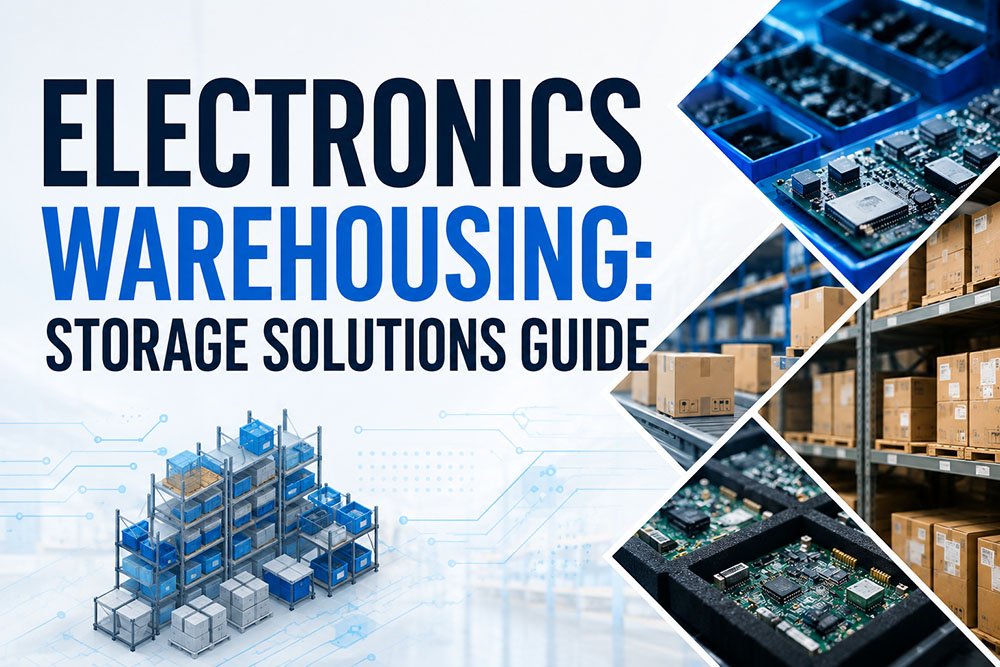
Warehousing electronics is fundamentally different from warehousing most other product categories. The inventory tends to be small in physical size but high in value, sensitive to static discharge, humidity, and temperature swings, and often subject to rapid product lifecycle turnover that leaves obsolete stock behind if not managed carefully. A storage layout that works well for automotive parts or FMCG goods may leave an electronics operation exposed to product damage, shrinkage, or inventory obsolescence risk.
This guide covers the specific storage challenges electronics warehouses face, the racking and layout solutions that address them, and what to consider when planning a new electronics warehouse or upgrading an existing one.
What Makes Electronics Warehousing Different
Electronics inventory presents a combination of storage requirements that few other product categories share simultaneously. Individual items are typically small, often stored in cartons ranging from mobile phone-sized boxes to component reels that can weigh under a kilogram each. But the value density is exceptionally high — a single carton can contain thousands of dollars of components, and a single pallet position can hold high-five-figure or six-figure inventory value.
At the same time, electronics are physically sensitive. Electrostatic discharge (ESD) can damage semiconductors, integrated circuits, and printed circuit boards even at voltages far below what a human can feel. Humidity accelerates corrosion on connectors, contacts, and lead frames. Temperature extremes can degrade batteries, LCD displays, and adhesives. And many electronic products carry short commercial lifecycles — mobile devices, consumer electronics, and computer components often become obsolete within 12 to 24 months, meaning inventory that sits unrotated can lose significant value even without physical damage.
Layered on top of these physical constraints are operational patterns typical of electronics distribution: high SKU counts running into the tens or hundreds of thousands for a broad distributor, order profiles dominated by high volumes of small orders each containing a handful of items, and returns handling that often exceeds forward-fulfillment complexity due to warranty replacements and repair flows. Together these factors mean electronics warehousing rarely fits neatly into a single racking format.
High cost of storage errors. Because inventory value is concentrated in small physical units, even minor storage mistakes carry outsized financial consequences. A single mishandled shelf of components can represent tens of thousands of dollars in damage or write-off value, well above what similar mistakes would cost in most other warehousing categories. This raises the stakes for storage design decisions that in a general warehouse might be treated as routine.
Traceability and audit requirements. Many electronics categories — particularly those bound for regulated industries such as aerospace, medical devices, or defense — carry strict batch, lot, and serial number traceability requirements. Storage layouts and inventory management systems need to preserve this traceability from receiving through picking, adding a layer of documentation discipline that many general warehousing operations don’t need to maintain.
Current Challenges in Electronics Warehousing
Managing ESD exposure across storage and handling. Static-sensitive components require ESD-protected storage locations, grounded handling equipment, and often ESD flooring in specific zones. Standard warehouse infrastructure typically does not provide this protection by default.
Balancing high value with fast retrieval. High-value inventory needs both security and rapid access — two goals that often pull in opposite directions. Security-focused caged storage tends to slow retrieval; open-access shelving tends to complicate security.
Handling wide SKU counts with high pick velocity. Broad electronics distributors handling tens of thousands of SKUs across components, accessories, and finished products need picking layouts that keep pick faces compact enough to reach quickly while holding sufficient replenishment stock nearby.
Environmental control across large storage areas. Temperature and humidity control across an entire warehouse is expensive. Some electronics operators zone their storage — climate-controlled areas for sensitive components, standard storage for less sensitive accessories — which requires racking layouts that support this zoning.
Managing product lifecycle and obsolescence risk. Short commercial lifecycles mean strict FIFO or FEFO rotation matters even for non-perishable inventory, since older stock loses market value even if physically intact. Rack layouts that don’t enforce rotation create real inventory write-down risk.
Supporting reverse logistics. Warranty returns, repair flows, and refurbished stock create parallel inventory streams that need separate storage zones and often different handling procedures than forward fulfillment.
Security against theft and internal shrinkage. High-value, easily concealed inventory is a target for both external theft and internal shrinkage. Warehouse layout and storage format play a significant role in physical security controls.
Recommended Storage Solutions for Electronics
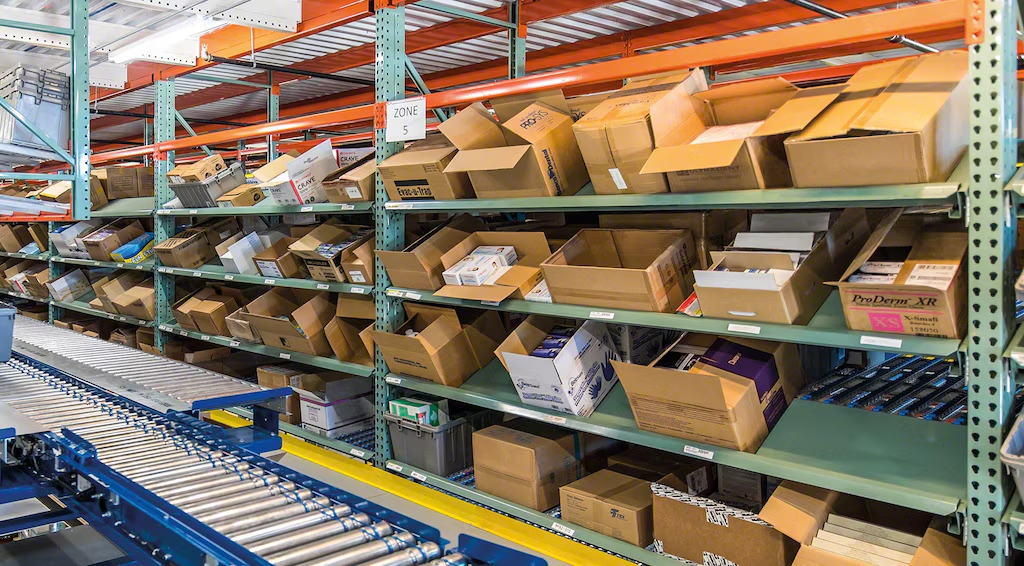
Boltless shelving and small-parts storage for components. For loose components, reels, small accessories, and hand-picked parts, adjustable light-duty boltless shelving with dividers and bins provides the accessibility and organization needed for high-SKU picking. Static-dissipative decking and grounding accessories can be specified where ESD protection is required.
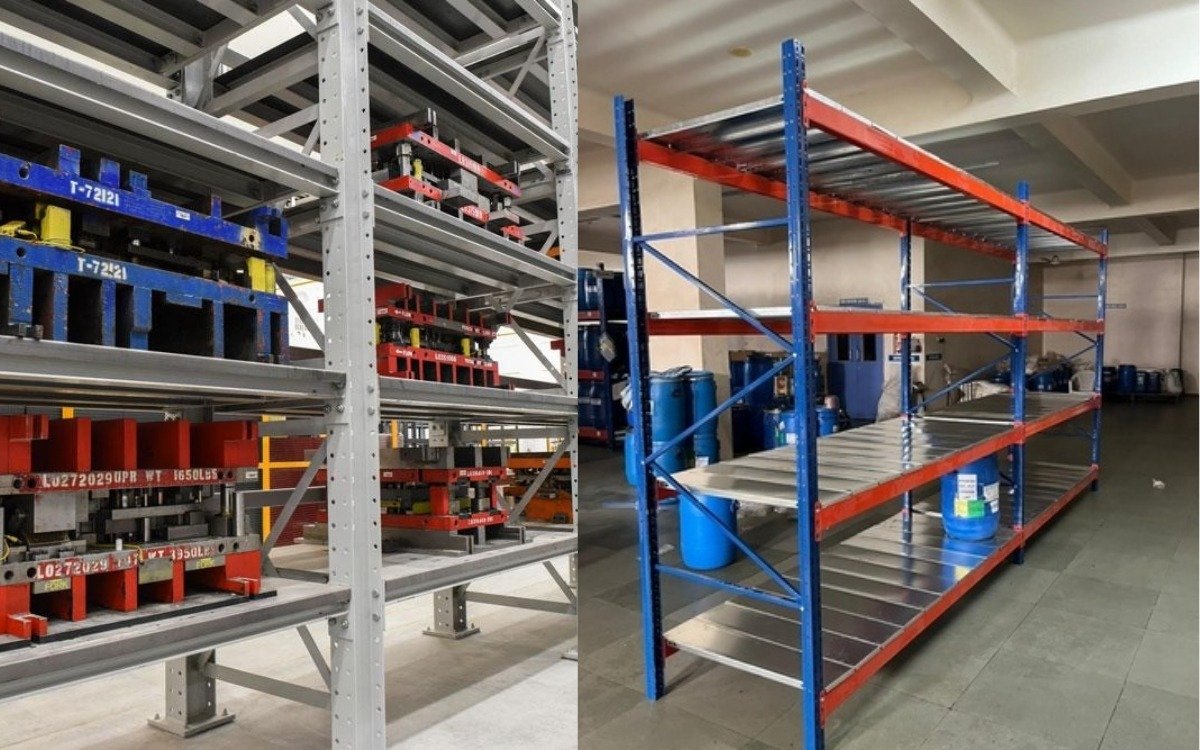
Selective pallet racking for finished goods and cartoned inventory. Boxed finished electronics, replenishment stock, and case-quantity inventory typically store well in selective pallet racking, which provides direct per-pallet access matching the high SKU velocity and FIFO rotation requirements electronics distribution demands.
Pick modules for high-volume order fulfillment. Electronics fulfillment operations processing thousands of orders per shift benefit substantially from multi-level pick modules combining mezzanine floors, pallet-level replenishment, carton flow lanes, and integrated conveyors. This overview of mezzanine racking covers the structural foundation typical pick module designs rely on.
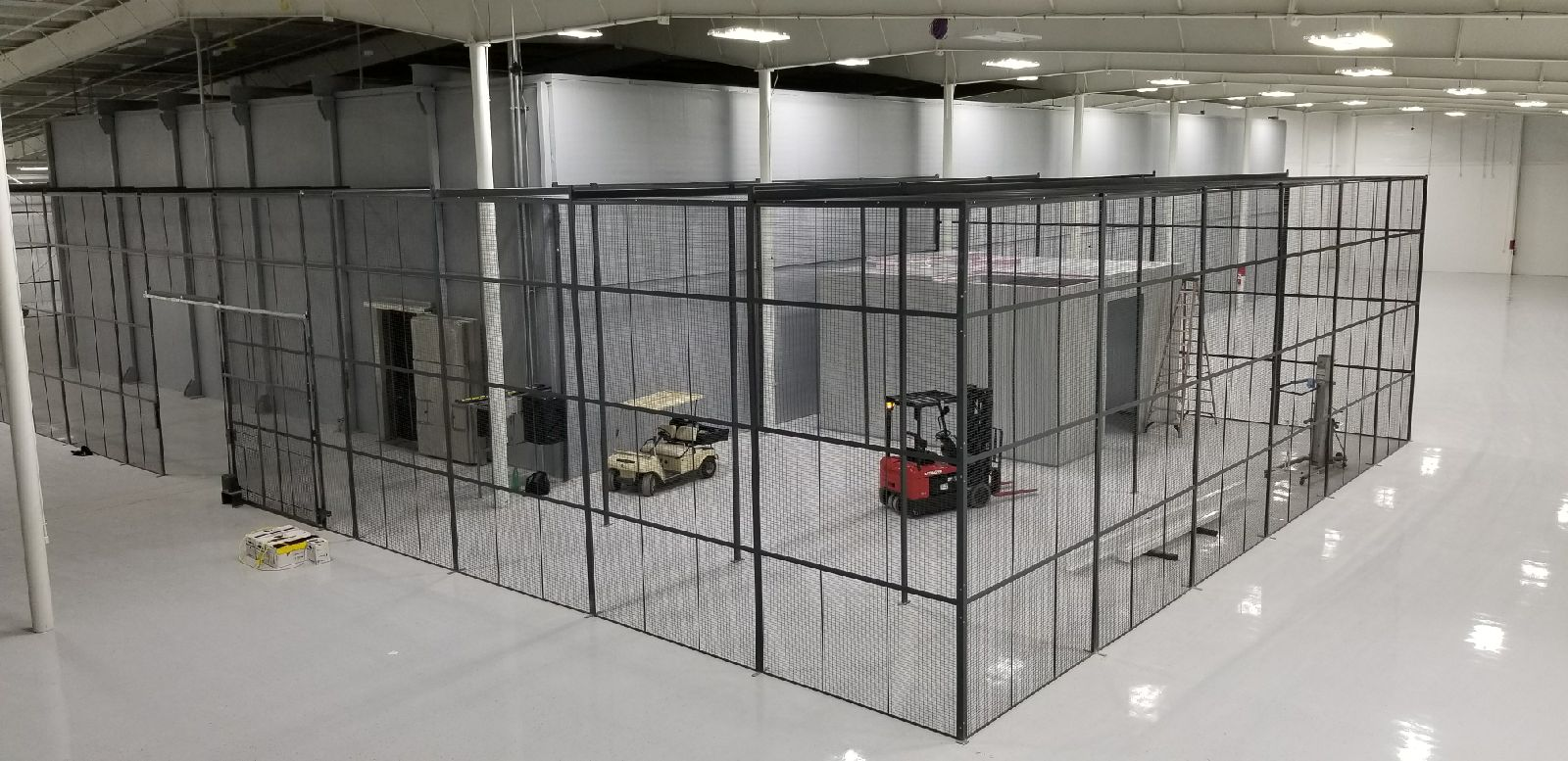
Caged or secured storage zones for high-value items. Premium items — enterprise servers, high-end consumer electronics, precious metal components — often warrant dedicated caged storage with restricted access. This can be integrated within a broader racking layout as fenced-off zones rather than requiring separate rooms.
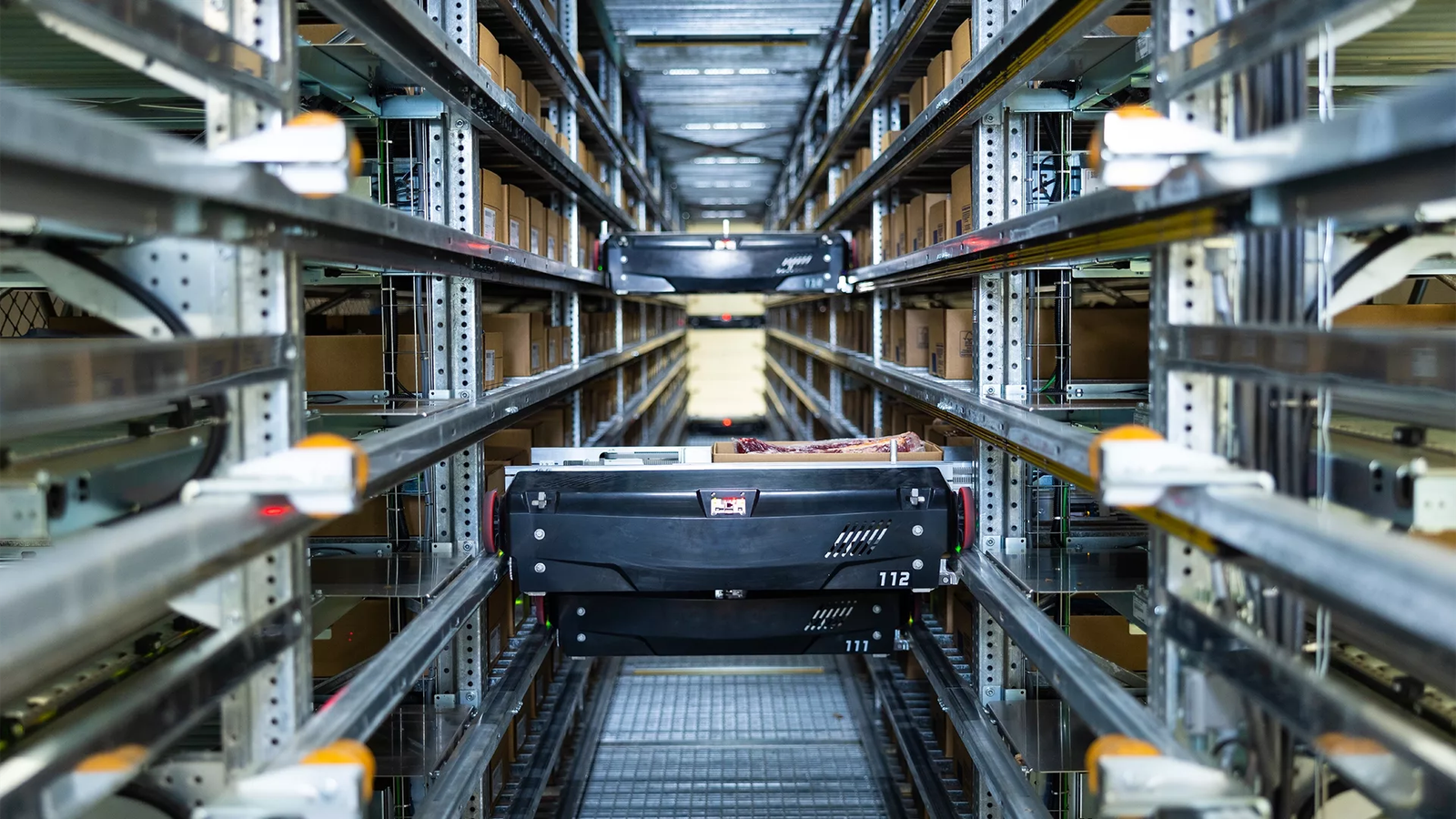
Automated storage for high-throughput distribution. Larger electronics distributors handling continuous high-volume flow increasingly use automated storage and retrieval systems for high-velocity SKUs, since automation improves pick accuracy, reduces shrinkage exposure, and supports the pick rates modern e-commerce electronics fulfillment demands. Automated systems are particularly relevant where high-value inventory concentration makes shrinkage risk a meaningful cost factor — physically restricting human access to storage locations reduces both accidental damage and internal theft opportunity in ways that manual layouts cannot easily match.
Cantilever racking for oversized items. Large-format electronics — commercial displays, professional audio equipment, industrial control cabinets — may not fit standard pallet racking and often store more efficiently on cantilever racking, which provides horizontal support for long or bulky items.
Climate-controlled sub-zones. Rather than climate-controlling the entire warehouse, many electronics operators create dedicated climate-controlled zones for sensitive inventory (temperature-critical batteries, humidity-sensitive semiconductors) while allowing standard conditions elsewhere. Racking layouts should support this zoning without requiring full facility reconfiguration. This zoned approach typically reduces annual climate control operating cost significantly compared to facility-wide humidity or temperature management, while still protecting the specific inventory categories that actually require environmental control.
Dedicated reverse-logistics storage zones. Warranty returns, repair inventory, and refurbished stock create parallel inventory streams that need physical separation from forward-fulfillment storage. Dedicated reverse-logistics zones typically include quarantine racking for items awaiting inspection, holding zones for refurbishable stock, and secure disposal areas for items being scrapped. Combining reverse logistics with forward fulfillment in the same racking zones often leads to returned items being accidentally shipped as new — a costly and reputation-damaging error that dedicated reverse-logistics layouts prevent.
Electronics Warehouse Storage Solution Comparison
| Inventory Type | Recommended Storage Format | Key Requirement |
|---|---|---|
| Loose components, reels, small parts | Boltless shelving with bins/dividers | ESD-safe zones, high accessibility |
| Cartoned finished goods | Selective pallet racking | FIFO rotation, per-pallet access |
| High-volume fulfillment orders | Multi-level pick modules | Integrated conveyor, compact pick face |
| Premium / high-value items | Caged or secured storage zones | Physical access control |
| High-throughput core SKUs | Automated storage systems | Pick accuracy, shrinkage reduction |
| Oversized commercial electronics | Cantilever racking | Horizontal support for irregular loads |
| Temperature-sensitive stock | Climate-controlled sub-zones | Environmental isolation |
| Returns and repair inventory | Segregated boltless shelving zone | Separated from forward-fulfillment flow |
Expected Operational Improvements
Electronics warehouses that match storage format to inventory type — rather than applying a single racking approach across all product categories — typically see:
- Reduced product damage from ESD, humidity, and handling, since sensitive items are stored in protected zones and irregular items are stored in formats engineered for their dimensions
- Higher pick accuracy and throughput, particularly when multi-level pick modules or automated systems are used for high-volume fulfillment zones
- Better inventory rotation and reduced obsolescence write-downs, when rack layout supports FIFO or lifecycle-based rotation for short-lifecycle SKUs
- Improved physical security, when high-value inventory is segregated into secured zones within the broader warehouse layout
- More efficient use of building footprint, since vertical storage and pick module integration typically outperform ground-level-only layouts for high-SKU, high-throughput operations
- Streamlined returns handling, when reverse logistics inventory has dedicated storage separated from forward fulfillment flows
- Reduced climate control cost, when environmental zoning limits humidity and temperature management to areas that genuinely require it, rather than the full facility
Project Considerations for Electronics Warehouse Planning
ESD control zoning. Identify which SKUs require ESD-safe handling and design racking, flooring, and worker grounding infrastructure around those zones rather than treating ESD control as a facility-wide default. Static-dissipative decking, grounded racking, and ESD-certified handling equipment should be specified for the relevant areas.
Humidity and temperature management. Environmental control requirements vary significantly across electronics SKUs. Lithium batteries, LCD displays, and moisture-sensitive semiconductors need tighter environmental control than most consumer accessories. Zoning environmental control to specific areas rather than facility-wide reduces cost.
Security infrastructure integration. Physical security elements — caging, restricted-access zones, CCTV coverage — should be planned into the racking layout from the start rather than added afterward. Retrofitting security controls into existing racking often produces gaps.
Inventory obsolescence and rotation. For short-lifecycle electronics, FIFO or lifecycle-based rotation is essential. Rack layouts and warehouse management systems should support batch tracking and rotation enforcement rather than relying on manual discipline. Similar rotation principles apply to any inventory category where sitting time affects value, whether the driver is expiry date or product lifecycle.
Returns and reverse logistics flow. Warranty returns, repair inventory, and refurbished stock often need separate storage zones, quarantine areas for damaged inspection, and different handling procedures. These should be designed into the warehouse layout, not treated as afterthoughts.
Order profile and pick technology. Electronics fulfillment order profiles vary widely — B2B distribution differs from consumer e-commerce differs from repair parts fulfillment. Pick technology (pick-to-light, voice, RF scanning) should match the specific order profile rather than defaulting to a general approach.
Fire protection considerations. Some electronics carry specific fire risks — lithium batteries in particular — that require dedicated fire protection considerations. A qualified fire protection engineer should be involved in warehouse design where these risks are present.
Scalability planning. Electronics distribution volumes can shift quickly with product lifecycle, market trends, and seasonal demand. Racking layouts should accommodate anticipated growth or contraction rather than being sized precisely to current volume.
Frequently Asked Questions
What is the biggest storage challenge specific to electronics warehousing? The combination of high value density, physical sensitivity (ESD, humidity, temperature), and short product lifecycles makes electronics storage more complex than most other categories. No single racking format addresses all three simultaneously, which is why electronics warehouses typically combine multiple storage solutions across zoned inventory categories.
Do I need ESD-protected racking throughout the warehouse? Not usually. ESD protection is generally needed only in specific zones storing static-sensitive components. Applying ESD infrastructure warehouse-wide typically adds significant cost without proportional benefit for less sensitive inventory such as cartoned finished goods or accessories.
How should I handle humidity control in an electronics warehouse? Humidity control is typically zone-based rather than facility-wide. Moisture-sensitive components (semiconductors, connectors, batteries) are stored in dedicated humidity-controlled areas, while less sensitive inventory occupies standard climate conditions. This significantly reduces climate control cost compared to facility-wide humidity management.
What storage format works best for high-volume electronics order fulfillment? Multi-level pick modules combining mezzanine floors, carton flow lanes, and integrated conveyors are the most common solution for high-volume electronics fulfillment, since they support the compact pick face and rapid order throughput that consumer electronics and small-item distribution demand.
How do I secure high-value inventory within a broader racking layout? Dedicated caged or fenced-off zones within the broader warehouse layout are the most common approach, combining physical access controls with CCTV monitoring and restricted item-level check-out procedures. Full separate rooms are typically not necessary for most high-value electronics categories.
Should returns be stored together with forward-fulfillment inventory? Generally no. Returns often need quarantine or inspection before being categorized as sellable, refurbishable, or scrap, and mixing returns with forward inventory increases the risk of returned items being shipped as new. Dedicated reverse-logistics zones prevent this.
How does lithium battery storage affect racking requirements? Lithium battery storage carries specific fire risk considerations that may require dedicated storage zones, particular fire suppression systems, and compliance with region-specific storage codes. A fire protection engineer and code compliance review should inform the racking specification for these zones.
Can automated systems reduce shrinkage in electronics warehouses? Yes. Automated storage and retrieval systems physically restrict human access to inventory locations, which can significantly reduce internal shrinkage exposure compared to open-access manual storage. This is one of several reasons larger electronics distributors are increasingly investing in automation for high-value inventory zones.
Key Takeaways
- Electronics warehousing combines high value density, physical sensitivity, and short product lifecycles in ways that few other inventory categories share simultaneously
- Storage solutions typically need to be zoned by inventory type — ESD-protected areas for sensitive components, secure zones for high-value items, climate-controlled areas for environmentally sensitive stock, and standard storage for accessories
- Common storage formats include boltless shelving for components, selective pallet racking for finished goods, multi-level pick modules for high-volume fulfillment, cantilever for oversized items, and automated systems for high-throughput or high-security zones
- Environmental control (humidity, temperature) and physical security (caging, access control) should be applied selectively to the zones that actually need them, rather than facility-wide
- Reverse logistics and product lifecycle rotation are structural planning issues, not operational afterthoughts, and should be designed into the warehouse layout from the start
Conclusion
Electronics warehousing rarely fits into a single racking format because the inventory itself spans so many different physical and operational profiles — sensitive components, high-value finished goods, oversized commercial equipment, and returns all coexist in the same operation. Warehouses that plan storage as a zoned system, matching format to inventory type, generally achieve better inventory protection, faster fulfillment, and lower total operating cost than those defaulting to a single racking approach across all categories. Companies such as Lracking are commonly involved in electronics warehouse projects where operators are integrating multiple storage formats — component shelving, pallet racking, pick modules, and secure zones — into a coordinated layout that addresses the sensitivity, value, and lifecycle characteristics electronics inventory demands. For operators planning a new electronics warehouse or upgrading an existing one, a project-specific assessment of SKU profile, environmental requirements, order patterns, and security needs remains the most reliable starting point for identifying the right combination of storage solutions.