
The selection of the wrong pallet rack beam types is a much more expensive replacement part than a part replacement. Structural failures result in severe injuries, loss of stock and expensive regulatory shutdowns. The type of beam you choose is directly related to the amount of load your racking system will safely support each and every day. Mismatched profiles result in concealed stress points, which, over time, can cause entire rack structures to fail quietly. This guide includes information on beam types, load ratings, finish options, compliance standards and practical selection criteria to help you make an informed choice.
What Are Pallet Racking Beams?
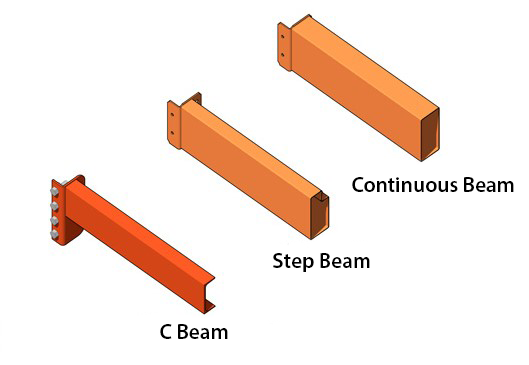
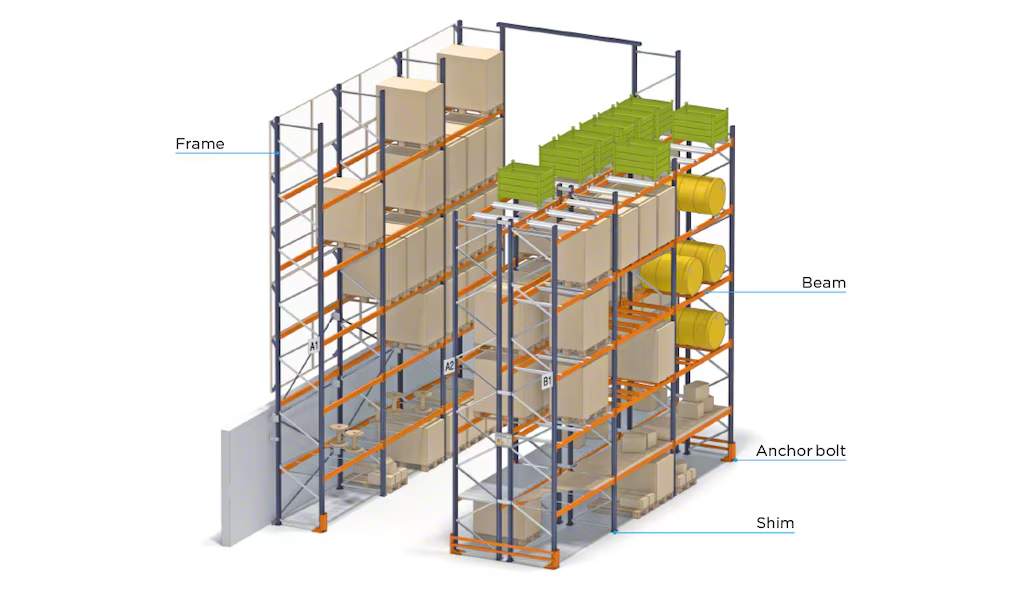
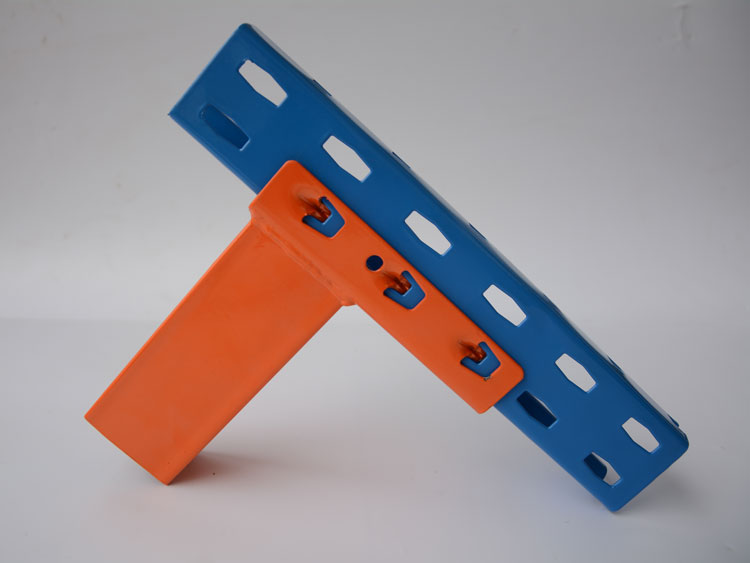
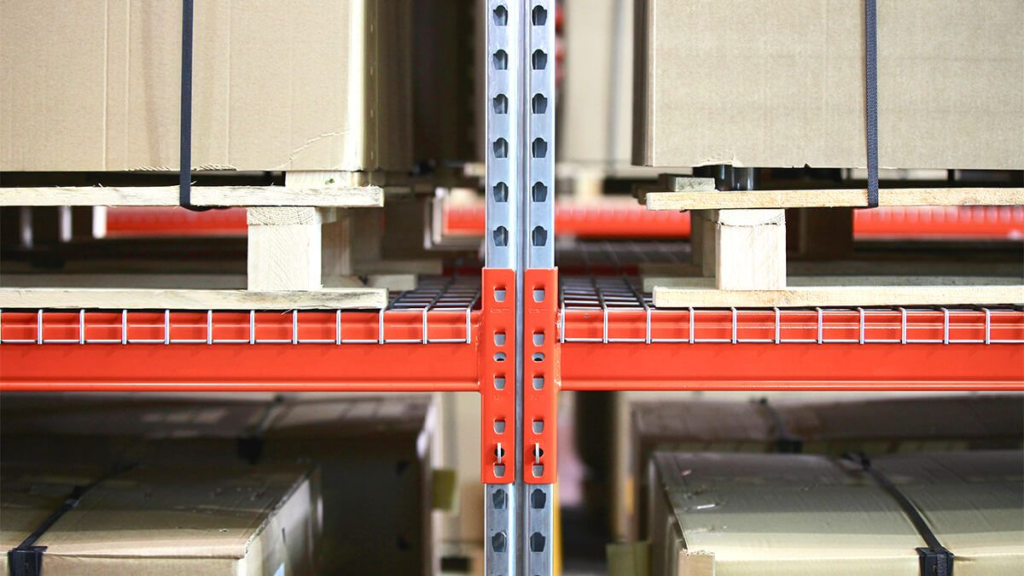
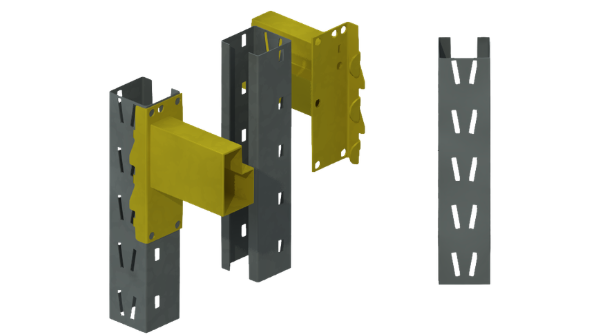
Beam of pallet racking is a horizontal steel beam directly attached to uprights and supports palletised loads, making them one of the most essential pallet rack beam types used in warehouse storage systems. They are the load-bearing structure of any selective racking system, working in conjunction with uprights, anchor bolts, safety pins and decking accessories. The weight is evenly distributed along each beam, avoiding stress points at individual contact points. Beams attach at various heights with the spacing usually set at 2″ hole centres along the upright. Endplates or connectors fit into the standardised upright holes (most often in the form of a teardrop punching) and are securely held in place by spring-loaded safety locking pins.
Why Beam Selection Is a Strategic Decision for Businesses?
The choice of beam directly influences the structural stability, compliance rating and the performance of your racking system on a day-to-day basis. If the beam type does not match the load profile, then it can cause a serious structural failure risk that may put workers and inventory in danger. The compatibility with existing uprights dictates whether partial upgrades or full and expensive uprights are necessary for expansion.
OSHA requires that beams be inspected at least once per year and that this is a mandatory level of operation. The Rack Manufacturers Institute (ANSI-MH16.1) provides manufacturing tolerances, design procedures and safe loading standards. This is the standard that sets guidelines for beam load capacity testing that every compliant system must adhere to. This correct beam selection also helps to facilitate faster picking cycles, better product visibility and safer forklift access during the day.
Pallet Rack Beam Profile Types
Step Beams (Structural Step Profile)
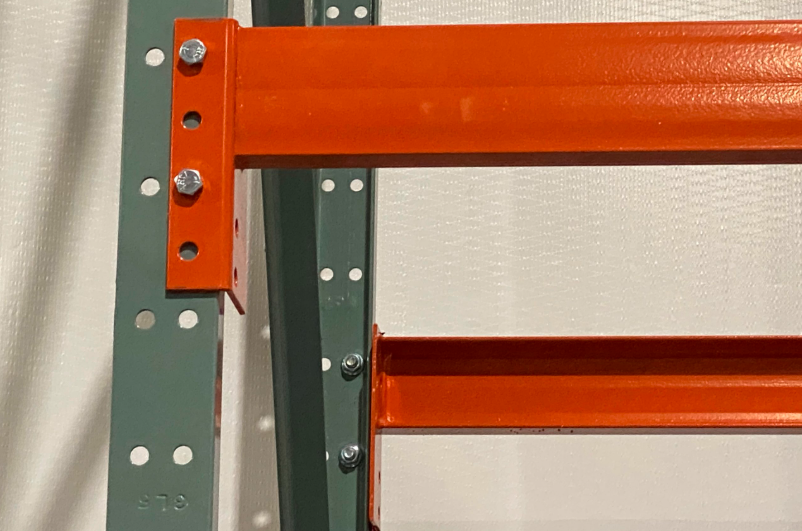
Step beams are by far the most popular pallet rack beam types used in North America warehouses. The recessed inner flange allows wire decks to be installed without any extra clips or hardware. The greater the beam, the greater the load-carrying capacity over standard bays. They are ideal for a selective pallet rack with a wire deck. A little less strength per inch is made up for by greater height.
Box Beams / Closed Tube / Rectangular Tube
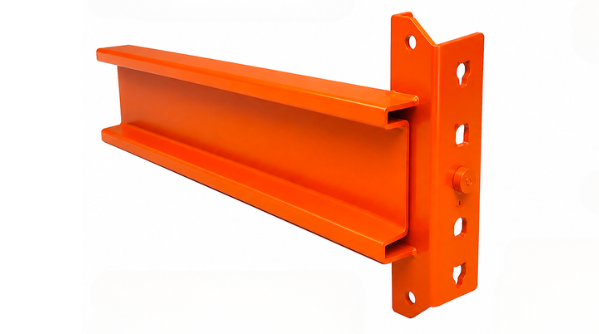
Box beams are the result of welding two C-shaped profiles together to create one closed rectangular profile. This construction provides greater strength per square inch than alternate step beam constructions. There is no interior step; wire decks must be clipped on. Large-format distribution centres and heavy unit loads are best suited. They come in many different lengths, widths and thicknesses of gauge.
C-Channel Beams (Single C / Structural C-Channel)
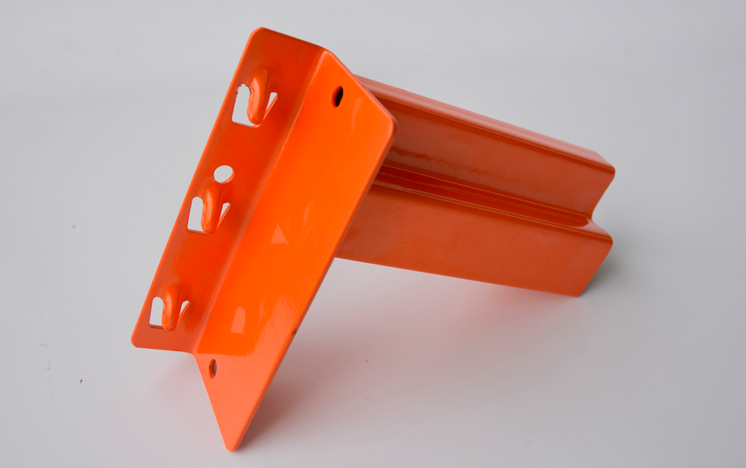
C channel beams are hot-rolled structural steel beams that are measured in pounds per foot. They attach directly to structural uprights and not with the usual teardrop hook connectors. Vertical adjustment is made at 2″ increments in the vertical column. They are used in seismic zones, outdoor environments and heavy industrial facilities. They are the only roll-formed beams to achieve the structural grade performance in extreme loading.
Z-Beams (Z-Profile / Picking Beams)
Z-beams have a unique Z-shaped cross-section designed to provide shelving panel support. The panels are metal or wood, and fit into the profile with no hardware. These are designed for manual picking and, as such, have a reduced load capacity. Multi-level pick modules and carton-flow systems are their primary application. A variant without the upper flange is a natural panel stop.
Single Tube Profile – Light Beams
Light beams are commonly used for warehouse beams and are made of one closed tube profile rather than two closed box welds. This is a design that is less material-intensive and still strong enough for less demanding uses. They can be used in both pallet rack and manual pick solutions. They are cost-effective for facilities with a mix of light and medium SKU profiles. Their low cost makes them a viable option for cost-efficient warehouses.
Continuous Beams
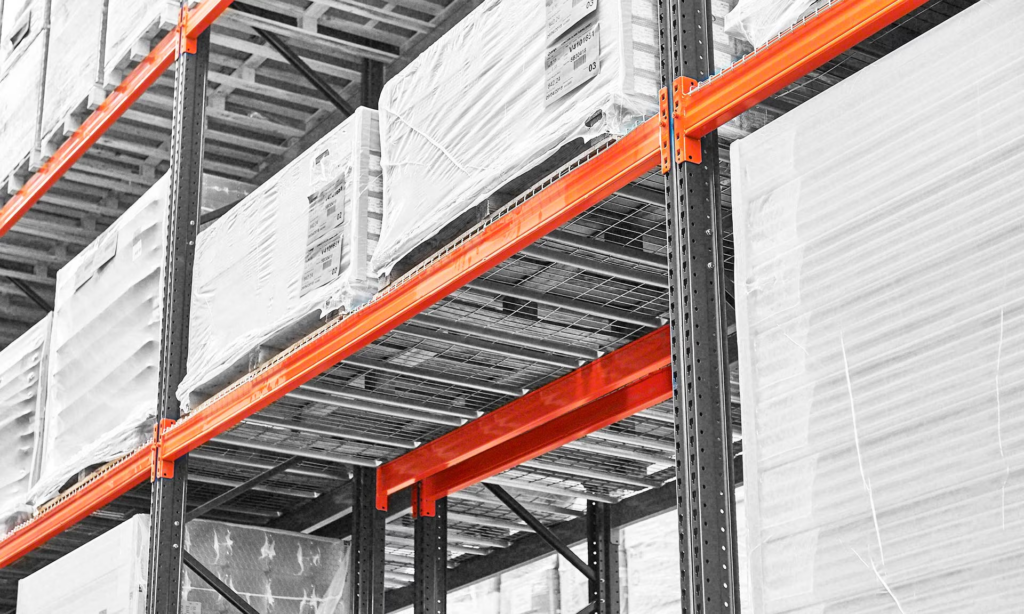
In different pallet rack beam types, continuous beams are supported across several rack bays without the need for individual connectors between modules. They are only used in clad-rack and drive-in silo warehouse construction. Multi-point support behaviour ensures that they are structurally efficient in the case of extreme unsupported spans. They cannot be adjusted and thus are not appropriate for reconfigurable storage layouts. No catalogue selection, dedicated engineering specification per installation. For broader industry guidance, consult MHI’s material handling resources.
Pallet Rack Beam Profile Comparison
| Beam Type | Profile Shape | Connection Method | Relative Load Capacity | Best Application | Deck Compatibility | Adjustability |
| Step Beam | Stepped C | Hook/endplate (teardrop) | Medium–High | Selective pallet rack | Wire deck (slots in) | Yes, 2″ centres |
| Box Beam (Double C) | Closed rectangle | Hook/endplate (teardrop) | High–Very High | Heavy-duty selective rack | Wire deck (clipped) | Yes, 2″ centres |
| C-Channel (Structural) | Open C | Bolted to the structural upright | Very High | Structural rack, seismic zones | Bolted decking | Yes, 2″ centres |
| Z-Beam | Z-profile | Hook/endplate | Low–Medium | Pick modules, carton shelving | Wood/metal panels (slots in) | Yes |
| Light Beam | Single tube | Hook/endplate | Low–Medium | Light pallet/picking hybrid | Clipped accessories | Yes |
| Continuous Beam | Custom long-span | Welded/embedded | High (span-efficient) | Clad-rack silos | Fixed per design | No |
Beam Connection Styles and Upright Compatibility
The integrity of your complete racking system depends on the connection style of pallet rack beam types. Beam-to-beam upright incompatibility is a major safety violation and compliance failure. Please always check the compatibility of the connectors before they are procured or before the system is expanded.
The seven primary upright/connector styles:
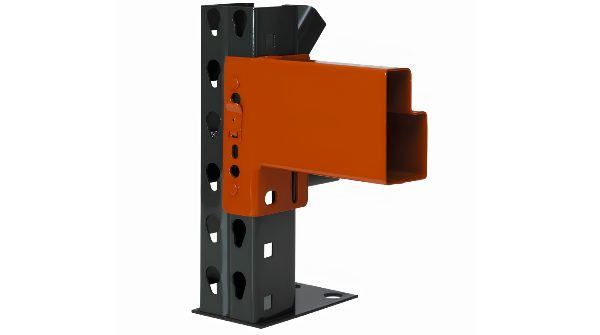
- Teardrop: There is no doubt that the teardrop style is the most popular style seen in North American warehouses. It has inverted teardrop slots for speedy, tool-free beam installation. The vertical spacing is standard 2″ throughout.
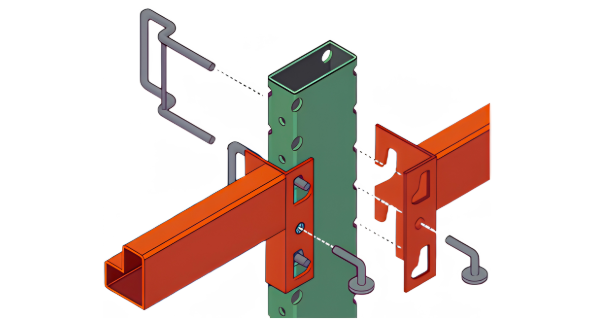
- Newstyle: Newstyle uprights are similar to teardrop but with more narrow, more rectilinear hole patterns clearly defined. They should be joined with riveted pin connectors having pointed teeth or tapered oval ends. Beam engagement is definitely different from conventional teardrop systems.
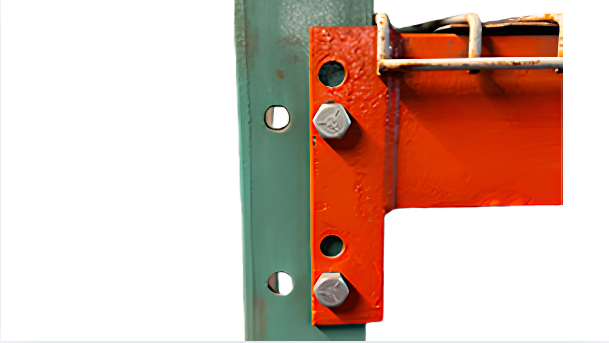
- Structural (Bolted): Structural uprights are made from heavy gauge c-channel column with no hook-based connector slot. Beams are bolted directly to uprights and provide the maximum load-bearing capacity possible. This system is very well suited to extreme duty industrial, and cold storage applications.
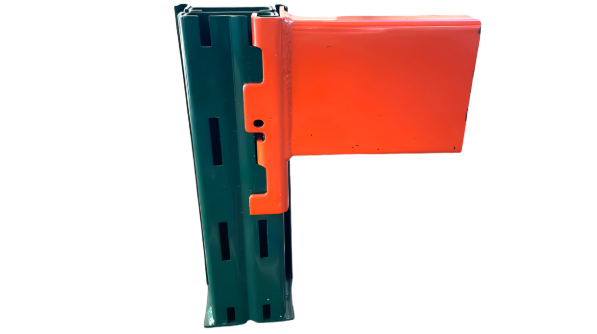
- Speedrack: Speedrack’s proprietary slot pattern does not match the pattern of most competing upright systems on the market today. It is quick to connect and can be used to hold medium to heavy pallet loads. Speedrack is still one of the well-known brands in North American DCs.
- Ridg-U-Rak: Ridg-U-Rak uprights provide a unique slot design developed and patented by their original manufacturer. Secure beam seating under demanding dynamic load conditions is offered by their connector design. There are still warehouses in use today that have the original Ridg-U-Rak systems installed decades ago.
- Keystone: Keystone uprights feature a special interlocking slot system that is not the same as the teardrop and is commonly used with industrial racking beams. They securely wedge in place and stay in place even when the forklift is in operation. Several industrial racking companies around the country supply the keystone components.
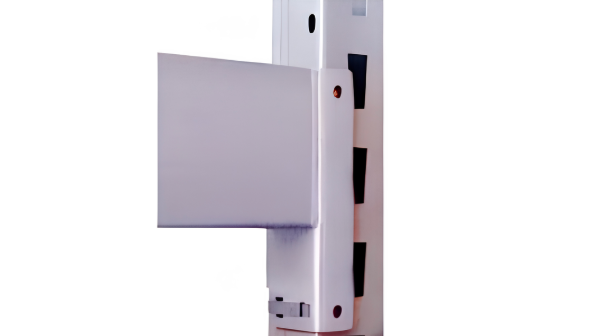
- Penco: Penco created its own unique upright slot style for shelving and racking use. Their connectors are in no way compatible with teardrop or newstyle uprights. Today, Penco systems are prevalent in light-to-medium commercial storage.
Beam Load Capacity: Calculation Factors
A combination of steel grade, profile height, pallet rack beam lengths, and gauge thickness determines the load capacity of all the pallet rack beam types. The longer the beam, the lower the load that it can be rated for at the same gauge and profile. Taller stepped or box-type profiles will support much more weight than shorter options. Don’t overload — manufacturer-rated capacity is the maximum, and progressive deformation will occur before catastrophic structural failure.
Note that UDL ratings are not the same as point load ratings; make sure to verify the rating for your application. Static ratings do not consider dynamic load factors associated with a forklift’s movement. Deflection limits, ultimate failure testing and acceptable manufacturing tolerances are all based on ANSI-MH16.1 protocols and apply to all types of beams.
For all of the beam SKUs listed in your project, always get manufacturer-specific load capacity tables. OSHA does not allow any exception to this rule: Post updated load placards after rack configuration change.
Key Beam Selection Criteria for B2B Procurement
| Selection Factor | What to Evaluate | Common Mistakes to Avoid |
| Load capacity | Max UDL per beam pair; point load vs. distributed load rating | Using generic “beam capacity” without referencing span-specific load tables |
| Beam length | Must match upright bay spacing exactly | Ordering beams that overhang or underlap upright column centres |
| Profile type | Match to decking type (step for wire deck slots; box for clipped deck) | Mixing step beams with box beam wire decks — the deck won’t seat correctly |
| Connector style | Must match existing upright slot pattern | Mixing teardrop beams with new-style uprights — pins won’t engage safely |
| Finish | Indoor painted vs galvanised for moisture/chemical exposure | Specifying painted beams for cold storage or food-grade environments |
| Compliance | ANSI-MH16.1 certified; manufacturer load tables available | Purchasing uncertified offshore beams without rated load documentation |
| Expandability | Beam availability in the manufacturer’s catalogue for future expansion | Selecting a discontinued or proprietary beam that limits future scalability |
Pallet Rack Beam Types Installation, Inspection, and Maintenance Best Practices
Beam Installation Requirements
Each storage level requires at least 2 beams, one on each side. There are never to be any exceptions to full engagement of endplates in upright slots. Before loading operations are carried out on any rack system, the safety pins must be completely locked.
Post-Installation Deflection Check
Once installed, check beam deflection remains within specification under full operational load. The deflection limit as per ANSI-MH16.1 is span/180. Always perform this key structure checking step.
OSHA Annual Inspection Mandate
Rack beams must be inspected at least once per year as per OSHA requirements. If any beam is damaged, it will be taken out of service on the day of the damage. Marking a damaged beam and continuing to use it is completely out of compliance.
Damage Indicators That Need to be Replaced
Beams should be replaced as soon as they are found to be bent or bowed, as seen in the beam profile. Cracking of welds at endplate connections is an indicator of potential failure. Safety pins are also missing, as well as impact dents that are beyond manufacturer tolerances, and this is something that needs to be dealt with right away.
Load Placard Posting Requirement
A load placard with rated capacity per level per rack bay shall be provided for each rack bay. Both OSHA and RMI guidelines stipulate the posting in a conspicuous area. Do not use racks without capacity information posted.
Field Repairs Are Not Allowed
There is no framework of compliance recognised that allows for the repair of damaged beams on-site. There is no other legally or structurally acceptable corrective action other than replacement. Manufacturers’ warranty conditions are not met when the load is compromised by field welding or bending.
Why Lracking for Quality Pallet Rack Beam Types?
If you are looking for pallet warehouse racking beams, then it is essential to work with a knowledgeable, certified manufacturer. That is exactly what Lracking, established in 2008 and with its factory built in Dongguan, China, 18,000+ sq. meters, can provide. Lracking’s beams are CE / ISO / AS4084 certified, which sets international standards for structure. A trusted supply partner for B2B procurement teams in 70+ countries, their engineering team offers free layout drawings, competitive pricing and customisation to fit your bay spacing, load and upright compatibility requirements.
Conclusion
Selecting pallet rack beam types is not something that can be done lightly — it is the safety ceiling of your rack system. Each of the profile types is designed to support a different load, environment and operational requirement. Understanding pallet racking beam sizes is equally critical, as pallet rack beam dimensions directly determine load capacity, bay spacing and compatibility with your uprights and decking. Beams, uprights and decking should be compatible before purchase. ANSI-MH16.1 and OSHA compliance is not a checkbox; it’s a baseline. Always consult a certified rack engineer before finalising the specifications for new builds, expansions or post-damaged replacements. Internationally compliant certified beams engineered, supported and reliable B2B supply partner, Lracking in 70+ countries.