Warehouses handling heavy unit loads, high-traffic forklift operations, or long-term storage commitments often reach a point where standard roll-formed racking no longer meets operational demands. Structural racking, built from hot-rolled steel components bolted together into a rigid frame, is frequently the solution operators turn to when durability, load capacity, and impact resistance become the deciding factors in a storage project.
This article explains what structural racking is, how it is built, when it is the right choice, how it compares to alternative storage formats, and what operational improvements a warehouse can expect after implementation.
What Is Structural Racking?
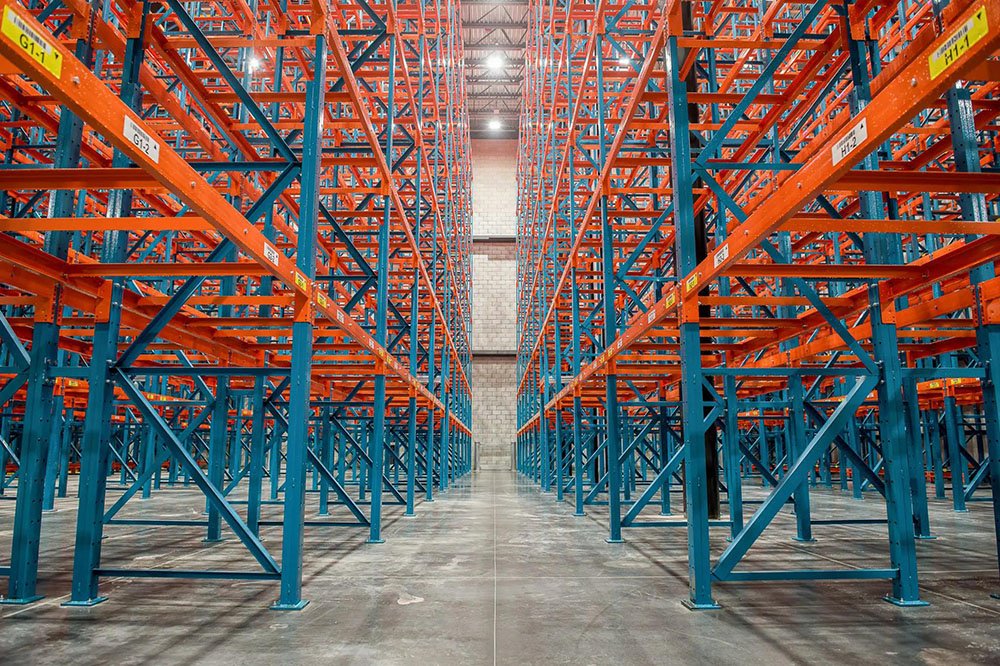
Structural racking is a pallet storage system built from hot-rolled structural steel sections — typically I-beams, C-channels, or similarly rolled profiles — rather than the thin-gauge, roll-formed sheet steel used in conventional pallet racking. The frames are assembled using bolted or welded connections between columns and beams, which produces a rigid, continuous structure rather than a series of clip-in joints.
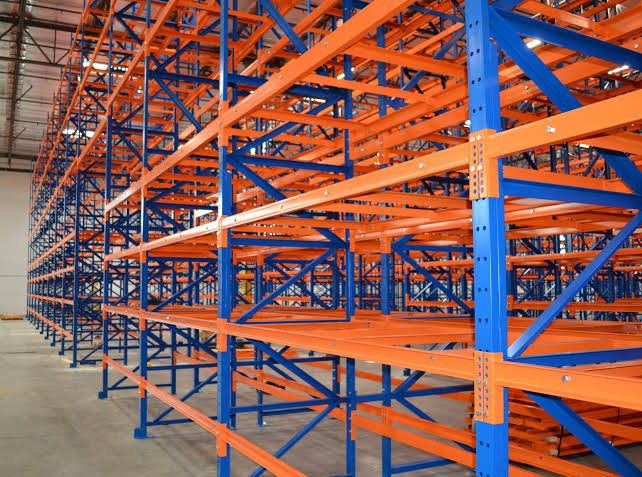
Core components of a structural racking system:
- Columns (uprights): Hot-rolled steel posts, often with a heavier wall thickness than roll-formed uprights, forming the vertical backbone of each frame.
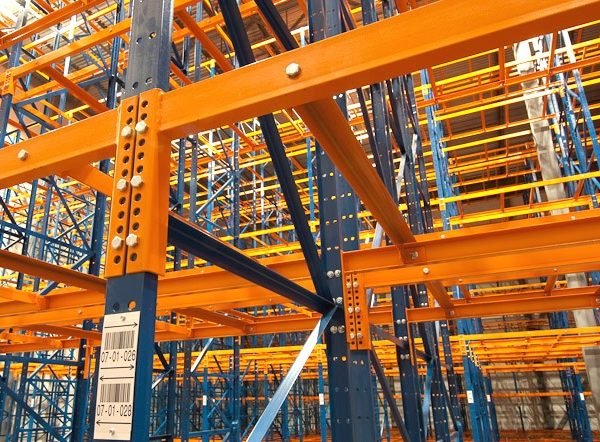
- Beams: Structural steel beams bolted directly to the columns, creating a rigid frame connection rather than a hook-and-slot fit.
- Bracing: Diagonal and horizontal bracing members tie columns together for lateral stability, particularly in taller installations.
- Base plates and anchoring: Structural columns are typically bolted to the floor slab through base plates, distributing point loads and anchoring the frame against tipping or shifting.
- Decking or supports: Depending on the configuration, pallets may rest directly on beams, on wire decking, or on additional support rails spanning between beams.
How it differs from roll-formed racking:
Roll-formed racking is manufactured by cold-forming thin steel coil into a shaped profile, then connecting beams to columns using clip or hook connectors that slot into perforations along the upright. This method is efficient to produce and install, and works well for standard, moderate loads. Structural racking instead uses solid, hot-rolled steel connected through bolted joints, which distributes stress differently across the frame and tolerates impact and heavier loads with less deformation.
Common structural racking configurations:
- Selective structural racking, offering direct access to every pallet position, similar in layout to standard selective racking but built with structural components
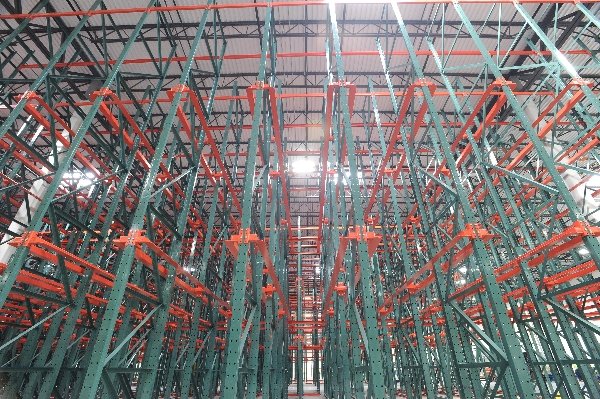
- Structural drive-in racking, where forklifts enter the rack structure itself to load and unload pallets from the front, maximizing density for heavy, uniform loads
- Structural pallet flow racking, using gravity or powered rollers within a structural frame to support first-in-first-out inventory rotation for heavy pallets
Because the frame itself is engineered for higher load tolerances, structural racking is generally specified where load weight, traffic frequency, or long-term durability requirements exceed what a roll-formed system is designed to handle.
Advantages and Disadvantages of Structural Racking
Structural racking is not a universal replacement for other storage formats. Evaluating both sides helps determine whether it fits a specific warehouse’s operational profile.
Advantages:
- Higher load capacity. Hot-rolled steel components and bolted connections generally support heavier per-pallet and per-bay loads than equivalent roll-formed systems, a distinction explored further in this heavy-duty versus light-duty racking comparison.
- Greater impact resistance. Bolted structural joints tolerate forklift contact with less deformation, reducing the frequency of frame damage in high-traffic aisles.
- Longer service life. Because the frame resists fatigue and deformation more effectively over repeated use, structural racking is often specified for long-term storage investments.
- Design flexibility. The same structural frame can be configured for selective, drive-in, or pallet flow storage, and can often be integrated with mezzanine platforms.
- Lower long-term repair frequency. Fewer damaged components typically translate into less downtime for inspection, recertification, or replacement over the system’s lifespan.
Disadvantages:
- Higher upfront cost. Structural steel components and bolted installation generally cost more to purchase and install than roll-formed equivalents of similar dimensions.
- Longer lead times. Structural components may require more manufacturing or fabrication time than standard roll-formed parts, depending on order volume and configuration complexity.
- Heavier structure. Structural racking is generally heavier than roll-formed racking, which increases floor loading considerations and may require additional slab assessment.
- Less efficient for light, uniform loads. For warehouses storing consistently light, standardized pallets with low traffic, the added load capacity and durability of structural racking may not justify the additional cost.
- Bolted assembly complexity. Installation and any future reconfiguration typically require more labor and time than clip-in roll-formed systems, since bolted joints must be torqued and verified.
The decision between structural and roll-formed racking generally comes down to whether the operational risk and cost of frame damage under the facility’s actual load and traffic conditions outweigh the higher initial investment in a structural system.
What Problem Does Structural Racking Solve
Many distribution centers and manufacturing warehouses experience recurring damage to their storage systems. Forklift collisions, uneven load distribution, and constant put-away and retrieval cycles gradually weaken lighter racking structures. Over time, this leads to:
- Frequent repair or replacement of damaged uprights and beams
- Safety concerns from bent or compromised frames
- Downtime while damaged sections are inspected or repaired
- Reduced confidence in load ratings after repeated impacts
For operations storing heavy pallets, oversized components, or metal coils, the core challenge is not simply finding storage space — it is finding a storage structure that can reliably carry heavy, uneven, or high-turnover loads for years without structural fatigue.
Current Challenges in Heavy-Duty Storage Environments
Warehouses considering a racking upgrade typically face several overlapping challenges:
Load-bearing limitations. Standard roll-formed racking is engineered for moderate, evenly distributed loads. When pallet weights increase, or when loads are irregular in shape or weight distribution, roll-formed systems may not provide sufficient safety margin.
High forklift traffic. Facilities with narrow aisles, multiple shifts, or high order volumes see more frequent contact between forklifts and racking frames. Roll-formed steel deforms more readily under impact than structural steel.
Long-term capital planning. Some operators are reluctant to invest in a racking system that may need partial replacement within a few years. This raises the effective cost of ownership even if the initial price is lower.
Fire protection and code compliance. Depending on jurisdiction and storage height, certain warehouses must meet specific structural and fire-protection requirements that influence which racking format is permitted or preferred.
Mixed load types. Warehouses storing a combination of palletized goods, coils, drums, or oversized items often find that lighter racking systems are not rated for the full range of items they need to store.
Recommended Solution: Structural Racking Systems
Given the construction described above, structural racking offers several advantages directly relevant to the challenges outlined:
Higher load capacity per bay. Structural columns and beams generally support heavier loads than roll-formed equivalents of similar dimensions, making the system suitable for heavy pallets, coils, and irregular loads.
Greater impact resistance. Bolted structural connections tolerate forklift contact better than roll-formed clip connections, reducing the frequency of frame replacement after minor collisions.
Design flexibility. Structural racking can be configured for selective pallet storage, drive-in configurations, or combined with mezzanine platforms for multi-level storage, depending on the warehouse layout and throughput requirements.
Longer service life. Because the frame resists deformation more effectively, structural racking is often specified for facilities planning a storage investment intended to last well beyond a typical roll-formed system’s usable life.
For warehouses evaluating multiple storage formats, it is worth comparing structural racking against related systems such as drive-in and drive-through pallet racking for high-density storage of homogeneous products, or cantilever racking as a complementary solution for long or irregular items within the same warehouse.
Structural Racking Comparison Table
| Storage Format | Load Capacity | Impact Resistance | Selectivity | Typical Application |
|---|---|---|---|---|
| Structural Racking | High | High | Moderate to High | Heavy pallets, coils, high-traffic zones |
| Roll-Formed Racking | Moderate | Moderate | High | Standard palletized goods |
| Drive-In Racking | High | Moderate | Low | Bulk storage of uniform SKUs |
| Cantilever Racking | High (long items) | Moderate | High | Long or irregular materials |
This comparison is intended to support internal evaluation rather than to declare a single “correct” format — the right choice depends on load characteristics, traffic patterns, and SKU variety within a specific facility.
Expected Operational Improvements
Warehouses that transition to structural racking in appropriate applications commonly report the following types of improvement:
- Reduced frame replacement frequency, since structural connections withstand forklift contact better than roll-formed alternatives
- Improved load confidence, allowing operations teams to store heavier or less uniform loads without exceeding safety margins
- Lower long-term maintenance costs, as fewer sections require repair or recertification over the racking’s service life
- Support for higher-traffic operations, where narrow aisles or multi-shift picking increase the likelihood of incidental contact
- Extended asset lifespan, supporting longer depreciation schedules and more predictable capital planning
These improvements should be evaluated against the specific operational profile of the warehouse rather than assumed universally, since facilities with light, uniform loads and low traffic may not see proportional benefit from the added cost of structural steel.
Project Considerations
Before specifying structural racking, several project-level factors typically need to be assessed:
Warehouse height and clear ceiling clearance, which determines how many storage levels can be configured and whether the racking will interact with sprinkler systems or lighting.
Pallet or load weight range, including maximum and average weights, to ensure beam and column ratings are specified with adequate safety factors — see this guide to pallet racking weight capacity for related planning considerations.
Forklift type and turning radius, since aisle width requirements differ between reach trucks, counterbalance trucks, and narrow-aisle equipment.
Fire protection requirements, particularly for high-piled storage, where in-rack sprinklers or flue space requirements may influence bay spacing and configuration.
SKU variety and turnover rate, which affects whether a fully selective layout or a higher-density configuration is more appropriate.
Expansion planning, so that the initial structural racking layout can accommodate anticipated growth in storage volume without requiring a full redesign.
Floor loading capacity, since structural racking concentrates significant weight on a smaller footprint than open floor storage, requiring confirmation that the existing slab can support the anticipated point loads.
Addressing these factors during the planning phase, rather than after installation, tends to reduce the likelihood of costly reconfiguration later in the project lifecycle. Industry guidance from organizations such as MHI and RMI provides structural design and load-rating standards commonly referenced during this planning stage.
Frequently Asked Questions
How is structural racking different from roll-formed racking? Structural racking uses hot-rolled steel components with bolted connections, while roll-formed racking uses cold-formed steel with clip-style connectors. The structural format generally offers higher load capacity and better resistance to impact damage.
Is structural racking more expensive than roll-formed racking? Initial material and installation costs are typically higher for structural racking. However, warehouses with high forklift traffic or heavy loads may offset this through reduced repair frequency and a longer usable lifespan.
What is a typical implementation timeline for a structural racking project? Timelines vary based on warehouse size and complexity, but most projects move through site assessment, structural design, manufacturing, and installation phases over several weeks to a few months, depending on order volume and site readiness.
Can structural racking be combined with a mezzanine floor? Yes. Structural racking is commonly integrated with mezzanine floor systems to add usable storage or work levels above ground-floor racking, particularly in facilities with significant unused vertical space.
Does structural racking require special fire protection measures? Fire protection requirements depend on storage height, commodity classification, and local building codes rather than the racking format itself. A qualified fire protection engineer should be consulted for high-piled storage configurations.
What is the expected service life of a structural racking system? Service life depends on load conditions, maintenance practices, and environmental factors, but structural racking is generally specified for long-term use in facilities where frame durability is a primary concern.
How does structural racking support future warehouse expansion? Because structural bays can often be extended or reconfigured, warehouses can plan phased expansions that build on the existing structural framework rather than replacing the entire system.
Is a capacity assessment required before installing structural racking? A capacity assessment covering floor loading, pallet weights, and traffic patterns is generally recommended before finalizing a structural racking layout, to confirm the design matches actual operational conditions.
Key Takeaways
- Structural racking is suited to heavy loads, high-traffic environments, and long-term storage investments where frame durability is a priority
- Compared to roll-formed racking, it offers higher load capacity and greater resistance to forklift impact
- Project planning should account for warehouse height, floor loading, forklift type, and fire protection requirements
- Expected improvements include reduced maintenance frequency, extended asset lifespan, and greater load confidence
- The format is often combined with complementary solutions, such as mezzanine floors, within a broader warehouse storage optimization strategy
Conclusion
Selecting the right racking format is ultimately a question of matching structural performance to the specific demands of a warehouse’s load profile and traffic conditions. Structural racking addresses a distinct set of operational challenges — heavy loads, frequent forklift contact, and long-term durability requirements — that lighter storage formats are not always designed to handle. Companies such as Lracking are commonly involved in structural racking projects where operators need to withstand demanding, high-impact warehouse environments while maintaining reliable load capacity over the long term. For warehouses weighing structural racking against other storage formats, a project-specific assessment remains the most reliable way to confirm which solution best supports both current operations and future expansion plans.