Choosing a racking supplier based on price and delivery time alone is one of the most common mistakes warehouse operators make when planning a storage project. Two racking systems can look nearly identical on a spec sheet — same steel gauge, same beam length, same stated load capacity — and still perform very differently in service, because the manufacturing process behind them was not the same. Understanding how racking is actually produced gives buyers a practical way to evaluate supplier quality before committing to a project, rather than discovering problems after installation.
This guide walks through the core stages of the rack manufacturing process and explains what to verify at each stage when assessing a potential supplier.
Why Manufacturing Process Knowledge Matters for Buyers
Most warehouse operators and procurement teams are not steel fabrication experts, and racking suppliers know this. Marketing materials frequently emphasize load capacity numbers and certifications without explaining how consistently those standards are actually met on the production floor. This creates a real risk: a supplier can claim compliance with a given standard while cutting corners in ways that are not visible until the racking is under load in a live warehouse.
The consequences of selecting a supplier with an inconsistent or poorly controlled manufacturing process are not cosmetic. Undersized welds, inconsistent steel thickness, or inadequate surface treatment can lead to premature frame failure, corrosion, or reduced load capacity well before the racking’s expected service life. Because racking failure creates direct safety risk in an occupied warehouse, understanding the manufacturing process is not a technical curiosity — it is a practical risk management tool for anyone responsible for a storage project.
This is particularly relevant for buyers sourcing racking internationally or from unfamiliar suppliers, where factory visits are less practical and reliance on documentation, certifications, and third-party verification becomes the primary way to assess production quality. Even for buyers working with established local suppliers, understanding what happens between raw steel and a finished, installed racking system provides a more informed basis for comparing quotes, since two proposals with similar pricing can represent very different levels of underlying manufacturing rigor.
Current Challenges Buyers Face When Evaluating Suppliers
Limited visibility into production quality. Most buyers never see a supplier’s factory floor before placing an order, and even when a factory visit is possible, buyers without a manufacturing background may not know what to look for.
Inconsistent or vague technical documentation. Some suppliers provide detailed load charts, material certificates, and test reports, while others rely on general marketing claims without verifiable data behind them.
Difficulty comparing suppliers on equal terms. Racking from different suppliers may appear similar based on dimensions and stated capacity, making it hard to distinguish a well-manufactured system from a marginal one without understanding the production steps that affect real-world performance.
Pressure to prioritize price and lead time. Procurement processes often weight cost and delivery speed heavily, which can inadvertently push decision-makers toward suppliers with weaker quality control, since cutting process steps is one of the easiest ways to reduce cost and shorten production time.
Understanding the Rack Manufacturing Process
Raw material selection and steel grade. Production begins with coil or sheet steel, and the grade and thickness selected directly affect load capacity and durability. Reputable manufacturers work with certified steel suppliers and can provide material certificates confirming the grade used. Buyers should ask whether steel grade is consistent across production runs or varies based on cost pressures at the time of order.

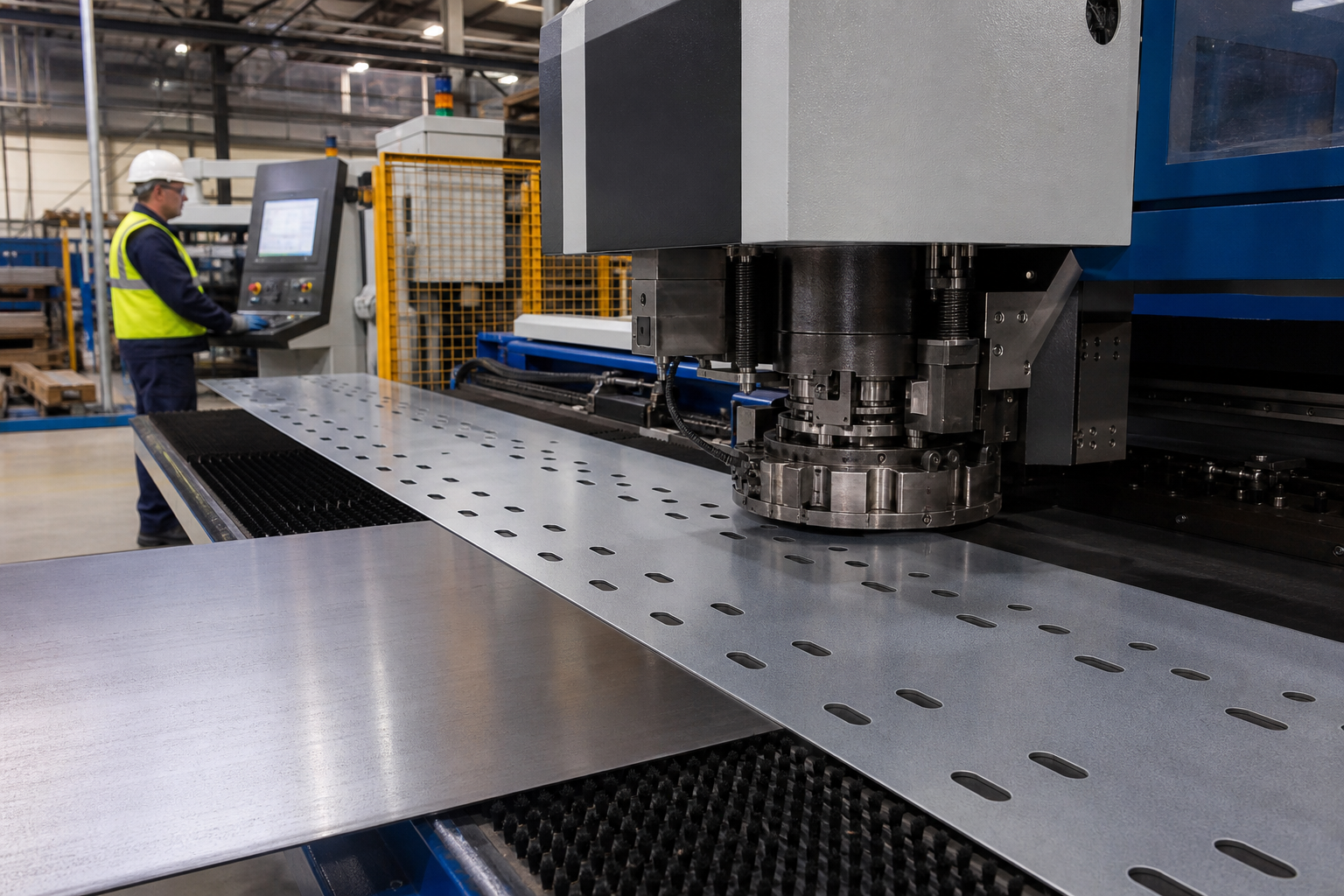
CNC punching. Before roll-forming, flat steel strip is fed through a CNC turret punch or servo punching line. The machine creates the repeating slots and holes required for beam connectors, bracing, anchors, and height adjustment. Buyers should check hole pitch, slot geometry, edge quality, burr control, and positional tolerances because errors introduced at this stage carry through every later forming and assembly step.
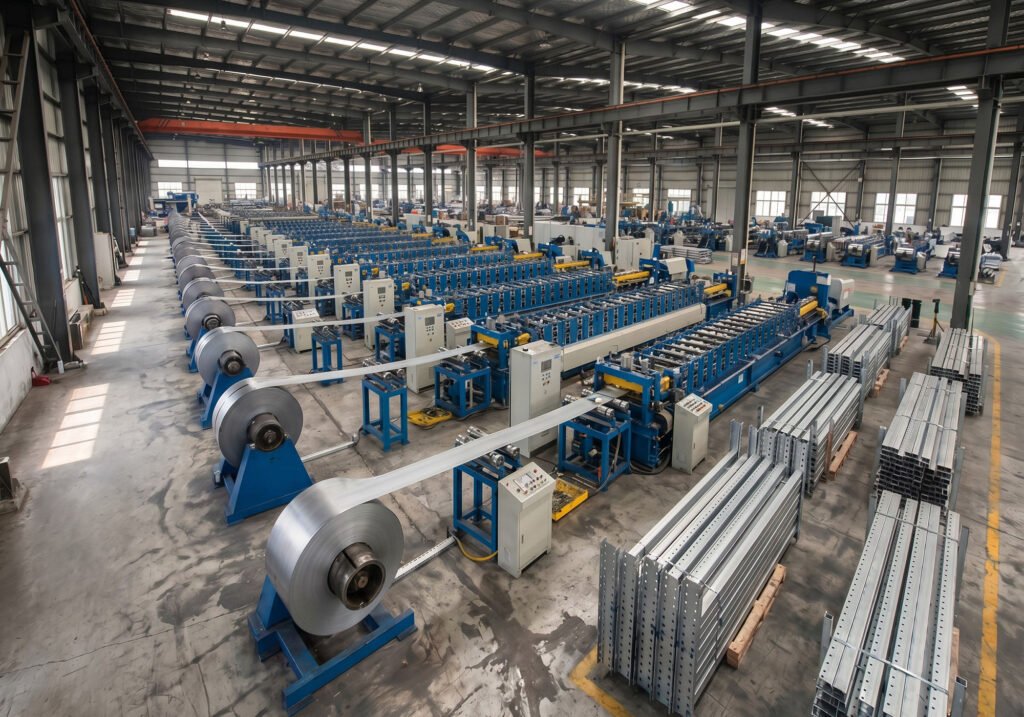
Roll-forming or structural fabrication. Depending on the racking type, steel is either roll-formed into upright and beam profiles using specialized machinery, or cut and welded from structural steel sections for heavier-duty applications. Roll-forming precision affects how accurately components fit together during assembly, while structural fabrication quality affects weld integrity and connection strength.
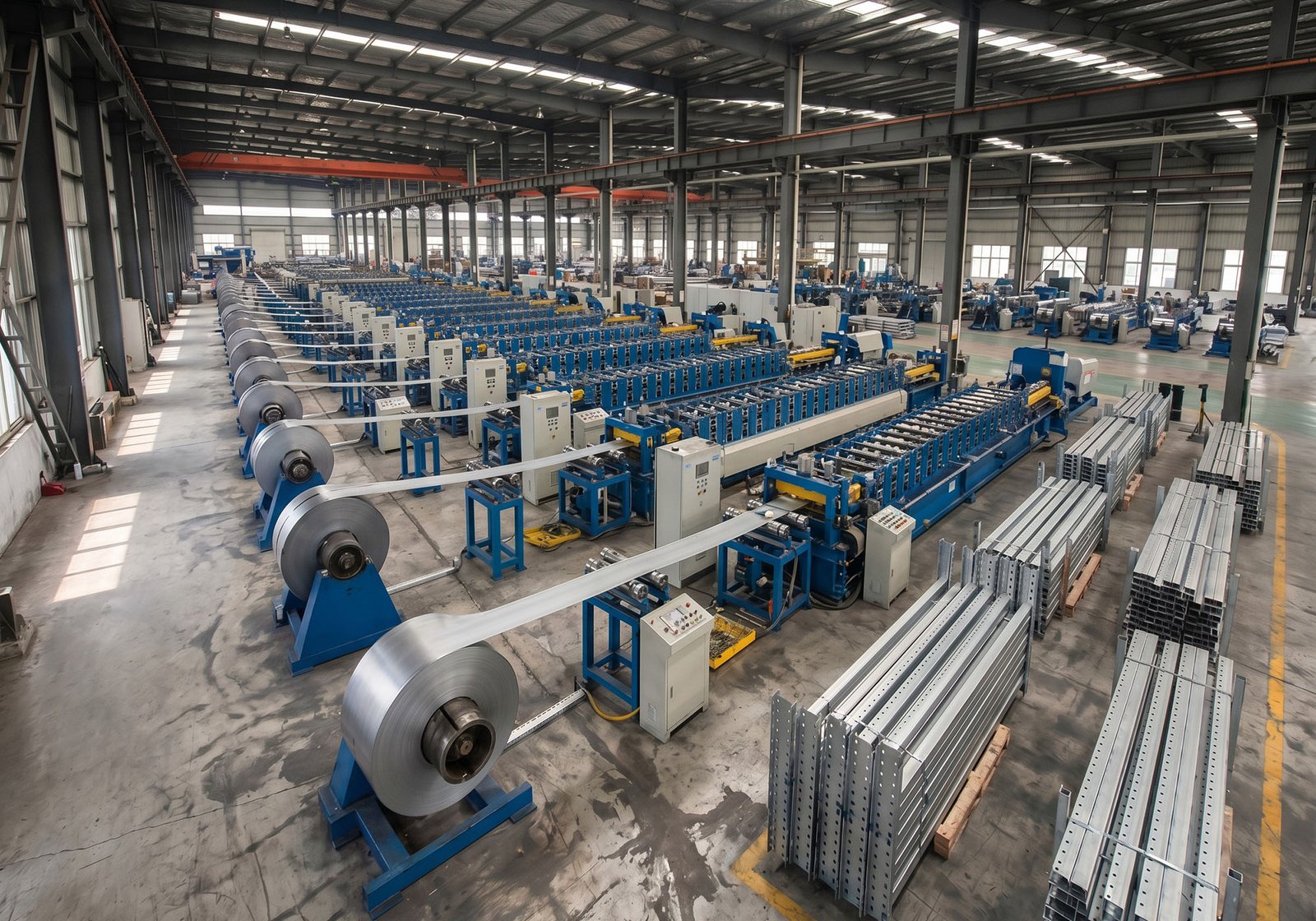
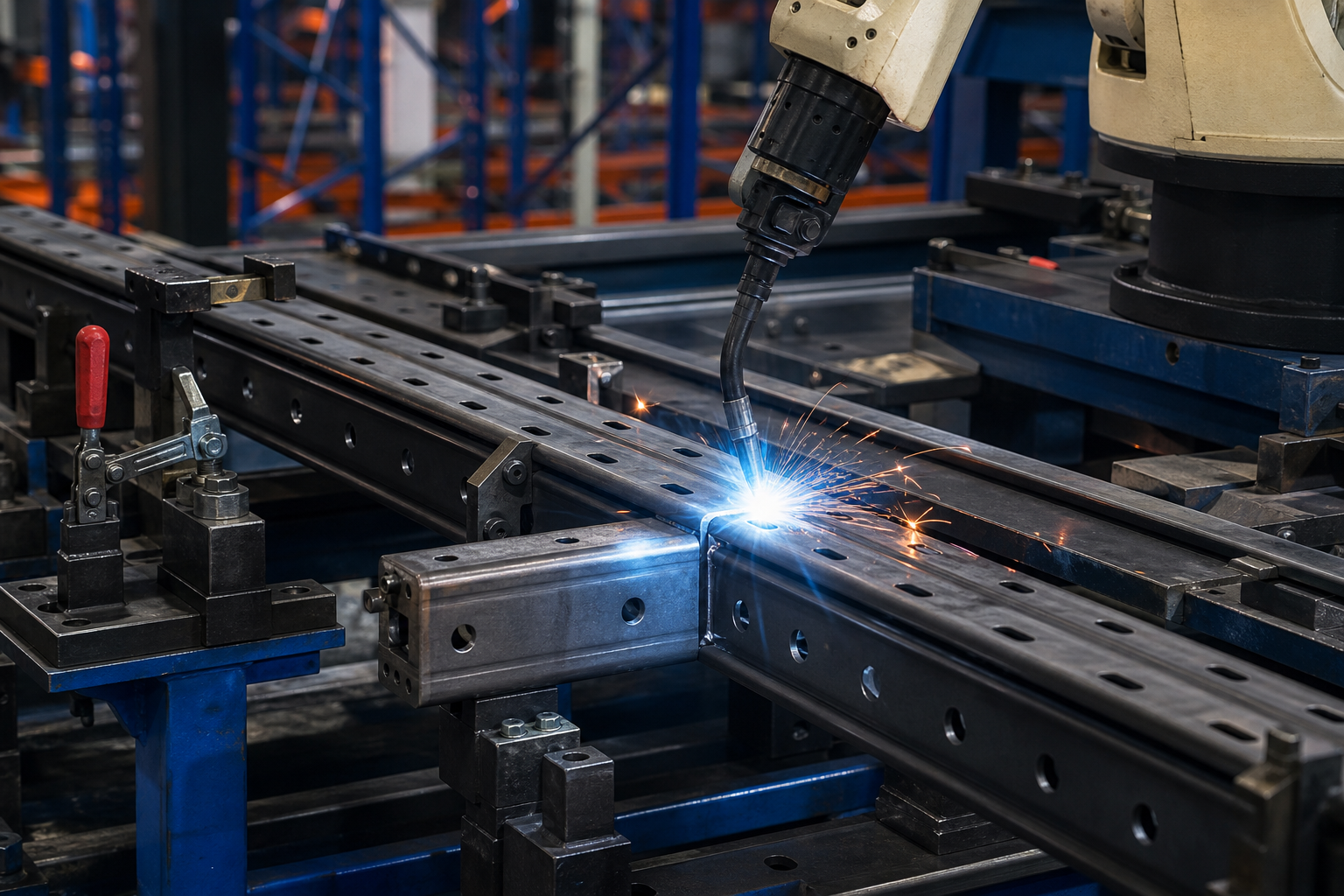
Welding and connection assembly. For components requiring welded joints, weld quality directly affects structural integrity, particularly for structural racking and connection points bearing concentrated loads. Buyers should ask whether welding is performed by certified welders and whether welds are visually inspected or tested as part of routine quality control.
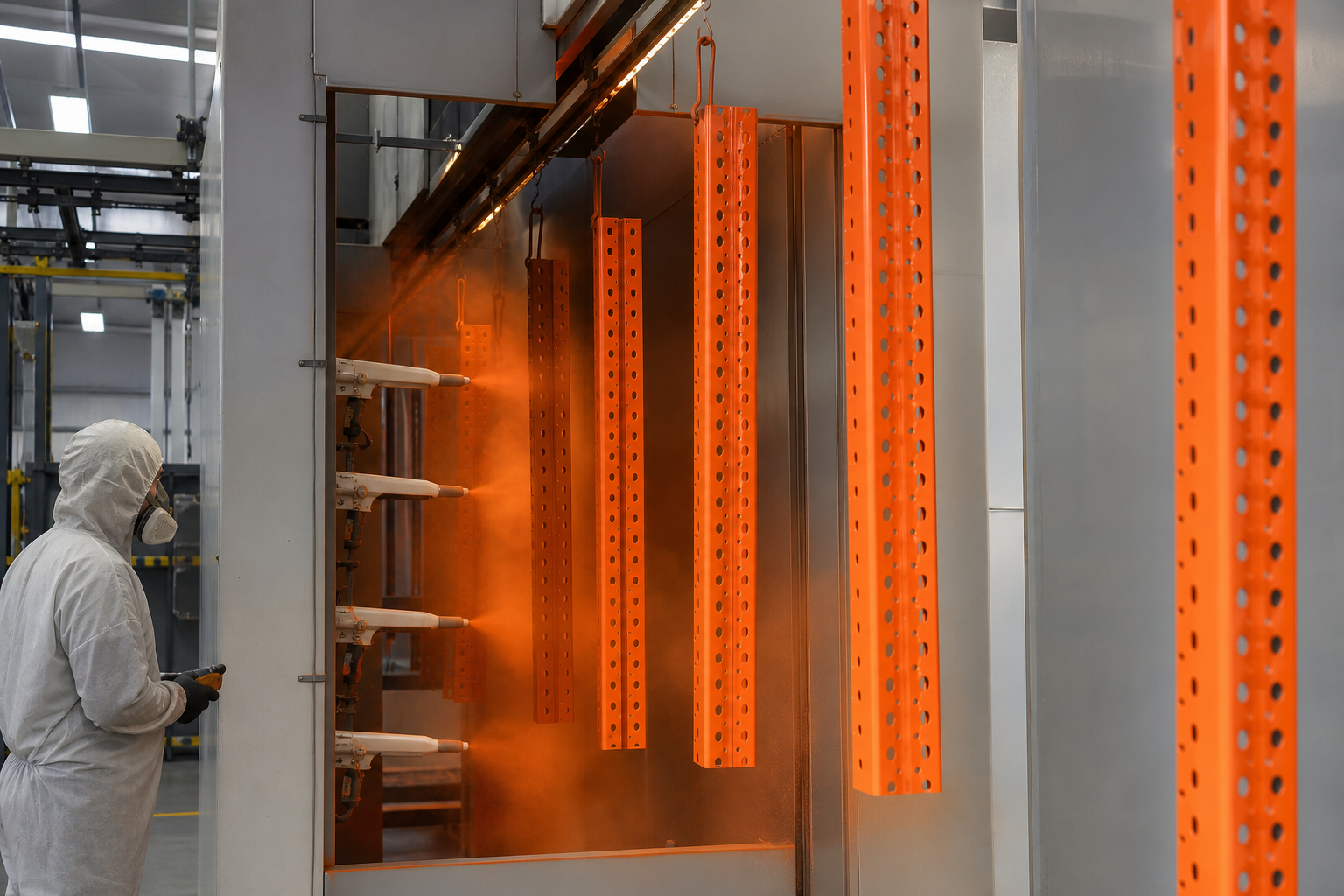
Surface treatment and coating. Racking is typically finished with powder coating, galvanizing, or another protective treatment to resist corrosion and wear. The choice and consistency of this treatment significantly affects service life, particularly in humid, outdoor, or cold storage environments. A closer comparison of coating approaches is covered in this overview of galvanized versus painted steel racking. For protective paint application and supervision on steel structures, refer to ISO 12944-7:2017.
Quality control and testing. Reputable manufacturers conduct dimensional checks, load testing on sample components, and visual inspection before products leave the factory. The rigor of this stage varies significantly between suppliers, and buyers should ask specifically what testing is performed, at what frequency, and whether results are documented and available on request. Some manufacturers test every production batch, while others rely on periodic sampling — understanding which approach a supplier uses helps set realistic expectations about consistency across a large order.
Packaging and logistics. Even well-manufactured racking can be damaged in transit if packaging and handling procedures are inadequate. Buyers shipping internationally should ask how components are protected during loading, transport, and unloading, since damage discovered after installation is far more costly to address than damage caught before shipment. This is especially relevant for taller or heavier components, such as those used in structural or high bay racking projects, where bent or scratched components can compromise both appearance and structural performance if not identified before installation.
Manufacturing Stage Quality Checklist
| Manufacturing Stage | What to Verify | Potential Red Flag |
|---|---|---|
| Raw material | Material certificates confirming steel grade | Vague or unavailable material documentation |
| Fabrication | Roll-forming precision or structural weld quality | Visible inconsistency in dimensions between samples |
| Welding | Certified welders, inspection procedures | No documented weld inspection process |
| Surface treatment | Coating type, thickness, consistency | Inconsistent coating coverage or thin application |
| Quality control | Load testing, dimensional checks, documentation | Testing claims without available records |
| Packaging | Protective packaging standards for transit | History of transit damage complaints |
Expected Benefits of Selecting a Well-Manufactured Racking Supplier
Warehouses that prioritize manufacturing quality when selecting a supplier typically see measurable advantages over the racking’s service life:
- Longer service life, since consistent material quality and surface treatment reduce the rate of corrosion, fatigue, and structural degradation over time
- Reduced safety incidents, as properly welded, dimensionally accurate racking is less prone to the kind of structural weaknesses that lead to collapse or component failure
- Lower long-term maintenance and replacement costs, since well-manufactured racking requires fewer repairs and component replacements over its operational lifespan
- More predictable project outcomes, since accurate fabrication reduces installation issues caused by misaligned components or inconsistent dimensions
- Stronger compliance positioning, since documented material and testing records support audit and inspection requirements more effectively than undocumented claims
Project Considerations When Evaluating a Manufacturer
Beyond understanding the manufacturing process itself, buyers should incorporate several practical verification steps into their supplier evaluation:
Certifications and standards compliance. Look for documented compliance with relevant standards such as ISO 9001 for quality management, along with regional structural standards like AS4084, EN 15512, or ANSI MH16.1, depending on the installation location. A supplier’s quality-management certification can be checked against the official requirements of ISO 9001:2015.
Factory audit or virtual inspection. Where an in-person visit is not feasible, many manufacturers can provide video walkthroughs or third-party audit reports covering production processes and quality control procedures.
Sample requests and load documentation. Requesting physical samples or detailed load test documentation before committing to a full order helps verify that marketing claims match actual production output.
Consistency across production runs. Ask whether quality control standards are applied consistently regardless of order size, since some suppliers apply stricter controls to large or high-visibility orders while cutting corners on smaller ones.
Post-installation inspection support. A manufacturer’s involvement should not end at delivery. Ongoing structural integrity depends on regular inspection after installation, which is covered in more detail in this guide to pallet racking inspection practices, and buyers should confirm what support, documentation, or replacement part access the manufacturer provides after the racking is in service.
Overall supplier evaluation criteria. Manufacturing process quality is one part of a broader supplier evaluation that should also include engineering support, communication reliability, and after-sales service, covered more broadly in this guide to selecting heavy-duty pallet racking manufacturers.
Safety implications of manufacturing shortcuts. Ultimately, manufacturing quality is a safety issue as much as a durability one, since structural failure risk connects directly to the broader safety practices covered in this overview of pallet racking safety.
Frequently Asked Questions
Can buyers tell manufacturing quality just by looking at finished racking? Some indicators, such as coating consistency and weld appearance, can be assessed visually, but many quality factors — steel grade, testing rigor, dimensional tolerance — are not visible without documentation or physical testing, which is why requesting certificates and test data matters.
Is ISO certification enough to guarantee manufacturing quality? ISO 9001 certification indicates a documented quality management system is in place, but it does not guarantee every product meets a specific performance standard. Buyers should still request product-specific load testing and material documentation alongside general certification.
Does a lower price always indicate lower manufacturing quality? Not necessarily, but significantly lower pricing compared to comparable suppliers often reflects cost-cutting somewhere in the process, whether in material grade, testing rigor, or labor practices, and warrants closer verification before proceeding.
How can international buyers verify a factory’s manufacturing process remotely? Video factory tours, third-party inspection services, and requested documentation such as material certificates and test reports are common methods international buyers use to assess manufacturing quality without an in-person visit.
What certifications should a racking manufacturer have? Relevant certifications typically include ISO 9001 for quality management and regional structural or safety standards such as CE, AS4084, or ANSI MH16.1, depending on where the racking will be installed and used.
Does surface coating really affect racking durability? Yes. Coating type and application consistency significantly affect corrosion resistance, particularly in humid, outdoor, or cold storage environments, and inconsistent coating is a common source of premature racking degradation.
Should buyers request physical samples before placing a large order? For large or high-value projects, requesting samples or a smaller pilot order can help verify manufacturing quality firsthand before committing to full-scale production, particularly when working with a new supplier.
How does manufacturing quality connect to long-term racking safety? Manufacturing defects such as inconsistent welds, incorrect steel grade, or inadequate coating can compromise structural integrity over time, making manufacturing quality a foundational factor in a racking system’s ongoing safety performance, not just its initial appearance.
Key Takeaways
- Racking systems that appear similar on paper can perform very differently based on manufacturing process quality, making process knowledge a practical tool for supplier evaluation
- Key stages to evaluate include raw material sourcing, fabrication precision, welding quality, surface treatment, and quality control testing
- Documentation — material certificates, test reports, and certifications — is the most reliable way to verify manufacturing claims that are not visible on the finished product
- Manufacturing quality directly affects long-term safety, service life, and total cost of ownership, not just initial appearance or price
- Supplier evaluation should combine manufacturing process verification with broader factors such as certifications, factory audits, and after-sales support
Conclusion
Understanding how racking is manufactured gives buyers a concrete framework for evaluating suppliers beyond price and delivery promises, reducing the risk of selecting a partner whose products underperform once under real warehouse load conditions. Companies such as Lracking are commonly involved in projects where operators are conducting exactly this kind of supplier due diligence, particularly for large-scale or safety-critical storage installations where manufacturing consistency has direct operational consequences. For buyers evaluating racking suppliers, requesting documented evidence of each manufacturing stage remains the most reliable way to separate suppliers with genuine quality control from those relying on marketing claims alone.