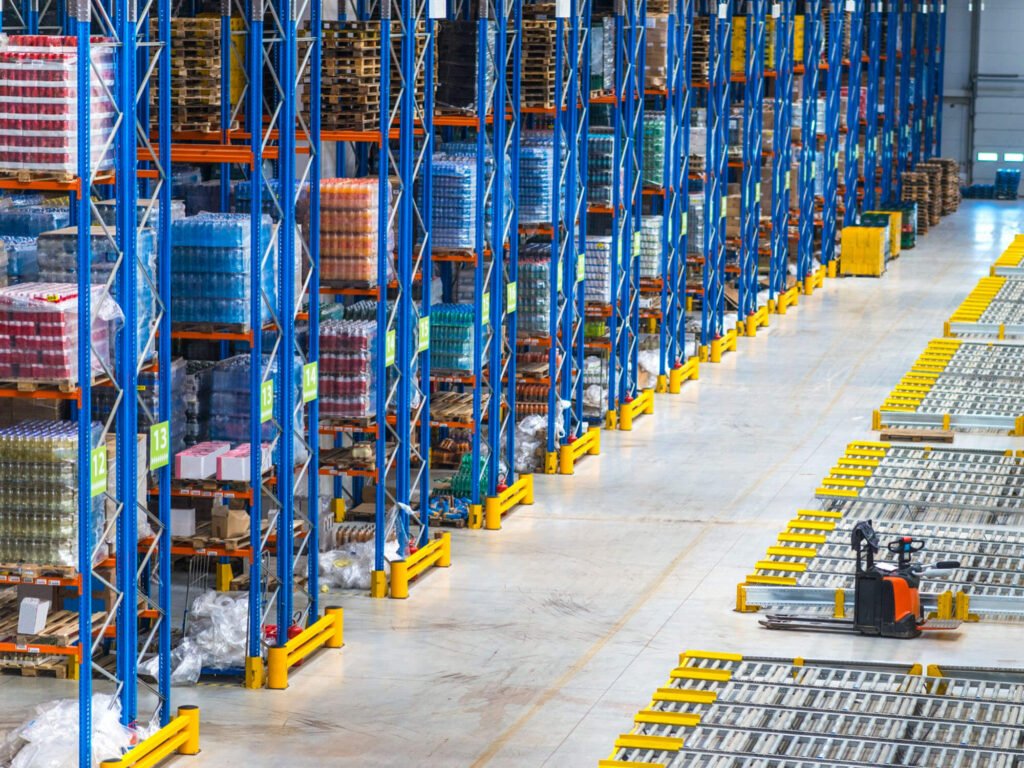
What is FMCG? Understanding the Industry
Fast moving consumer goods (FMCG) are daily products that are sold cheaply in short periods of time in markets. These products are based on high volume, low-margin business models which are motivated by mass consumption trends at the global level today. Most of the FMCG products have a short shelf life but have high inventory turnover in the retail channel. The level of consumer demand is high and stable based on the needs of everyday life and the buying habits.
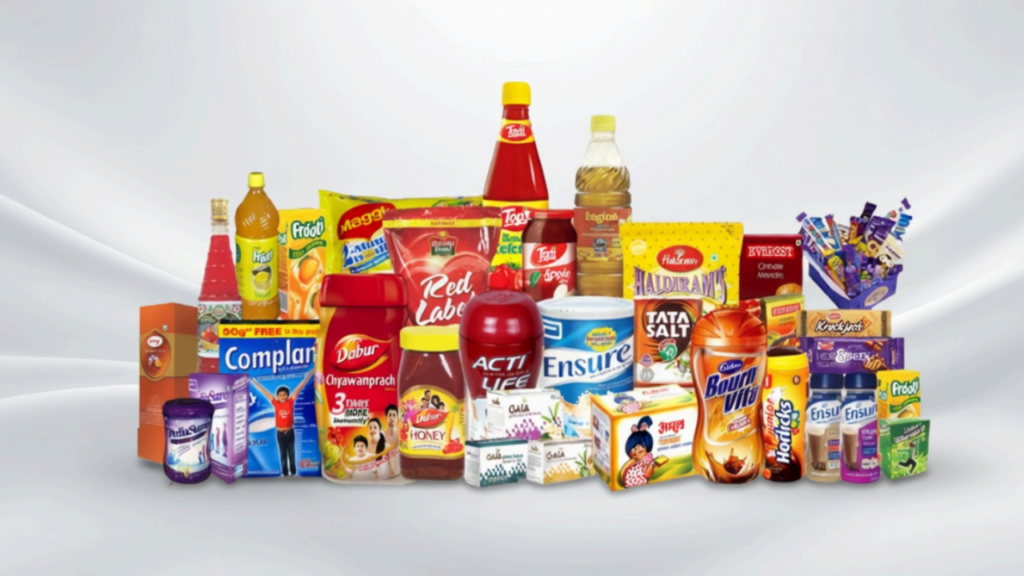
Key Characteristics of FMCG Products
- Frequent purchasing
- Low cost per item
- High consumption rate
- Short lifecycle
- High inventory turnover
Common FMCG Categories and Examples
| Category | Examples | Special Storage Needs | Turnover Rate |
| Food & Beverages | Dairy, snacks, frozen food | Temperature control | Very High |
| Personal Care | Shampoo, soap, cosmetics | Ambient storage | High |
| Cleaning Products | Detergent, cleaners | Hazard compliance | Medium-High |
| OTC Healthcare | Aspirin, vitamins | Expiry tracking | Medium-High |
What is FMCG Warehousing?
FMCG warehousing is a high-volume storage warehouse that deals with fast-moving consumer goods. These warehouses are concerned with high movement and short dwell time distribution. Goods in supply chains flow between manufacturer, distribution center and the retailer. Warehouses serve as central points that guarantee a smooth flow and availability of inventory.
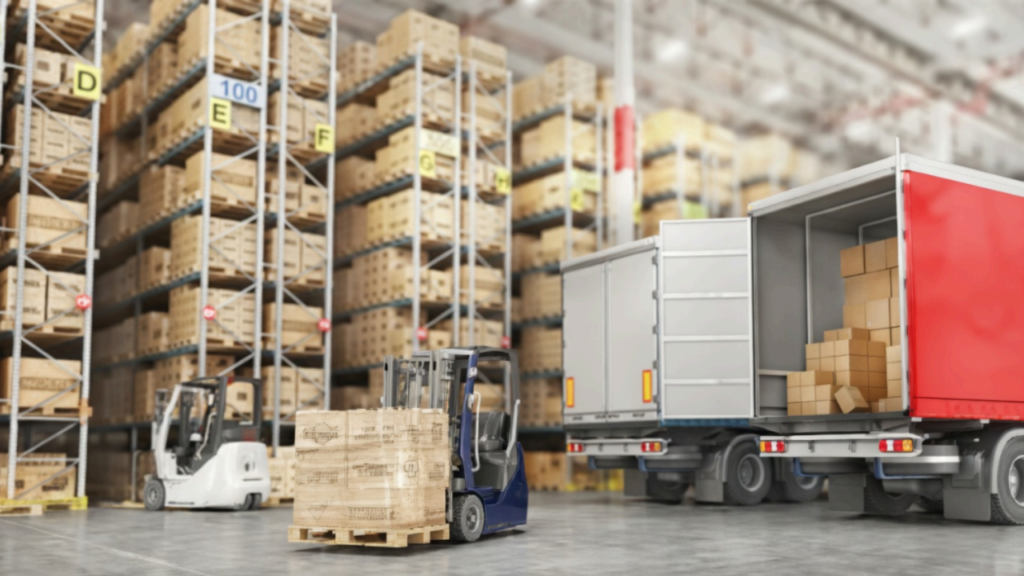
FMCG Warehousing vs Traditional Warehousing – Key Differences
Inventory Turnover
The warehousing of FMCGs has a very high inventory turnover rate as products are fast moving. The traditional warehousing has a low turnover due to longer storage of goods. FMCG needs to be replenished constantly and traditional systems are not so focused on speed operations but on storage efficiency.
Expiry Management
Fast moving consumer goods warehousing is highly concerned with the expiry dates because of the perishable goods and fast moving goods. Traditional warehousing is primarily concerned with non perishable products that do not need much control. First expiry first out systems are implemented in FMCG and traditional storage is more adaptable in rotation.
Demand Volatility
The volatility in demand of consumer goods warehousing is high due to seasonal and consumer behavior changes. Conventional warehousing has a comparatively steady demand trends over extended periods. FMCG needs quicker forecasting and traditional warehousing is based on predictable planning cycles overall efficiency is enhanced.
SKU Complexity
Retail products warehousing is involved in large SKU diversity such as day-to-day products and product lines that turn over quickly. Traditional warehousing has fewer SKUs that are usually concentrated on bulk or industrial good storage. The complexity of FMCG puts an extra strain on operations, whereas the conventional systems are relatively easier to operate.
Fulfillment Speed
Bulk consumer goods warehousing emphasizes speedy delivery to satisfy prompt consumer needs in markets. Conventional warehousing is not so much concerned with speed but rather with scheduled bulk shipments. FMCG guarantees fast order picking compared to the traditional systems which allow longer processing time to balance difference in efficiency.
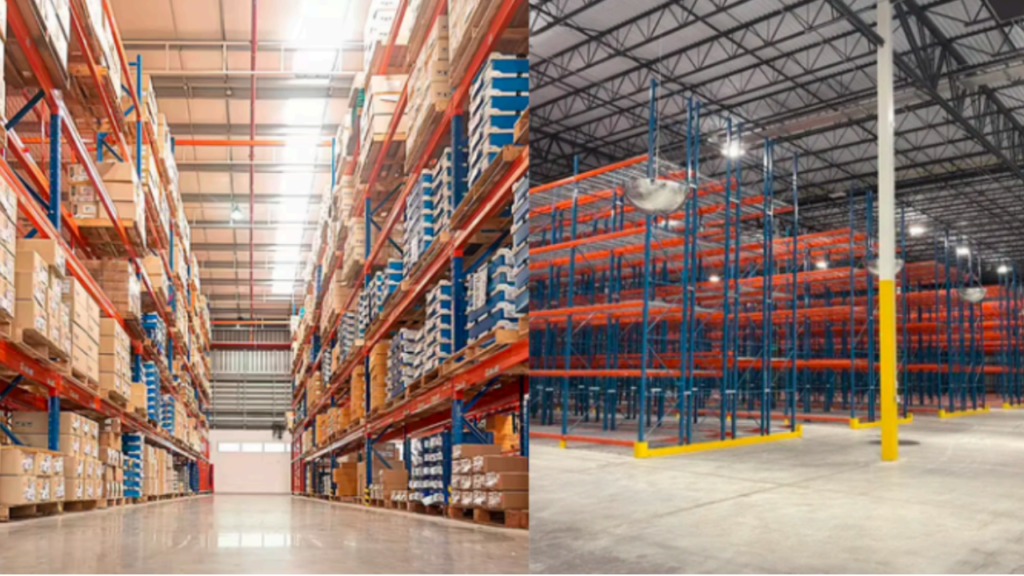
Why Consumer Goods Warehousing is Critical in 2026
Growth of E-Commerce
The growth of e-commerce transforms the warehousing needs of FMCGs in 2026. Same-day delivery expectations compel you to stock nearer to consumers. D2C brands and online grocery development add to the high reliance on the warehouse.
Omnichannel Fulfillment
Omnichannel fulfillment links online and offline FMCG activities effectively. Click-and-collect model enhances convenience and lessens last-mile strain to you. Integration of market places guarantees the real-time visibility of inventory and easier flow of orders.
Consumer Expectations
The retail channel of FMCG is fast changing in terms of consumer expectations. You need to make sure that you deliver faster and have always on stock. The freshness standards are a contributor to heightened warehousing and distribution accountability in networks today.
Global Supply Chain Changes
FMCG warehousing strategies are being redefined by global supply chain changes. The disruption of supply chains makes it necessary to develop flexible regional networks. The nearshoring tendencies and local warehouses enhance resilience and delivery speed dramatically.
Unique Challenges in Warehouse FMCG
High Inventory Turnover
FMCG goods are fast moving and therefore need the continuous replenishment. Daily operations of warehouses have to ensure real time stock visibility and accuracy to prevent stockouts and overstock.
Short Shelf Life & Expiry Management
FMCG goods tend to have low shelf life that has to be monitored. FEFO techniques also make sure that the first goods to expire are shipped first, minimizing wastage and preserving the quality of products.
Demand Volatility
The seasonal variations of demand of FMCG are influenced by promotions and consumer behavior. Warehouses have to change inventory planning within a short period of time particularly during festivals and marketing campaigns at a short notice.
SKU Complexity
FMCG warehouses deal with thousands of SKUs daily operations effectively handled. The packaging of various sizes necessitates the use of adaptable storage and picking machines in order to achieve proper order fulfillment process.
Tight Delivery Deadlines
The logistics of FMCG are in demand of same day and next day delivery which is urgent. Delays may have a significant effect on customer satisfaction warehouses optimise routes and dispatch processes in day-to-day operations.
Multi-Temperature Storage Requirements
The products of FMCGs demand ambient chilled and frozen storage conditions at the same time. Various zones uphold product safety and compliance standards temperature control will ensure that the quality of products is maintained at all times.
RequirementsTraceability
Traceability plays an important role in the safety compliance systems of FMCGs in the world. Lot and batch tracking make product recalls effective in enhancing transparency and supply chain responsibility throughout operations.
FMCG Warehouse Layout Design
Key Warehouse Zones
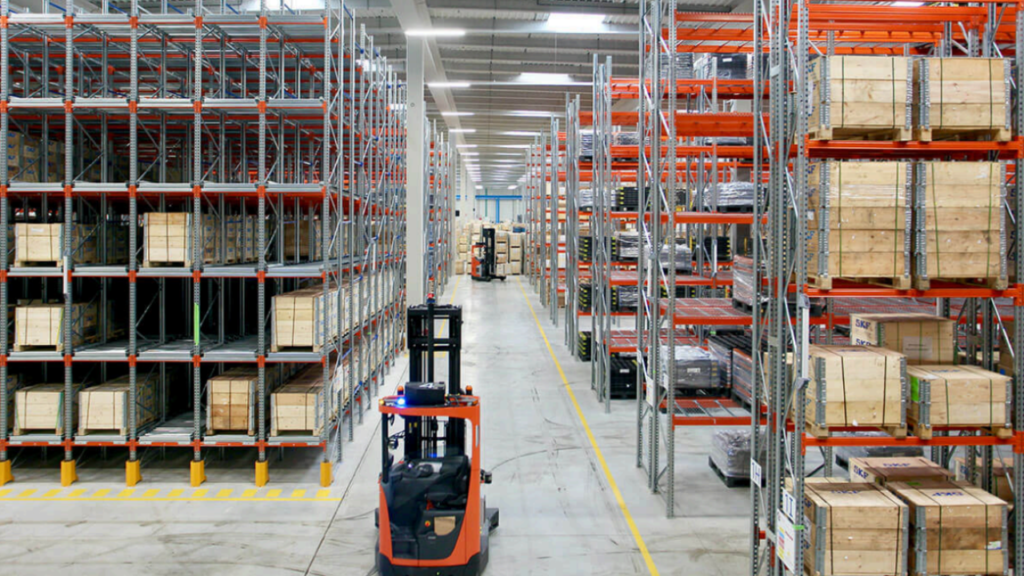
The main areas in FMCG warehouse are receiving, inspection, storage, picking, packing and shipping. Receiving handles goods that are received and quality and compliance are checked by inspection. Storage contains inventory, picking facilitates orders, packing is efficient in preparing dispatch. Shipping ensures timely delivery and smooth outbound logistics operations.
Multi-Temperature Zones
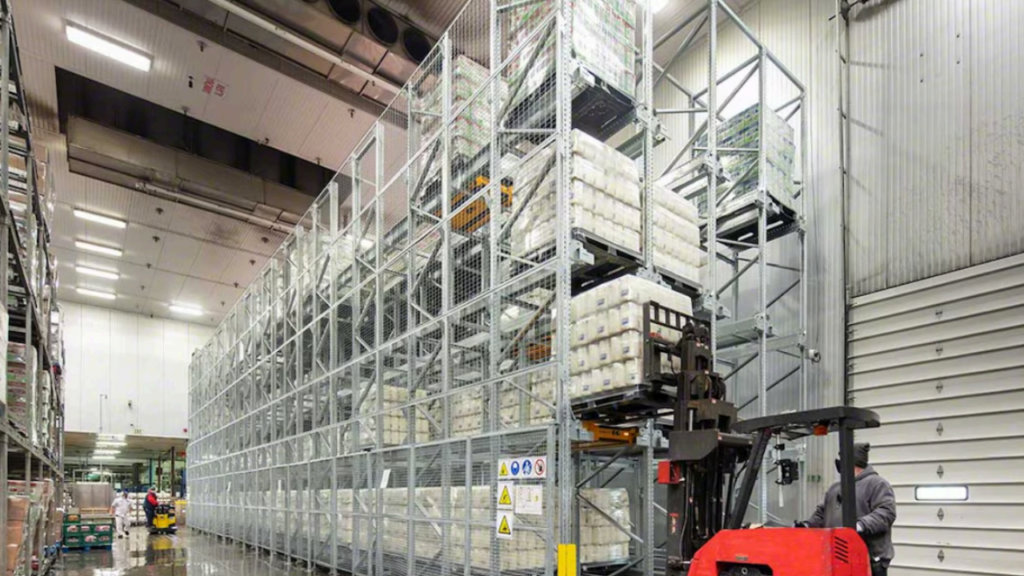
Multi temperature environments ensure quality in products in FMCG categories. Dry goods are stored in controlled room temperature in ambient zones. Fridge areas are used to store perishable foods such as dairy and fresh foods. Low storage of ice cream and meat is done in frozen zones. Efficient operations.
Fast-Moving Product Placement
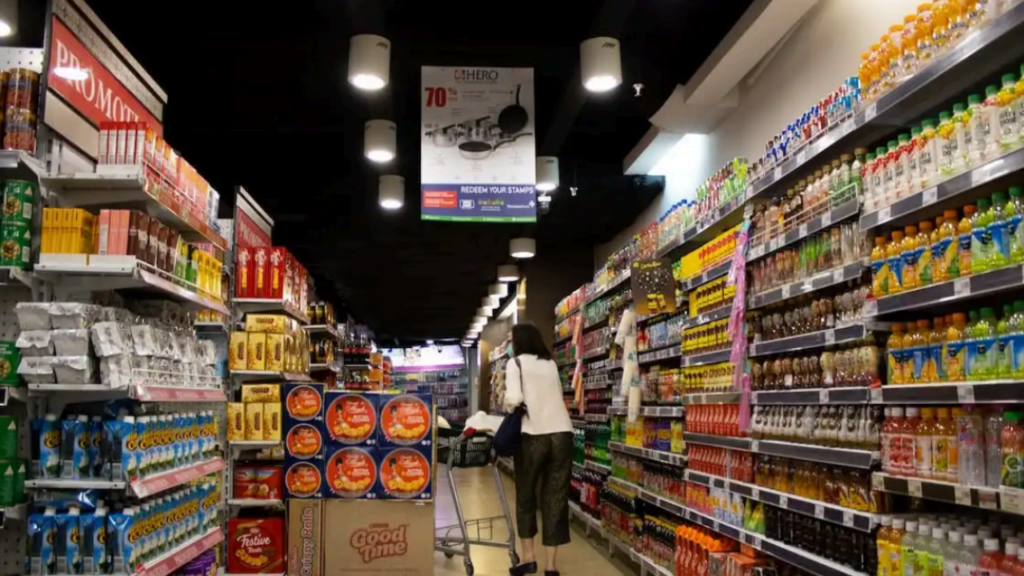
FMCG products are fast moving products which should be placed strategically to achieve maximum efficiency in the warehouse. Golden zone strategy puts high demand products in places which are easily accessed. ABC slotting categorizes products according to turnover rates and priority. You enhance picking speed and cut down handling time.
Cross-Docking Zones For broader industry guidance, consult MHI’s material handling resources.
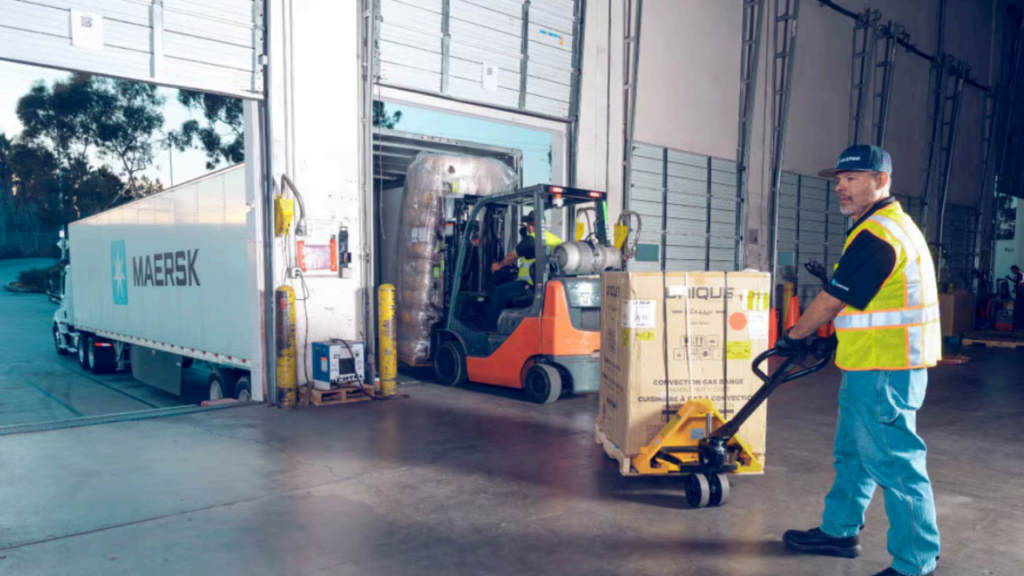
The cross docking areas facilitate quick transit of FMCG products. Truly fast moving products do not go through the storage and go directly to shipping. Goods to be promoted are given priority to the immediate dispatch operations. You save time in warehouses and enhance responsiveness of delivery. Productivity enhances the level of customer satisfaction.
Core Warehouse FMCG Operations
- Receiving: Goods arrive at warehouse from multiple suppliers daily. Checking of inspection quantity, condition, and documentation accuracy. Checks on quality and expiry dates and compliance standards.
- Put-away Process: Slotting strategies assign products based on demand frequency. Location allocation guarantees an orderly storage and reduced time of retrieval. Temperature placement ensures the quality of products in storage areas.
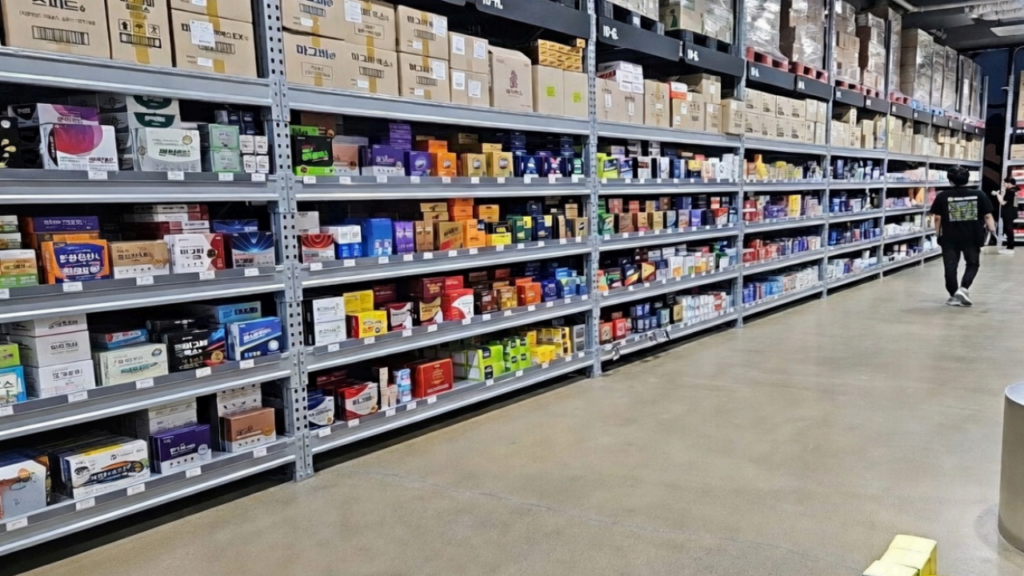
- Storage: Pallet storage supports bulk handling and easy movement. Case storage: Case storage is organized to store medium quantities in a manner that is easily accessed. Shelf storage handles small products with high accuracy in classification. effectively.
- Picking: Order picking retrieves items for individual orders. Wave, batch and zone picking enhance efficiency in the warehouse. Both techniques decrease the time spent on traveling and enhance precision.
- Packing: Packaging requirements ensure product safety during transit handling. Labeling offers identification, tracking and batch traceability. Compliance labeling is in line with regulatory and FMCG requirements. minimizing errors in shipment.
- Shipping: Dispatch planning schedules shipments based on order priority. The choice of carriers is based on price, speed and reliability. Optimization of routes is a way of saving on delivery time and transportation costs.
- Cross Docking: Cross docking enables direct transfer from receiving to shipping. It reduces storage time and enhances speed of supply chain. There are no delays in storage of products.
Warehouse FMCG Storage Systems
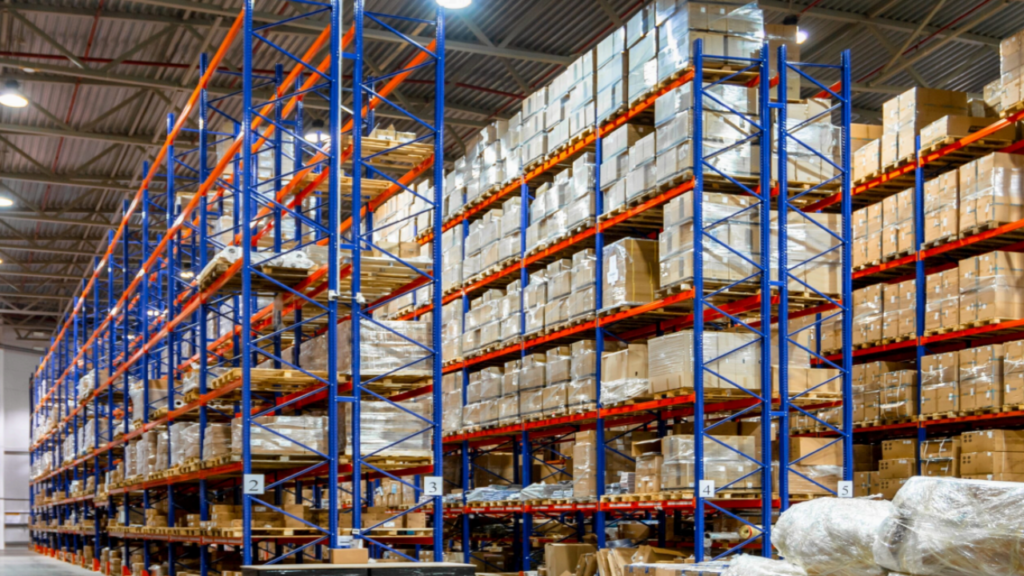
Selective Pallet Racking
Selective pallet racking is FMCG warehousing storage system that provides direct aisle access. Each pallet is readily accessible enhancing picking speed greatly. It is most common solution in fast moving consumer goods warehouses. It enhances precision and minimizes handling delays in operations.
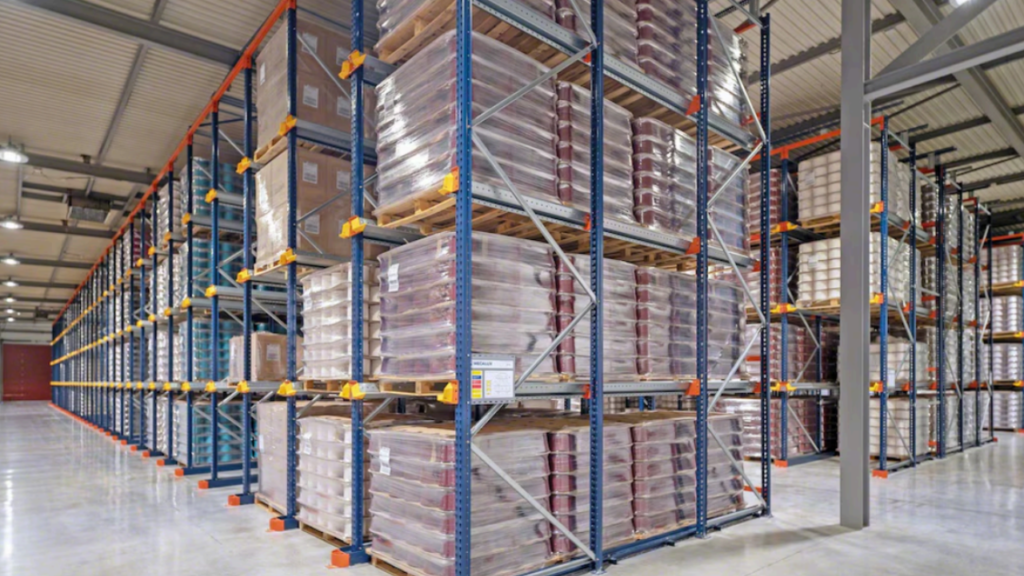
Drive-In Racking
Drive-in racking is bulk storage of FMCG on high density racking. It permits forklifts to be in lanes in order to store and retrieve. Depending on the requirements of the products, you can either use FIFO or LIFO. It maximizes the use of warehouse space on FMCG goods.
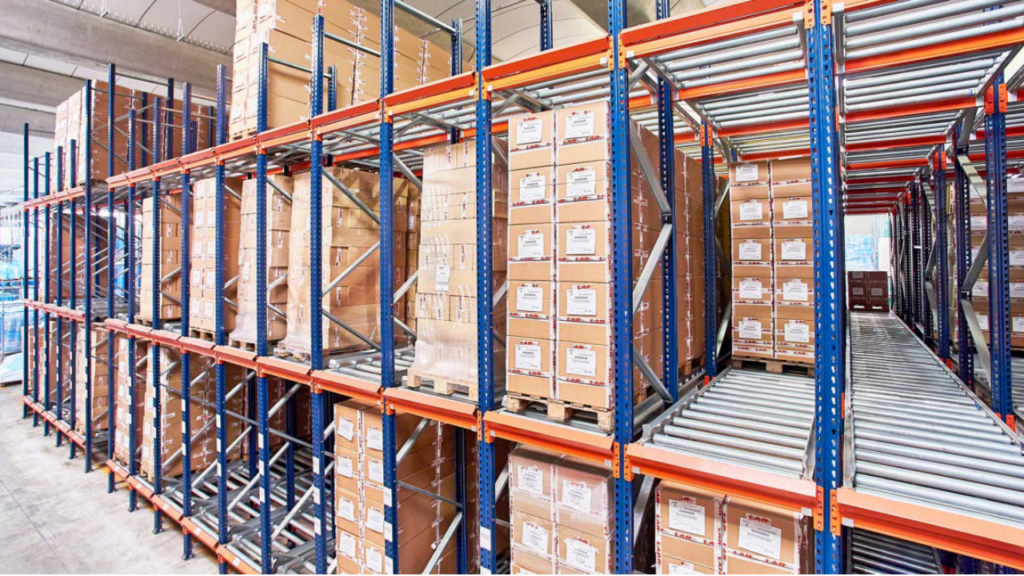
Pallet Flow Racking
Pallet flow racking is gravity-fed storage system of FMCG. It involves the movement of pallets using rollers along lanes in an automatic manner. You take advantage of FIFO rotation when there is a high turnover of products. It is best suited to FMCG products that need to be shipped very quickly and the stock has to be turned over regularly.
Push-Back Racking
Push-back racking is the medium-turnover FMCG warehousing storage system with nested carts. On inclined rails, you are able to stack a number of pallets deep without any risk. It maximizes storage capacity and still ensures rapid access to products. Appropriate in FMCG products that have medium inventory turnover rates efficient.
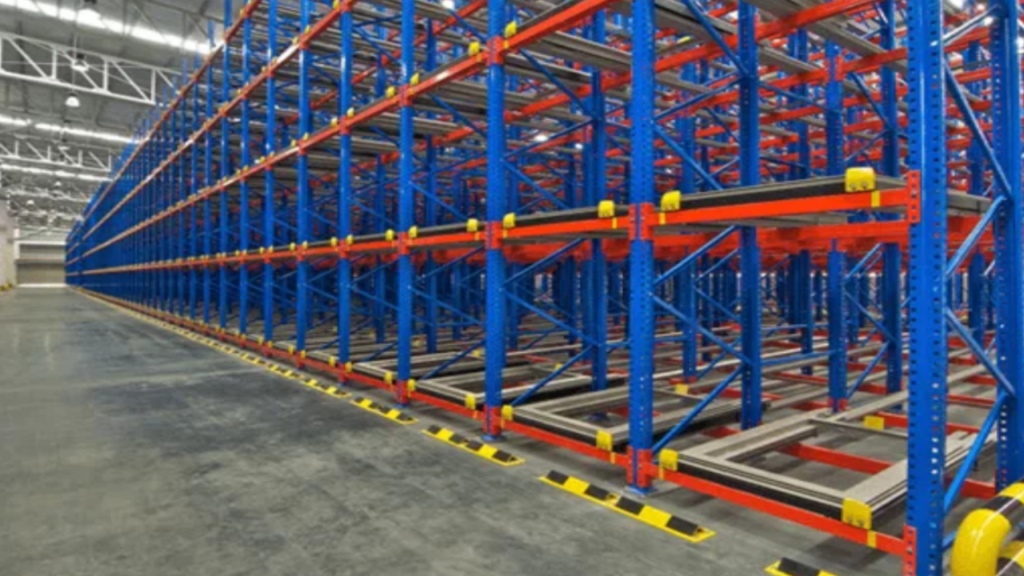
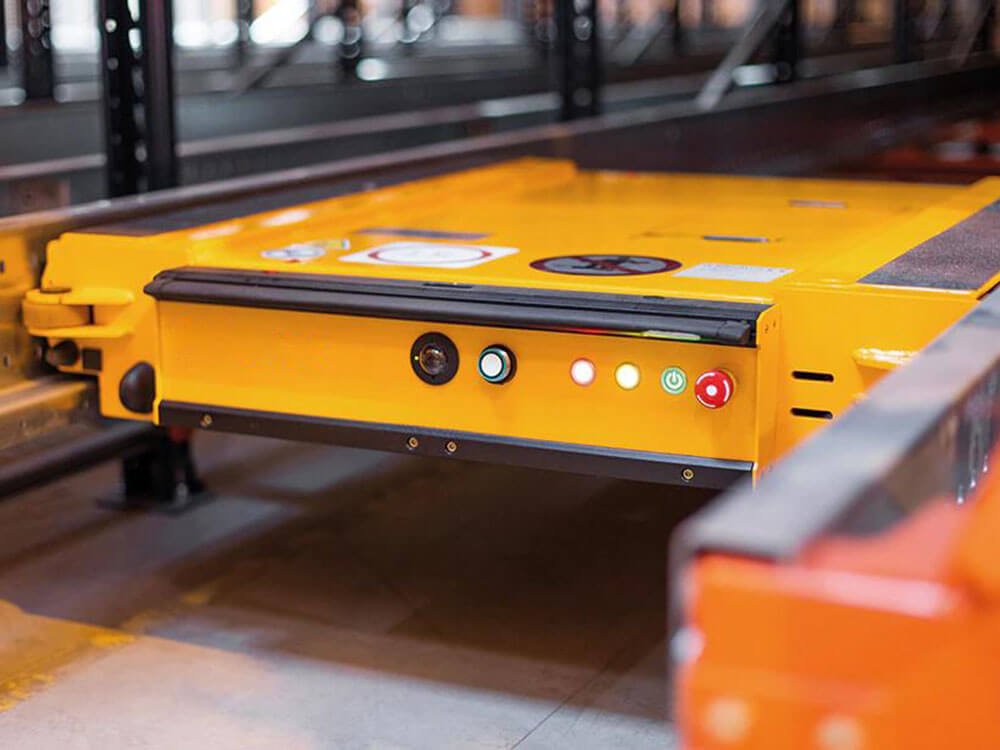
Pallet Shuttle Systems
Pallet shuttle systems are fully automated FMCG high-density storage systems. They use semi-automated shuttles to move pallets inside racks. You decrease forklift entry enhancing safety and working speed. It enhances space in storage and suits well in quick FMCG operations settings effectively.
Automated Storage and Retrieval Systems (AS/RS)
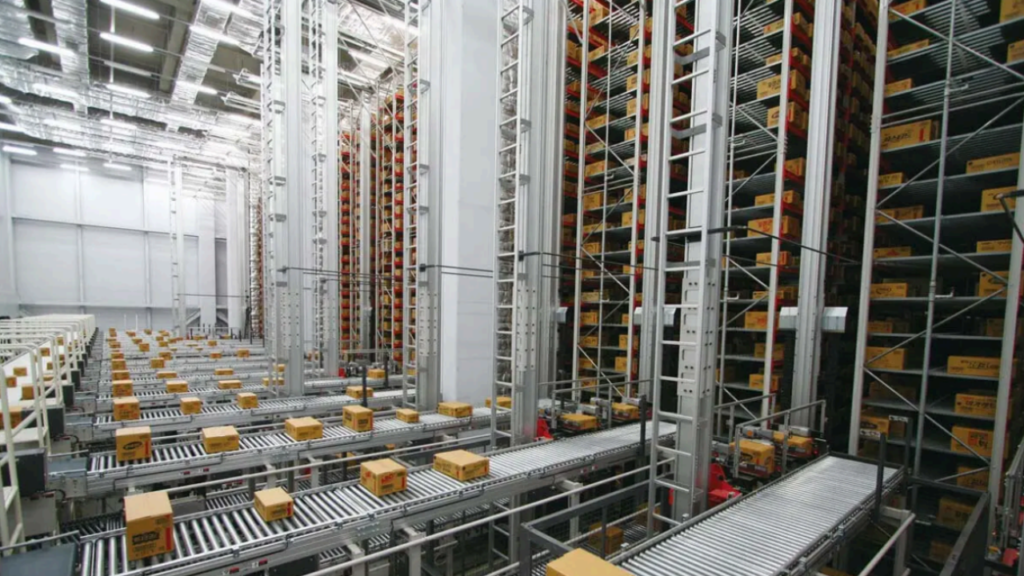
Fully automated warehouses of FMCGs are made possible by automated storage and retrieval systems. They have robotics and software to control inventory accurately. You achieve high efficiency, accuracy and less labour dependency. Large FMCG distribution centers that need automation scalability enhanced are best suited to it.
FMCG Storage Systems Comparison
| Storage System | Best For | Density | Cost | Automation Level |
| Selective Racking | Mixed SKUs | Medium | Low | Low |
| Drive-In Racking | Bulk storage | High | Medium | Low |
| Pallet Flow | High turnover | High | Medium | Medium |
| Push-Back | Medium turnover | Medium | Medium | Medium |
| Pallet Shuttle | High volume | Very High | High | High |
| AS/RS | Large operations | Very High | Very High | Fully Automated |
FMCG Automation in Warehousing
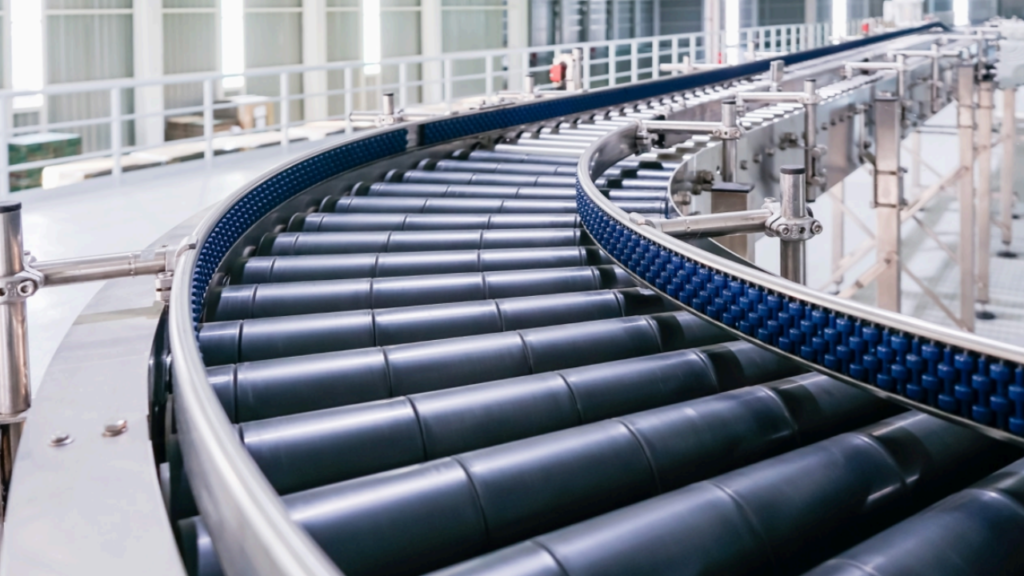
Conveyor Systems
The automated movement of goods through the FMCG warehouses is made easy by conveyor systems. You have the advantages of lower labor expenses and increased velocity, enhanced productivity, and effective and continuous material flow operations management.
Robotics
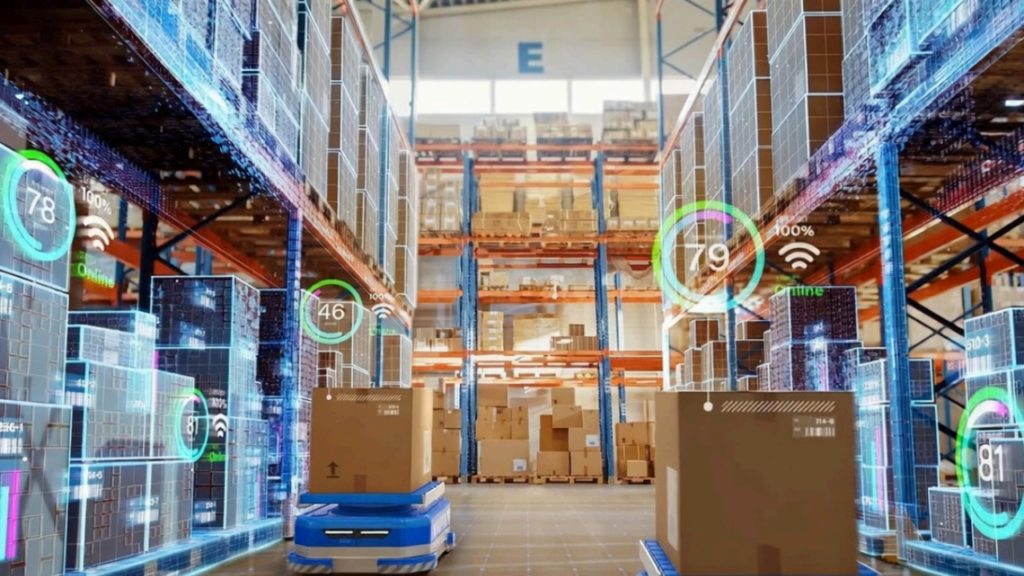
FMCG warehousing Robotics enhances the picking accuracy of intelligent mobile robots. You have the benefit of quicker order fulfillment and less error and warehouse operations are more reliable and can be expanded with increasing demand.
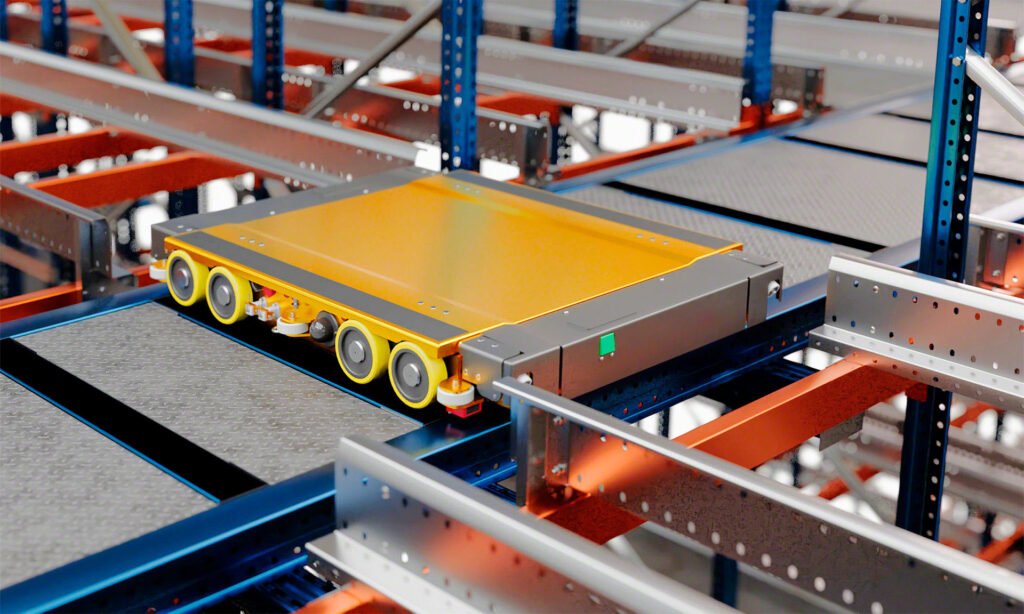
Automated Pallet Systems
Automated pallet systems are automated systems of storage and retrieval, which are operated with the help of shuttle systems and automated cranes. These systems assist in ensuring maximum use of space, less handling, and smooth operations of pallet movements.
Barcode and RFID Systems
Barcode and RFID systems enhance accuracy of inventory tracking in FMCG warehouses by capturing real-time data. You have improved visibility, less inventory mistakes and quicker audits to help you make effective decisions about your warehouse.
Pick-to-Light Systems
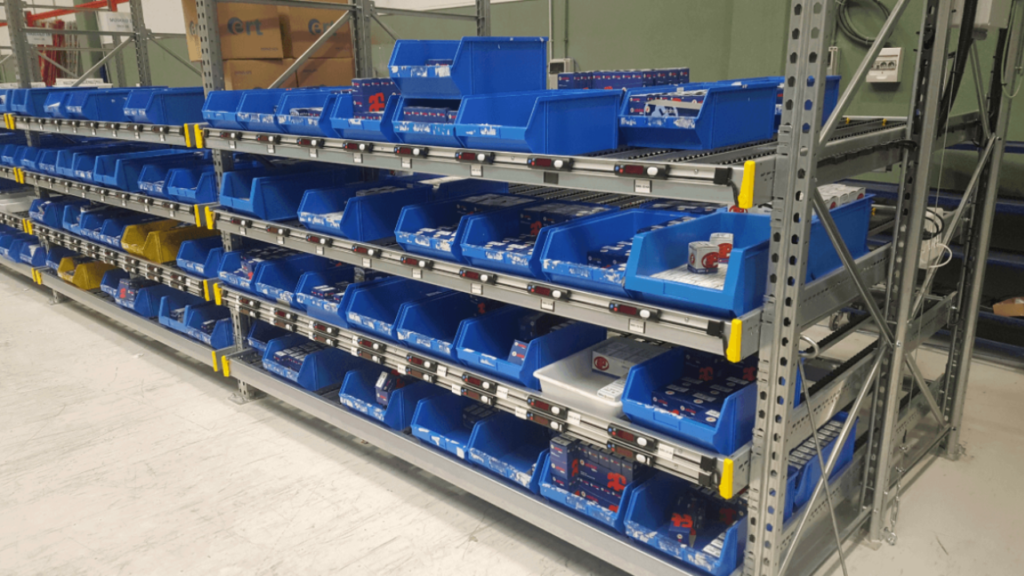
Pick-to-light systems improve speed in picking orders by providing visual cues to workers in FMCG warehouses. These systems minimize errors, enabling you to accomplish quicker fulfilment and enhanced operational efficiency.
Technology in Warehousing of FMCG
Warehouse Management System (WMS)
Warehouse Management System enhances the operations of FMCGs by ensuring proper inventory monitoring and visibility and efficiency of control. Your management of orders is simplified and you have real-time visibility of all the activities of the warehouse.

Cloud-Based WMS
Cloud-Based WMS enables access to data in the warehouse remotely at any time enhancing flexibility of FMCG teams to a great extent. Scalability means that systems expand without a hustle and stays performance-wise and lowers operational costs to you with ease.

Barcode Scanning Systems
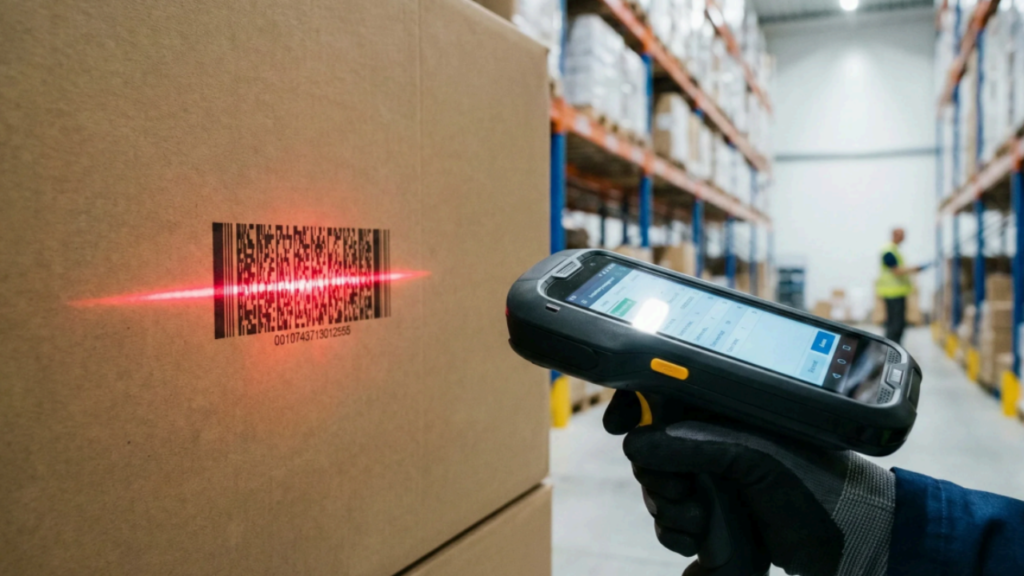
Barcode scanning systems simplify the warehousing of FMCG as they allow products to be scanned rapidly with high accuracy and through mobile devices. Live updates minimize mistakes and assist you to handle inventory more effectively within daily operations workflow.
ERP Integration
ERP integration links the FMCG warehouse systems and finance and supply chain operations in real-time. Business integration enhances financial visibility and guarantees improved decision making to your organization in its overall growth.

AI & Demand Forecasting
FMCG warehousing can effectively make accurate predictions of the needs of a product through AI and demand forecasting. Demand planning is smarter because it will help you to minimize wastes and enhance the overall performance of the supply chain.

How to Set Up an FMCG Warehouse – Step-by-Step Guide
Step 1: Determine Warehouse Requirements
Begin by determining product volume, storage requirements and handling requirements. You have to evaluate demand projections keenly. Establish capacity, compliance, and budget constraints to ensure effective planning and implementation of FMCG warehouse.
Step 2: Choose Location
Choose a site close to suppliers, highways, and distribution markets. You ought to consider the cost of transportation, accessibility, and risk factors. Make a priority on the fields that facilitate quick FMCG flow and effective supply chain functioning smooth.
Step 3: Design Layout
Design a plan that divides receiving, storage, picking and dispatch areas. Streamline the processes, minimize congestion, and enhance safety standards in operations. Make the most of the available space to enable quicker handling of the FMCGs.
Step 4: Choose Storage Systems
Select pallet racking, shelving and automated systems depending on the needs of the products. Make sure that it is durable, scalable and easily maintained to perform in the long-term in the warehouse. Correctly match inventory turnover speed with match storage systems.
Step 5: Implement WMS
Install a warehouse management system to monitor the inventory and operations in an efficient and accurate manner. Combine WMS and procurement and distribution channels visibility enhanced. Periodically refresh data to ensure efficiency of the stock control process.
Step 6: Train Staff
Properly train the staff on how to operate in the warehouse, safety measures, and how to handle equipment. Make sure that employees are well informed about inventory systems and reporting. Regular drills to enhance the level of preparedness.
Step 7: Launch Operations
Gradually start operations and keep a close eye on the workflow efficiency and system performance metrics. Early spotting of bottlenecks and redesigning processes to flow FMCGs. Make certain that there are systems of continuous improvement and performance monitoring in place.
Consumer Products Warehousing Mistakes to Avoid
- Overstocking: Overstocking leads to increased storage costs and product wastage. It also minimizes the efficiency of the warehouse and decreases the inventory turnover. Proper planning will avoid the unnecessary accumulation of stock.
- Poor Demand Forecasting: Poor demand forecasting causes inaccurate inventory planning in FMCG warehouses. This translates to stockouts or oversupply of stock to sales. Fewer mistakes in supply improve due to better forecasting.
- Manual Inventory Tracking: Manual inventory tracking increases human errors and delays warehouse operations. It lowers the accuracy and real-time stock visibility becomes hard to attain. This can be addressed by automation.
- Poor Layout Design: Poor warehouse layout design slows down FMCG storage and retrieval processes. Poor layouts add to the travel time and decrease the productivity of operations in warehouses.
- Lack of Automation: Lack of automation in FMCG warehousing reduces speed and increases operational errors. It restricts effectiveness in inventory management procedures. Accuracy and speed of workflow are enhanced by automation.
FMCG Warehouse Real-World Examples
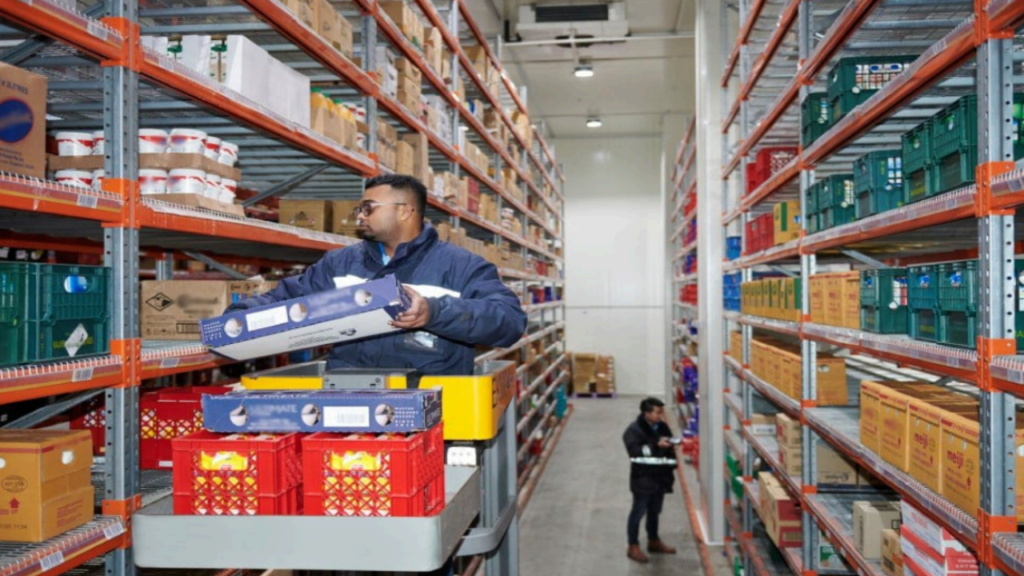
Food Distribution Centers
Food distribution centers deal with fresh and packaged food that is delivered in time to retail stores in an effective manner. These plants have temperature control inventory management and streamline the supply chain flow on your behalf at all times.
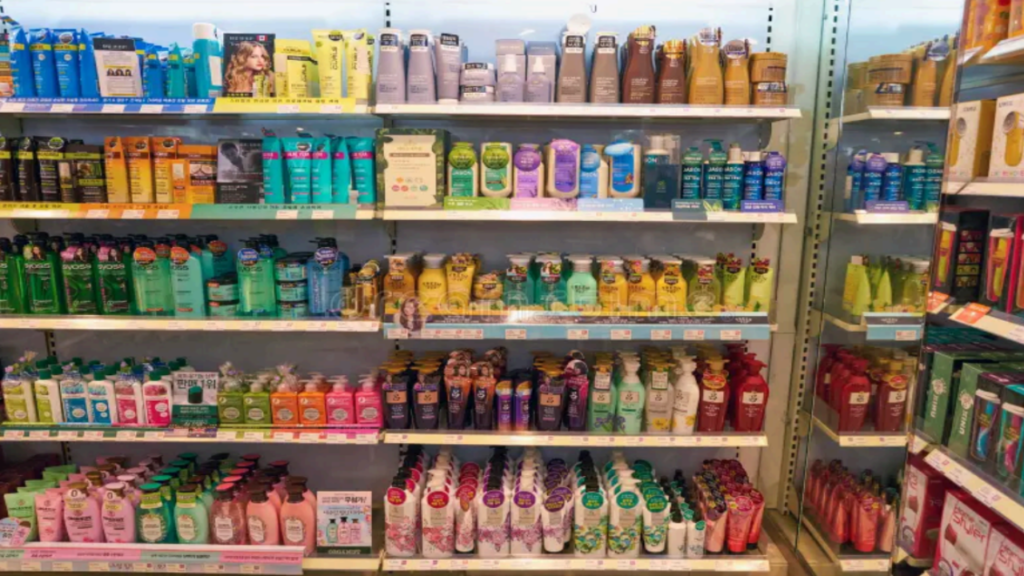
Personal Care Warehouses
Cosmetic skincare and hygiene products are kept in personal care warehouses under strict conditions of quality controlled environments. They guarantee accurate inventory on proper packaging and quick delivery to retail and online stores effectively.
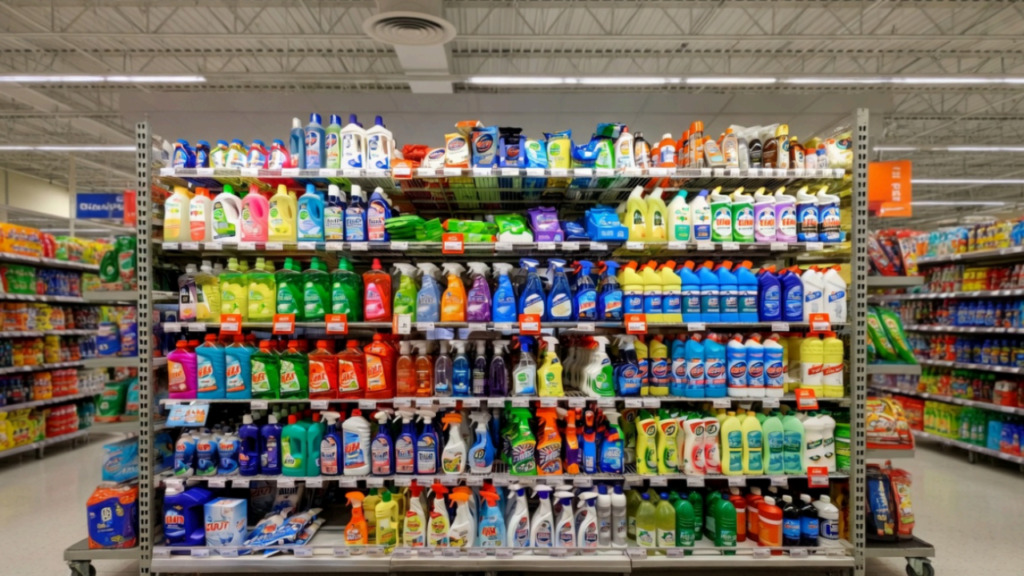
Cleaning Products Distribution
Distribution centers of cleaning products deal with detergents disinfectants and household cleaners and have a well-organized storage system. They give importance to safety laws inventory and provide delivery to both business and residential clients on time.
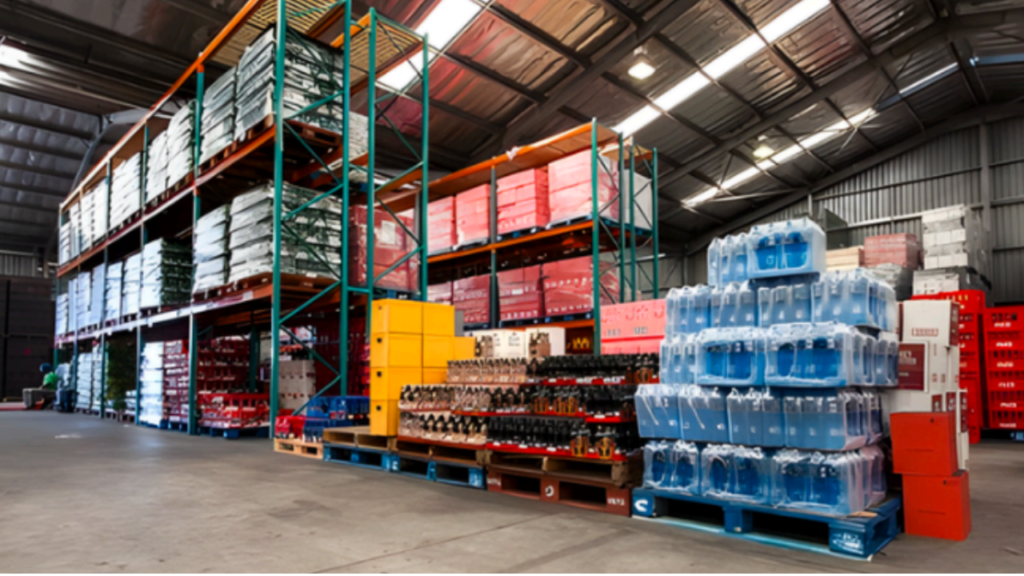
Beverage Storage and Distribution Centres
Beverage storage and distribution centers can store soft drinks juices and bottled water in large quantities. They keep temperature regulated environments, monitor expiry dates and facilitate bulk retail supply chains.
Warehouses of Pharmaceutical OTC Products
OTC Pharmaceutical warehouses store over the counter drugs vitamins and supplements are stored in safe and secure places. They provide quality control of compliance and effective delivery to pharmacies and healthcare providers around the world.
China Leading FMCG Warehousing Expert– Fast Quotes & Competitive Prices
Lracking is a prominent manufacturer of warehouse pallet racking and mezzanine floor in China that has almost 20 years of experience in providing quality storage facilities in the FMCG warehouse and industrial logistics. Lracking specializes in selective pallet racking, drive-in systems, mezzanine flooring, cantilever racking, and AS/RS solutions, FMCG solutions, and offers quick quotes and economical customization according to the size of the warehouse. Lracking has ISO and CE-certified production, serving more than 70 countries, as well as Fortune 500 clients, which guarantees its durable, scalable, and efficient FMCG industry storage solutions that would support high FMCG turnover, strict delivery schedules, and modern omnichannel supply chain demands.
Conclusion
FMCG warehousing is crucial in the supply chain in terms of availability of products, speed and efficiency. It assists in the development of consumer demand and enhances the current retail and e-commerce systems worldwide. The future FMCG logistics will be based on automation, AI-based forecasting, and robust networks. Scalable warehouse design and storage systems of FMCG operations can be achieved through efficient infrastructure providers, such as LRacking. The smart warehousing practices, layout optimization and investing in technology should be embraced by the businesses to enhance long term supply chain performance and reliability in a consistent manner.