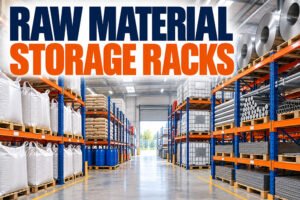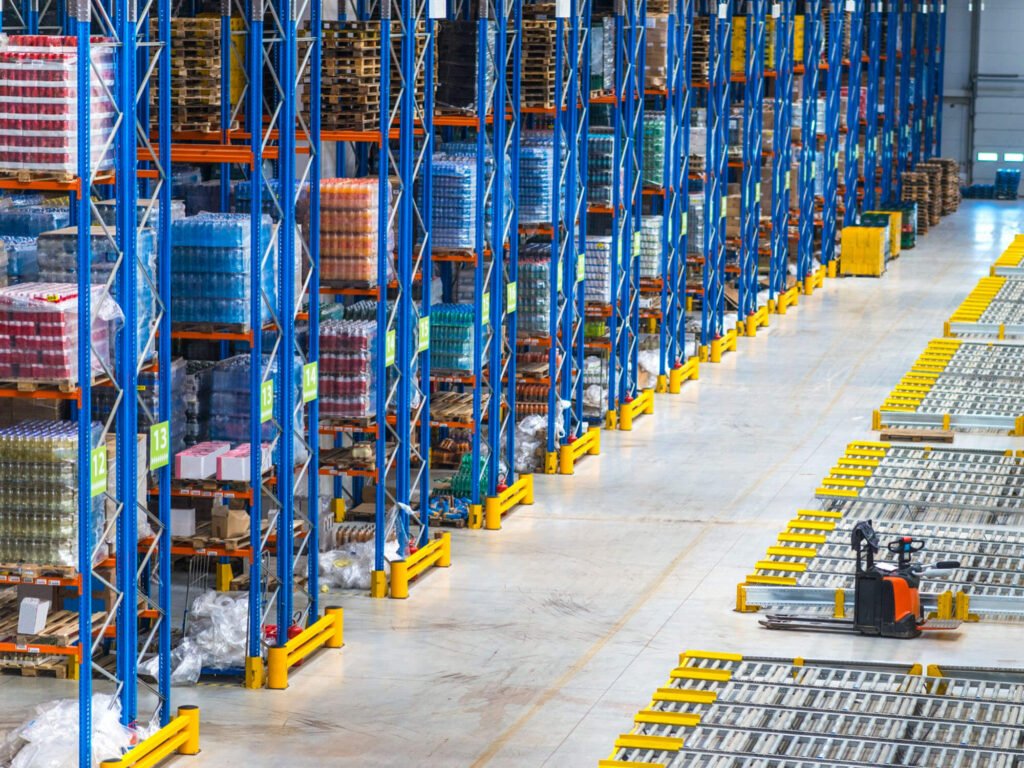
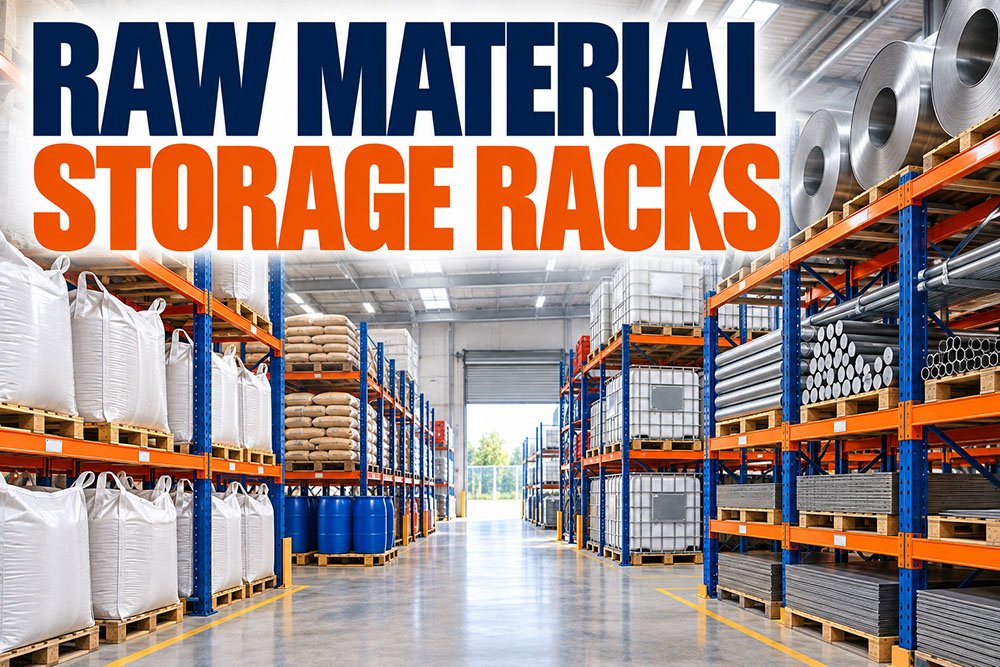
Most warehouse racking discussion focuses on finished goods — palletized inventory sitting in a distribution warehouse waiting to be shipped. But upstream of that, in factories and production facilities, there’s a different storage need that gets much less attention: raw materials waiting to be consumed by production. Steel bars queued for the next machining run, sheet metal awaiting stamping, fabric rolls staged for the cutting table, resin pellets held for the next injection cycle. These materials aren’t finished inventory — they’re inputs sitting between receiving and production, and they need storage solutions engineered for that specific role.
This guide covers what raw material storage racks are, how they differ from general warehouse racking, and how to select the right format for the specific materials waiting to be used in a given production operation.
What Are Raw Material Storage Racks?
Raw material storage racks are storage systems specifically designed to hold materials that will be consumed by production, typically located within a factory or on the production side of a facility rather than in a general distribution warehouse. They serve as the buffer between raw material receiving and the point of use on a production line, machine, or assembly area.
The defining characteristic isn’t the specific rack format — it’s the storage role. A cantilever rack storing steel bars near a cutting saw is functioning as a raw material storage rack. A vertical sheet rack holding aluminum sheets next to a punch press is a raw material storage rack. A drum rack staging chemical containers near a mixing station is a raw material storage rack. What ties them together is that all of them exist to make raw materials available to production quickly, in a form that supports the specific handling and consumption pattern the production process uses.
How raw material storage differs from general warehouse racking:
- Access frequency matters more than density. Raw materials get pulled continuously as production runs; rapid retrieval typically outweighs storage density gains.
- Material form drives format. Long bars, coils, sheets, drums, and pellets each need different rack designs — general pallet racking often doesn’t fit.
- Proximity to production is critical. Raw material racks usually sit adjacent to the equipment that consumes them, not in a distant warehouse zone.
- Material handling equipment varies. Raw materials are often moved by cranes, hoists, or manual handling rather than pallet-only forklifts.
- First-in-first-out rotation is common. Many raw materials have shelf life, batch tracking requirements, or lot control needs that make FIFO rotation essential.
Current Challenges in Raw Material Storage
Materials that don’t fit standard pallet racking. Long bars, oversized sheets, coils, drums, and bulk containers rarely conform to standard pallet dimensions, forcing improvised storage arrangements when only pallet racking is available.
Excessive walking or handling distance. When raw material racks sit far from the production area they feed, operators waste significant time transporting materials to the point of use.
Damage during storage. Raw materials — particularly precision-machined parts, coated sheet metal, and fabric rolls — can be damaged by improper storage, either from contact with rough surfaces, incorrect stacking, or environmental exposure.
Difficulty tracking batches and lots. Raw materials often carry batch numbers, mill certificates, or lot codes that must be tracked for quality control and traceability. Storage layouts that don’t support clear batch separation create traceability problems downstream.
Space conflicts with production activity. Raw material racks compete for floor space with production equipment, work-in-process staging, and finished goods shipping, creating layout tensions that pure warehouse racking doesn’t face.
Safety in mixed-use environments. Production floors have more foot traffic, more active equipment, and more parallel activities than warehouse floors, raising the safety bar for how raw material racks are configured and protected.
Just-in-time inventory pressures. Modern manufacturing often targets minimal raw material inventory to reduce working capital, which puts pressure on storage systems to support smaller, more frequent replenishment cycles.
Common Raw Material Storage Rack Formats
The right format depends primarily on the physical form of the material being stored — different materials need genuinely different rack designs, and using the wrong format often causes damage or handling inefficiency.
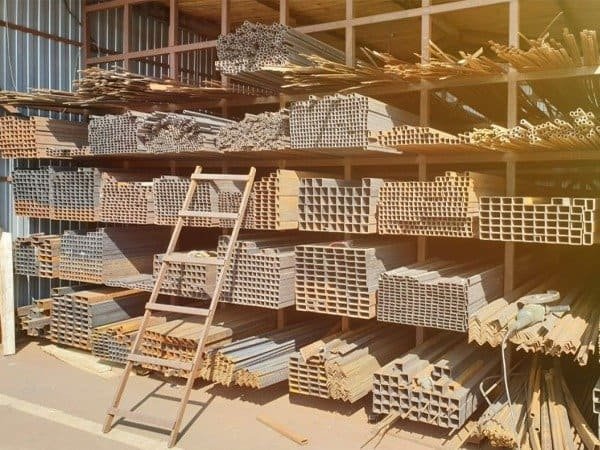
Cantilever racks for long materials. Steel bars, pipes, timber, extrusions, tubing, and similar long materials store efficiently on cantilever racking, which supports the material along its length without front uprights that would obstruct loading. Cantilever configurations are typically single-sided when placed against a wall or double-sided when access is needed from both sides. Adjustable arms accommodate varying material lengths as production requirements change.
Vertical sheet racks for sheet metal, plywood, and panels. Sheet materials store vertically on frames with dividers or slots that hold each sheet separately, preventing the damage that flat stacking causes to lower sheets. This format also allows individual sheets to be pulled without disturbing others.
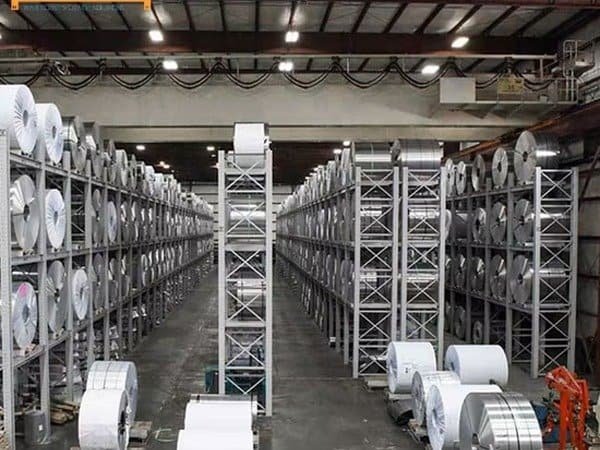
Coil racks for wire, cable, and rolled materials. Coiled or spooled materials sit on horizontal arms or in dedicated cradle configurations that support the coil weight without deforming it. Wire, cable, and strip stock are common applications.
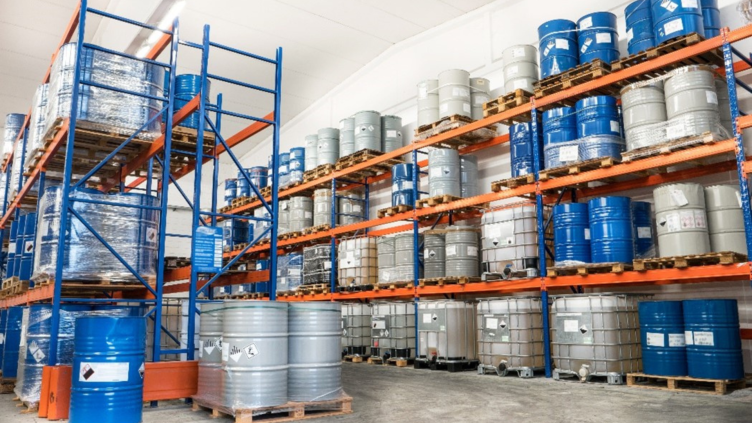
Drum and IBC racks for liquids and bulk containers. Drums and intermediate bulk containers (IBCs) store in horizontal or vertical configurations depending on whether they need to be dispensed from the storage position. Drum racks often include spill containment for hazardous materials.
Mold and die racks for tooling. Mold and die storage is a specific raw material adjacent category — tooling used in production stored ready for changeover. This overview of mold rack systems covers the configurations designed specifically for tooling storage.
Pallet racking for palletized raw materials. When raw materials arrive on standard pallets and can be consumed pallet-by-pallet, conventional pallet racking works well, particularly selective pallet racking for per-pallet access as production draws materials down.
Stacking racks for reconfigurable staging. For raw materials that arrive in variable volumes, portable stacking racks allow the storage footprint to expand and contract as production schedules change, without permanent floor commitment.
Flow racks for high-turnover small parts. Gravity flow lanes present cartons or containers of small components ready for kitting or assembly line consumption, with new stock loaded from the rear as front stock is depleted.
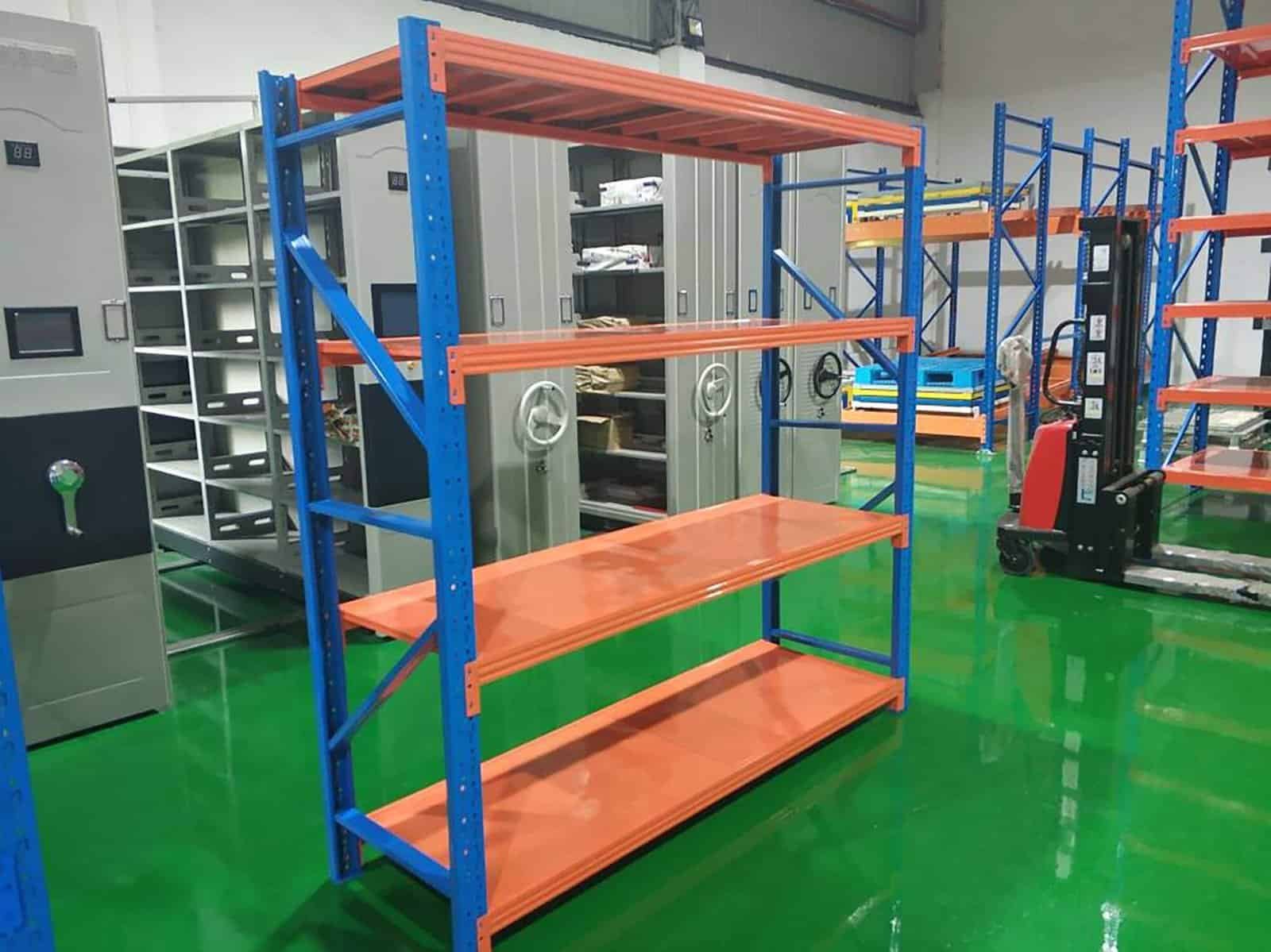
Heavy-duty racking for high-load raw materials. For extremely heavy or dense raw materials — coils, blocks, castings — structural racking or purpose-engineered heavy-duty formats provide the load capacity these materials require.
Raw Material Storage Rack Format Comparison
| Material Type | Recommended Rack Format | Key Consideration |
|---|---|---|
| Long bars, pipes, timber | Cantilever racking | Adjustable arms for varying lengths |
| Sheet metal, plywood, panels | Vertical sheet racks | Prevents sheet-to-sheet damage |
| Coils, wire, cable | Coil racks | Support without deformation |
| Drums, IBCs, chemicals | Drum/IBC racks | Spill containment where required |
| Tooling, molds, dies | Mold and die racks | Fast changeover access |
| Palletized raw materials | Selective pallet racking | Per-pallet access for production draw |
| Variable-volume staging | Stacking racks | Reconfigurable footprint |
| Small parts for assembly | Flow racks | FIFO gravity feed to pick face |
| Heavy or dense materials | Structural racking | High load capacity |
Expected Operational Improvements from Correct Rack Selection
Production facilities that match raw material storage to actual material type and production consumption pattern typically see:
- Reduced material damage during storage, since format-appropriate racking prevents the contact, stacking, and environmental damage improvised storage causes
- Faster material retrieval to production, when raw material storage is positioned appropriately and configured for the handling method production actually uses
- Improved batch and lot traceability, when storage layout supports clear separation of material batches rather than mixing them in shared locations
- Better use of production floor space, since format-appropriate racking often has smaller footprint than improvised solutions using general pallet racking
- Reduced safety incidents, when material handling patterns match the rack design rather than fighting it
- Support for just-in-time inventory strategies, when storage supports frequent small replenishment cycles rather than large infrequent restocks
- Longer material shelf life, when environmental protection is built into storage rather than added afterward
These improvements depend on selecting rack formats that reflect the specific materials and production patterns of the operation. Raw material storage that treats all materials as generic pallet loads generally underdelivers on all of these dimensions.
Project Considerations for Raw Material Storage
Material profile documentation. Before selecting racking, document the full range of raw materials the facility handles: dimensions, weight, packaging, unit of consumption, replenishment frequency, environmental sensitivity, and any batch or lot tracking requirements.
Production consumption patterns. How production actually consumes materials — pallet at a time, one bar at a time, kits of small parts, drums drawn periodically — should drive rack format and positioning decisions. Matching storage format to consumption pattern reduces handling time and error rates.
Proximity to production equipment. Raw material racks should sit close enough to the equipment they feed that operators don’t waste significant time transporting materials. Layout planning should treat raw material storage as adjacent to production, not as a separate warehousing function.
Handling equipment. Not all raw materials are moved by forklifts. Some require overhead cranes, jib cranes, manual carts, or hand handling. Rack format should support the actual handling equipment used.
Environmental considerations. Raw materials sensitive to humidity, temperature, dust, or UV exposure need appropriate storage environments. Racking specification should account for coating, decking, and environmental protection needs.
Batch tracking integration. For regulated industries or quality-critical materials, racking should support clear batch and lot identification, whether through label systems, dedicated location assignments, or integration with warehouse management systems.
Safety in mixed-use zones. Production floors have more parallel activity than warehouses, so raw material racks in production areas need additional consideration for pedestrian safety, forklift interaction, and integration with production traffic flow.
Scalability and reconfiguration. Production requirements change over time as products, volumes, and processes evolve. Racking that can be reconfigured or expanded accommodates these changes more easily than fixed formats.
Fire protection and hazardous material compliance. Some raw materials — flammable liquids, reactive chemicals, combustible dusts — carry specific fire and hazardous material storage requirements that affect rack selection and installation.
Frequently Asked Questions
How is a raw material storage rack different from general warehouse racking? Raw material storage racks are typically designed and positioned for the specific role of feeding production, with format matched to material shape (long bars, sheets, coils, drums, etc.) and positioned adjacent to the equipment that consumes them. General warehouse racking usually stores finished or palletized goods for later shipping rather than active production consumption.
Do I need different rack formats for different raw materials? Usually yes. Long materials, sheets, coils, drums, and palletized materials each perform best in different rack formats. Trying to store all raw materials in a single format — typically standard pallet racking — often causes damage, wastes space, or slows retrieval.
Where should raw material storage be located in a factory? Ideally as close as practical to the production equipment that consumes the material, so handling time between storage and the point of use is minimized. Layout planning should treat raw material storage as adjacent to production rather than in a distant warehousing zone.
Can I use pallet racking for raw material storage? Yes, for raw materials that arrive on standard pallets and can be consumed pallet-by-pallet. For long bars, sheets, coils, drums, and other non-palletized formats, dedicated rack formats generally perform better than pallet racking.
How do I handle raw materials that need batch tracking? Rack layout should support clear separation of material batches, either through dedicated location assignments, labeling systems, or integration with a warehouse management system that tracks batch locations and enforces FIFO or lot-based rotation.
Are stacking racks suitable for raw material storage? Yes, particularly for raw materials that arrive in variable volumes or for facilities with seasonal production patterns. Stacking racks let the storage footprint expand and contract without permanent floor commitment.
Do raw material racks need special fire protection? Some raw materials — particularly flammable liquids, combustible dusts, and reactive chemicals — carry specific fire protection requirements that affect rack specification. Fire code review should be part of any raw material storage project involving these material categories.
How does just-in-time inventory affect raw material storage design? Just-in-time strategies typically favor smaller, more frequent replenishment cycles rather than large infrequent restocks. This affects rack sizing (often smaller than for bulk storage) and location (closer to production for rapid draw), and often benefits from flow rack or per-pallet access formats rather than bulk-density formats.
Key Takeaways
- Raw material storage racks are storage systems specifically designed to hold materials awaiting production consumption, typically located within factories rather than distribution warehouses
- Format selection should follow the material’s physical form — long bars, sheets, coils, drums, and pallets each perform best in different rack types
- Access frequency and proximity to production usually matter more than raw storage density for materials waiting to be consumed
- Batch tracking, environmental protection, and handling equipment compatibility all affect rack specification alongside basic dimensions and load rating
- Selection should account for actual production consumption patterns, not just static storage volume, to support just-in-time inventory strategies and reduce material handling time
Conclusion
Raw material storage occupies a specific and often underserved role in production facility design — neither general warehousing nor pure production line staging, but the buffer between them that determines how efficiently materials flow into production. Warehouses and factories that select raw material storage racks based on actual material form, production consumption patterns, and proximity to point of use generally see fewer material handling issues, less damage, and better production continuity than those relying on general pallet racking for all raw material needs. Companies such as Lracking are commonly involved in projects supplying dedicated raw material storage solutions — cantilever, sheet, coil, drum, and pallet racking — configured for the specific material and production profile of individual facilities. For operators planning raw material storage, an honest inventory of what materials need to be stored, how production consumes them, and where they need to sit relative to production equipment remains the most reliable starting point for identifying the right combination of rack formats.