What is Warehouse Planning?
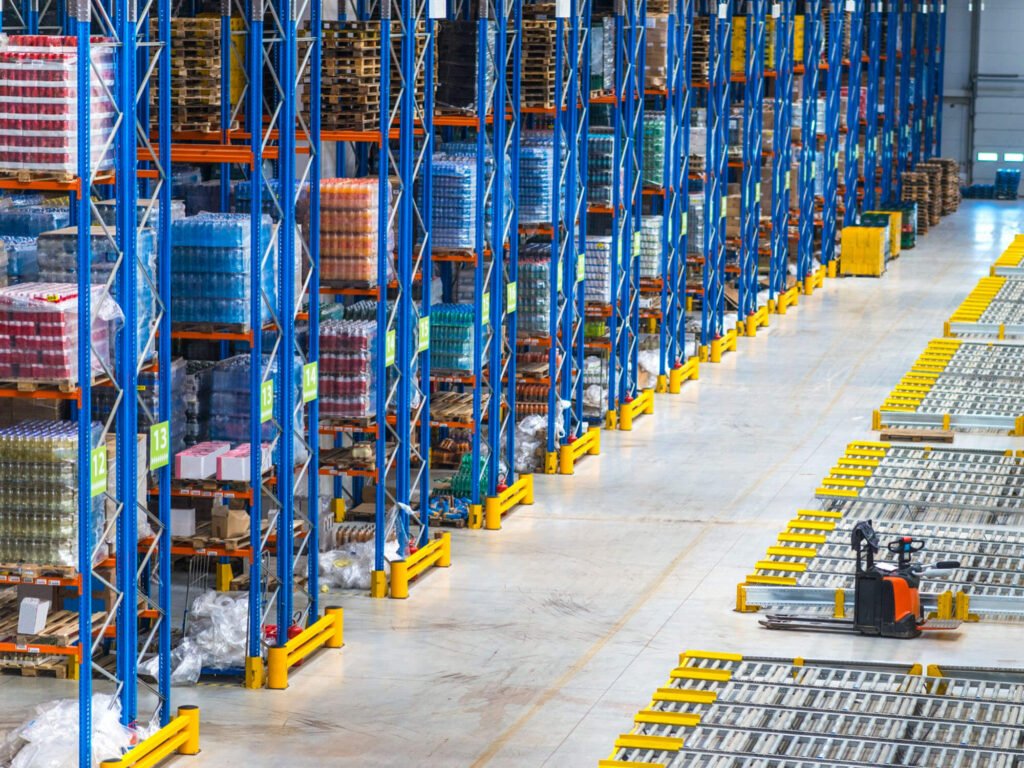
Warehouse planning is the process of deciding how to efficiently organize and manage warehouse activities throughout the whole process. It aims to enhance flows and minimize delays in facilities in general. When planning warehouse layouts, space usage, movement routes, and storage organization are managed. It also optimizes picking and shipping, workflow, manpower management, and technology applications in pursuit of increased productivity in everyday operations. Operational efficiency of logistics is ensured and supported by good warehouse set up, which promotes scalable logistics systems.
Core Goal of Warehouse Set Up
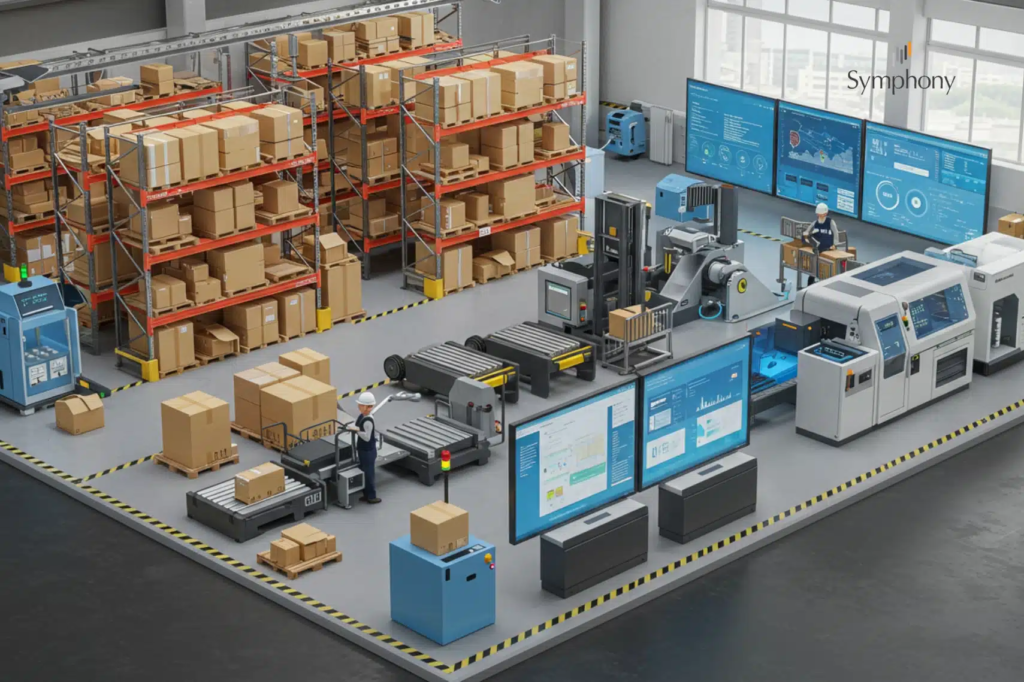
Several key objectives are associated with warehousing planning, which help to increase the overall efficiency level of an operation. By optimizing processes and effectively eliminating unnecessary movement activities, warehouse planning helps to reduce operational waste. Optimized layouts reduce handling time and greatly enhance the throughput daily for warehouse operations. Optimized space design leads to higher storage utilization, higher service levels, and reduced cost per order. They all contribute to effective, cost-effective warehouse management and customer satisfaction.
Why Setting up a Warehouse Is Important
- Operational Efficiency: In general, the warehouse plan significantly increases the speed of receiving, putaway, and picking. Short paths minimize handling touches across warehouse areas and keep congestion to a minimum, while moving efficiently and smoothly.
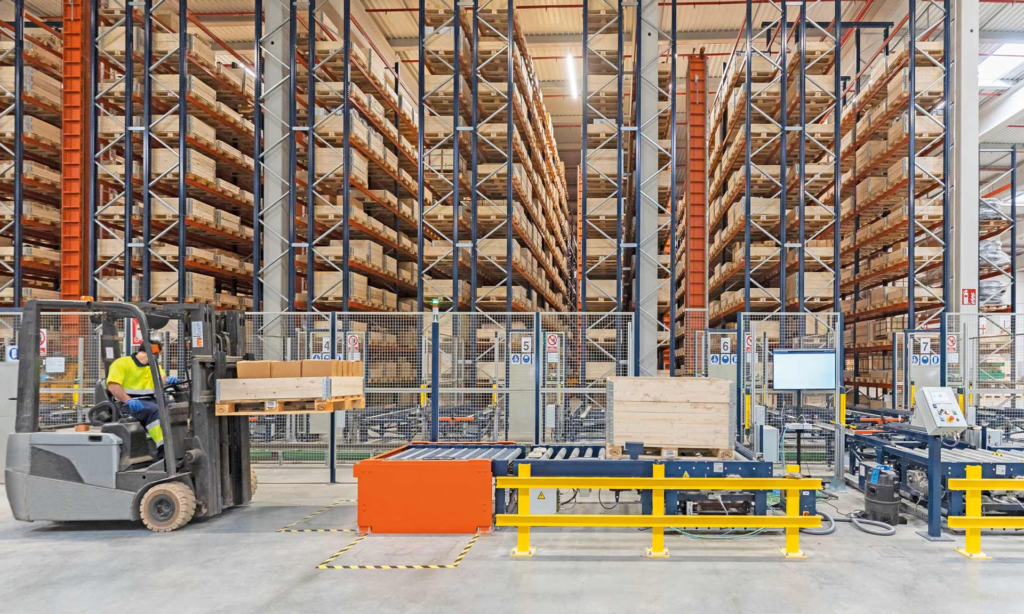
- Better Space Utilization: Improved space utilization leads to higher cube usage, as well as to higher storage density in facilities. Vertical storage optimization makes the most efficient use of a warehouse space, eliminating dead space.
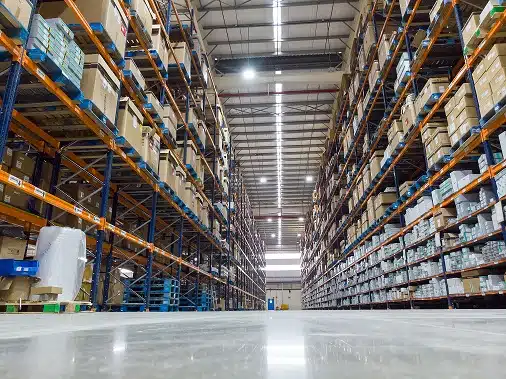
- Reduced Operating Costs: Combined, better labor planning and equipment optimization strategies reduce the costs of operation. Reduced inventory carrying costs and fewer picking errors have a direct positive impact on the overall profitability.
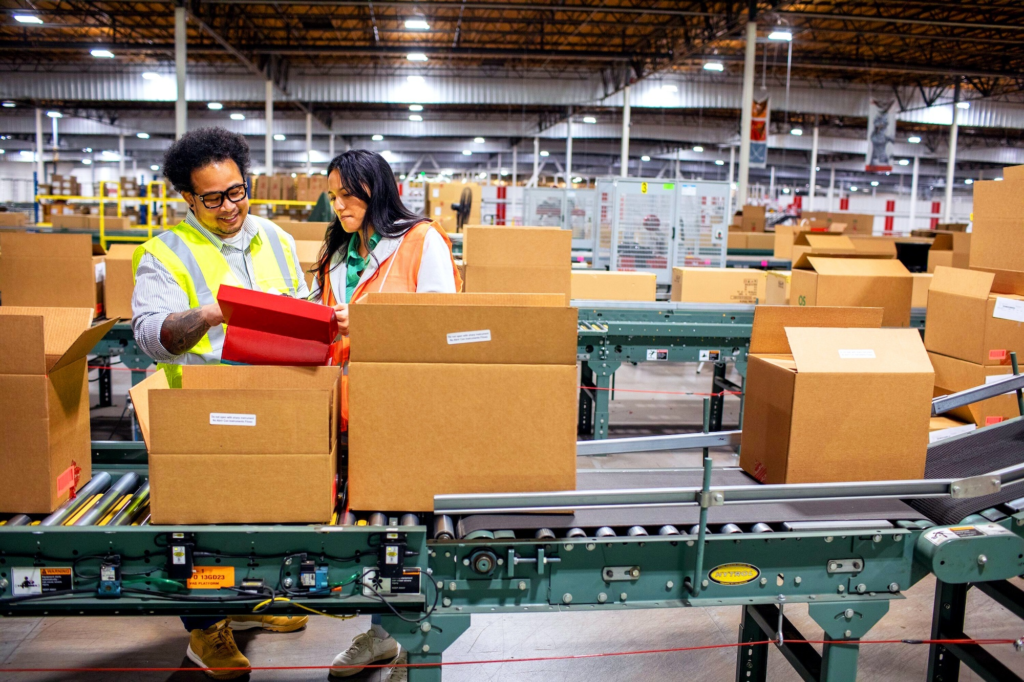
- Improved Inventory Accuracy: Precise location management and integration of bar code RFID systems are the key to improved inventory accuracy. Real-time inventory visibility minimizes errors and improves inventory tracking throughout warehouse operations.

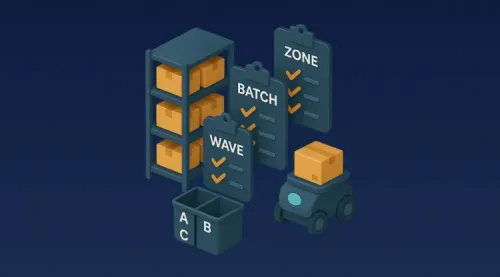
- Faster Order Fulfillment: Smoother pick face optimization will speed the order fulfillment process and cut down on overall processing delays. Simplified batch zone and wave picking to obtain faster and more efficient distribution.
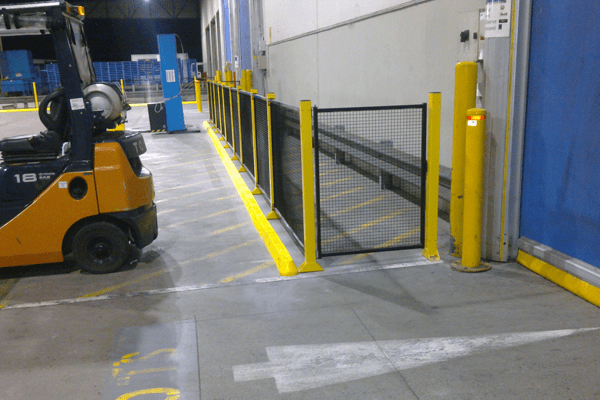
- Safer Operations: For safe warehouse operations, the forklift routing and pedestrian segregation systems planning are important. Safe warehouse environments are consistently achieved by emergency access routes and fire code compliance.
- Easier Expansion: Easier expansion comes from scalable planning and modular storage design principles, which enable. By preparing for automation, warehouses can expand at an efficient rate and cater to future requirements.

When a Business Needs a Warehousing Planning
New Warehouse Setup
When setting up a new warehouse plan, it is important to plan for space and workflow alignment. It provides seamless inbound flow, storage optimization, and efficient outbound operations every day.
To Expand the Existing Warehouse
The need for warehouse expansion arises when businesses are growing, and their existing space is proving insufficient to meet demands effectively. It enhances storage layout, workflow efficiency, and facilitates future operational growth planning.
Poor Storage Utilization
The overall efficiency is affected by poor storage utilization, as well as by the need for unnecessary handling time. The correct slotting and layout design can optimally utilize space in the warehouse for efficient daily operations.
Picking Bottlenecks
Often, during the picking, bottlenecks happen when the number of orders exceeds the warehouse’s processing capacity limits. They make it take longer to fill orders and hurt the overall satisfaction of your customers.
Inventory Inaccuracy
Inaccurate inventory results in stockouts, overstocking, and inconsistent results of the order fulfillment process. System integration and regular audits enable accurate inventory records to be maintained over time.
Rising Fulfillment Costs
Inefficient warehouse operations and labor use patterns can lead to rising fulfillment costs. Optimization can minimize costs by optimizing routing, storage, and process design.
Growth in SKU Count
The more SKUs a company has, the more complex the storage and inventory system becomes. Warehousing planning allows for a scalable structure that can accommodate various product variations in an efficient manner over time.
Seasonal Demand Increases
To manage seasonal demand fluctuations effectively, flexible warehouse planning is needed during the season. During peak times, the appropriate forecasting and staffing changes guarantee timely order fulfillment.
Automation Implementation
The warehouse’s design and layout must be optimized for efficient implementation of automation. It enhances speed, accuracy, and decreases manual labor processes to a great extent, overall efficiency.
3PL Operational Scaling
When the demand of clients overcomes the internal capacity limitations on a regular basis, 3PL operational scaling becomes a necessity. It allows for effective distribution, cost management, and higher service levels to be met.
How to Set up a Warehouse Plan – Step by Step
Step 1 – Define Business & Operational Requirements
Understand Business Model
In the initial phase of warehouse planning, it is crucial to correctly determine the operational structure, inventory storage requirements, and inventory movement requirements. Each facility has a unique layout that allows for wholesale distribution, manufacturing, storage, cold storage, fulfillment, and third-party logistics to function efficiently.
Determine Service Expectations
Satisfied service expectations have a significant impact on warehouse processes, staffing, transportation coordination, and inventory placement. Caring for the operational processes is important consistently for fast deliveries, cross-docking operations, bulk shipments, and filling accuracy.
Analyze Customer Demand
The analysis of customer demand creates a significant improvement in the allocation of resources in the warehouse, picking efficiency, replenishment time, and utilization of warehouse resources. Frequencies of orders, number of SKUs, seasonal demand surges, and average shipment sizes should be reviewed periodically.
Forecast Growth
Long-term forecasting allows a scalable warehouse expansion, investments in technology, staff planning, and future flexibility in operation to be successfully implemented. Businesses should be planning their warehouse growth and performance in three, five, and ten-year plans.
Step 2 – Analyze Inventory Before Planning
SKU Count and Dimensions
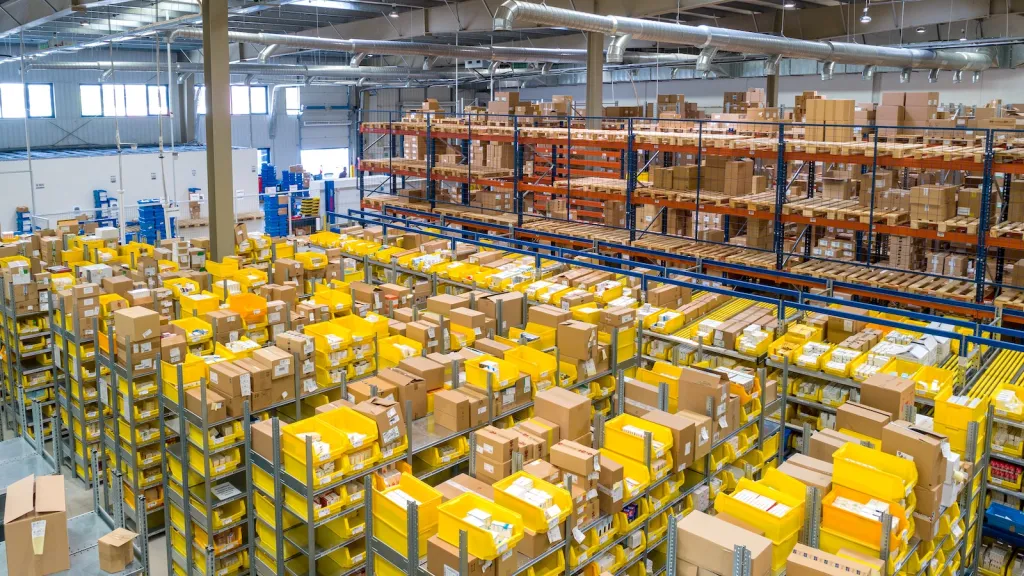
Accurately determine the total number of SKUs before warehouse layout and replenishment planning on a daily basis. Carefully measure product dimensions as this relates directly to picking speed, organization efficiency, and product accessibility for storage.
Weight Profile
Take time to check weight profiles prior to equipment selection, as heavier inventory means stronger shelving systems all the time. Every day, damaged floors, unstable pallets, and unsafe handling operations in the warehouse are avoided due to balanced weight distribution.

Fast-moving, slow-moving items.
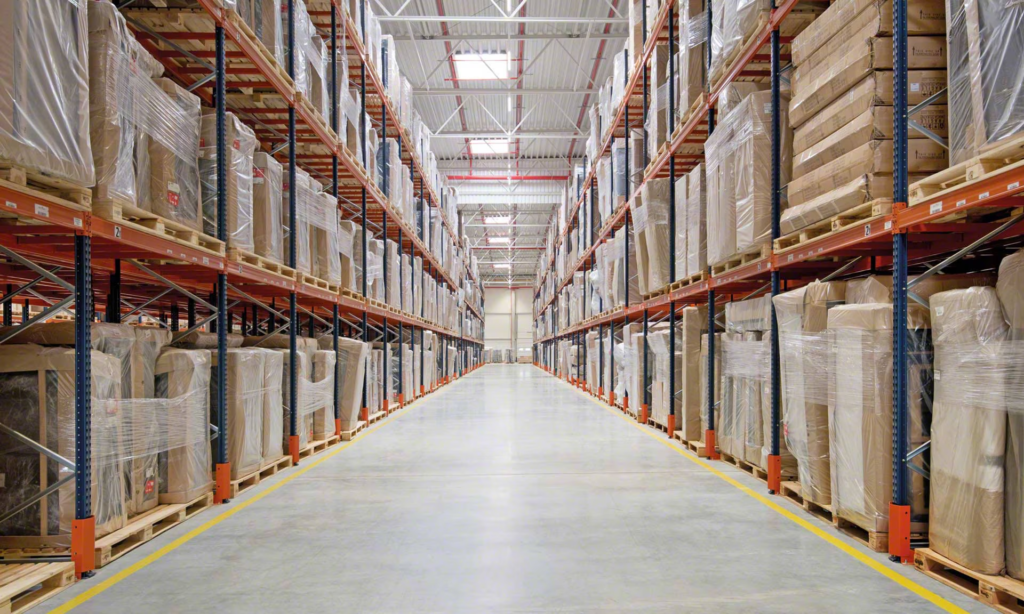
Identify fast-moving products and slow-moving inventory and sort them out to increase picking efficiency and decrease travel distance. Ensure that high-demand operational periods are quick and easy by positioning repeat inventory in dispatch points.
ABC Analysis
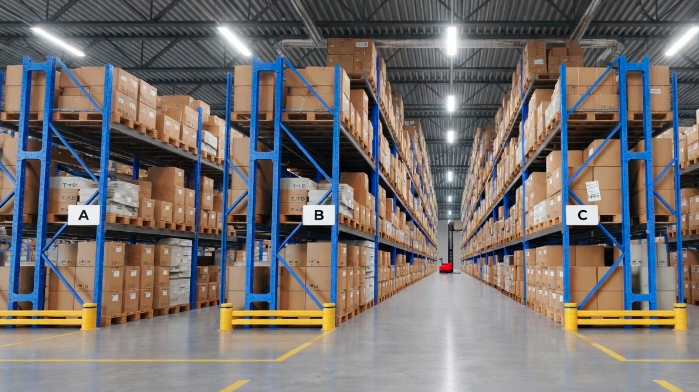
Carefully classify A items, as these items will generate maximum revenue and will need to be monitored every day with procedures. Organize moderately B items and store economically C items in efficient secondary warehouse locations afterward.
Shelf-life and Expiry Management
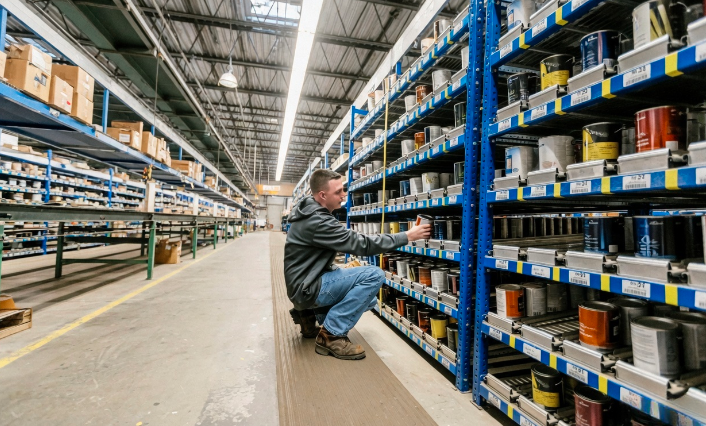
Carefully manage product shelf-life with FIFO, FEFO, and batch control to avoid unnecessary product expiration losses. You can get better inventory rotation, compliance, customer safety, and reduce waste across operations with accurate expiration tracking.
Special Storage Requirements
Some products are fragile and need to be protected from damage by packaging, while refrigerated products need stable temperature monitoring systems every day. There is a need for restricted access, special handling procedures, and increased security measures throughout for hazardous and high-value goods.
Packaging Formats
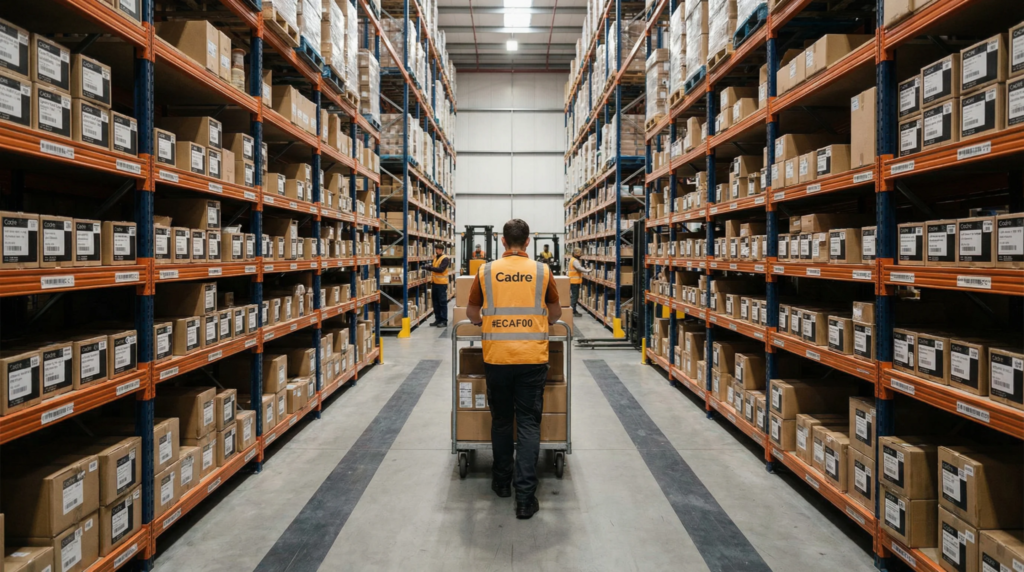
Understand the packaging types, such as pallets, cartons, totes, and loose picks, before planning activities in the warehouse. Packaging selection enhances flexibility in storage, transportation, inventory protection, and operational productivity for growth.
Step 3 – Determine Warehouse Capacity Requirements
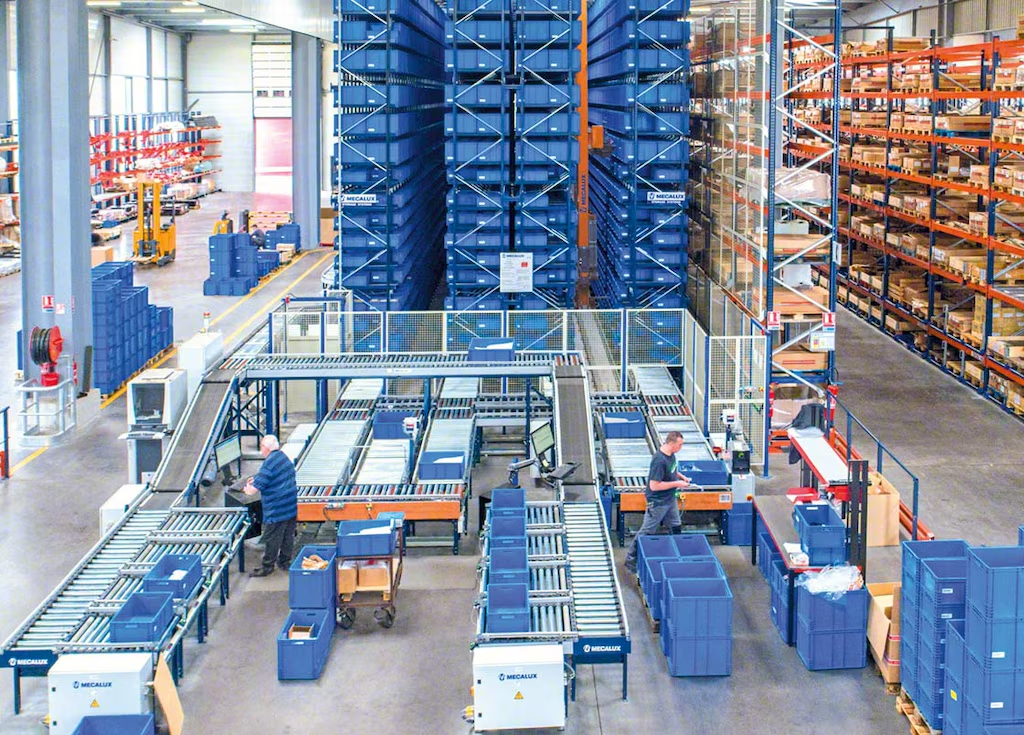
- Storage Capacity: Determine the position of pallets with a high degree of accuracy, based on the inventory forecast and product dimensions. Plan for seasonal variation in inventory and future growth each year when demand peaks.
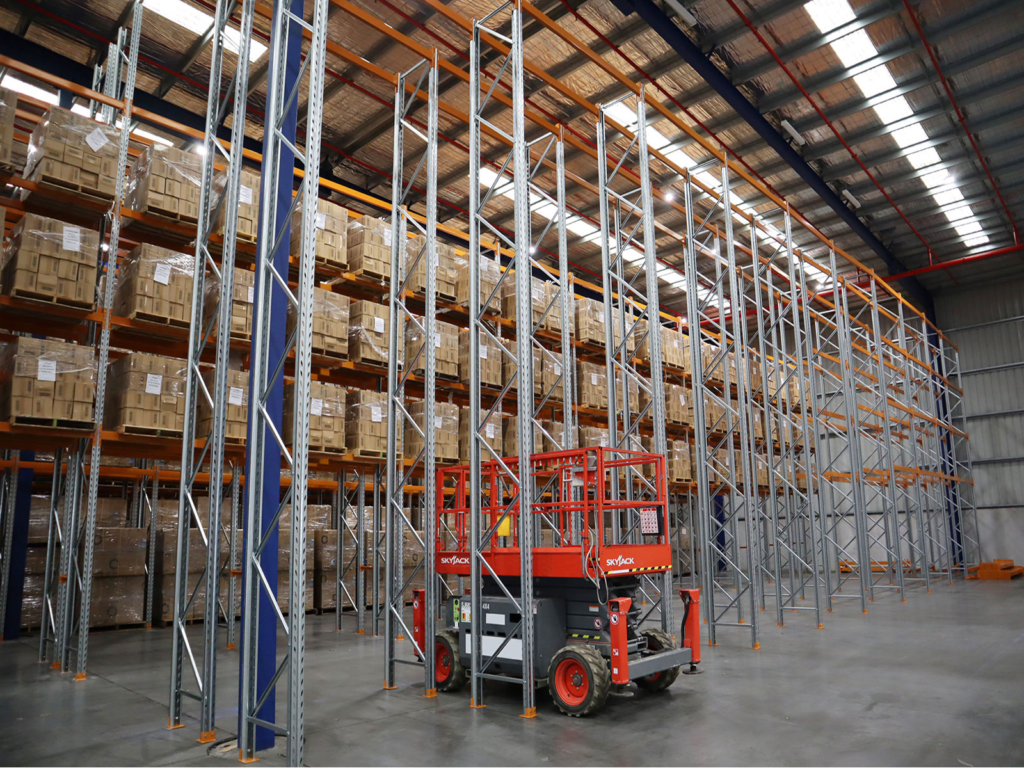
- Throughput Capacity: Review receiving, picking, and shipping volumes during normal business hours. Make sure that the systems are able to process orders efficiently, without any delay, during high-volume customer activity times during peak seasons.

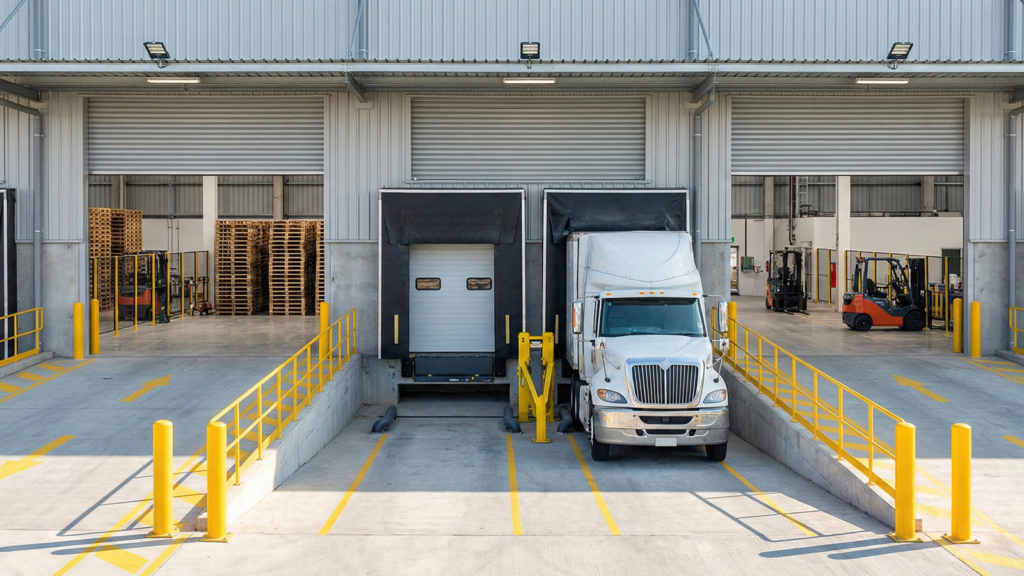
- Dock Capacity: Review loading dock availability for carriers and frequency of shipments. Avoid congestion by carefully coordinating appointments, unloading times, and transportation activities during holidays each day.
- Labor Capacity: Calculate staffing needs based on workload forecasts, productivity, and operational targets. Rotate staff regularly between different tasks to maintain a flexible workforce when absences occur, and overtime is required during exceptionally busy periods.

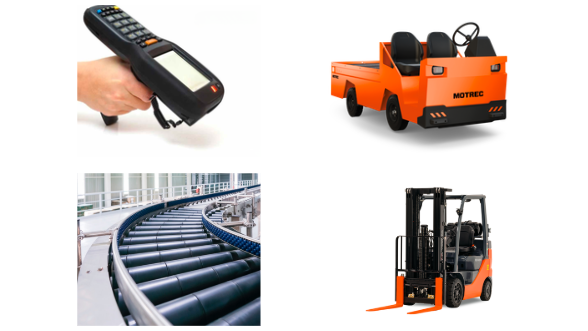
- Equipment Capacity: Check forklifts, conveyors, scanners, and vehicles used in the warehouse on a daily basis. Plan preventative maintenance on a regular basis to prevent breakdowns that cause disruptions in productivity and order fulfillment during emergencies.
- Peak Capacity Planning: Pre-plan extra storage, labor, and transportation resources in advance of busy seasons. Plan contingencies for delays from suppliers, unexpected demand, and operational bottlenecks in advance during the holidays.
Step 4 – Select the Right Warehouse Location
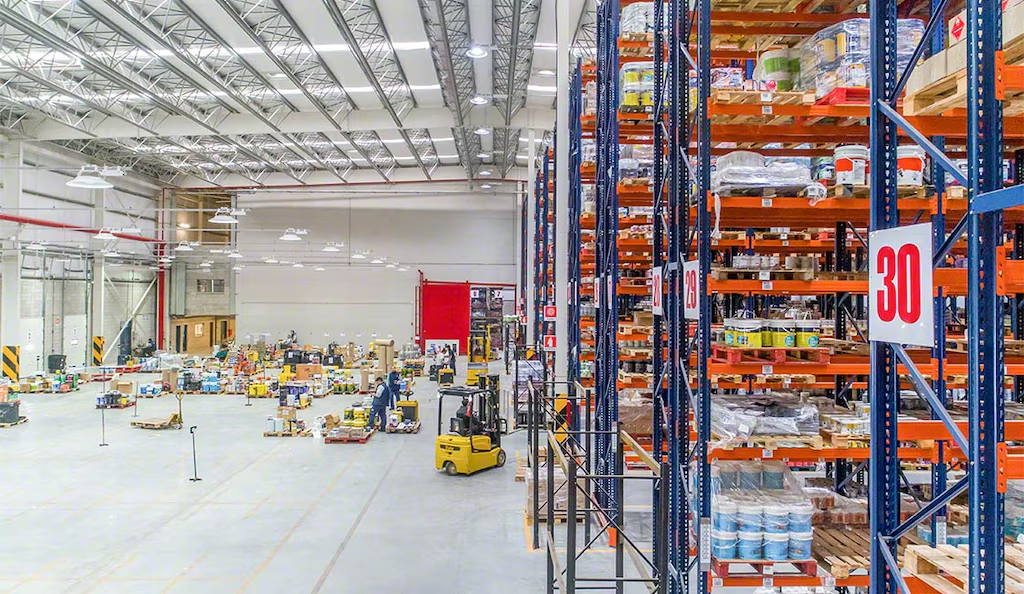
The optimal warehouse location will affect efficiency, delivery time, and long-term operational profitability. Proximity to suppliers decreases transportation expenses and inventory replenishment times. Proximity to customers leads to quicker delivery and service performance. Good transport connectivity helps to facilitate the flow of goods through distribution systems. Reliability of labor supply ensures consistent staffing during the high-demand time. Proper utilities are provided for the proper working of the equipment and warehouse. Ensuring zoning compliance eliminates legal problems and an equal land cost performs better long-term operational savings.
Step 5 – Plan Warehouse Zones Properly
Receiving Area
Today, the receiving area processes inbound goods and confirms receipt of goods with the purchase order. Today, it can effectively handle the smooth unloading, preliminary sorting, and create proper documents before warehouse processing.

Inspection / QA Area
The inspection and QA area examines the quality of products and verifies that they meet the defined standards in a strict manner. Defective products are detected, documented, and isolated for subsequent corrective action or rejection processing in a timely fashion.

Putaway Zone
The putaway zone receives goods and puts them away in a systematic manner, organizing the goods. By moving parts to a “best fit” location, efficient putaway eliminates unnecessary handling, which has a significant impact on warehouse accuracy and productivity each day.
Reserve Storage
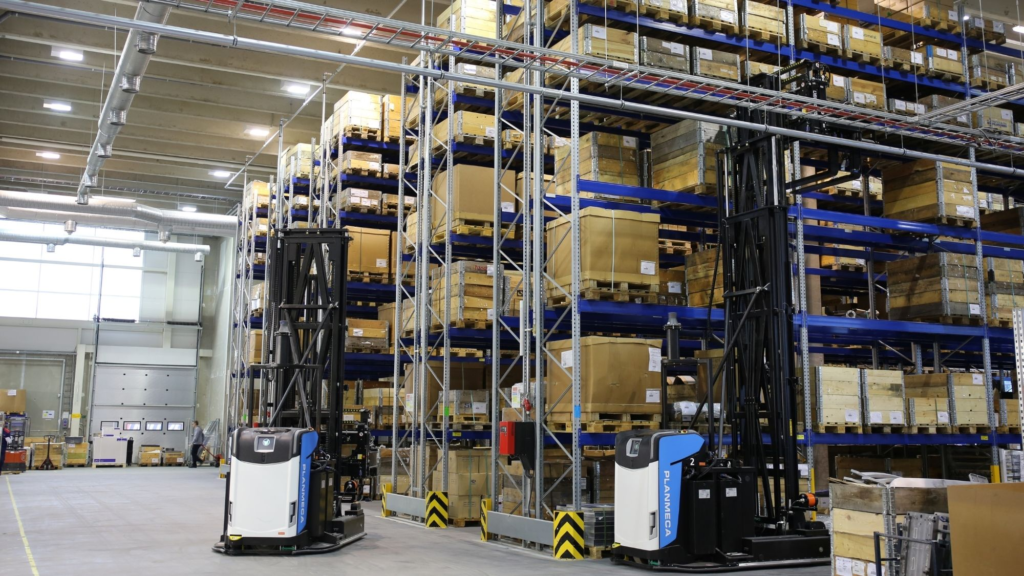
Reserve storage keeps bulk inventory for replenishing forward picking locations when needed quickly, always available. It helps in long-term stock holding and helps in maintaining the stability of the supply chain without any risk of disruption.
Forward Picking Area
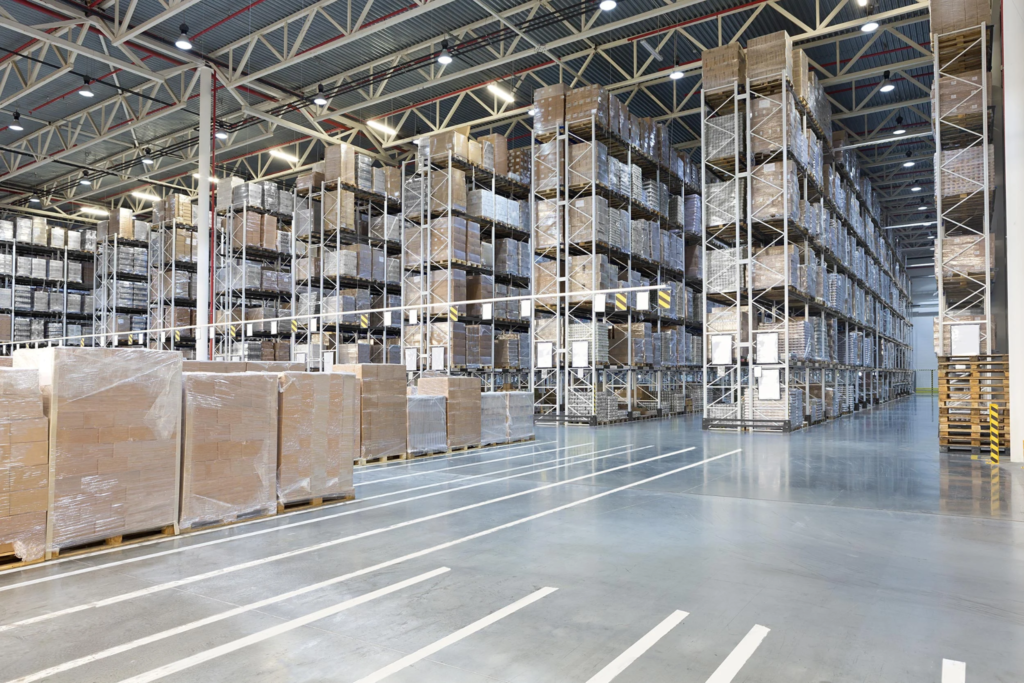
Items that move quickly are kept close to packing stations in the forward picking area for efficiency. It enhances order fulfillment speed, significantly in day-to-day operations, by minimizing the distance workers have to travel.
Packing Area
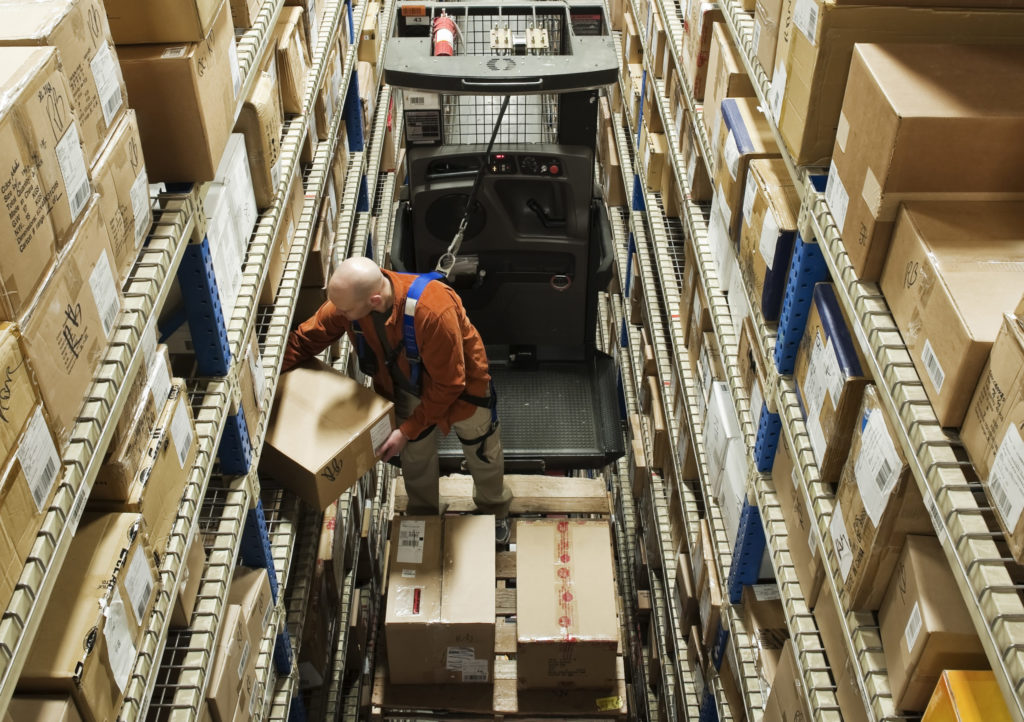
Orders are marked and protected at the packing area before they are sent to the dispatch stage. It guarantees accuracy, minimizes damage, and enhances customer satisfaction on every delivery.

Shipping / Dispatch Area
The shipping area oversees outbound shipping and manages the transit of goods for efficient daily shipping. It helps to document, load, and ship goods from the Warehouse to the customers in a proper manner and in time.
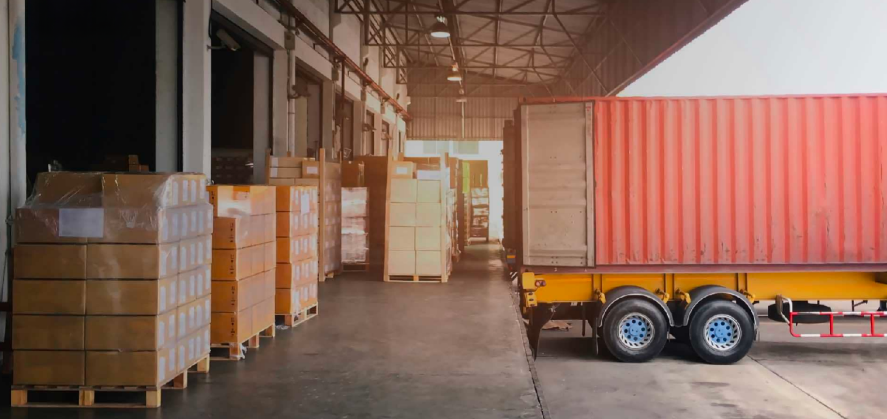
Returns Processing Area
The returned goods processing area properly processes and inspects returned goods and makes decisions systematically. It pinpoints why items are coming back and will update stock records to reflect this for future planning purposes.
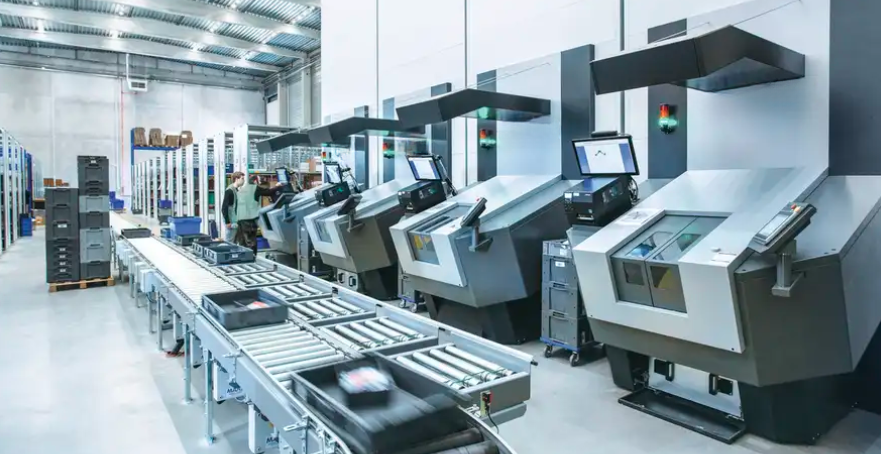
Damaged Goods Area
Damaged goods are segregated from sellable items in the warehouse for safekeeping in the damaged goods area, where they are handled with care for safety monitoring. It ensures strict inventory management procedures and prevents risks of contamination.
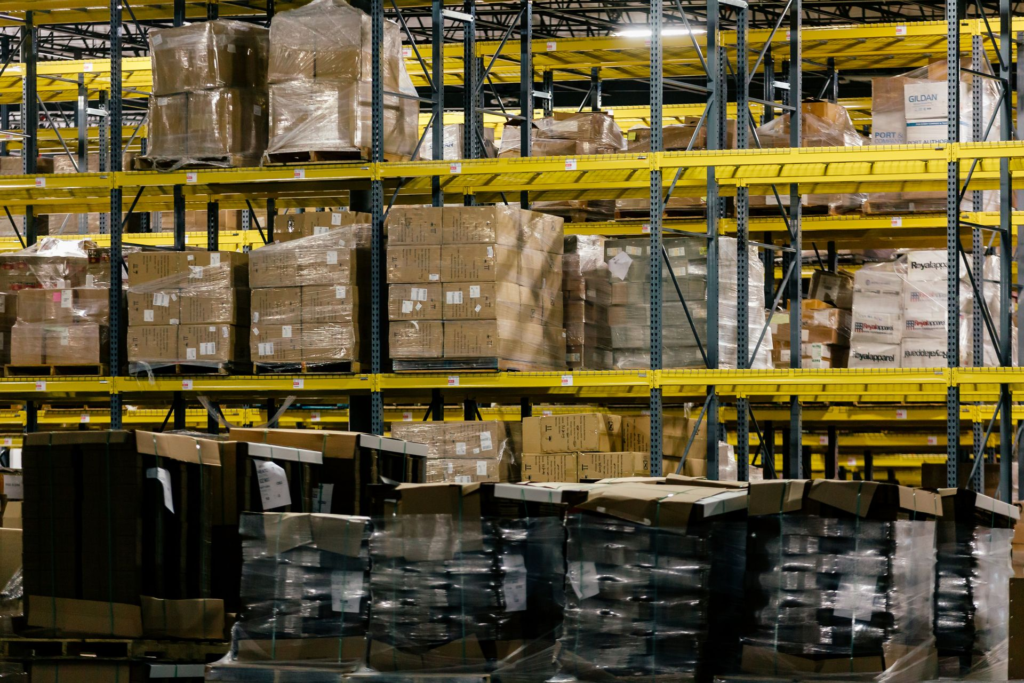
Value-added Services Area
The value-added service area efficiently carries out labeling, kitting, re-packing, and assembly services for customization. It supports the operation process of the warehouse with flexibility and helps to improve the process efficiency, so as to enhance the readiness of the products and improve customer satisfaction.

Office & Staff Facilities
Office and staff facilities work well to facilitate administrative activity and staff coordination in warehouse operations smoothly every day. They provide rest areas, meeting rooms, and essential resources for productivity team efficiency and growth.

Step 6 – Choose Warehouse Storage Systems
Selective Pallet Racking
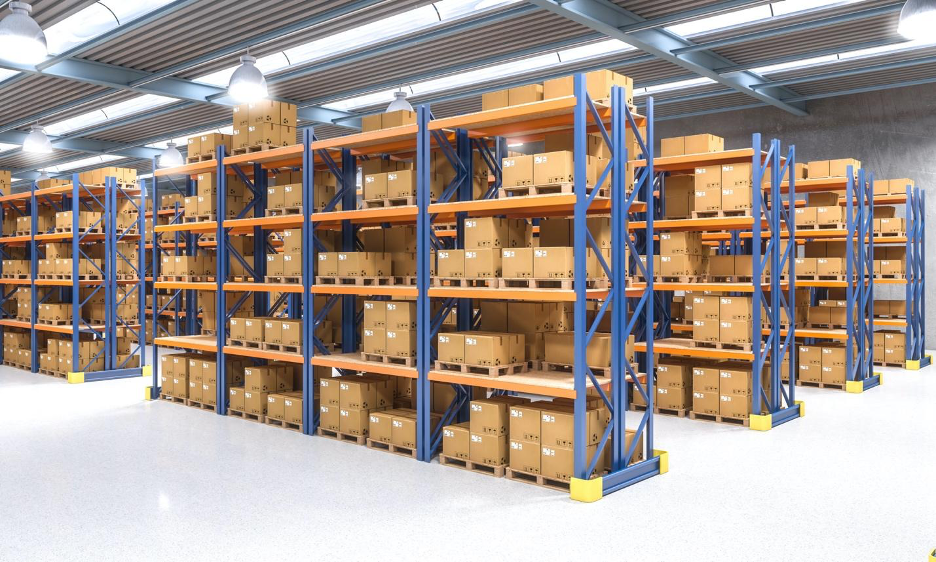
Selective pallet racking is a direct access pallet storage system. It enhances accessibility, works well for high SKU variety, and is optimal for fast-moving operations that warehouse efficiently.
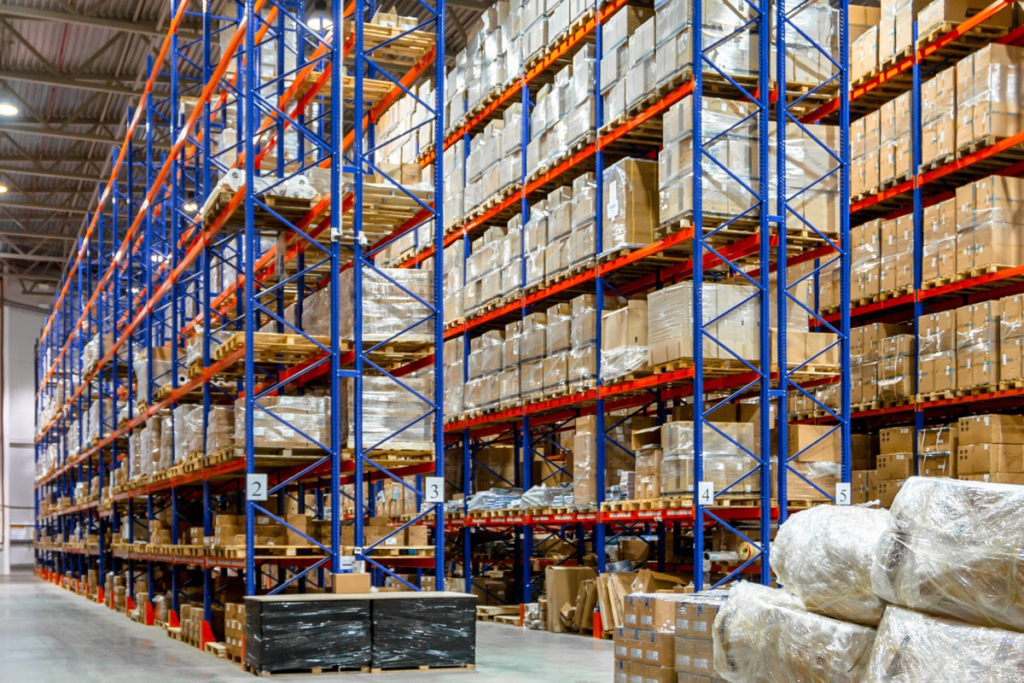
Double Deep Racking
Double deep racking enables pallets to be stored two deep for very efficient storage. It saves on aisle space, is suitable for medium SKU rotation, and optimizes warehouse space usage.
Drive-in / Drive-through
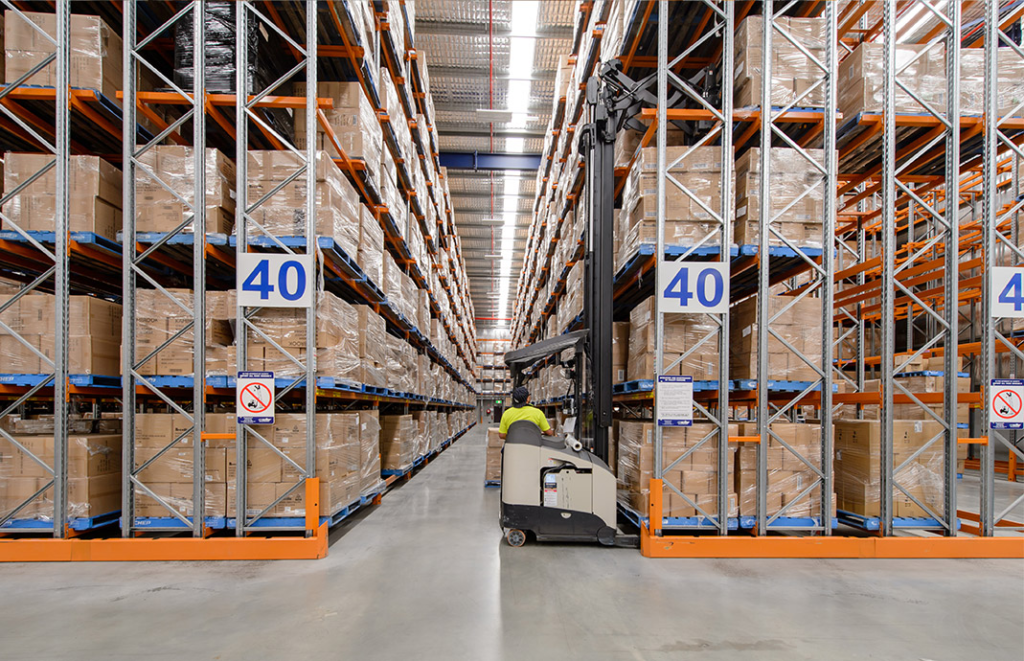
Drive-in drive-through racking enables the forklift to access storage lanes for compact pallet storage. It allows for maximum density, which is most suitable for low SKU turnover warehousing.
Push Back Racking
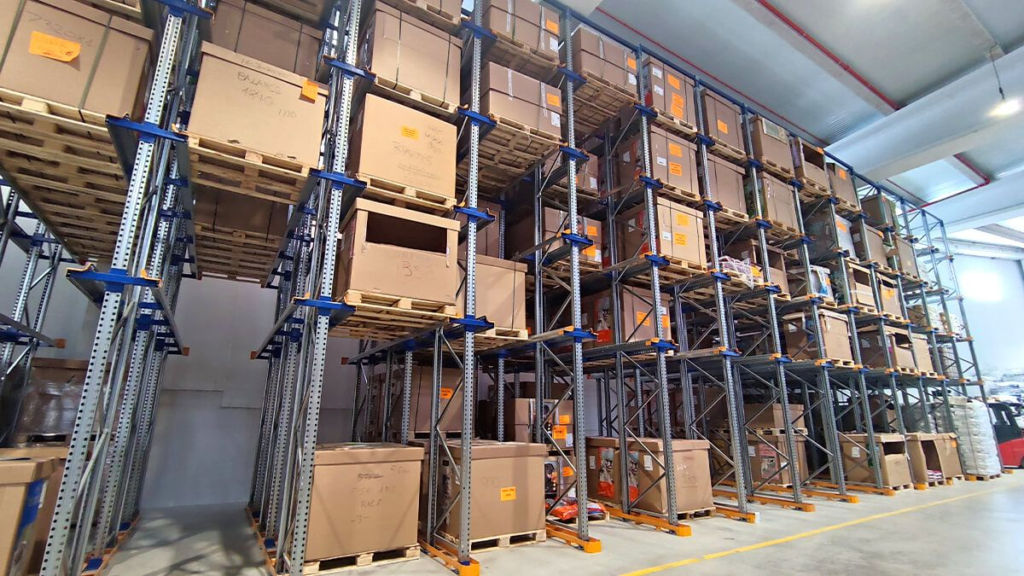
Push-back racking is a racking system that features stacked pallets on a single lane with nested racks. It provides high density, a LIFO system, and is applicable in medium SKU variety warehouses.
Pallet Flow Racking
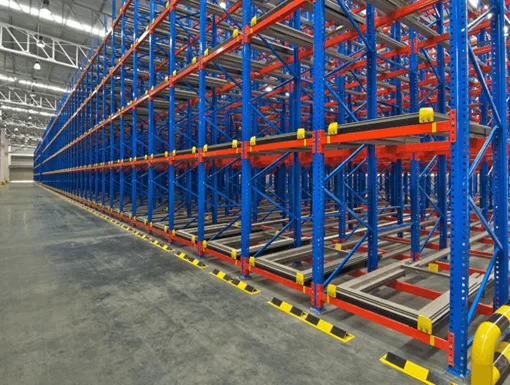
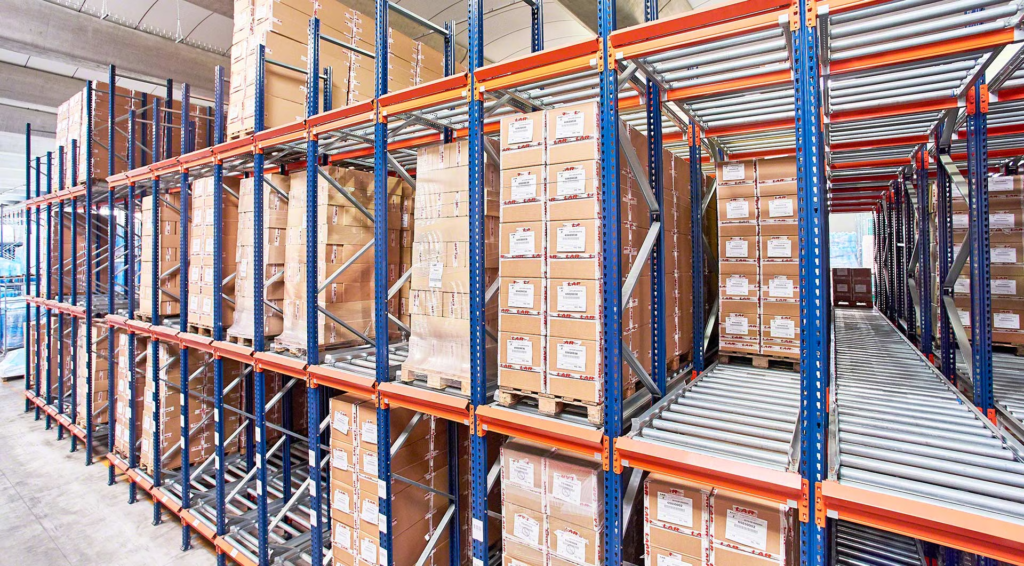
Pallet flow racking is a type of racking where gravity rollers provide automatic first-in, first-out operation. It assures high rotation efficiency, particularly for perishable goods and fast turnover.
Cantilever Racking
Cantilever racks are used to store long, irregular items such as pipes, timber, and steel bars. It offers flexible storage, accessibility, and is suitable for storage spaces for bulky materials.

Shelving Systems
Shelving systems are used to manually store small goods, tools, or lightweight items. They provide low-volume picking solutions, cost efficiency, and easy organization.
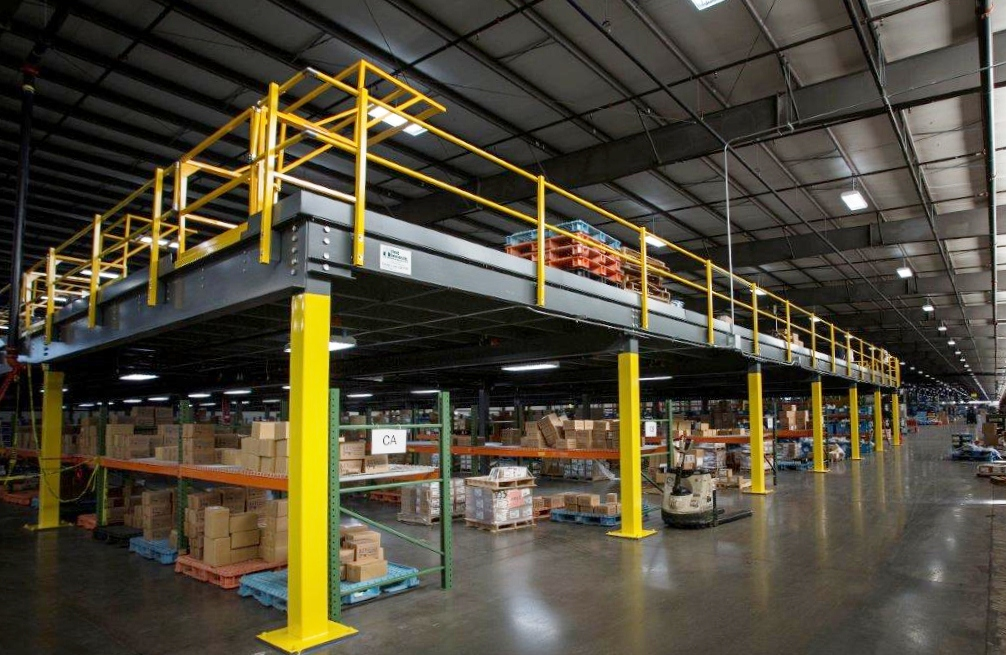
Mezzanine Storage
In order to maximize space in the warehouse, additional levels are built on the existing floor space, known as mezzanine storage. It increases capacity, ideal for offices or light storage above main operations areas, efficiently.
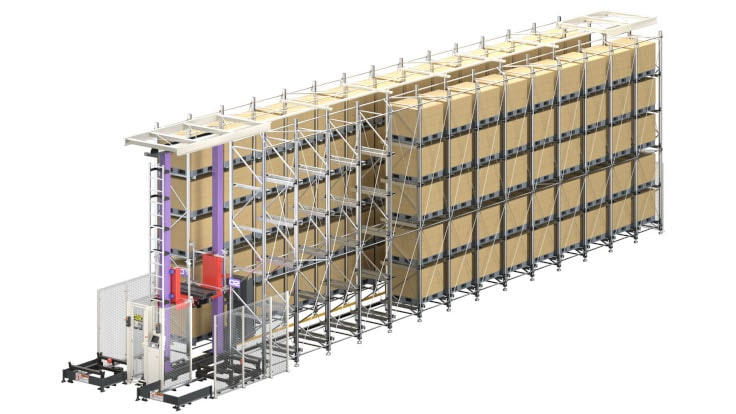
AS/RS Systems
High-efficiency warehouses use AS/RS systems to automate storage and retrieval with robotics. They save manpower, increase accuracy, and are great for large-scale operations and warehousing systems.
Selection is based on access, density, cost, SKU diversity, and rotation speed. Accessibility is a key factor in the design of goods flow in storage. A higher density results in a smaller space but can also decrease handling efficiency. Cost is a compromise between infrastructure and labor investments. Flexible systems are required for SKU diversity. To ensure the smooth operation of all operations, the picking should be efficient, and replenishment should be frequent when the rotation is fast.
Step 7 – Design Efficient Warehouse Layout
U-shaped Layout
The U-shaped layout provides an efficient in/out flow of the warehouse operations, reducing congestion. This makes for easy receiving and dispatching, and also helps to reduce internal travel time efficiently.
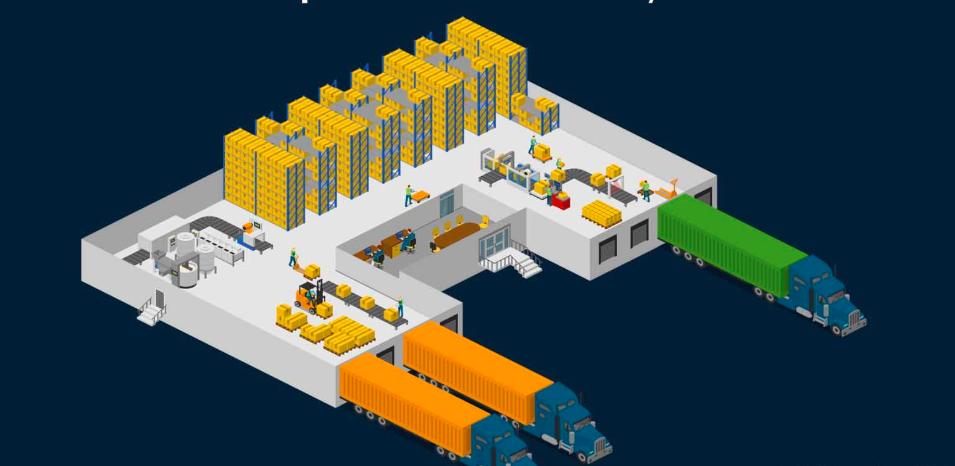
I-shaped Layout
I shaped the layout to optimize straight-line receiving to shipping. It’s best suited for high-volume warehouses that have continuous product flow systems.
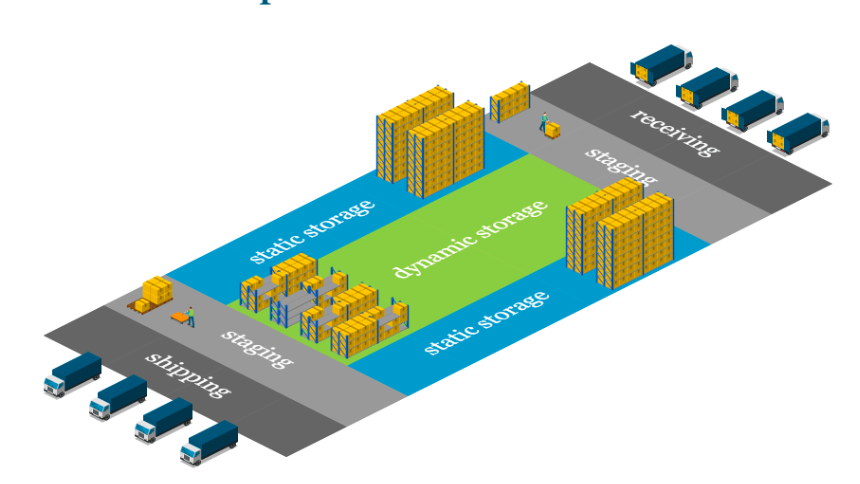
L-shaped Layout
A L-shaped layout is adopted to divide the receiving and dispatch areas to enhance the space organization in a small space. It reduces cross traffic and improves the efficiency of operation in the case of small warehouse designs.
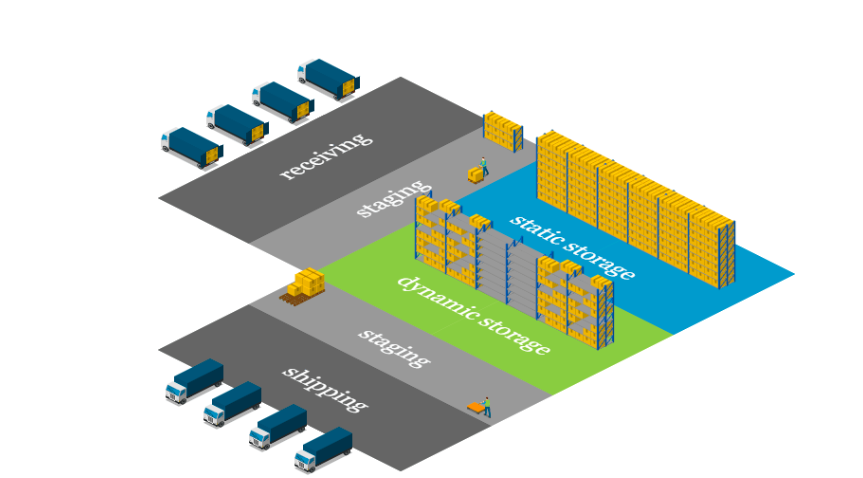
Aisle Width Planning
Designing the width of aisles to allow safe and efficient forklift and worker travel along the aisle. It is both high storage density and easy access to ensure the efficient management of the warehouse operations.
Dock Placement
The efficiency of receiving and dispatch operations in strategically designed warehouses is determined by the type of dock. It should minimize the distance goods travel and the time required to process goods flow.
Traffic Flow Planning
The traffic flow planning is utilized for planning the movement of goods and people in the warehouse facilities. It reduces congestion and makes travel efficient, reliable, and safe in all zones.
Congestion Avoidance
Congestion avoidance: prevent delays by separating material flow in a well-defined manner between inbound and outbound. It has a big positive impact on productivity and on minimizing operational risks in intensive warehouse situations.
Pick Path Optimization
In warehouse operations, the picking activity is the time that is spent on picking movements in order picking. It promotes efficiency and assists in quicker order fulfillment without committing to too many mistakes in the process.
Vertical Space Utilization
Vertical space utilization maximizes storage capacity by using racking systems that are efficiently and effectively designed. It frees up floor space and increases the general organization and efficiency of the warehouse.
Step 8 – Material Handling Equipment Planning
Forklifts
A forklift is an industrial truck that is used to lift and move heavy loads of palletized materials in warehouse facilities. They have excellent load capacity, are appropriate for dock storage yards, and are suitable for fast material handling.
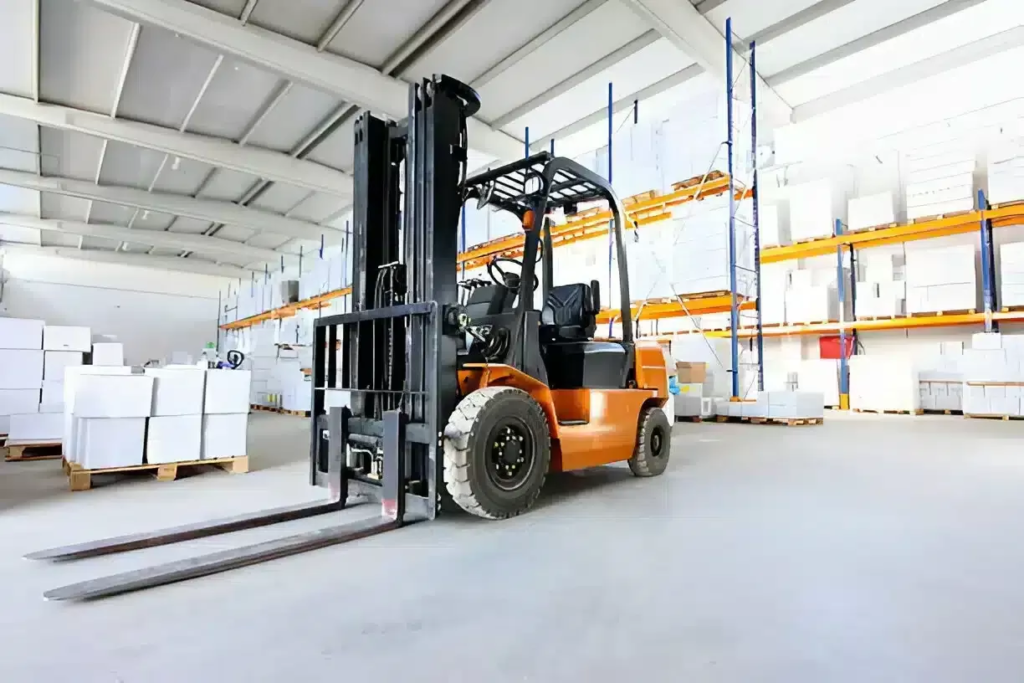
Reach Trucks
Reach trucks are narrow aisle forklifts that are used for high rack storage and high vertical warehouse operations. In addition, they can be successfully used in narrow aisles and can be used to provide long reaches in deep racking systems.
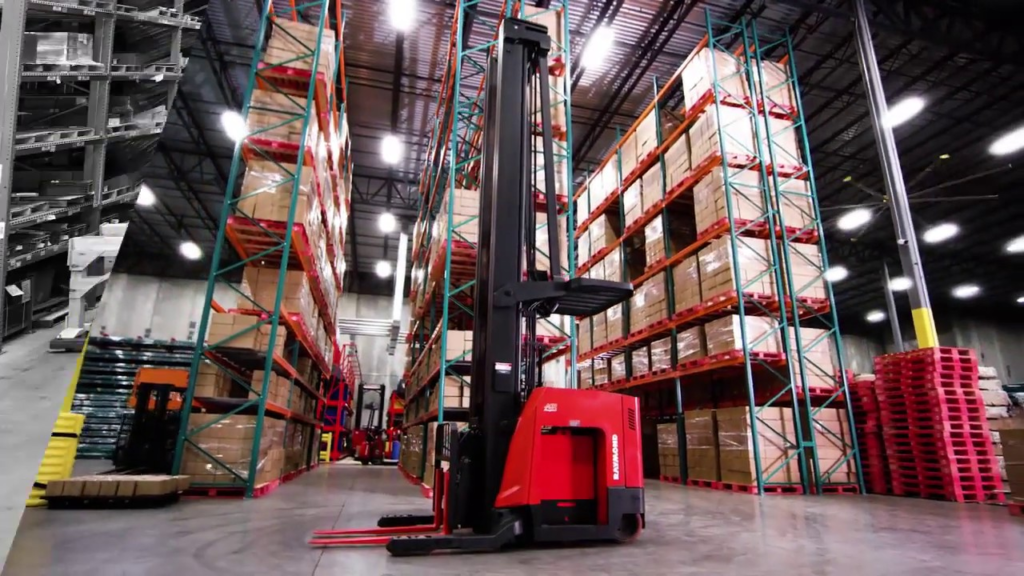
Pallet Jacks
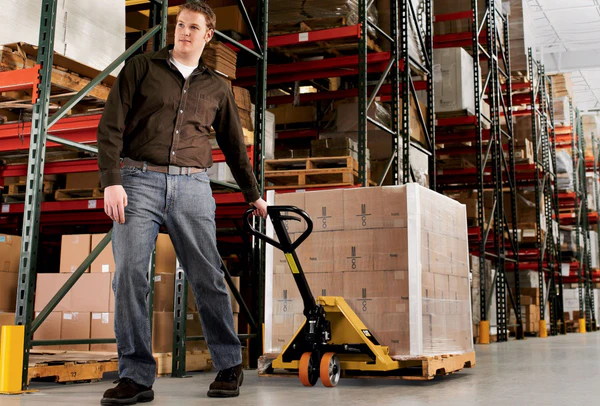
Pallet jacks are hand or electric devices that are employed to move pallets for short distances in warehouses. They are easily operated, cost-effective, and perfect for light-duty floor transport duties.
Conveyors
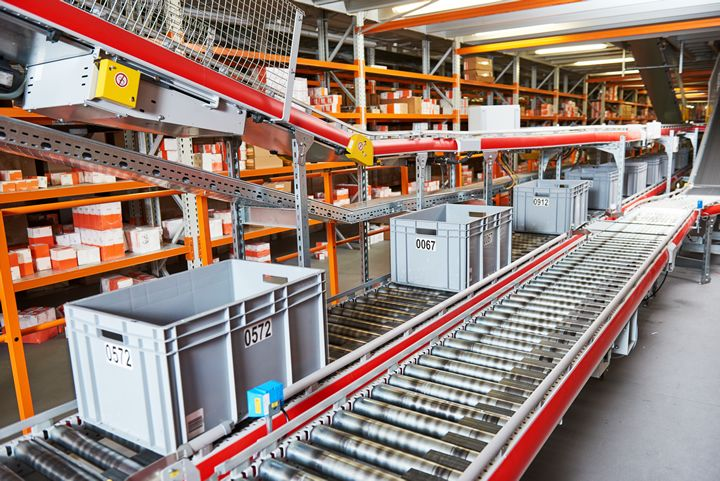
Conveyor Systems are mechanical devices to move products from one area of the warehouse to another with little or no human interaction. They can significantly improve the productivity of high-volume operations and packaging in warehouses.
Sortation Systems
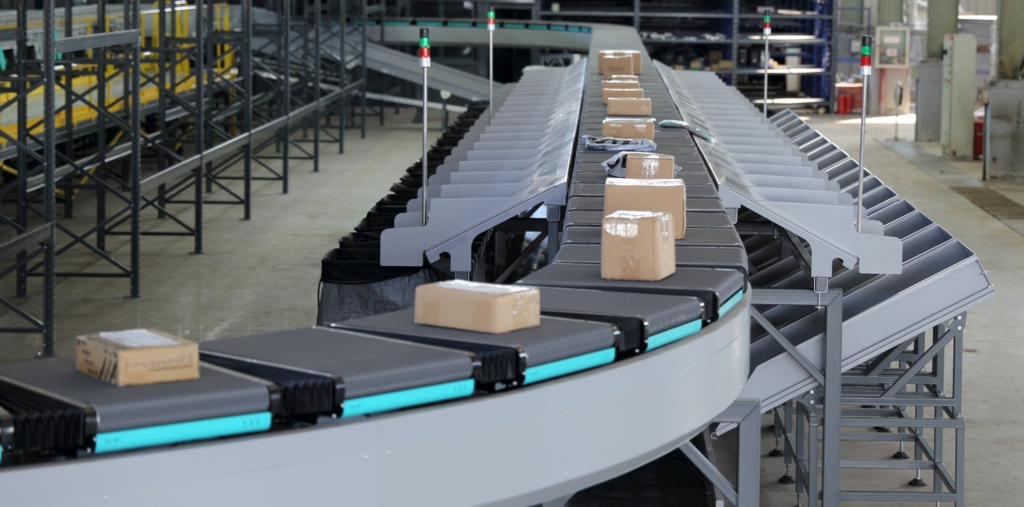
Sortation systems can automatically sort and route products to their correct destinations in distribution centers, where they can do this quickly and efficiently. They play a crucial role in making order fulfillment fast and significantly minimizing manual sorting mistakes.
AGVs
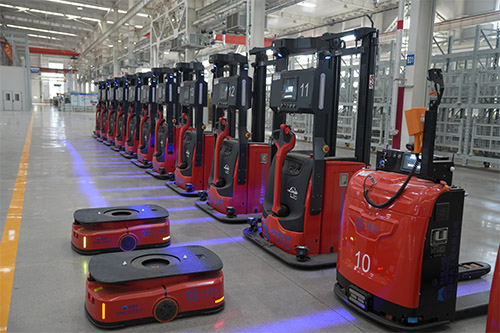
Automated Guided Vehicles (AGVs) are vehicles fitted with an autonomous navigation system and programmed to navigate a defined path to transport materials around a warehouse or production line without the need for humans. Their ability to decrease manpower expenses and enhance protection in repetitive material relocation tasks is effective in warehouses.
AMRs
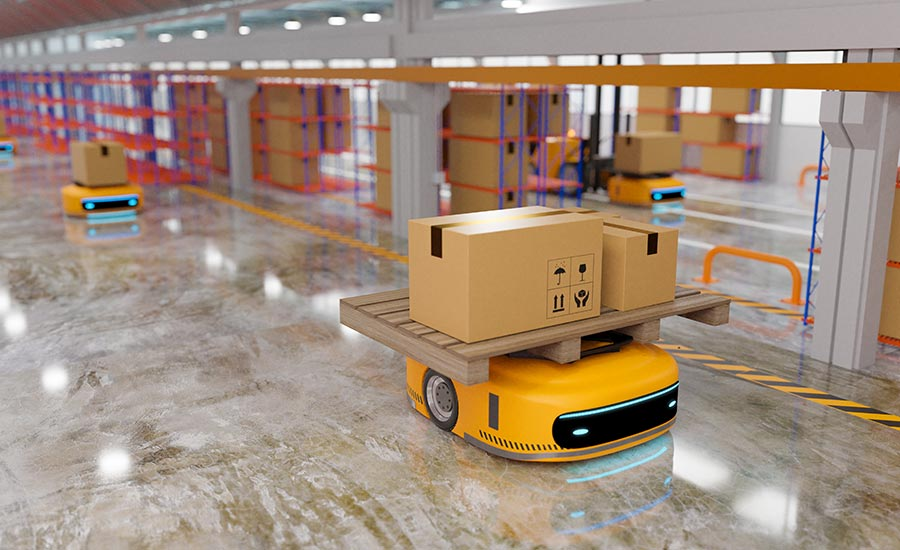
AAMRs are designed with sensors and AI to navigate the material movement in a warehouse flexibly and dynamically. They adapt easily and efficiently to new environments and enhance the efficiency of e-commerce fulfillment centers.
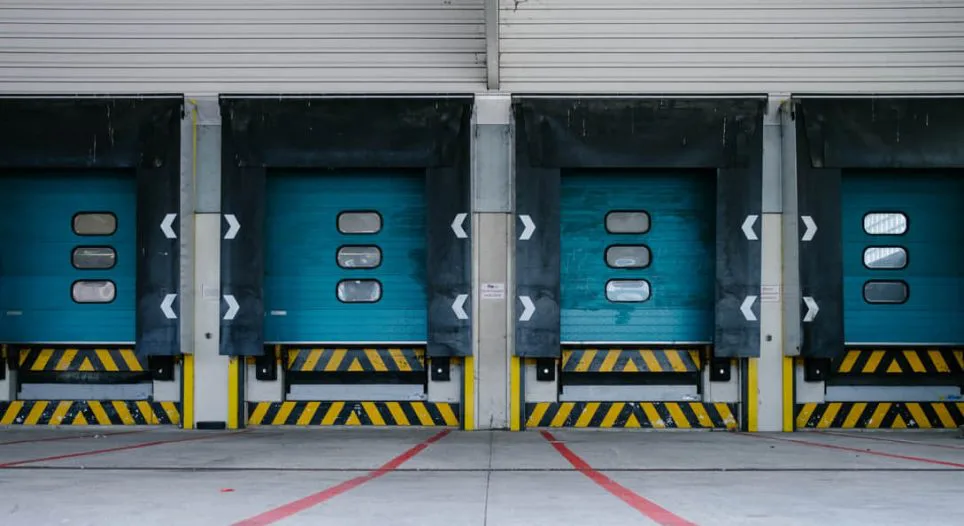
Dock Equipment
Dock equipment, such as dock levelers, bumpers, and seals, is used for safe loading and unloading of truck operations. It enhances the safety of docks, lessens damage, and simplifies cargo movement between transport and storage areas.
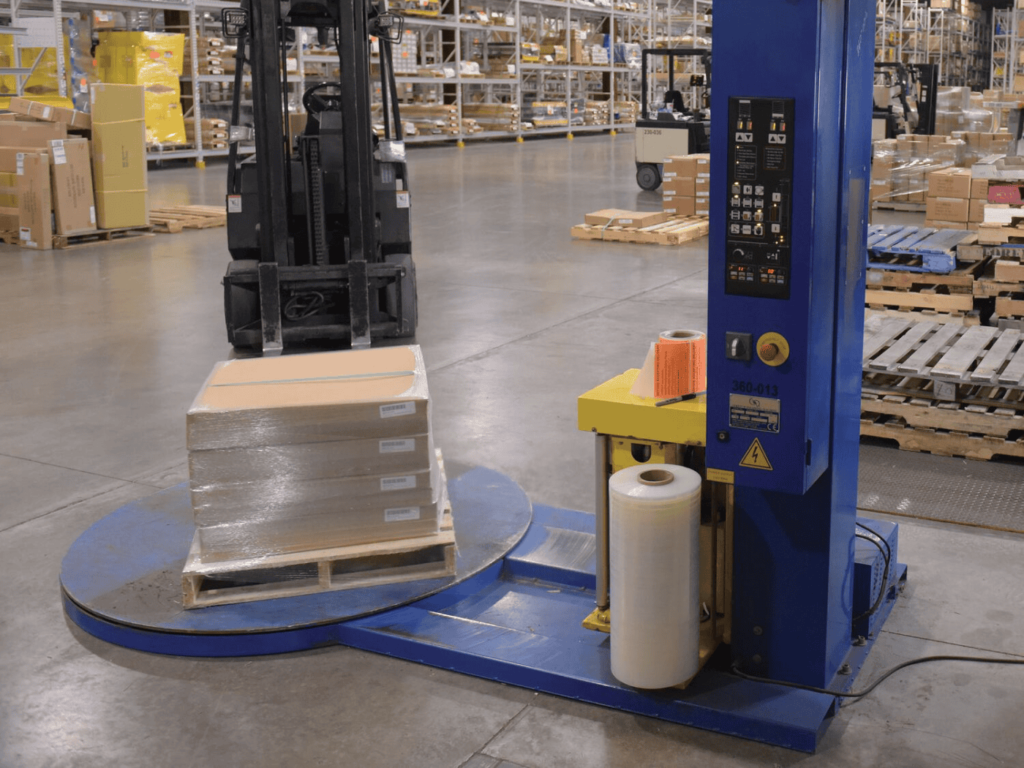
Packaging Equipment
The packaging equipment in the warehouse plans is used to automate and streamline the process of wrapping, sealing, and labeling the products for efficient operation workflow during product dispatch preparation. It can increase the product protection, quicken product shipping speed, and ensure the uniformity of product shipping.
Equipment selection is based on load type, lift height, travel distance, and throughput requirements. Good evaluation results in efficiency, safety, and cost-effectiveness in the planning process of warehouse material handling operations.
Step 9 – Warehouse Workflow Planning
This step involves planning the warehouse workflow for all the core operational processes in sequence. Receiving, inspection, putaway, replenishment, picking, packing, shipping, and returns processes are the backbone of the operation. Design is concerned with efficiency (touch reduction, route simplification, and queue reduction). These enhancements will provide for less time spent handling, less congestion, and a more efficient movement of material between zones. Each workflow is matched with quicker throughput and stable operational control during the facility operation. A better layout provides stability of operation.
Step 10 – Warehouse Technology Planning
Warehouse Management System (WMS)
Today, WMS provides efficient inventory tracking, order processing, and warehouse coordination of materials. The benefits of real-time data to warehouse management systems are vast and help to minimize operational errors and enhance decision-making.

Barcode Systems
Each day, barcode systems help to quickly scan products for accurate tracking and efficient warehouse operations. They minimize human mistakes and accelerate inventory tracking in storage and shipping procedures greatly.

RFID Technology
RFID technology is a technology used for real-time identification of products without having to scan them directly in the line of sight. It helps increase warehouse accuracy, boost speed, and effortlessly manage large-scale automated inventory systems.

Mobile Scanners
Today, mobile scanners enable workers to efficiently capture the inventory data in real time with handheld devices that are wireless. They increase mobility, decrease delays, and increase productivity in warehouse operations significantly in daily activities.

Voice Picking Systems
Voice-picking systems are used to direct workers to instructions that they follow in order to complete warehouse orders hands-free. In modern logistics, they play a vital role in cutting down picking mistakes, accelerating processes, and improving the overall effectiveness of warehouses.

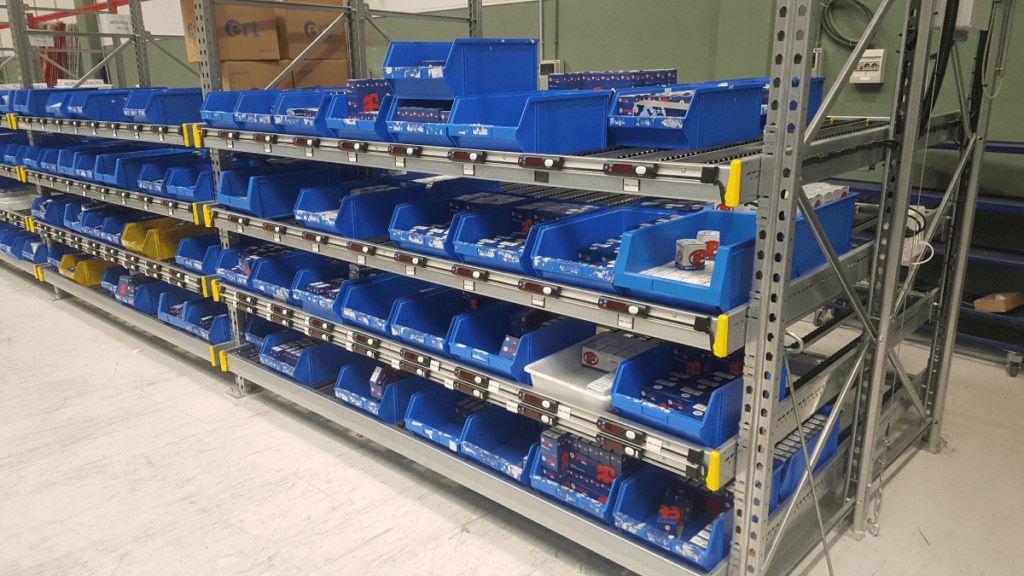
Pick-to-Light Systems
Pick-to-light systems are used to effectively indicate to workers during order picking activities. Today, they can lead to several benefits in terms of accuracy, training time, and picking speed in the warehouse.
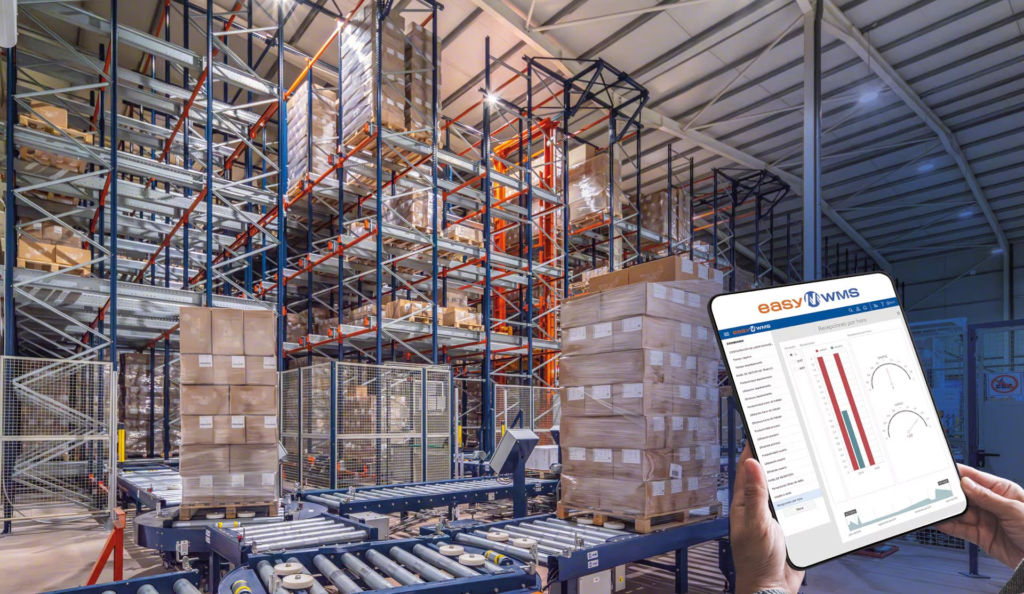
Inventory Visibility Dashboards
Inventory Visibility Dashboards offer efficient, real-time visibility of inventory and its movement throughout warehouses around the world. They assist managers in making data-driven decisions and in minimizing stock-outs effectively and in real time.
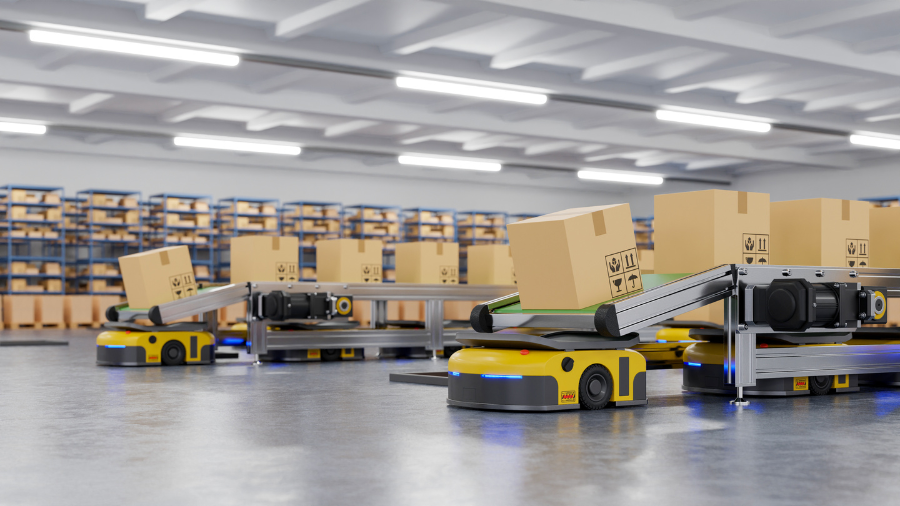
Automation Integration
Automation integration is the integration of robotics and warehouse systems for better overall performance. It lowers labor costs, enhances accuracy, and provides a good way to scale warehouse operations in logistics systems.
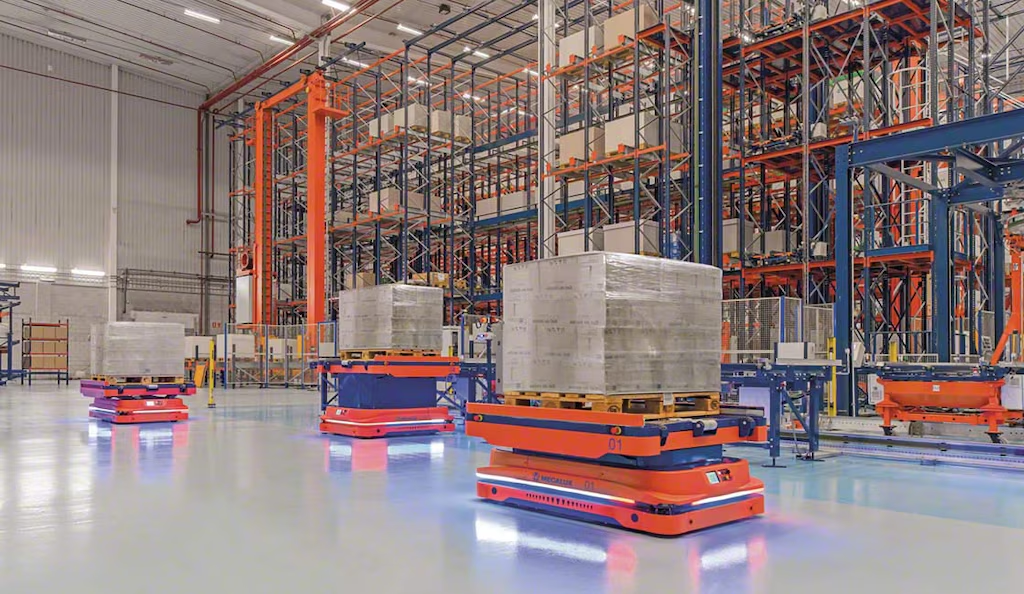
ERP Integration
Seamless transfer of data in real-time between warehouse operations and enterprise systems is achieved through ERP integration. It increases visibility, coordinates, and synchronizes inventory with business planning across the departments efficiently.
Step 11 – Labor Planning
Optimize the use of manpower in the plan of warehouse and focus on labor planning. Daily, managers are responsible for the workforce size and the design of shift planning for balanced operations. Teams establish productivity goals, determine training needs, and continually enhance workplace ergonomics. Retention strategy emphasizes engagement, career development, and attrition reduction. Careful planning helps to ensure that the warehouse runs more smoothly and that its performance is stable over time. Ongoing monitoring ensures the efficiency and satisfaction of the workforce are maintained at a consistent level.
Step 12 – Warehouse Safety Planning
While setting up a warehouse, concentrate on warehouse safety planning on key operational risk controls. During incidents, fire protection and emergency exits ensure a quick response. Rack safety, forklift safety, and pedestrian lanes reduce collision risks. When operating equipment and dealing with hazardous materials, PPE is used to prevent injuries to workers. Hazardous goods compliance is responsible for safe storage and transport practices. Continuous safety audits help to uncover weaknesses and enhance the overall safety of the warehouse. Increasing the safety and resilient operation of the warehouse is achieved through continuous improvement.
Step 13 – Budgeting for The Plan of Warehouse
When planning a warehouse, it is important to allocate the budget to the right cost buckets. Consider building racks, forklifts, dock systems, WMS, labor, training, safety, maintenance, and contingency reserve. Clearly distinguish between capital expenditure and operating expenditure. ROI Planning involves assessing the financial viability, efficiency, and payback period of investing in a warehouse. Effective planning is a fundamental element of sustainable budgeting, which involves making balanced investment decisions, enhancing operations, and supporting the scalable growth of a warehouse.
Common Warehouse Planning Mistakes Beginners Make
- Under Estimating Future Growth: In the beginning, people plan warehouses according to their current needs, but they don’t look into the future. This results in a space crunch in the expansion period and expensive redesigns later on.
- Inadequate Aisle Sizing: Wrong aisle dimensions make the operations involved in material handling inefficient and slow down considerably each day. It also causes congestion hazards and restricts safe forklift operating paths in general.
- Wrong Rack System: Use of an incorrect racking system results in significant losses in storage space and flexibility over time. It can also present safety hazards and restrict inventory accessibility in general.
- Failure to acknowledge Workflow: The efficient flow of goods within the warehouse area is lost. This leads to delays, mistakes, and a decrease in productivity during the daily operation of overall efficiency.
- Insufficient receiving space: will result in inbound shipments getting congested and delays in the inbound process. It hinders the unloading schedules and reduces the flow efficiency of warehouse operations.
- No Replenishment Strategy: Without replenishment planning, stockouts and overstock situations often occur in warehouses. This results in lost order fulfillment and inventory balance control problems in general.
- Poor labeling: Workers struggle to identify the inventory every day because of poor labeling systems. It increases picking errors and reduces overall warehouse accuracy significantly, affecting performance rates.
- Over/Under Automation: Too much or too little automation in the warehouse leads to an imbalance in the efficiency levels of the warehouse overall. It will either cost more or be less productive if it is the wrong system to plan for.
- No KPI Tracking: Warehouse performance problems go undetected for extended periods of time without KPI tracking. This blocks any improvements that can be made on time and impacts the overall efficiency of the operational decision-making process.
Key Warehouse KPIs to Measure Success
Space Utilization
Space utilization is the extent to which warehouse floor and vertical storage space are used. By planning the layout of the store efficiently, a lot of wastage can be avoided, and the overall performance of the storage capacity will be greatly improved.
Inventory Accuracy
Inventory accuracy ensures that stock is recorded correctly and is in line with the stock on hand in the warehouse system. Regular cycle counts and audits help minimize discrepancies and prevent costly stock errors.
Dock-to-Stock Time
The speed of dock-to-stock time is measured from goods received to goods in storage. This will increase the efficiency of flow and will also help in order fulfillment operations to be fulfilled at a faster rate.
Pick Accuracy
Pick accuracy indicates the level of correct items picked in the order picking process stage. High accuracy leads to lower returns, higher customer satisfaction, and increased warehouse reliability overall.
Order Cycle Time
Order cycle time measures the time it takes to complete the order, from placing to delivery. The shorter cycles ensure responsiveness, boost customer confidence, and increase overall operational efficiency.
Labor Productivity
Labor productivity indicates the output produced by each worker in a warehouse environment. Higher productivity reduces costs and ensures efficient use of human resources overall.
Cost Per Order
Cost per order = Total operating expense needed for each order. Reducing this value will enhance the long-term sustainability of warehouse management and boost profitability.
Damage Rate
Damage rate is a measure of the percentage of the goods that are damaged during the handling and storage process. The lower the damage rates, the better the handling practices are, and the better the compliance with warehouse safety standards.
Capacity Utilization
Capacity utilization is a measure of how efficiently warehouse space is being used. Utilization optimizations help maximize storage efficiency without going over operational limits and space requirements.
Why Lracking Is a Smart Choice for Warehouse Planning
Lracking has proven manufacturing experience and end-to-end project support, along with customizing options that make it an effective solution for efficient warehouse set up. With 16+ years of experience, ISO and CE certified products, free layout drawings, accurate quotes, quick production, secure global shipping, and installation support, Lracking enables businesses to create storage systems that optimize space utilization, streamline workflow, and facilitate long-term business growth. Its extensive product selection also makes it easier and cost-effective to customize your warehouse.
Conclusion
The warehouse planning process is crucial for optimizing the efficiency, accuracy, and long-term success of warehouse operations. By using a strategic and data-driven approach, businesses can optimize their warehouse space, cut down on costs, and increase overall productivity, all while improving operations. Continuous improvement is a means of adapting to change in demand and technology. The end goal of well-designed warehouses is improved supply chain performance and customer satisfaction. Businesses can benefit from scalable, efficient, and future-ready warehouse systems for sustainable growth over time by leveraging solutions such as Lracking, which offer reliable, state-of-the-art warehouse development support, customized designs, and proven expertise.