In the modern warehouse world, a standard storage system is silently sucking your productivity and profitability. Customized warehousing solutions are storage systems, layouts, equipment and processes that are designed specifically for your products, workflows and growth goals. These solutions cater to specific product types, inventory levels, and future business growth strategies. The demand for customized infrastructure is growing in companies in ecommerce, logistics, and manufacturing sectors to remain competitive. This article takes a look at why customization is important, what solutions you can personalize, and the top custom warehousing solutions provider. Let’s get started!
The State of Modern Custom Supply Chain Solutions: Why Generic No Longer Works
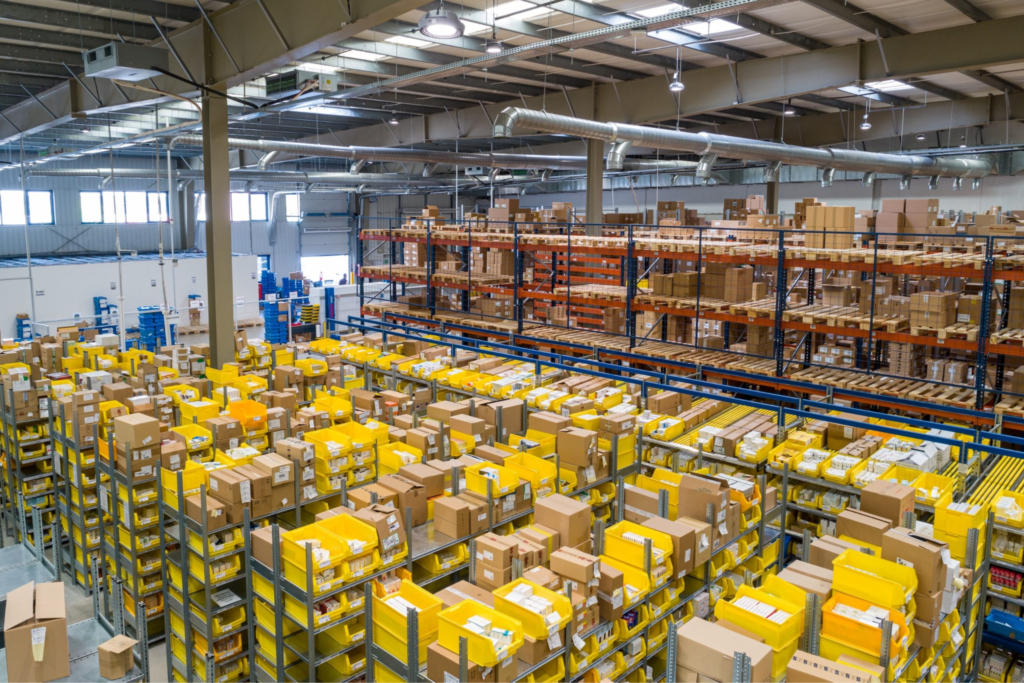
Today, warehouses house more product types than ever before. Today, several industries have to deal with thousands of SKUs at a time in their operations. This diversity cannot be handled efficiently with a generic racking/shelving system. Vertical space is wasted, picking is slowed down and products are damaged regularly due to mismatching storage. Poorly designed layouts quickly add up to excess labor hours. The world-wide warehousing market is hundreds of billions of dollars a year and inefficiency multiplies quickly. Today’s businesses aren’t just looking for storage, they’re looking for fulfillment infrastructure. Customized warehousing solutions address that need right on the spot.
Why Customized Warehousing Solutions?
Operational Fit Over Compromise
Standard racking is seldom a match for your actual inventory size, weight or turnover. With generic systems, operations have to bend around storage, not storage around operations. Customization fills this expensive gap for good.
Space Utilization
Custom layouts take into consideration the ceiling height, column placement, and floor load capacity. Businesses always achieve 20-50% more storage density than generic configurations. All cubic metres are put to use at last.
Workflow Optimization
Customized warehousing is designed with an understanding of the real-time movement of goods. There are no hangups in inbound receiving, put-away, picking or dispatch. Less travel time equates to increased throughput and fewer expensive operational chokepoints.
Scalability
Modular custom systems are scalable and reconfigurable with changing product mix and volume of inventory. When operations expand or relocate, companies aren’t forced to make an expensive complete switch. The capital invested remains secure and continues to provide real value.
Safety and Compliance
Custom designs are done considering local building codes and NFPA 13 sprinkler clearance requirements. From the outset, seismic zone factors, load-bearing capacities are engineered in. Compliance is designed into the system, rather than added on later.
Industry-Specific Requirement
Different storage sectors such as cold chain, pharmaceutical, hazardous materials and automotive storage have different regulatory requirements. These specialized handling and compliance requirements cannot be met with standard solutions. The challenges of each industry are solved precisely and reliably with purpose built systems.
Return on Investment
The consistent level of customization cost savings is achieved through reduced labor, fewer product damages, and faster fulfillment. Companies also need less square footage to store the same amount of inventory. The savings in the long term are much greater than any initial investment you may make.
Generic vs. Customized Warehousing Solutions — Key Comparisons
| Evaluation Criteria | Generic/Standard Solutions | Customized Warehousing Solutions |
| Space Utilization | Average 55–65% of available cubic space used | Up to 85–95% of cubic space utilized with tailored layouts |
| Upfront Cost | Lower initial investment | Moderate-to-higher upfront; lower total cost of ownership |
| Scalability | Limited; requires full replacement for major changes | Modular design allows incremental expansion or reconfiguration |
| Fit for Product Type | Designed for average loads/dimensions | Engineered for specific SKU dimensions, weights, and turnover rates |
| Safety Compliance | Basic compliance met | Fully tailored to fire codes, seismic zones, and industry regulations |
| Labor Efficiency | Standard pick paths; higher travel time | Optimized pick paths reduce travel time and labor hours |
| Damage Risk | Higher due to poor product-to-system fit | Reduced through purpose-built support, dividers, and load handling |
| Industry Suitability | General-purpose only | Suitable for cold storage, pharma, automotive, e-commerce, and more |
| Long-Term ROI | Diminishes as business scales | Improves as system grows with the business |
Key Components of a Customized Supply Chain Solutions – Worth Understanding
Pallet Racking Systems
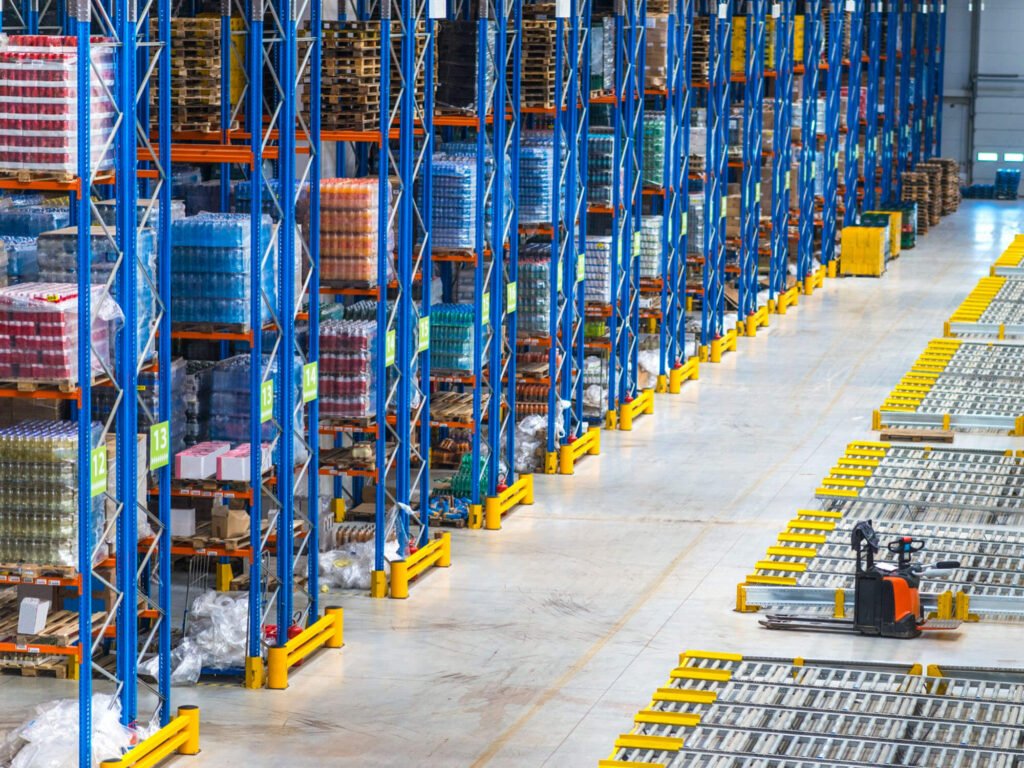
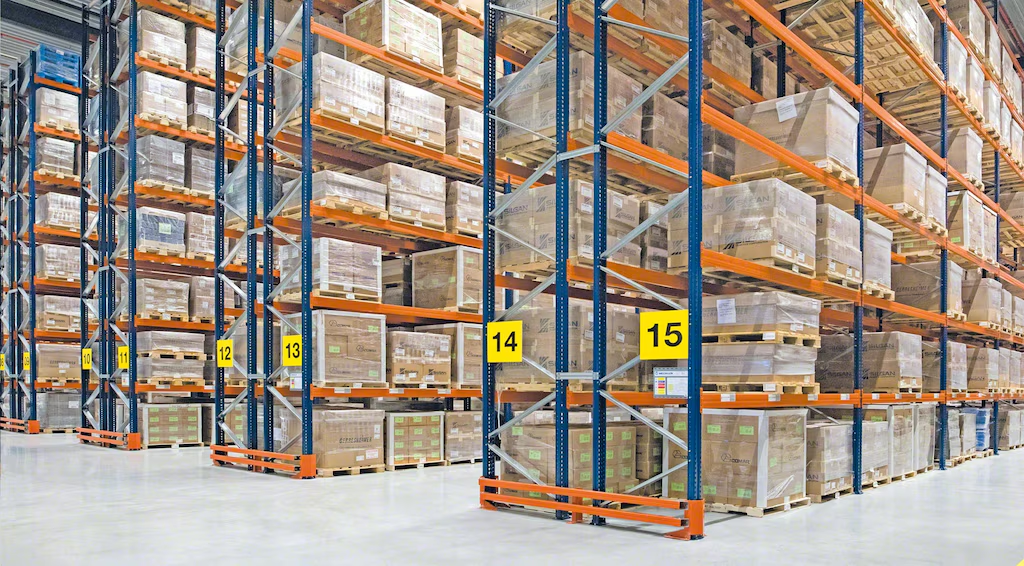
Selective racking allows for direct access to all stored pallets. Drive-in systems are used for maximum density of single-SKU bulk storage. Push-back and pallet flow racks are appropriate for medium to high volume applications. Cantilever is used to lift long, irregular objects such as timber or pipe.
Shelving Systems
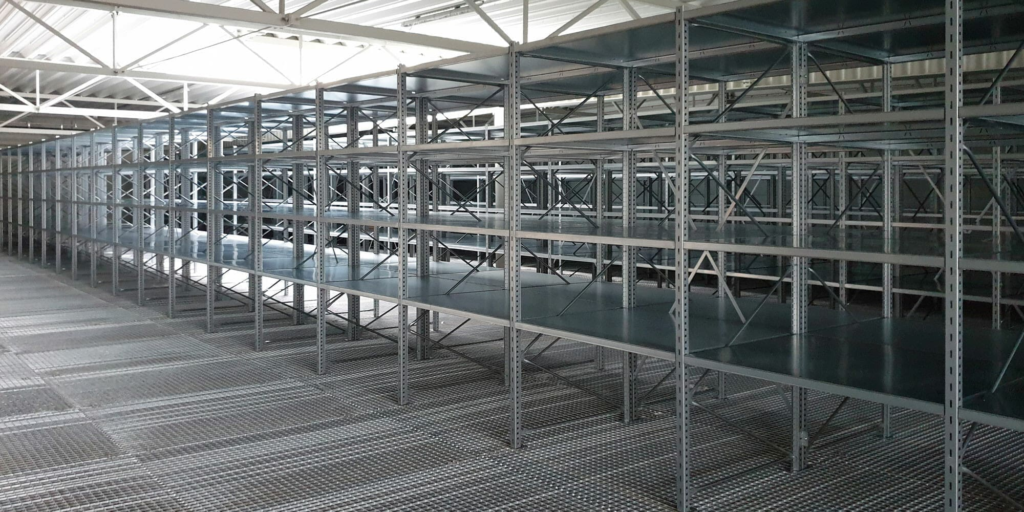
Light duty Shelving is ideal for small parts, documents and retail back-stock. Medium duty is used to move moderate loads throughout distribution and manufacturing facilities. Every day, industrial shelving is subjected to heavy loads in demanding, high throughput warehouse operations. Each tier is designed for truly distinct use cases.
Mezzanine Floors
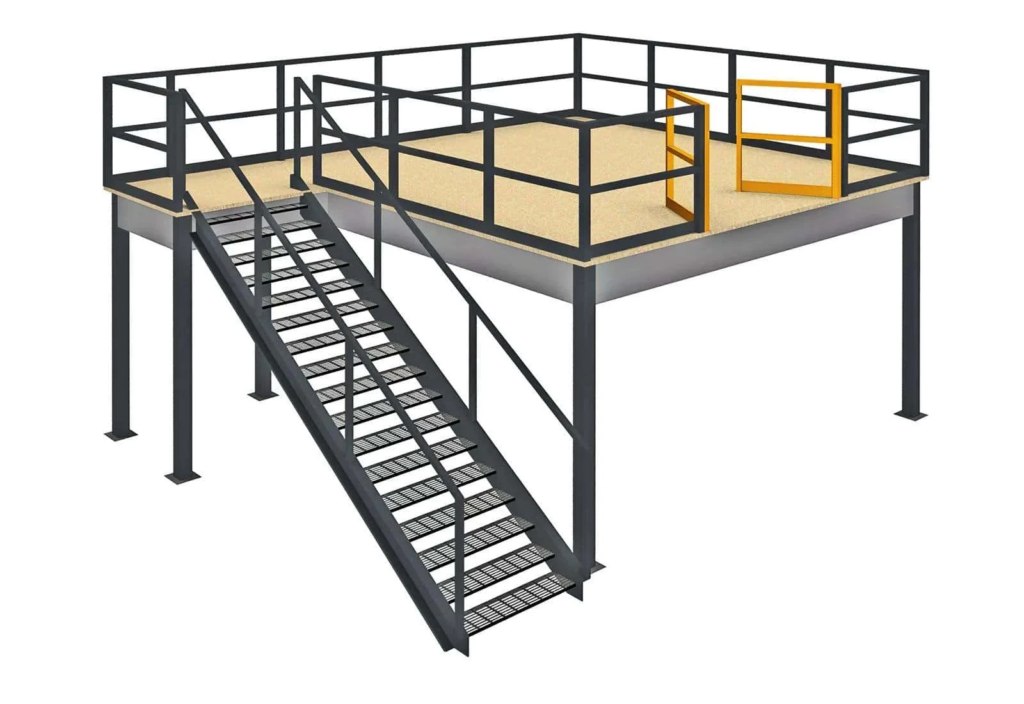
Mezzanines provide a new level of useful space within existing building shells in an efficient way. They double the operating space with no costly building extensions or relocations. They are employed by businesses for pick and pack stations, offices or overstock storage. Safe load capacity for all applications with structural engineering.
Conveyor and Automation Systems
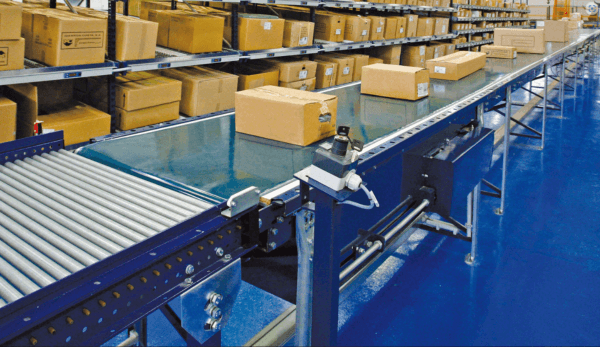
Semi-automated conveyors are used to transport goods between zones with limited manpower. Fully automated systems seamlessly combine sorters, robotic pickers, and dispatch lanes. The automation level is optimized based on throughput capacity and layout complexity. Both options will greatly save on labor costs and order processing time.
Warehouse Management Systems
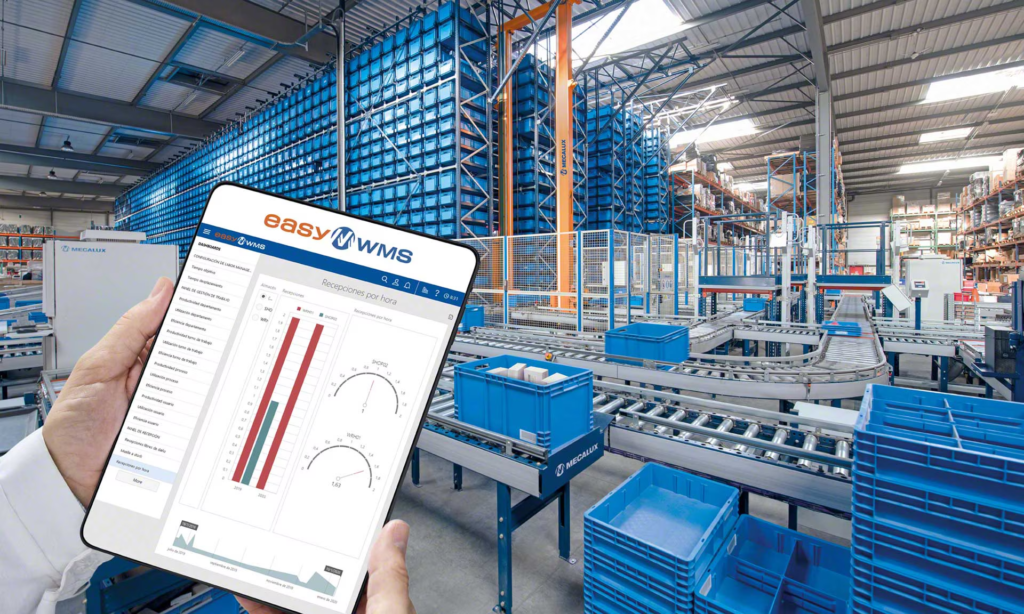
A WMS is the software solution that controls all inventory movements and tracking. It guides put-away, picking, replenishment and dispatch in real-time. Barcode or RFID would help a lot with stock visibility. Even the best-designed physical systems don’t run effectively without a WMS.
Safety Accessories
Every day, forklift impact damage is prevented in upright frames through the use of column guards. Rack end barriers prevent vehicle collisions at the ends of aisles where there is a high traffic flow. Safety netting keeps workers from being injured by falling objects at storage levels. Wire Decking offers consistent pallet support and full visibility of load throughout.
Which Warehousing Solutions Can Be Customized?
Pallet Racking — Fully Customizable
Pallet racking is the most flexible warehousing system today. It is used in many businesses, including the creation of efficient and scalable storage systems. Some of the customizations you can do with Pallet racking systems are as follows:
Beam Height and Spacing
The height of the beam is determined by the highest pallet that a business normally stores. Industrial goods require greater vertical spacing when they are taller. The smaller the consumer product the smaller the beam interval, hence more levels can be fit vertically. This makes the best use of the building’s height efficiently.
Bay Width and Depth
The size of the bays depends exclusively on the type of forklift that is used in the warehouse. Narrow aisles are needed for reach trucks as opposed to counterbalance forklifts. The depth is set based on a standard, euro or custom pallet size. If this is done correctly, the operation never suffers from any time-consuming problems from day one.
Load Capacity Configuration
Upright frames and beams are rated based on actual load weights per shelf level. Steel distribution is among heavy industries which require much higher ratings. Automotive parts storage typically includes heavy, irregularly heavy loads. Before engineers determine any structural component, they calculate the total bay loads.
Racking Type Selection as Customization
- Selective Racking: Every position is individually accessible without touching other pallets. This direct-access configuration is best for operations that carry hundreds of SKUs, but have low per-SKU volume.
- Drive-In/Drive Through Racking: Forklift trucks are able to drive into the racking lanes to set or get pallets. Typically, high-volume, low-SKU businesses, such as beverage distribution, will have either LIFO or FIFO storage systems to maximize storage density.
- Push-Back Racking: Loaded pallets are placed on a series of nested carts which automatically move along inclined rails backward. Ideal for warehouses with a moderate number of SKUs and efficient lane access, but requiring semi-dense storage.
- Pallet Flow Racking: Gravity moves pallets forward as front stock is picked and removed with the help of rolls. This is the system used for perishables and date-coded inventories to ensure a first in first out approach without compromises.
- Cantilever Racking: Horizontal arms are attached to the vertical columns and there is no obstruction in the front of the rack. It is the open arm design that can’t be accommodated with standard racking, and is mainly used for pipes, structural timber, sheet metal and oversized furniture.
Finish and Protective Coatings
Powder-coat finishes are not only for aesthetics in the warehouse, but they also provide a useful function. Zones are marked with different colors to aid in the picking process and help employees navigate. Cold store and humid facility anti-corrosion coatings are provided for racking used in these environments. This significantly increases the structural life span with safety compliance.
Accessories and Add-Ons
Wire decking, pallet supports and row spacers are all set up according to the system. Damage from forklift impacts is minimized in high traffic locations by column protectors. Travel and main aisle structural uprights are protected by rack guards. All accessories are chosen according to the working environment.
B) Warehouse Mezzanine — Fully Customizable
A warehouse mezzanine is a platform that is raised above the ground level of your building structure. It can effectively double the usable floor space without the need for any relocation or expansion. Each mezzanine is designed to the specific dimensions, ceiling height and load specifications of the space by the manufacturer.
Various structural specifications are required for light office use, pick-and-pack and heavy pallet storage applications. Placement of stairs, handrails and pallet gates are accurately determined with regard to operational processes and safety standards.
Decking can include steel grating for ventilation or steel plate for heavy loads. Mezzanines fit in seamlessly with the racking system below and above the platform level. These can be used in retail BOH storage, e-commerce fulfillment floors, and tiered automotive parts storage.
Free standing and building supported structures are fully custom engineered prior to installation. In most places, local building codes will need engineering stamps and compliant fire egress routes.
Shelving Systems
Shelves are adjustable to different pitches to allow for the mixed height of products in one system. Specific width and depth and load rating to fit specific inventory profiles. Mobile compactus shelving is a shelving system that removes the fixed aisle completely, allowing for a dramatic increase in storage capacity without altering the building footprint.
Conveyor and Material Handling Systems
The speed, incline, width, and divert are designed for particular facility layouts. Conveyor system design is a direct result of throughput targets from the beginning. The integration with picking robots, automated sortation or manual pack stations maintains the efficiency of the process.
Warehouse Layout and Slotting
Product Slotting is one of the most effective and often overlooked warehousing customizations that can have a tangible impact. ABC analysis enables to place the fastest moving SKUs closer to the dispatch, which can save hours of labour. There are several aisle designs that are suitable for various building shapes and operating patterns: straight-through, U-flow, or L-flow.
Lighting, Climate Control, and Safety Systems
Cold room racking is made with special coatings that can resist the freezer temperatures without damaging the structure. High bay LED lights are carefully placed for optimal visibility on the racking heights. In-rack sprinkler integration is needed for tall racking systems, and must be carefully planned during the design phase.
The Customized Warehousing Solutions Design Process — What to Expect
Step 1: Needs Assessment
SKU’s, dimensions, weight and turnover velocity dictate all design decisions. Requirements for throughput, size of the workforce and growth forecasts are all important inputs. A custom warehousing solution can’t be specified or costed without this foundation.
Step 2: Site Survey
The physical dimensions of the building, column grid and floor load capacity are measured on site. Racking placement is directly affected by dock positions, fire egress routes, and sprinkler layouts. This accurate information on the location helps to avoid redesigning a project and noncompliance issues at a later stage.
Step 3: Concept Design
Proposed layouts are created based on actual site and inventory data gathered in Step 2. Type of racking, mezzanine options, and aisle configurations are considered for maximum storage efficiency. Storage capacity calculations validate that the solution will satisfy present requirements and future growth objectives.
Step 4: Engineering and Compliance Review
All the structural calculations ensure that every part of the racking is safe for the required load-bearing. Load certifications are clearly recorded for continuous compliance and insurance. Where planning and/or building approval is legally required, local authority submissions are completed.
Step 5: Fabrication and Procurement
Components are fabricated and procured in accordance with approved engineering specifications. Custom dimensions, coatings and load ratings are verified before any production occurs. Quality tests during the fabrication avoid on-site installation delays and structural non-conformances.
Step 6: Installation
Installation is a methodical process, carried out by a team of professionals to ensure that the project is completed without disrupting the ongoing activities of the warehouse. Live facilities can continue to operate during the installation process with phased schedules. All structural connections are checked as they are being installed against engineering drawings.
Step 7: Commissioning and Training
System handover involves formal load capacity labelling of all racking bays and levels. Safe loading practices, weight limits and inspection procedures are covered in detail during operator training. There is safety signage throughout and every team member understands it correctly.
Industry-Specific Customized Warehousing Solutions Requirements
| Industry | Primary Storage Challenge | Recommended Customizations | Key Compliance Considerations |
| E-commerce / Retail | High SKU count, rapid pick rates, returns | Mezzanine pick floors, dynamic shelving, slotting optimization | Fire egress, ergonomic pick heights |
| Pharmaceutical | Temperature sensitivity, traceability | Climate-controlled racking, segregated zones, access control | GDP (Good Distribution Practice), FDA/regulatory standards |
| Automotive | Wide product size range (fasteners to panels) | Cantilever racking, bin shelving, heavy-duty selective racking | Load certification, seismic compliance |
| Food & Beverage | FIFO management, hygiene, cold chain | Pallet flow racking, stainless/food-safe coatings, cold-room systems | HACCP, FDA food safety, cold chain integrity |
| Manufacturing | WIP and raw material flow | Drive-in racking, point-of-use shelving, kitting zones | Load floor limits, fire suppression integration |
| 3PL / Logistics | Multi-client, multi-product flexibility | Modular adjustable racking, mezzanines, flexible layouts | Client-specific SLA compliance, liability for product damage |
| Retail Back-of-House | Limited space, stock accessibility | Mezzanine for overstock, mobile shelving, gravity flow | Building code permits for mezzanine structures |
Common Mistakes to Avoid When Specifying Customized Warehousing Solutions
- Underestimating the future growth: Plan for 5–7 years’ growth, not the current stock.
- Failure to observe forklift clearance requirements: Minimum aisle widths vary by type of forklift – if these are not observed, a system is inoperable.
- Ignoring floor load capacity: Racking legs may have concentrated point loads that exceed the slab design capacity – always check with a structural engineer.
- Selecting the cheapest installer that does not have engineering credentials: Custom systems require load-certified, code compliant designs, not just price-competitive assembly.
- Ignoring safety accessories: Column protectors, safety nets and pallet stops are not optional extras, they are an integral part of the system integrity and worker safety.
- Not considering fire suppression: In-rack sprinkler systems are often needed for high-bay racking systems, so this should be planned for, and not retrofitted.
Lracking Offers Affordable Custom Warehousing Solutions
Lracking is a trusted brand in China, and is a manufacturer engaged in warehouse pallet racking and mezzanine flooring solutions. Having been in business for almost 20 years, they offer bespoke storage solutions such as selective pallet racking, cantilever racking, drive in racking and mezzanine platforms. Lracking can provide everything in project execution including layout design, engineering consultancy, precise quotation, prompt production, safe shipping all over the world and professional guidance for installation. With 18,000 square meters of operation, the company provides products certified by ISO and CE, competitive prices, quality control and warehousing solutions customized to suit the different operating needs of clients in 70 countries.
Evaluating a Customized Warehousing Solutions Provider — What to Ask
1) Does the provider carry out a formal site survey and assessment of inventory needs before quoting?
2) Are designs made by qualified engineers who have load certification?
3) Does the provider have product liability and installation insurance?
4) What is the warranty for structure and components?
5) Is the system expandable or can it be reconfigured after installation?
6) Is the provider in compliance with relevant local standards (e.g., AS 4084 in Australia, EN 15512 in Europe, RMI standards in the US)?
7) Are they providing safety signage, load notices, and post installation inspection documentation?
Conclusion
Customized warehousing solutions are not a luxury but a must-have for businesses that prioritize efficiency, safety, and growth. Whether it’s a custom pallet racking solution, engineered mezzanines, optimised slotting or a climate controlled system, each customisation yields measurable returns. The design process is systematic, compliance-focused and based on your unique inventory and workflow. There is no denying that businesses with a purpose built storage consistently outperform those with a generic storage. Work with an experienced, certified provider like Lracking to create a warehousing system that will expand with your business.