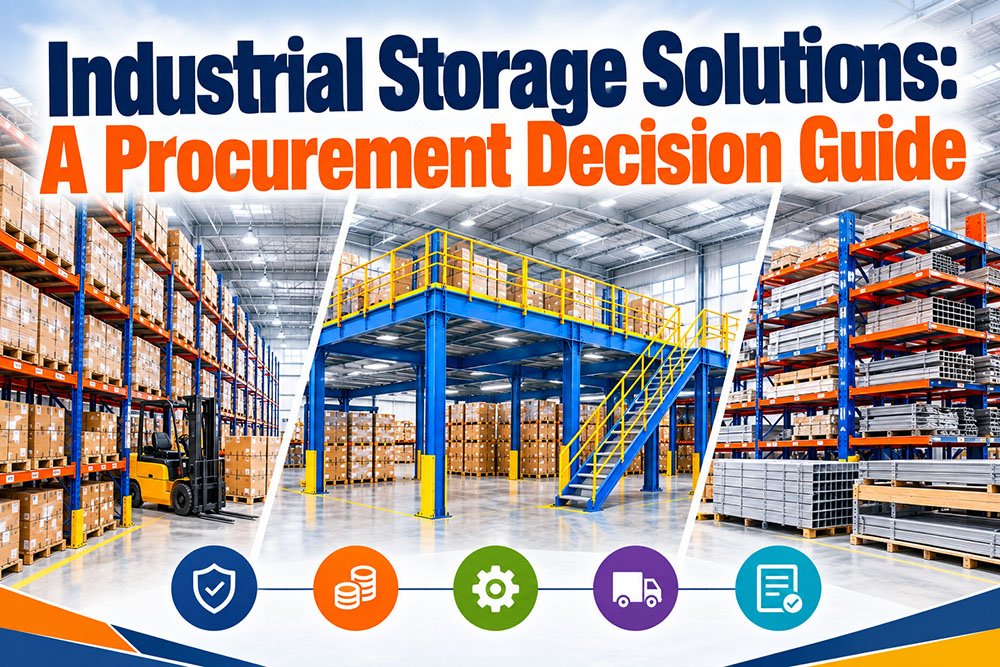
Procuring industrial storage solutions is unlike most warehouse purchases. The project involves significant capital, structural engineering, long installation timelines, and operational implications that extend over the storage system’s full 15 to 25 year service life. A wrong decision at the specification stage can lock an operation into inefficiencies or safety risks that are expensive and disruptive to correct later. Yet many industrial storage procurement processes are run with less rigor than the capital at stake warrants, often defaulting to supplier recommendations without independent evaluation.
This guide covers how industrial buyers should approach industrial storage solutions as a structured procurement project — from needs assessment through supplier selection, ROI modeling, contract scoping, and post-installation verification — so the storage system actually delivers the operational and financial outcomes the business invested in.
Why Industrial Storage Procurement Deserves Structured Decision-Making
Industrial storage solutions typically represent one of the largest single-project investments a facility makes outside of the building itself. A medium-sized warehouse racking project easily reaches six figures; large-scale structural, automated, or high bay installations run well into the millions. The investment is also effectively permanent — once racking is bolted to the floor, reconfiguration is costly, and replacement is a multi-month project with substantial operational disruption.
Despite the stakes, industrial storage procurement often follows a lighter process than other comparable capital expenditures. Buyers may collect two or three quotes, choose based on price and delivery timeline, and leave technical evaluation to the supplier. The result is often a system that delivers the specified pallet positions but underperforms against operational needs — wrong format for the inventory velocity profile, wrong material grade for the load conditions, wrong aisle width for the handling equipment, or wrong compliance documentation for the regulatory environment.
A structured procurement approach doesn’t require specialized storage engineering expertise. It requires a clear framework for defining needs, evaluating suppliers against those needs, modeling expected returns, and validating that the installed system matches what was specified.
Current Challenges Industrial Buyers Face
Translating operational needs into storage specifications. Operations teams understand what the storage system needs to accomplish, but translating that into racking specifications — upright height, beam capacity, aisle width, bay dimensions — requires technical knowledge the operations team usually doesn’t have, and may rely on supplier guidance that’s inherently biased toward that supplier’s product.
Comparing suppliers with different specifications. Different suppliers quote different configurations in response to the same requirement, making apples-to-apples comparison difficult without independent technical review.
Verifying compliance claims. Supplier marketing often references standards (AS4084, FEM, EN 15512, RMI, ANSI MH16.1) without the engineering documentation to support actual compliance. Distinguishing genuine compliance from marketing language is essential but requires effort.
Modeling ROI accurately. Many industrial storage procurements are approved based on capacity gains alone, without rigorous modeling of labor savings, floor space value, maintenance costs, and expected service life — making it difficult to evaluate alternative supplier proposals on comparable financial terms.
Managing project timelines. Industrial storage installations involve engineering review, manufacturing lead times, shipping (often international), site preparation, installation, and commissioning. Timeline slippage at any stage can cascade through the operation.
Scoping after-sales support. Multi-year warranties, replacement parts availability, and inspection support often matter more over the system’s lifetime than initial price, but these are easy to under-specify in the procurement process.
Managing risk of supplier failure. For international procurement, buyer risk includes supplier non-performance, shipping damage, and compliance disputes. Managing these risks requires structured contract terms and verification protocols.
The Industrial Storage Procurement Framework
A structured industrial storage procurement moves through six phases, each with specific deliverables and decisions that feed into the next phase.
Phase 1: Needs Assessment
Before engaging suppliers, document the operational requirements the storage system must support. This is the single most important phase — specifications set here drive every subsequent decision.
Document inventory profile. Catalog pallet dimensions, load weights (maximum and average), load height, SKU count, and inventory turnover velocity. Variable loads and mixed SKU dimensions have significant implications for racking format and configuration.
Document handling equipment. Catalog existing or planned forklifts, their lift height capability, aisle width requirements, and expected replacement timing. Racking height and aisle width must align with handling equipment, now and across the equipment’s planned lifecycle.
Document building constraints. Measure actual usable clear height (not just ceiling height), floor loading capacity, column spacing, sprinkler locations, door and dock positions, and any seismic or environmental conditions.
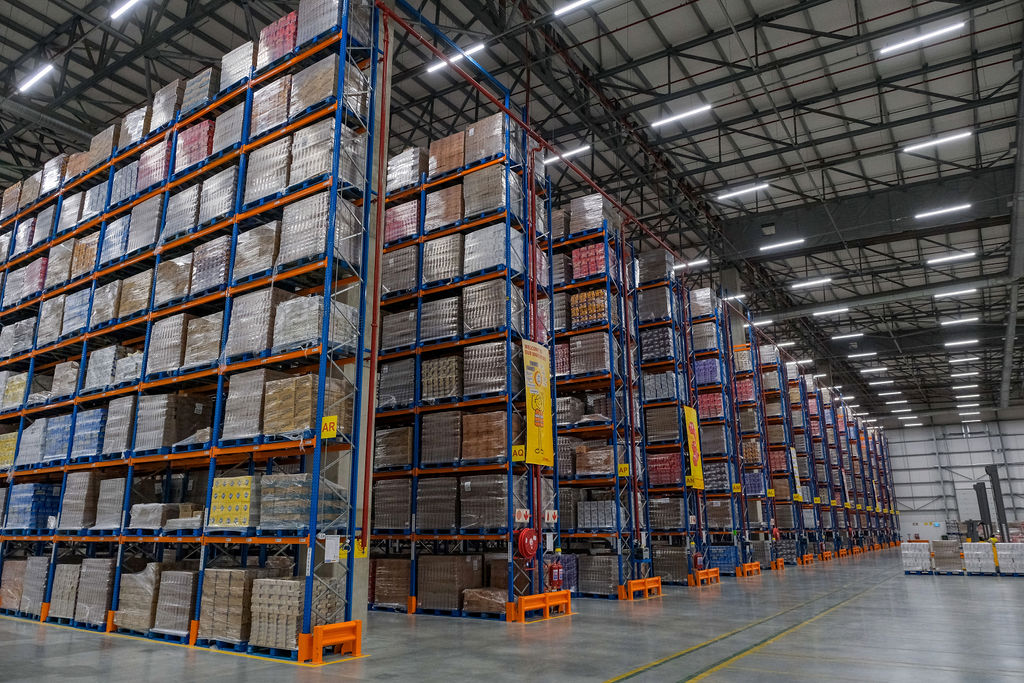
Document regulatory and insurance requirements. List applicable fire codes, building codes, workplace safety standards, and insurance conditions. These often constrain racking format and height more than operations teams realize.
Document throughput requirements. Catalog expected pallets per shift, picking patterns, order profile, and peak-period demand. Throughput requirements drive aisle configuration and format selection as much as pure storage capacity does.
Document growth plans. Project expected inventory growth over the planned service life of the storage system. Over-specifying for growth that doesn’t materialize wastes capital; under-specifying forces disruptive expansion.
Phase 2: Specification Development
Translate operational requirements into technical specifications that can be sent to suppliers for consistent quoting. This phase prevents the common problem of comparing dissimilar supplier proposals.
Define racking format requirements. Based on inventory velocity, SKU profile, and throughput, specify the appropriate racking format (selective, drive-in, VNA, pick module, or combinations). Supplier proposals should be constrained to the specified formats rather than left open to individual interpretation.
Define load and dimensional specifications. Specify maximum load per beam, maximum load per upright frame, pallet dimensions, number of levels, bay dimensions, and aisle width. These should match the needs assessment, with appropriate safety margins.
Define material and compliance requirements. Specify material grades (Q235B, Q355B, or structural steel equivalents), coating type, and applicable compliance standards. Related material selection considerations are covered in this guide to Q235B vs Q355B racking steel.

Define documentation and certification requirements. Specify what engineering documentation, test reports, material certificates, and compliance evidence suppliers must provide. Documentation requirements set at this stage prevent later disputes about what should have been included.
Define delivery and installation scope. Specify whether suppliers are responsible for shipping, installation, commissioning, operator training, and post-installation support, or whether these are separate contracts.
Phase 3: Supplier Identification and Evaluation
Identify qualified suppliers and evaluate them against the specifications rather than against each other’s marketing materials.
Build a longlist of qualified suppliers. Industry references, trade associations, prior project contacts, and B2B marketplaces are all starting points. For international procurement, confirm supplier legitimacy through verified factory information and third-party platform credentials.
Request detailed proposals against the specification. Rather than open quote requests, provide suppliers with the detailed specifications developed in Phase 2 and ask them to quote against those specifications. Deviations should be flagged explicitly.
Evaluate supplier capability beyond price. Price is one factor among several. Also evaluate manufacturing capability, engineering support, compliance documentation, references in similar projects, after-sales support, and financial stability. Broader manufacturer evaluation criteria are covered in this guide to rack manufacturing process quality.
Request material certificates and test reports. Reputable suppliers can provide mill test certificates for steel used, structural test reports for assembled components, and compliance documentation for applicable standards. Marketing claims without documentation should be treated as unverified.
Visit factories or request virtual tours. For significant procurements, factory verification — either in person or through third-party inspection — reduces the risk of selecting a supplier whose actual capability doesn’t match marketing materials.

Check industry-specific references. Industry references from similar installations are more informative than general reference lists. Ask specifically about similar project scale, similar load conditions, and similar regulatory environments.
Phase 4: ROI Modeling and Business Case
Before final supplier selection, model the return on investment for the storage project in terms that align with the organization’s capital approval process.
Model direct capacity gain. Calculate the pallet positions the specified system delivers compared to current capacity. For capacity-expansion projects, this is the primary driver of financial return.
Model labor cost impact. Different storage formats and configurations have significantly different labor implications. Faster retrieval, better slotting, and reduced travel distance all affect labor cost per pallet handled.
Model avoided facility expansion. For projects increasing capacity within existing buildings, the primary financial benefit is often the capital expenditure avoided by not building or leasing additional warehouse space.
Model maintenance and service life costs. Different supplier proposals may have different expected service lives, maintenance requirements, and spare parts availability. Factor these into total cost of ownership rather than comparing on purchase price alone.
Model risk-adjusted returns. Account for supplier risk, compliance risk, and installation risk. A lower-price proposal from an unverified supplier carries different risk profile than a higher-price proposal from an established supplier with documented compliance.
Build a payback period calculation. Divide total investment by annual benefits (labor savings + floor space value + avoided expansion + capacity gain value) to get a payback period that can be compared to the organization’s investment hurdle rate.
Phase 5: Contract Scoping and Terms
The procurement contract defines what the buyer receives and what recourse they have if the supplier doesn’t perform. Scoping terms carefully is particularly important for international procurement.
Specify deliverables and acceptance criteria. Define exactly what the supplier delivers (components, documentation, installation, training) and the acceptance criteria for each deliverable.
Specify timeline with milestones. Define delivery milestones for engineering review, manufacturing completion, shipping, installation start, and commissioning. Include provisions for timeline slippage.
Specify payment schedule tied to milestones. Rather than paying upfront, tie payments to verified milestone completion. Common structures include deposit (20–30%), production completion (40–50%), delivery (10–20%), and acceptance (10–20%).
Specify warranty terms. Define warranty scope, duration (typically 2–10 years for structural components), and claim process. Warranty terms often differ significantly between suppliers.
Specify dispute resolution terms. For international procurement, specify governing law, dispute resolution venue, and process for handling non-performance. These provisions are often overlooked but become critical if issues arise.
Specify post-installation support. Define what support the supplier provides after acceptance — inspection services, replacement parts availability, technical support, and reconfiguration assistance.
Phase 6: Installation Verification and Acceptance
The installation phase is where the specified system becomes operational, and buyer verification at this stage ensures the project delivers what was specified.
Conduct pre-installation inspection. Verify that delivered components match the specification before installation begins. Documentation (material certificates, dimensions, quantity) should be verified upon delivery.
Monitor installation quality. Verify installation against engineering drawings, including plumbness, anchoring, safety hardware installation, and load rating documentation.

Conduct acceptance testing. Depending on scope, acceptance may include visual inspection, load testing, safety verification, and operator training completion.
Confirm post-installation documentation. The supplier should provide complete as-built documentation: load charts, installation records, warranty paperwork, and operator manuals. Documentation serves both operational and compliance purposes over the system’s full service life.
Verify operator training completion. For complex systems (VNA, automated, pick modules), confirm that operator training was completed and documented before accepting the installation.
Procurement Phase Summary
| Phase | Key Deliverable | Common Pitfall |
|---|---|---|
| 1. Needs Assessment | Documented operational requirements | Treating as supplier’s job rather than buyer’s |
| 2. Specification Development | Detailed technical specification | Vague specs enabling incomparable quotes |
| 3. Supplier Evaluation | Qualified supplier shortlist | Price-only comparison without capability check |
| 4. ROI Modeling | Business case with payback | Capacity-only models missing labor and risk |
| 5. Contract Scoping | Signed contract with milestones | Missing post-installation support terms |
| 6. Installation Verification | Accepted operational system | Weak acceptance criteria enabling disputes |
Expected Operational Improvements from Structured Procurement
Industrial operations that approach storage procurement as a structured project typically see improvements across multiple dimensions compared to ad hoc procurement:
- Better match between specified system and actual operational needs, since needs assessment drives specification rather than supplier-led proposals
- More favorable total cost of ownership, since ROI modeling captures labor, floor space, and lifecycle costs rather than purchase price alone
- Reduced supplier risk, since structured evaluation and documentation requirements filter out suppliers whose capability doesn’t match marketing claims
- Improved compliance positioning, since documentation requirements set at specification time avoid later disputes about what should have been included
- Shorter effective project timelines, since structured specifications enable faster, more accurate supplier quoting
- Better long-term flexibility, since systems specified against documented needs typically accommodate operational changes better than supplier-default configurations
- Lower post-installation issues, since acceptance verification catches installation problems before they become operational problems
Project Considerations Beyond the Core Procurement Framework
Multi-site standardization. For organizations with multiple facilities, standardizing on specifications and preferred suppliers across sites simplifies documentation, parts sourcing, and operator training.
Phased procurement for large projects. Rather than specifying everything upfront, large projects often benefit from phased procurement — install an initial section, validate performance, then procure subsequent sections with refined specifications.
Integration with warehouse management systems. For automated or semi-automated systems, WMS integration requirements should be scoped as part of the storage procurement, not left as a separate project.
Alignment with facility maintenance capability. More complex systems (automated, mobile, VNA) require more sophisticated maintenance capability. Procurement should align with the organization’s actual maintenance capability or include provisions for outsourced maintenance.
Future reconfiguration planning. Specifications should accommodate anticipated growth and inventory changes rather than being optimized only for current conditions.
Supplier concentration risk. Relying heavily on a single supplier creates risk if that supplier faces capability or financial problems. For multi-year procurement programs, maintaining relationships with multiple qualified suppliers provides risk mitigation.
Insurance and legal review. For significant procurements, legal review of contract terms and insurance review of coverage implications are both worthwhile investments that often catch issues the procurement team wouldn’t see.
Load profile for heavy industrial applications. Industrial operations storing heavy, oversized, or dynamic loads often need structural racking rather than roll-formed systems — the material and construction choice should be part of specification rather than deferred to supplier default.
Frequently Asked Questions
How long does a typical industrial storage procurement project take? Timelines vary significantly by project scale and complexity. Needs assessment and specification development typically takes 2 to 6 weeks; supplier evaluation and selection 4 to 8 weeks; manufacturing and shipping (particularly international) 6 to 16 weeks; and installation 2 to 12 weeks depending on project size. Total projects typically range from 4 to 10 months.
What percentage of total project cost should go to planning and specification? There’s no fixed percentage, but industry practice suggests 3 to 7 percent of total project cost spent on planning and specification generally pays back several times over through better supplier selection, more accurate ROI, and fewer post-installation issues.
Can I rely on supplier recommendations for specification? Supplier recommendations are useful input but not sufficient as the sole basis for specification. Suppliers have inherent incentive to recommend configurations that match their product strengths, which may not match the operation’s actual needs. Independent needs assessment and specification development provides the baseline against which supplier recommendations can be evaluated.
How do I verify compliance with standards like AS4084 or FEM? Request engineering documentation, independent third-party test reports, and material certificates referencing the applicable standard version. General “AS4084 compliant” language in marketing without supporting documentation should be treated as unverified. A more detailed look at AS4084 verification is covered in this guide to what AS4084 covers.
How should I structure payment terms for international procurement? Milestone-based payment structures reduce buyer risk. Common structures include initial deposit (20–30% to confirm order and start production), production completion payment (40–50% after factory verification), delivery payment (10–20% after shipping), and acceptance payment (10–20% after installation acceptance).
How do I compare supplier proposals with different specifications? Normalize proposals against the specified requirements rather than comparing supplier-chosen configurations. If one supplier proposes a different configuration than specified, request they also quote the specified configuration so direct comparison is possible, or evaluate whether the alternative actually better meets the stated needs.
What is the typical service life of industrial storage systems? Well-specified and maintained industrial storage systems typically deliver 15 to 25 years of service, though harsh environments (cold storage, humid, high-impact zones) may shorten service life. Service life should factor into ROI modeling and material grade selection.
Should I include post-installation inspection and maintenance in the procurement contract? For complex or safety-critical systems, including post-installation inspection and maintenance support in the procurement contract — or scoping it as a separate service agreement — generally produces better long-term outcomes than treating these as afterthoughts.
Key Takeaways
- Industrial storage procurement deserves structured decision-making because of the capital involved, long service life, and operational implications over the system’s lifetime
- A six-phase procurement framework (needs assessment, specification, supplier evaluation, ROI modeling, contract scoping, installation verification) delivers better outcomes than ad hoc procurement
- Needs assessment and specification development are the highest-return phases — getting these right prevents most downstream problems
- Supplier evaluation should weigh capability, compliance documentation, and support — not just price
- ROI modeling should include labor savings, floor space value, avoided expansion, and risk-adjusted returns, not just capacity gains
- Contract terms should specify deliverables, milestones, warranty, and post-installation support with clear acceptance criteria
- Installation verification is the final check that the specified system actually delivers what was procured
Conclusion
Industrial storage solutions are among the most consequential capital investments a facility makes, and treating procurement as a structured project rather than a transactional purchase consistently delivers better operational and financial outcomes. Industrial buyers who approach procurement with documented needs assessment, detailed specifications, structured supplier evaluation, rigorous ROI modeling, careful contract scoping, and systematic installation verification generally find the installed system matches what the business actually needed. Companies such as Lracking are commonly involved in industrial storage projects where buyers are navigating this procurement process — often across multiple phases from initial specification through installation acceptance — and where documented compliance, engineering support, and after-sales reliability matter as much as initial price. For industrial buyers planning a storage project, investing in structured procurement upfront remains the most reliable path to a storage system that delivers both the capacity and the operational value the business invested in.