Selecting an automated storage and retrieval system (ASRS) manufacturer is fundamentally different from selecting a conventional pallet racking supplier. Standard racking procurement focuses on structural engineering, material grades, and manufacturing quality — all important factors but all contained within a narrower technical scope. ASRS procurement adds mechanical systems, control software, warehouse management system integration, and multi-year maintenance obligations that extend the evaluation framework far beyond what works for conventional racking purchases.
This guide covers the evaluation criteria specific to ASRS manufacturer selection — the dimensions that matter uniquely for automated systems and don’t appear in general racking procurement — and profiles ten established ASRS manufacturers in China that global buyers commonly evaluate for automated warehouse projects.
Why ASRS Manufacturer Selection Requires Its Own Framework
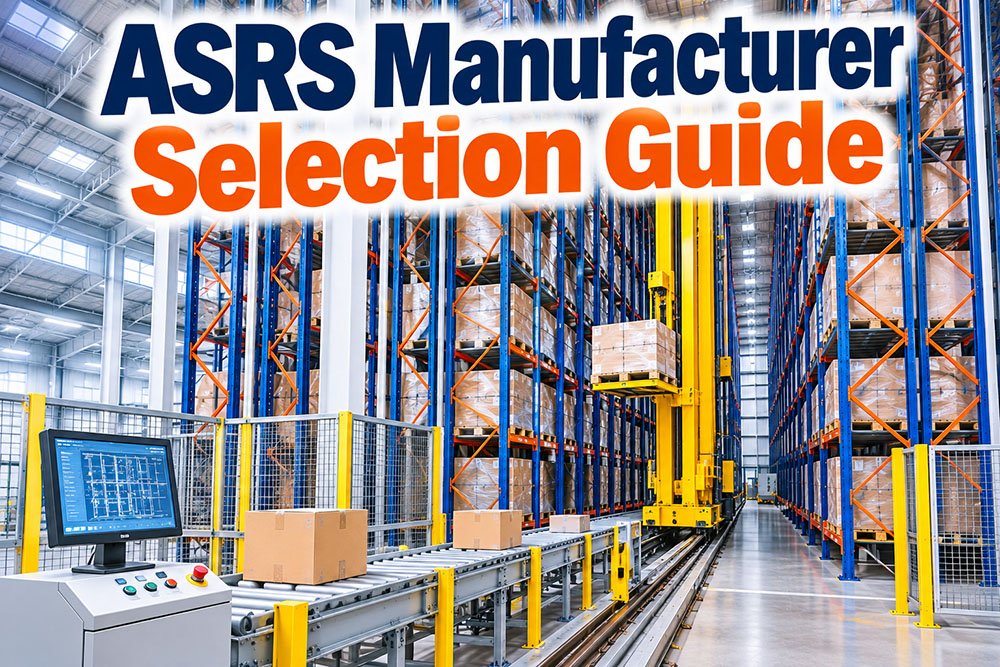
ASRS procurement introduces complexity dimensions that conventional racking buyers often underestimate. An ASRS project doesn’t just install a storage structure — it installs an operational system consisting of racking, automated handling equipment (stacker cranes, shuttles, conveyors, or robotic systems), control software, communication interfaces with the warehouse management system, and ongoing technical support that extends across the system’s entire service life.

The consequences of selecting the wrong ASRS manufacturer are also more severe than for conventional racking. A conventional racking system that underperforms can often be reconfigured or supplemented. An ASRS that doesn’t meet throughput targets, doesn’t integrate reliably with the WMS, or experiences chronic downtime from poor maintenance support can cripple warehouse operations in ways that are expensive and slow to recover from.
For these reasons, ASRS manufacturer evaluation should go well beyond manufacturing capability and compliance certification — the standard checklist for conventional racking suppliers. It should extend into mechanical engineering capability, software development and integration experience, long-term service infrastructure, and project delivery track record on comparable installations. A broader overview of automated storage systems is covered in this guide to automated racking types and selection.
Current Challenges in ASRS Manufacturer Evaluation
Difficulty verifying software capability. ASRS depends on control software (warehouse control system, crane management software, and WMS integration layers) that buyers often can’t evaluate directly. Software quality only becomes visible after commissioning, by which time it’s expensive to address.
WMS integration complexity. Integrating ASRS with an existing WMS is often the most difficult part of implementation, and manufacturers vary significantly in their integration experience with specific WMS platforms.
Long service-life support obligations. ASRS systems typically operate for 15 to 20 years or more. Buyers need confidence that the manufacturer will remain able to provide spare parts, technical support, and software updates across that entire period.
Reference verification challenges. ASRS reference installations are often confidential or restricted by client NDAs, making it harder to verify a manufacturer’s actual project track record than for conventional racking.
Price-only comparison failing badly. ASRS proposals from different manufacturers can vary significantly in scope (what’s included vs excluded), making apples-to-apples price comparison much more difficult than for conventional racking.
Local service capability varying by region. Global ASRS manufacturers may have strong engineering centers but weak local service networks in specific markets, affecting response times for maintenance and troubleshooting.
Mixed capability across subsystems. Some manufacturers are strong in mechanical engineering but weak in software, or vice versa. Evaluating subsystem capability separately is more informative than treating the manufacturer as a monolithic entity.
ASRS-Specific Evaluation Dimensions
Nine evaluation dimensions are specific to ASRS manufacturer selection and deserve dedicated analysis beyond what a conventional racking evaluation covers.
1. Mechanical Engineering Capability
The physical handling equipment — stacker cranes, shuttles, conveyors, or robotic arms — is the operational core of the ASRS. Evaluating mechanical engineering capability covers:

- Design and manufacturing of handling equipment in-house vs sourced from third parties
- Experience across load classes (unit-load stacker cranes for full pallets vs mini-load for cartons vs multi-level shuttles)
- Mechanical reliability data from existing installations
- Engineering depth for customization to specific project requirements
2. Control Software Development
ASRS performance depends heavily on the control software layers:
- Warehouse control system (WCS) that coordinates crane/shuttle movement
- Equipment firmware and real-time control
- Diagnostic and monitoring software
Manufacturers that develop their own WCS typically have better integration between mechanical and software layers than those licensing third-party WCS, but this needs to be weighed against the WCS maturity of established third-party platforms.
3. WMS Integration Experience
ASRS must communicate with the operation’s WMS to receive put-away and pick commands, report inventory movements, and handle exception conditions. Evaluation covers:
- Experience integrating with specific WMS platforms (SAP EWM, Manhattan, Blue Yonder, etc.)
- Standard integration protocols supported
- Custom integration development capability
- Documented integration project history
4. Project Delivery Track Record
ASRS projects are complex multi-month implementations. Project delivery capability covers:
- Number and scale of completed installations
- Industries served (automotive, cold chain, pharmaceutical, e-commerce require different expertise)
- Customer references and site visits available
- Project management methodology and documentation
5. Long-Term Service Infrastructure
ASRS runs for 15 to 20 years, requiring manufacturer support throughout. Service infrastructure covers:
- Regional service centers and response time commitments
- Spare parts availability and lead times
- Preventive maintenance programs
- Software update and support policies
- Remote diagnostic capability
6. Financial Stability and Longevity
ASRS buyers are entering multi-decade relationships. Financial stability covers:
- Company history and ownership structure
- Financial performance indicators (revenue, profitability where disclosed)
- R&D investment levels
- Likelihood of continued operation across the ASRS service life
7. Compliance and Certification
Regional compliance requirements affect ASRS as much as conventional racking:
- Structural compliance (AS4084, FEM, EN 15512, RMI/ANSI MH16.1)
- Safety standards for automated equipment (CE machinery directive, OSHA, equivalent regional standards)
- Software security standards where applicable (cybersecurity for networked systems)
- Industry-specific certifications (pharmaceutical GMP, food safety)
8. Customization and Scalability
Operations evolve, and ASRS should accommodate reasonable changes:
- Modularity of mechanical design
- Software configurability without custom development
- Expansion capability for additional capacity
- Interface flexibility for new handling equipment or WMS versions
9. Industry Experience Alignment
ASRS requirements vary significantly by industry, and manufacturer experience in a specific industry often matters more than general ASRS experience:
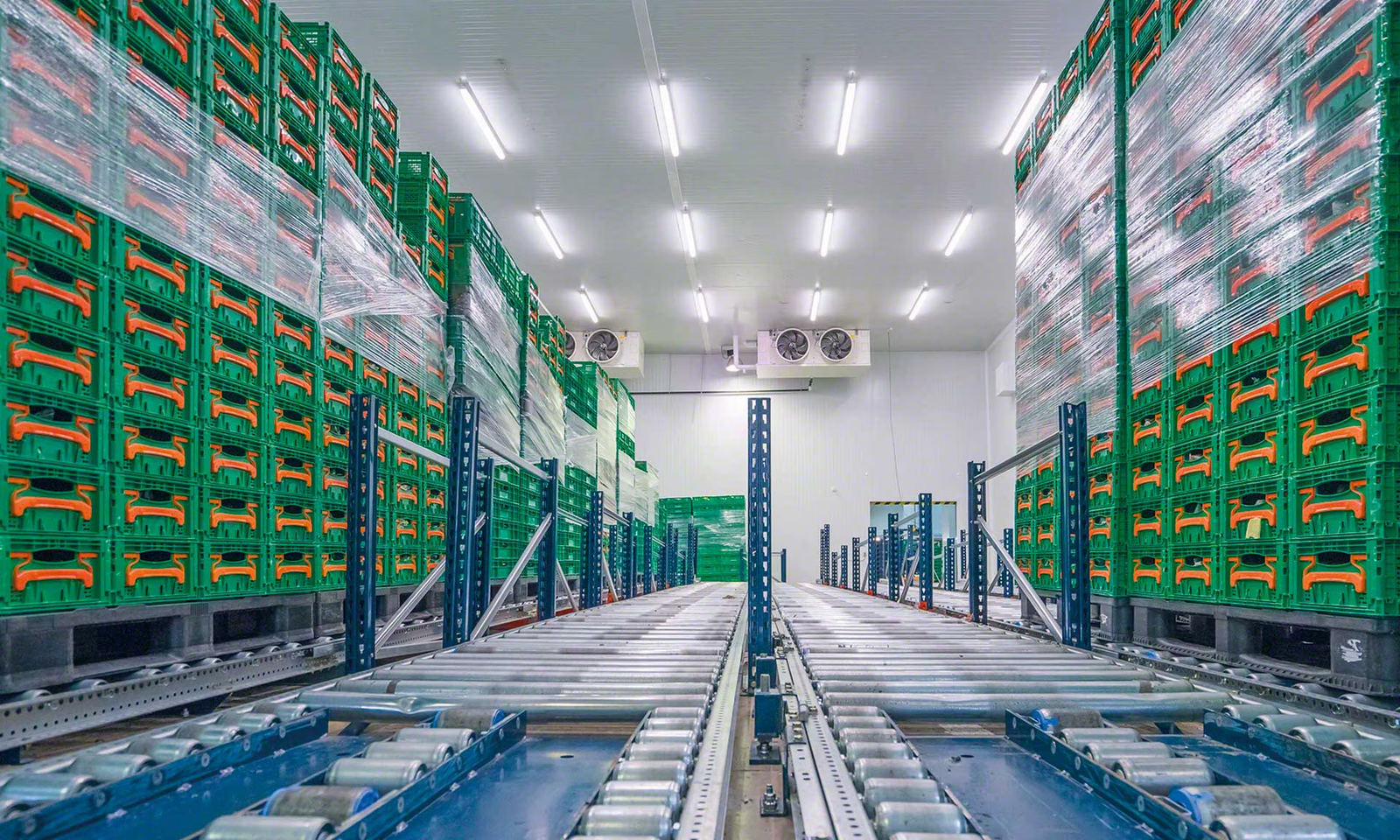
- Cold chain: cold-tolerant equipment, specialized maintenance protocols
- Pharmaceutical: regulatory compliance, batch tracking, validation protocols
- E-commerce: high throughput, each-picking, peak period scalability
- Automotive: just-in-time delivery, lineside integration
Evaluation Dimension Summary
| Evaluation Dimension | Key Question | Verification Method |
|---|---|---|
| Mechanical engineering | In-house capability and depth? | Factory visit, design reviews |
| Control software | Developed in-house or licensed? | Software demo, architecture review |
| WMS integration | Experience with your WMS? | Reference projects with same WMS |
| Project delivery | Comparable scale installations? | Client references, site visits |
| Service infrastructure | Regional support and response times? | Service agreement details |
| Financial stability | Multi-decade viability? | Financial disclosures, history |
| Compliance | Regional standards met? | Certification documentation |
| Customization | Accommodates future change? | Technical review, roadmap |
| Industry experience | Relevant vertical track record? | Industry-specific references |
China Top 10 ASRS Manufacturers
China has become one of the most significant global sources for ASRS manufacturing, driven by domestic logistics investment, strong mechanical engineering capability, and increasingly mature control software ecosystems. The following ten manufacturers are among those commonly evaluated by global buyers for ASRS projects, presented in no particular order of overall ranking — manufacturer suitability depends heavily on specific project requirements, industry focus, and regional service presence.
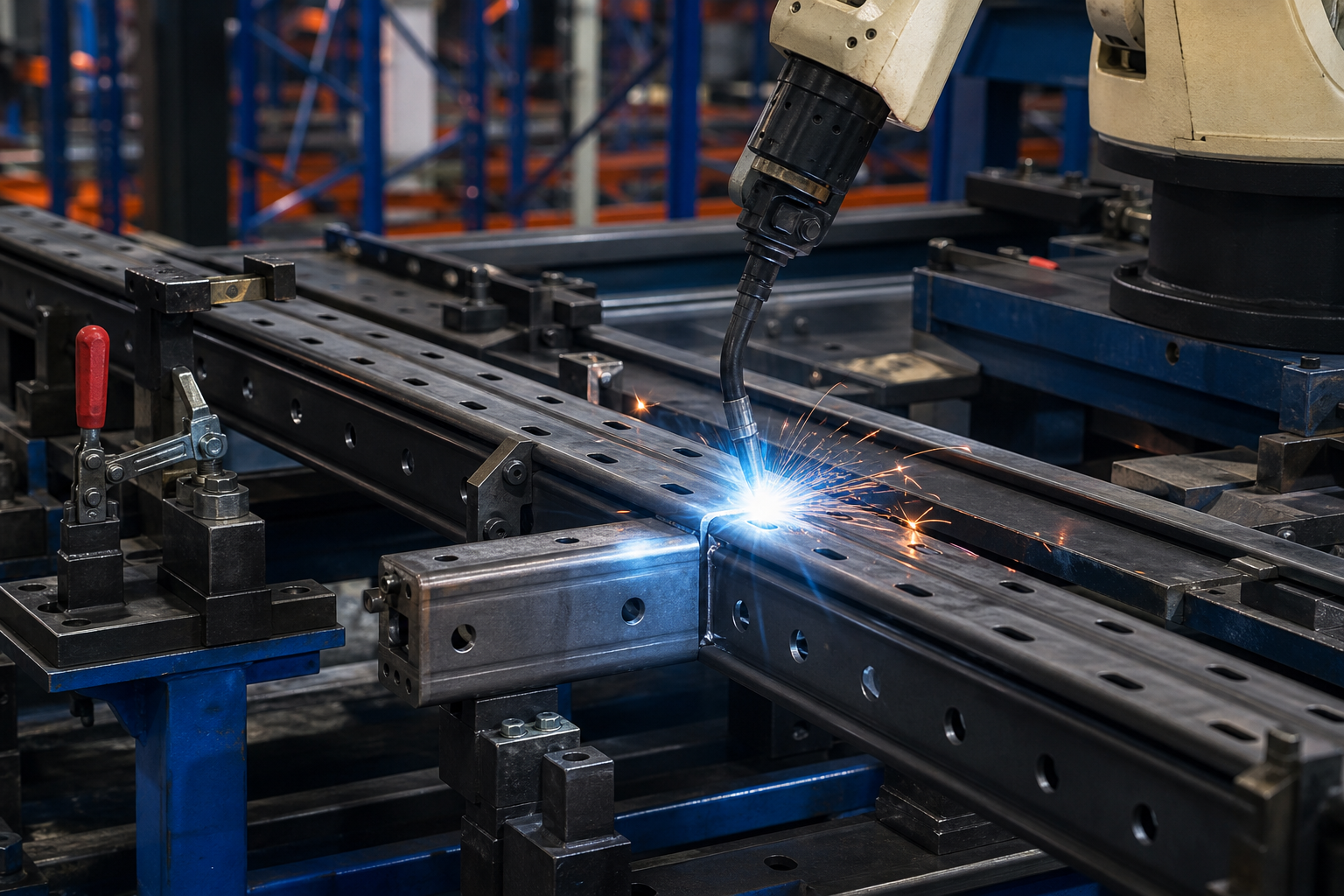
1. Lijin (Guangdong Lijin Storage Equipment Co., Ltd.)
Based in Dongguan, Guangdong, Lijin manufactures a range of warehouse storage solutions including pallet racking, mezzanine systems, cantilever racking, radio shuttle racking, and ASRS. The company’s ASRS portfolio includes unit-load and mini-load configurations for pallet and carton storage respectively, with integration capability for stacker cranes and shuttle systems. Established in 2008, Lijin holds ISO9001, CE, and AS4084 certifications and exports to over 70 countries. The company’s integrated capability across conventional and automated storage makes it a common choice for projects combining ASRS with surrounding conventional racking zones.
2. Mracking (Guangdong Xinmiao Storage Equipment Co., Ltd.)
Headquartered in Guangdong, Mracking produces a broad range of storage systems including pallet racking, mezzanines, mold racks, and ASRS configurations. The company serves multiple international markets including North America, Southeast Asia, Oceania, and Europe. Mracking’s ASRS offerings typically include integrated stacker crane systems and are often evaluated for medium-to-large scale installations.
3. Amerack
Amerack is a Chinese automation equipment manufacturer with ASRS capabilities covering stacker crane systems, radio shuttle racking, and conveyor integration. The company’s project portfolio includes installations across e-commerce fulfillment, cold chain, and manufacturing logistics. Amerack is commonly evaluated by buyers looking for moderate-complexity ASRS installations with integrated conveyor and sortation components.
4. Gieantech
Gieantech is positioned as a provider of integrated warehouse automation solutions, covering ASRS, conveyor systems, AGV integration, and warehouse management software. The company’s capability stretches from mechanical equipment through software integration, making it commonly considered for projects requiring end-to-end automation rather than purely ASRS hardware.
5. Nanjing Huade Storage Equipment Manufacturing Co., Ltd.
Founded in 1993, Nanjing Huade is one of China’s longest-established storage equipment manufacturers, with significant ASRS capability developed over three decades of continuous operation. The company’s product portfolio spans conventional pallet racking, radio shuttle systems, stacker cranes, and fully automated storage systems. Huade’s experience with clad-rack warehouse installations at heights up to 40 meters positions it for the largest-scale ASRS projects, with distribution across Europe, the Middle East, the Americas, and Asia.
6. Jiangsu Nova Intelligent Logistics Equipment Co., Ltd.
Jiangsu Nova is a 25-year established manufacturer with core capabilities across pallet racking, drive-in racking, shuttle racking, mezzanines, and ASRS systems. The company offers OEM/ODM services and is commonly evaluated for ASRS projects requiring integrated racking and automation capability from a single supplier, particularly for mid-sized installations.
7. Jiangsu Kingmore Storage Equipment Manufacturing Co., Ltd.
Established in 2003 with facilities in Nanjing and Jinhu covering approximately 150,000 to 200,000 square meters, Kingmore has expanded from conventional racking into automated warehousing including stacker cranes, shuttle cars, and four-way shuttle systems. The company developed intelligent warehousing software capability after 2017 and operates production bases in China and Southeast Asia, serving global ASRS projects.
8. INFORM Storage Equipment (Suzhou) Co., Ltd.
INFORM is positioned among the larger Chinese racking manufacturers and was listed on the Shanghai A-share market in 2015 (stock code 603066), making it the first publicly listed company in China’s warehousing industry. The company operates multiple factories with over 1,000 employees and has significant ASRS capability covering high-density storage racking integrated with automated handling equipment. Public listing provides buyers with additional financial transparency compared to privately held alternatives.
9. Jiangxi Huifeng Intelligent Logistics Equipment Co., Ltd.
Jiangxi Huifeng specializes in automated warehouse storage solutions including mini-load ASRS, vertical and horizontal carousels, and office automation storage. The company’s focus on mini-load and carousel configurations makes it commonly evaluated for small-item ASRS applications — spare parts, pharmaceuticals, electronics components, and similar inventory profiles that don’t require full-pallet ASRS.
10. Daifuku China
Daifuku is a global material handling leader with significant manufacturing and project delivery presence in China. While Daifuku itself is Japanese-headquartered, its China operations deliver ASRS projects for domestic Chinese buyers and export markets. Daifuku’s global ASRS experience across automotive, airport logistics, cold chain, and e-commerce makes it commonly evaluated for the most demanding ASRS installations, particularly where multi-site global standardization is a project requirement.
Manufacturer Comparison Summary
| Manufacturer | Headquarters | Established | Notable Capability |
|---|---|---|---|
| Lijin | Dongguan, Guangdong | 2008 | Integrated conventional + ASRS |
| Mracking | Guangdong | 2010 | Multi-market export |
| Amerack | China | 2005 | Shuttle + conveyor integration |
| Gieantech | China | 2008 | End-to-end automation + software |
| Nanjing Huade | Nanjing, Jiangsu | 1993 | 40m+ clad-rack installations |
| Jiangsu Nova | Jiangsu | ~2001 | Integrated racking + ASRS |
| Kingmore | Nanjing / Jinhu | 2003 | Shuttle + four-way shuttle + software |
| INFORM | Suzhou | — (A-share listed 2015) | Public company, large scale |
| Jiangxi Huifeng | Jiangxi | — | Mini-load and carousel focus |
| Daifuku China | China ops of global HQ | — | Global multi-site ASRS experience |
Expected Operational Improvements from Correct ASRS Manufacturer Selection
Operations that select ASRS manufacturers through structured evaluation — not just price or density claims — typically see:
- Faster commissioning and ramp-up, since manufacturers with relevant project experience encounter fewer surprises during integration
- Better WMS integration quality, when manufacturer WMS experience aligns with the operation’s actual WMS platform
- Higher operational uptime, when service infrastructure in the operation’s region is matched to actual response-time requirements
- Lower long-term maintenance cost, since manufacturers with robust spare parts and service capability avoid the premium cost of emergency support
- Better accommodation of operational changes, when manufacturer software and mechanical modularity supports reasonable configuration adjustments over service life
- Reduced compliance risk, when manufacturer certifications match the regulatory environment of the installation
- More predictable project outcomes, since structured evaluation surfaces issues before contract signature rather than after installation
Project Considerations Beyond Manufacturer Selection
Internal project management capability. ASRS projects require significant buyer-side project management, including requirements definition, WMS coordination, operator training, and acceptance testing. Operations without internal ASRS project management experience should factor consultant support into project planning.
WMS readiness. ASRS integration depends on WMS capability to issue commands, receive status updates, and handle exceptions. WMS platforms may need upgrades or configuration changes before ASRS integration is feasible.
Site readiness. ASRS installations require specific floor flatness, electrical infrastructure, and clearances. Site preparation often starts well before ASRS delivery and should be sequenced carefully.
Operator training and change management. ASRS changes operator workflows significantly. Training programs and change management typically need more attention than conventional racking projects require.
Ongoing optimization. ASRS systems benefit from ongoing slotting optimization, software tuning, and process refinement. This is covered in related principles in this guide to inventory turnover and racking selection.
Material and structural considerations. Even in ASRS, the underlying racking structure benefits from appropriate material and construction choices, covered in this guide to structural racking.
Compliance verification. For installations in markets with specific regional standards, compliance verification against those standards should be part of manufacturer evaluation. Related considerations for Australian and New Zealand markets are covered in this guide to AS4084 compliance verification.
Frequently Asked Questions
How is ASRS manufacturer selection different from conventional racking manufacturer selection? ASRS adds evaluation dimensions around mechanical systems, control software, WMS integration, and long-term service infrastructure that don’t apply to conventional racking. These dimensions often matter more than purchase price in determining long-term project success.
How long does a typical ASRS procurement process take? From needs assessment through manufacturer selection and contract signing, ASRS procurement typically takes 3 to 6 months for mid-sized projects and longer for larger or more complex installations. Subsequent manufacturing, installation, and commissioning extends overall timeline to 12 to 24 months for complete implementations.
Should I choose a global or Chinese ASRS manufacturer? Both can deliver quality ASRS projects, but the choice depends on project specifics. Global manufacturers (Daifuku, Dematic, SSI Schaefer, etc.) often have deeper software ecosystems and global service networks. Chinese manufacturers typically offer better cost positioning and have expanded capability significantly in recent years. Regional service presence often matters more than manufacturer origin.
What is the typical service life of an ASRS installation? ASRS structural components (racking) typically last 15 to 20 years or more. Mechanical equipment (cranes, shuttles) typically requires major maintenance or replacement cycles every 10 to 15 years. Software components may require updates or replacement every 5 to 10 years as technology evolves.
How critical is WMS integration experience for ASRS selection? Very critical. WMS integration is often the most difficult part of ASRS implementation and the area where projects most commonly experience delays or quality issues. Manufacturers with proven integration experience with the operation’s specific WMS platform typically deliver significantly smoother implementations.
Can I combine components from multiple ASRS manufacturers? Technically possible but operationally risky. Multi-vendor ASRS creates integration complexity, support responsibility gaps, and ongoing coordination overhead. For most projects, selecting a single primary manufacturer and treating ancillary components as separate purchases produces better outcomes.
How should I evaluate ASRS manufacturer software capability? Request software demonstrations using realistic scenarios from the operation’s actual inventory and throughput profile. Review architecture documentation. Request references with clients using the same software release in similar applications. Software capability is harder to evaluate than mechanical capability but equally important to long-term success.
What regional service capability should I verify before selecting an ASRS manufacturer? Verify presence of local engineers for routine maintenance, response time commitments for breakdown service, local spare parts inventory, and escalation protocols for complex issues. Global manufacturers may have strong engineering centers but weak local service in specific regions — this needs direct verification.
Key Takeaways
- ASRS manufacturer selection requires its own evaluation framework beyond what conventional racking procurement uses, covering mechanical engineering, software, integration experience, and long-term service capability
- Nine specific evaluation dimensions address the unique characteristics of ASRS procurement: mechanical capability, software, WMS integration, delivery track record, service infrastructure, financial stability, compliance, customization, and industry experience
- China hosts numerous established ASRS manufacturers covering the full range from mini-load carousels to large-scale clad-rack installations, with varying strengths in mechanical, software, and service dimensions
- The ten manufacturers profiled represent a cross-section of commonly evaluated Chinese ASRS suppliers; actual manufacturer suitability depends on project-specific requirements rather than general rankings
- WMS integration experience and regional service capability often matter more than purchase price in determining long-term ASRS project success
- Structured evaluation against the nine dimensions surfaces issues before contract signature rather than after installation, where they become much more expensive to address
Conclusion
ASRS manufacturer selection sits among the more consequential decisions in warehouse automation, and operations that approach it with a structured evaluation framework — rather than defaulting to price-based comparison or brand-name recognition — generally find the selected manufacturer actually delivers the operational performance and long-term service support the automated installation requires over its full lifecycle. Companies such as Lijin are commonly involved in ASRS projects where buyers are working through this evaluation process, particularly for installations combining ASRS with conventional racking zones or for projects requiring integrated mechanical and service capability from a single supplier. For warehouses evaluating ASRS manufacturers, matching the evaluation framework to the specific operational, integration, and service requirements of the actual project remains the most reliable foundation for selecting a manufacturer that will support the installation across its full service life.