Why Racking Configuration Still Matters in Smart Systems?
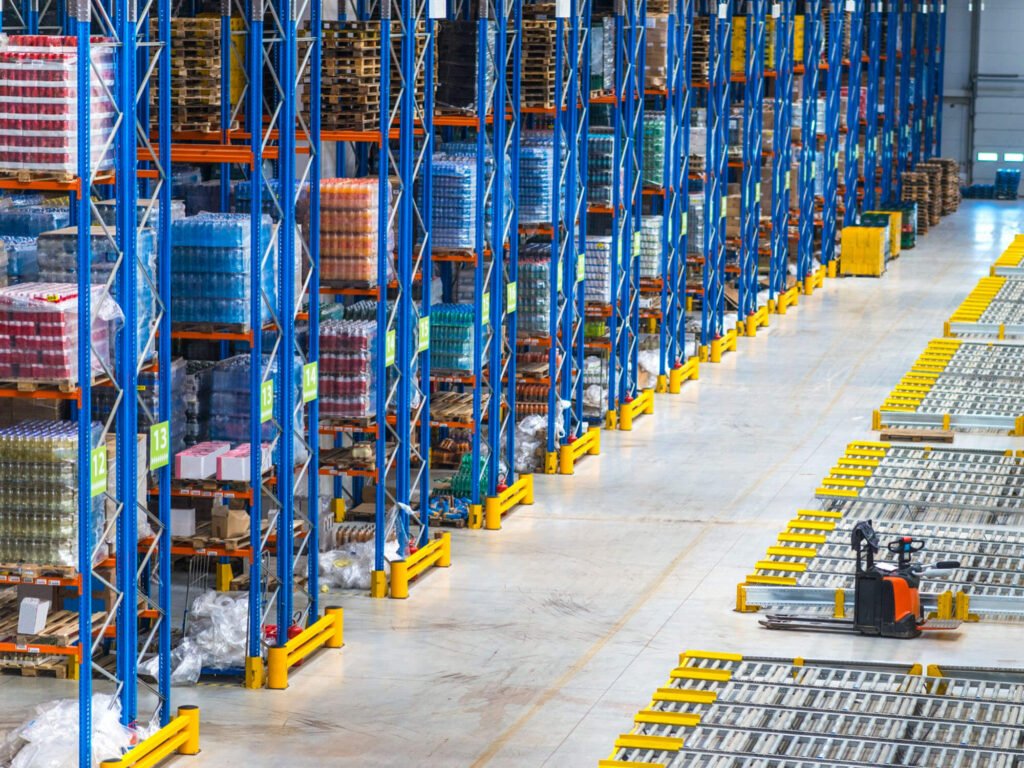
Effective and scalable smart warehouse systems start with proper racking setups. Physical layout determines the manner in which digital tools gather data, make decisions, and streamline operations. Unsuitable configuration poses risks of damaging products, interfering with work processes, and wasting useful storage space. Smart racking will make the system more efficient, but will not be able to cover the poor structural planning or layouts. An effective smart rack storage system will enhance accuracy, safety and long term operational performance.
What is Smart Racking?
Smart warehouse racking involves a combination of storage facilities with sensors, software, and connectivity. It turns simple shelving into data-driven, intelligent warehouse infrastructure. Smart systems are in contrast to passive shelves, which actively guide operations and efficiency. This provides you with more visibility, precision and control of operations. Maintenance alerts minimize downtime and storage risks as well.
How Smart Shelving Works
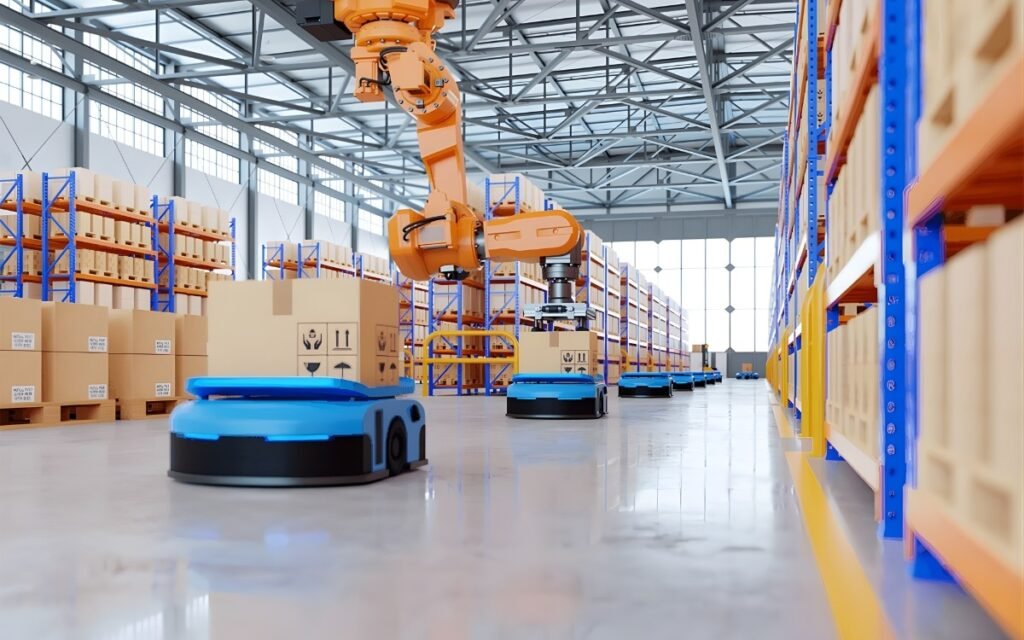
Smart racking is an efficient combination of robust storage frames, sensors, and automated movement systems. The sensors monitor the position, weight and shelf conditions of the inventory in the warehouse at all times. Linked software interprets data, and consequently guides picking, stocking, and replenishment operations with increased velocity each day. Goods are moved accurately through designated storage lanes by automated shuttles or robots when there is a busy operation. This system of coordination assists you in minimizing errors, space, and enhancing productivity in warehouses to a high level.
Key Technologies Behind Automated Racking System
Internet of Things (IoT) in Warehousing
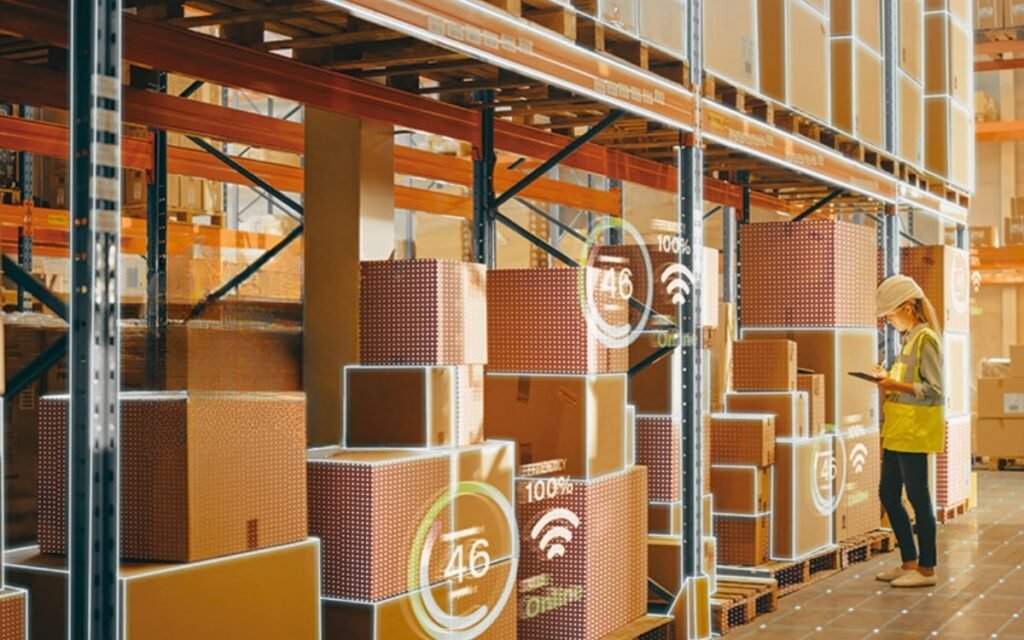
IoT links warehouse racks to allow real time visibility and smart operations. It allows real-time monitoring, enhancing accuracy and performance of storage systems. You have real time inter-rack and inter-system communication to make decisions faster in real time at all times.
RFID and Barcode Systems
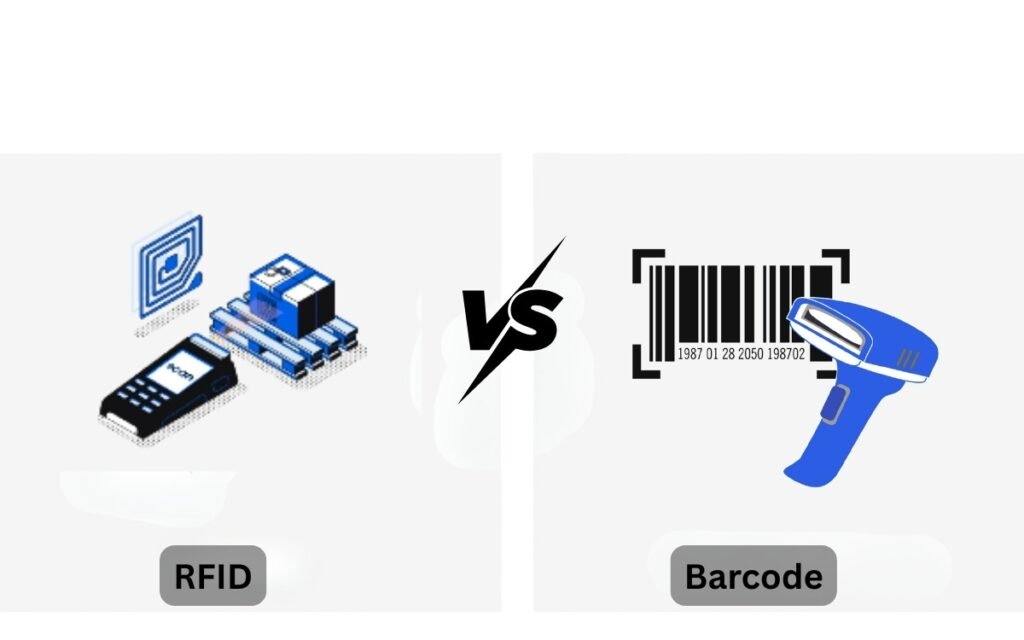
RFID and barcode systems are used to track track of inventory items in warehouses fast and efficiently. RFID is wireless and barcodes are manual operations and require line of sight scanning. These identification technologies are effective in helping you to improve speed and accuracy in inventory management.
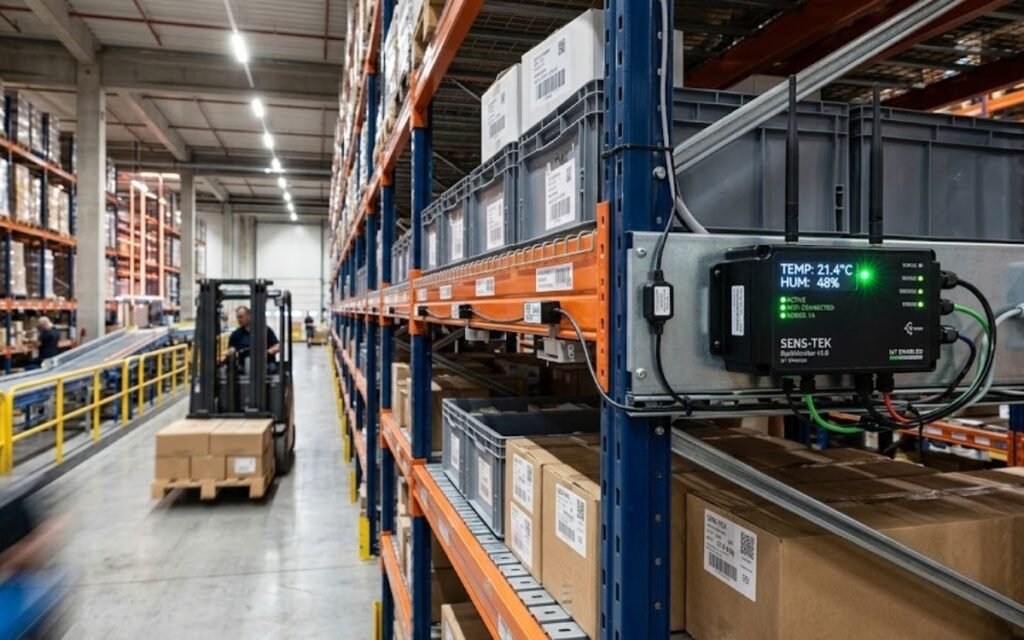
Sensors and Monitoring Devices
Smart racks have sensors that measure load, motion and environmental conditions in real-time with precision. Load sensors are used to measure weight, motion detectors used to track movement and environmental sensors used to monitor conditions. You are safe, minimize risks of damage, and keep optimum storage conditions at all times effectively.
Cloud computing and data analytics
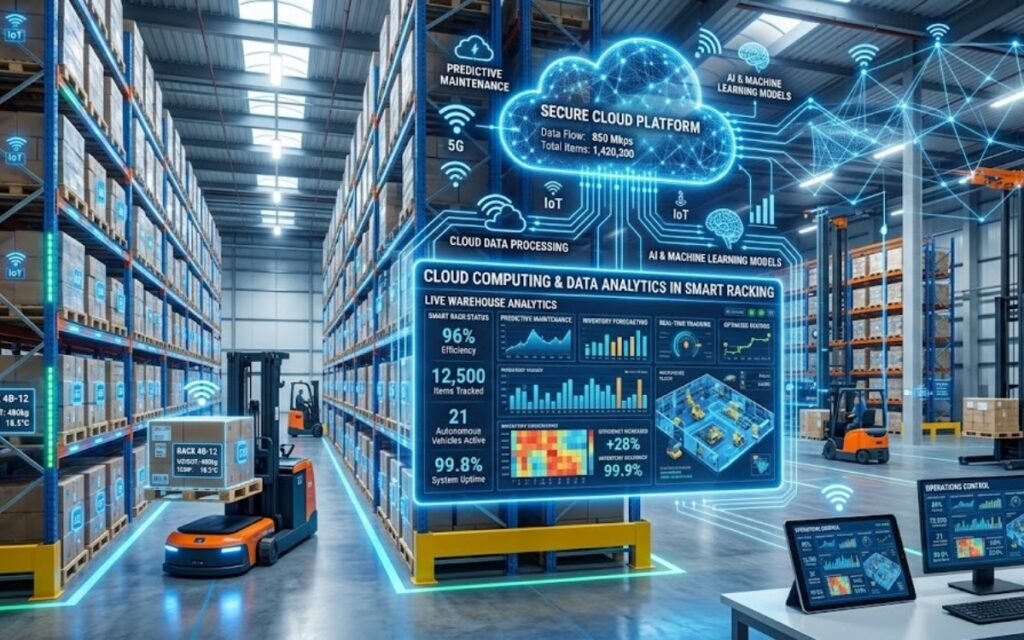
Warehouse data is stored and processed in smart rack systems in an efficient and secure manner by cloud computing. It allows predictive insights, performance tracking and detailed reporting to make improved decisions on the warehouse management. You get real-time analytics that enhance efficiency and decision making in operations in a greatly effective way.
Embedded with Automation Systems
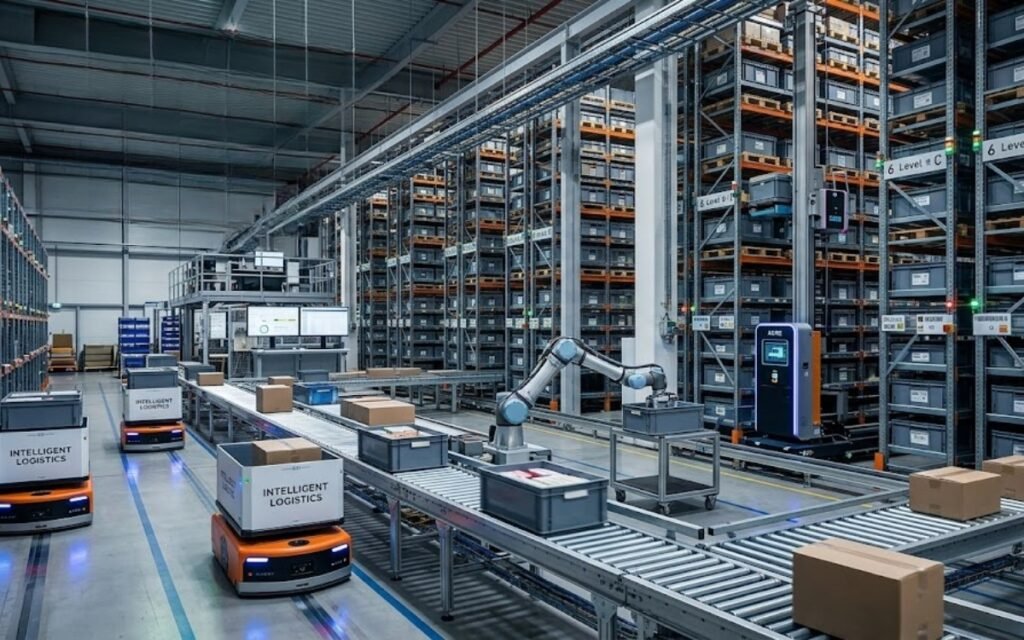
Smart racking goes hand in hand with robotics, conveyors and automated storage retrieval systems. This integration enhances the speed of the warehouse, decreases the manual work and increases the efficiency of the operations significantly productivity. Automated systems will consistently deliver reliably in order to achieve faster order fulfillment and less workflow.
Main Types of Automated Racking Systems
Smart Selective Pallet Racking
Smart selective pallet racking allows direct pallet access to the warehouse to facilitate flexible operations. It incorporates RFID tracking and occupancy sensors in real time visibility management. Most suitable in general warehousing when you need easy retrofit and scalability.
Drive-Through Racking / Drive-In
Drive-in automated racking enables the use of limited space in warehouses to store dense pallets. Sensor guided systems enhance placement accuracy and minimize the collision risks monitoring. Best when used in bulk storage when large volumes of stock have to be stacked in a small space.
Intelligent Pallet Shuttle Racking
Pallet shuttle system is an automated system that transfers goods within deep racking lanes systems. Shuttle navigation is controlled by sensors and software to provide safe high density operations system. Ideal when speed safety and maximum storage density usage are required in the warehouse.
Smart Flow Racking
Smart flow racking is gravity fed and allows movement of pallets using inclined lanes. Pallet movement stock rotation and lane blockages tracking sensors are used to monitor the movement of stock. Perfect in FIFO inventory and management system of first in first out.
Smart Cantilever Racking
Cantilever advanced racking stores long materials such as timber pipes and storage of sheets. The weight balance and cantilever arm loading conditions are continuously monitored by sensors. Perfect in safe handling operations of long and irregular construction materials.
Smart AS/RS Racking
Automated storage and retrieval system involves the use of robot cranes to handle the storage and retrieval systems. Advanced software controls storage retrieval that allows ultra high density warehouse operation control. Ideal in large automated warehouses that need round-the-clock efficient systems of inventory management.
Vertical Smart Storage Systems
Vertical smart storage racks involves VLM systems vertical carousels and tower storage units. These systems make the most of the floor space, and enhance picking efficiency of dense SKUs. Suitable where a high density automated vertical storage is needed in a modern warehousing.
Smart Racking vs Traditional vs Automated Systems
| Feature | Traditional Racking | Automated Racking | Smart Racking |
| Inventory Tracking | Manual | Automated (limited visibility) | Real-time, IoT-enabled |
| Accuracy | Moderate (human error) | High | Very high (up to ~99%+) |
| Labor Dependency | High | Medium | Low |
| Data Insights | None | Limited | Advanced analytics |
| Flexibility | High | Medium | High |
| Cost | Low initial | High initial | Medium to high |
| Maintenance | Low | Medium | Medium (tech + hardware) |
Benefits of Automated Shelving Systems
- Improved Accuracy of Inventory: Real-time tracking minimizes the discrepancy of inventory in all warehouse systems that are continuously enhancing the reliability of data. Eliminates counting errors when used manually to get more accurate stock records in real time.
- Enhanced Warehouse Efficiency: Faster picking and store operations result in much better warehouse delays. Saved time through travel saves on productivity and efficiency gains in the daily workflow.
- Space-optimal Slotting: Slotting based on data maximizes the available storage capacity in warehouse areas. Planning of layout is enhanced by better utilization of both vertical and horizontal space.
- Minimized Product Damage: Better monitoring of the loads helps to avoid overloading and provides safer storage conditions at all times. Physical impact during handling processes is reduced through use of protective accessories.
- Greater Safety: Load warnings and collision alerts will be used to avoid accidents in warehouse when there is a lot of traffic. Less manual handling risks ensure that workers are much safer and more reliable in their operations.
- Predictive Maintenance: Structural stress is identified early in order to detect potential problems in the system. Less downtime and cost of repair due to constant monitoring of the system.
Smart Shelving and Warehouse Automation
AMRs (Autonomous Mobile Robots)
In the modern warehouses, autonomous Mobile Robots deliver materials with safety and do not need human help. AMRs enhance flexibility and decrease delays and optimize the workflow in the warehouse to a significant extent. These systems move around with sensors that guarantee more intelligent and safe material handling processes.
AGVs (Automated Guided Vehicles)
Automated Guided Vehicles are used to transport materials along predetermined warehouse routes with the help of a magnetic or wire guidance system. AGVs improve safety and minimize labor expenses and ensure continuity of logistics. They have programmed routes that guarantee dependable warehouse automation activities.
Robotic Picking Arms
Robotic picking arms were effective in picking the items in high-speed fulfillment centers and doing it with high accuracy. These arms not only make them more accurate but also eliminate mistakes and enhance productivity in the warehouse. The systems powered by AI are able to adjust to diversified products enhancing the operational picking performance in a constantly efficient manner.
Conveyors
Goods are continuously moved around warehouses on conveyors to ensure efficient movement of materials. These systems minimize manual labor increase speed and have uniform flow. The current conveyor networks assist sorting packing and distribution procedures reliably precisely and efficiently.
Shuttle Systems
Shuttle systems are used to store and retrieve pallets in automated dense storage facilities. They optimize the use of vertical space and enhance efficiency of warehouses. These systems minimize the time of retrieval and facilitate high density inventory management activities without any difficulties.
Automated Cranes
Goods are moved and stored in smart rack systems in warehouses by automated cranes with accuracy. They enhance storage density minimizing labor risk and enhancing operational safety. State-of-the-art sensors control cranes to perform automated stacking operations precisely and efficiently.
Drones To Check Stock
Drones are efficient in conducting quick inventory audits with the aid of aerial scanning and imaging technology. They decrease human work and enhance accuracy and quicken stock verification. Drones in the warehouse offer real-time information that enhances inventory visibility and management effectiveness in control.
Implementation Roadmap for Smart Shelving
Phase 1: Warehouse Assessment
Study current warehouse layout to find out inefficiencies and unproductive space. You are supposed to monitor the flow of materials and record common operations bottlenecks. Findings in documents should be clearly written in order to enhance planning and maximize storage in future.
Phase 2: Data Analysis
SKU velocity analysis enables you to comprehend fast and slow moving inventory. Efficiently categorize stock in terms of importance and demand using ABC analysis. Analyze order profiles to predict buying patterns and enhance stock planning.
Phase 3: Technology Selection
Selecting sensors and software need to be carefully considered in terms of operational needs. You need to weigh hardware alternatives in terms of accuracy cost and scalability. The choice of vendors is important as the stability of the system in the long term depends on the credibility of the vendor.
Phase 4: Pilot Testing
You can first validate system performance in controlled conditions in the warehouse by pilot testing. Implement a small segment with a ten to fifteen percent coverage of operations in phases. Pilot the results of the measurements to scale to the full implementation in the warehouse successfully.
Phase 5: Full Deployment
Implementation of automated shelving systems on a large scale in a warehouse will need a gradual process. Combine with WMS and ERP systems so as to have a smooth data synchronization in place. Continuous monitoring of performance during expansion to ensure effective operation is maintained.
Phase 6: Change Management and Staff Training
Employee training will make employees learn new smart shelving technologies without any hassle. To ensure that the system is adopted and resistance to change is minimized, you should carry out workshops. The overall efficiency in change management is to keep productivity during transition to automated systems.
Industries Using Smart Shelving
- Ecommerce Fulfillment: Ecommerce fulfillment centers employ smart racking of fast SKUs handling efficiency enhanced. The systems sort cartons and parcels in a manner that facilitates fast picking and proper delivery flow processes.
- Food & Beverage: Automated racking helps to store beverages canned goods in the food beverage industry in an efficient and safe manner. Warehouses operations management can enhance the stock rotation and minimize spoilage through temperature controlled storage.
- Cold Storage: Frozen foods inventory is controlled by advanced racking in cold storage. The systems preserve ice cream and frozen meat with the optimal use of vertical space.
- Pharmaceuticals: Advanced shelving is used in pharmaceutical industries in terms of medicines vaccines and controlled storage systems. Proper tracking enhances syringe safety and compliance assurance of sensitive medical product handling.
- Automotive: Automotive warehouses use smart shelving in storage systems of auto parts and tires. The heavy duty racks handle engines and components with better accessibility and safety measures.
- Manufacturing: Automatic racking is relied on by the manufacturing units to store industrial components in an efficient manner. Arranged racks enhance the flow of raw materials and tools throughout production lines workflow speed.
- Retail Distribution: Retail distribution centers use smart racking to roll out retail goods management systems in an efficient manner. Filled items and electronics are kept securely with the picking accuracy optimized and efficiency enhanced.
How to Choose the Right Smart Rack Storage System
Storage Density Needed
Determine storage density required by looking at the available warehouse space and types of inventory that you deal with on a daily basis. Dense systems will enable you to make the most out of space without facing any difficulties in access operations due to space and safety concerns.
SKU Count
Consider SKU count since this has a direct impact on racking design and slotting complexity in systems. The increased SKU variety needs the flexibility of shelving solutions to ensure that you are able to handle inventory effectively at all times.
Order Volume
Order quantity dictates the necessary picking speed and has a significant impact on the racking system design to achieve efficiency in operations. High order volumes require the layouts to be streamlined in order to minimize delays and enhance throughput performance.
Pallet Sizes
The size of the pallets should be compatible with the rack size in order to prevent damage and enhance the safety level of storage. The varying sizes of pallets necessitate flexible racking systems that facilitate the handling of varied loads with ease and efficiency.
Turnover Speed
The speed of turnover influences the choice of racks since fast moving products would need to be stored in organized and convenient systems. Reduced turnover gives more storage space, yet you still require optimization of the retrieval planning process.
Automation Goals
The purpose of automation determines the integration of conveyors, robotics, or semi-automated picking systems into operations layer. Increased automation decreases labor dependence and enhances uniformity in the overall performance reliability measures in the warehouse operations.
Budget
Budget limitations influence how you select your racking, in terms of quality, longevity and long-term operational value investment planning. Wisdom in investment will guarantee a higher level of scalability without affecting the necessary safety and efficiency levels future readiness targets.
Software Compatibility
Software compatibility is one of the factors that make sure that your racking system is compatible with WMS and inventory tracking tools in the most efficient manner. Without integration, you will have data errors, lack of warehouse operational visibility and control accuracy.
Compliance Requirements
Compliance requirements guarantee that your racking system is not compromised in any way with regard to safety regulations and industry standards. Compliance minimizes risks, penalties and safe warehouse operations in your continuity assurance.
Advanced Smart Shelving Storage Solutions by Lracking
Lracking offers automated racking solutions to efficiently deploy smart racking into the warehouse through integrated warehouse storage solutions, such as intelligent shelving systems, pallet racking, and mezzanine-supported storage layouts, to accommodate the modern warehouse. Having more than 16 years of experience, being available in 70+ foreign markets, and having 18,000 sqm of manufacturing area, they provide high-quality certified systems (ISO, CE). Their end to end service includes the warehouse layout planning, correct quotation, efficient production (15-30 days) and safe delivery with professional installation instructions. Intelligent racking systems assist companies in enhancing inventory awareness, maximizing storage capacity, and streamlining workflow-providing scalable, organized, and economical storage facilities to run operations in 2026.
Conclusion
The use of smart racking systems in contemporary warehouses is crucial in enhancing accuracy, efficiency, and scalable storage capabilities in various industries today. They are effective at balancing robust physical design, with high-level digital intelligence and automation to achieve long-term operational success and reliability. Solutions such as LRacking offer built in automatic racking which supports effective layout planning, installation and scalable warehouse operations. Finally, smart warehouse racking can be regarded as a long-term investment that will help to keep long-term growth, productivity, and operational excellence progressing.