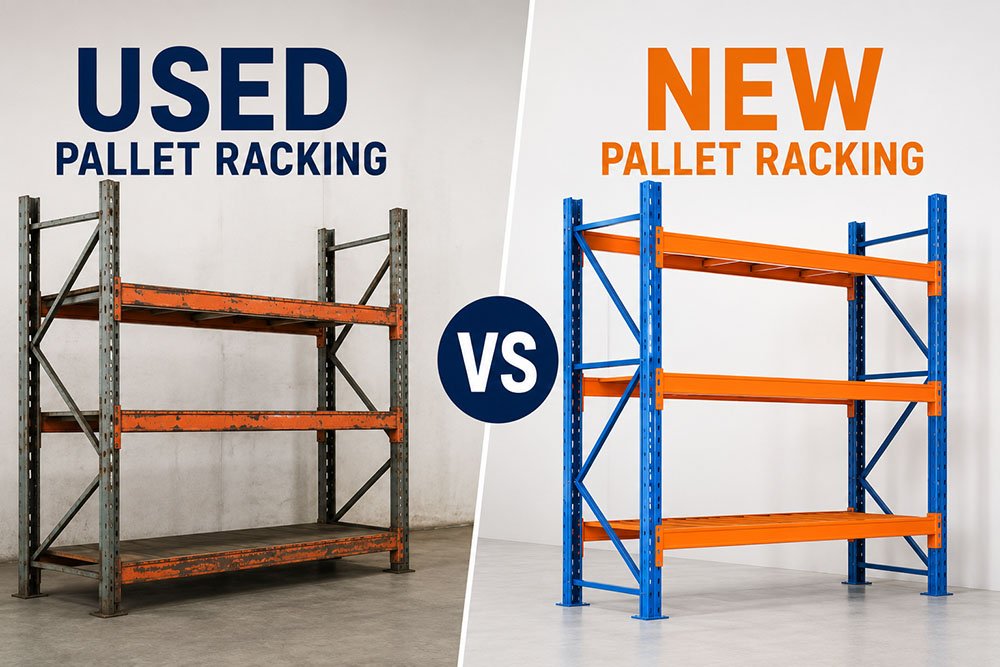
The cost difference between used and new pallet racking is often significant, and for warehouses facing budget pressure, buying used can look like an obvious way to reduce project cost. In some scenarios that reasoning holds. In many others, it does not. Used pallet racking carries a set of hidden risks that don’t appear on a price comparison spreadsheet — risks that only become visible after installation, sometimes only after a load-bearing failure or a failed insurance inspection.
This guide compares used and new pallet racking objectively, covering price, structural integrity, documentation, compliance, and long-term cost of ownership. The goal isn’t to say one is universally right — it’s to make sure buyers have the full picture before committing to either option.
Why the Used vs New Decision Is More Complex Than Price
Most buyers approaching this decision start with the price difference. A used selective pallet racking system can be sourced at roughly 60 to 70 percent of the cost of comparable new racking, and for cash-constrained projects that gap is meaningful. But racking is a structural safety system, not just a storage product. The cost of racking failure — injured workers, damaged inventory, disrupted operations, insurance disputes — is orders of magnitude higher than any savings on the purchase itself. The used-versus-new decision is therefore not just a price question. It’s a question of what risks a buyer is willing to accept, and whether they can verify those risks accurately before installation.
Direct Comparison: Used vs New Pallet Racking
Purchase price. Used racking is typically 60 to 70 percent cheaper than new for equivalent nominal specifications. This is the primary — and often the only — advantage that’s easy to quantify upfront.
Structural condition and load capacity. New racking arrives with a defined, documented load rating that reflects its as-manufactured condition. Used racking has an unknown load history — how much weight it carried, whether it was ever overloaded, how many forklift impacts it absorbed, and whether internal fatigue has reduced its effective capacity. A used upright may look identical to a new one and still have significantly reduced load-bearing capability, and there is often no reliable way to verify this without professional structural inspection.
Documentation and traceability. New racking generally comes with material certificates, load charts, engineering drawings, and manufacturer contact information for follow-up support. Used racking often has no documentation at all — buyers may not know the original manufacturer, the exact model, or the specifications the racking was engineered to. This becomes a serious problem when the buyer’s insurance provider, fire marshal, or safety auditor asks for documentation the buyer cannot produce.
Compliance and certification. New racking is manufactured to current standards — ISO 9001, AS4084, EN 15512, RMI, or ANSI MH16.1, depending on region — and the manufacturer can certify compliance. Used racking was manufactured to whatever standards applied at the time it was originally produced, which may be outdated, and there is typically no certification available for its current condition. In jurisdictions with strict rack safety codes, this can prevent installation approval outright.
Component consistency and compatibility. New racking is delivered as a matched system with consistent components and known compatibility. Used racking is often assembled from mixed sources — uprights from one manufacturer, beams from another, connectors from a third — creating potential compatibility problems and inconsistent load ratings across the same installation.
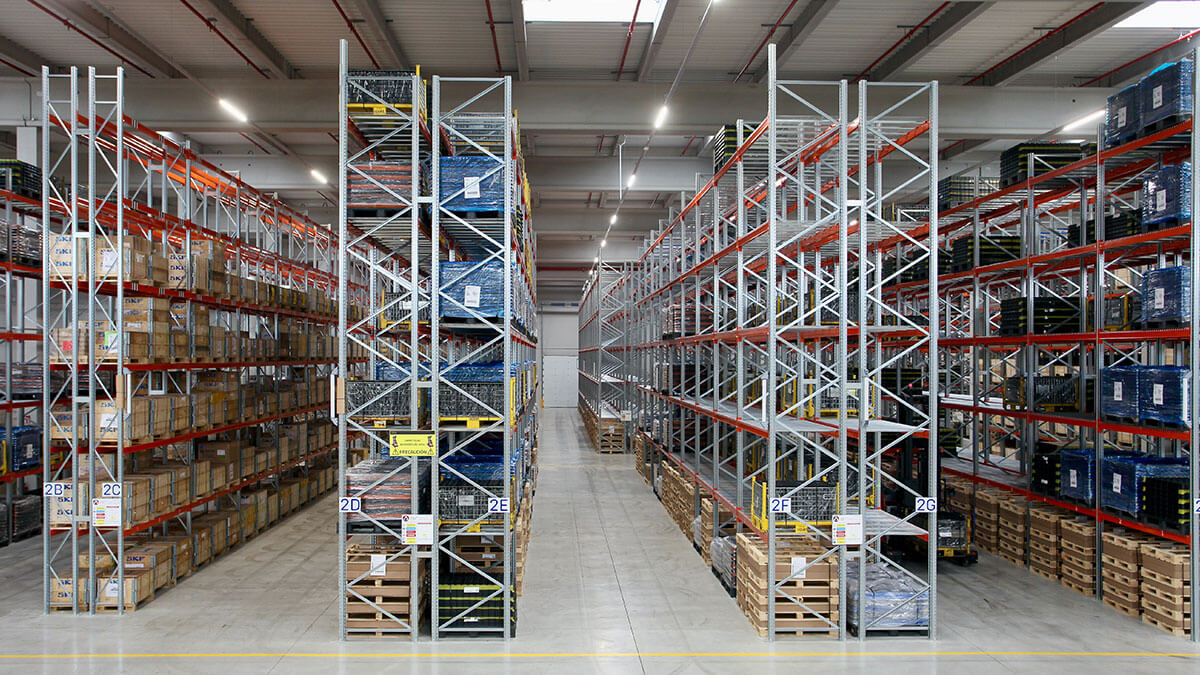
Warranty and after-sales support. New racking typically comes with a manufacturer warranty, replacement parts availability, and technical support if issues arise. Used racking generally comes with no warranty, no guaranteed access to matching replacement components, and no support if failures occur after installation.
Coating and corrosion condition. New racking has intact factory coating designed for its intended environment. Used racking coatings have already begun to degrade, and any damage or corrosion has already started, meaning service life from installation forward will be shorter than a new equivalent, especially in humid, cold, or coastal environments.
Installation and safety inspection cost. New racking generally installs straightforwardly using manufacturer-provided instructions. Used racking often requires professional structural inspection before installation — checking every upright for hidden damage, verifying beam-to-upright compatibility, and confirming residual load capacity — which reduces the effective cost savings once these services are factored in.
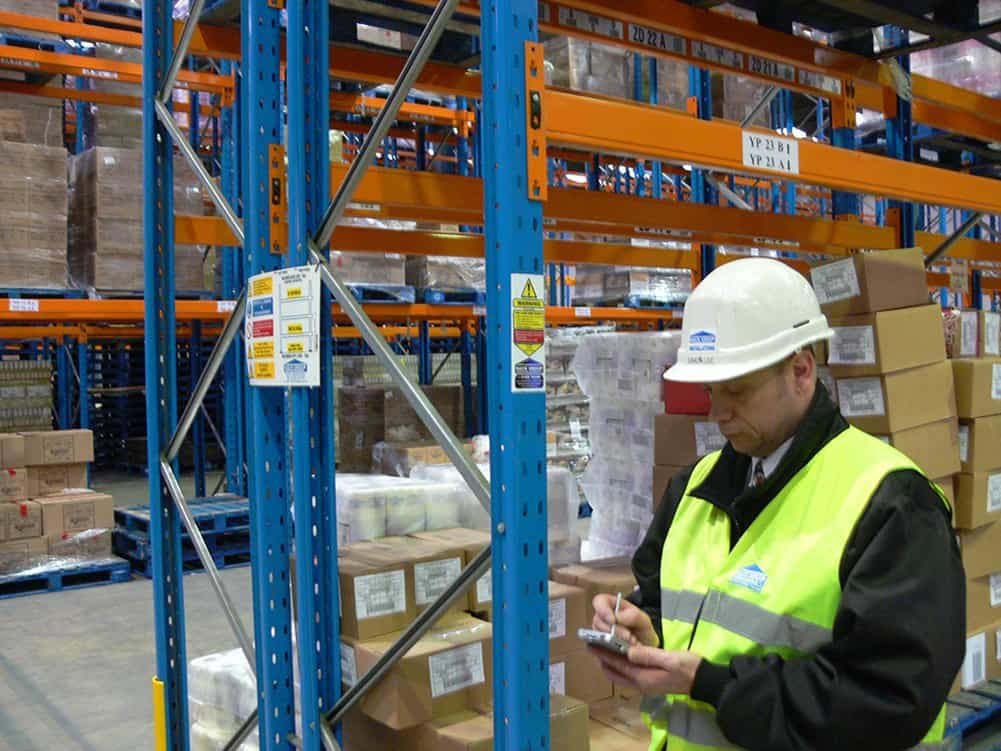
Insurance implications. Some insurance providers apply different terms — or decline coverage entirely — for facilities using uncertified used racking, particularly for high-value inventory or high-risk operations. Buyers should verify their insurer’s position before proceeding with used racking, since post-installation coverage issues are difficult and expensive to resolve.
Fire code compliance. Fire protection systems for pallet racking depend on documented rack specifications — dimensions, load ratings, flue spacing, and material properties. Used racking without documentation can create real fire compliance issues, particularly for facilities with in-rack sprinklers or high-piled storage requirements. General inspection principles that apply to any racking installation, new or used, are covered in this guide to pallet racking inspection, but pre-installation verification is significantly more involved for used systems.
Used vs New Pallet Racking Comparison Table
| Factor | New Pallet Racking | Used Pallet Racking |
|---|---|---|
| Purchase Price | Higher (baseline) | 60–70% lower |
| Load Rating Confidence | Fully documented | Unknown, requires inspection |
| Load History | None (as-manufactured) | Unknown, potentially compromised |
| Documentation | Complete | Often absent |
| Compliance Certification | Current standards | Often uncertifiable |
| Warranty | Included | None |
| Replacement Parts | Available | Difficult to source |
| Coating Condition | New, intact | Aged, potentially damaged |
| Component Consistency | Matched system | Often mixed sources |
| Installation Cost | Standard | Often higher (inspection required) |
| Insurance Implications | Standard coverage | May affect coverage terms |
| Expected Service Life | Full lifespan | Reduced, unpredictable |
The Hidden Costs of Used Pallet Racking
Even when the initial price advantage of used racking is real, several downstream costs typically erode or eliminate the savings once the full project lifecycle is considered.
Structural inspection cost. Responsible use of secondhand racking generally requires a professional structural assessment before installation. Depending on system size, this can add several thousand dollars to a project — money that partially offsets the purchase price difference.
Component replacement. Used racking systems often contain a percentage of components with visible or hidden damage that must be replaced before installation. Sourcing matching replacement components can be difficult, particularly if the original manufacturer is unknown or no longer in business.
Reduced service life. Used racking has already spent part of its expected lifespan under prior loads. The remaining service life is often significantly shorter than new equivalent racking, which means the total cost per year of usable service can be higher than the purchase price alone suggests.
Compliance remediation. In some jurisdictions, uncertified used racking cannot be legally installed for commercial storage without a professional engineering assessment providing current load ratings, which represents another significant cost — one that new racking simply doesn’t require, since compliance documentation is included as standard practice covered in this overview of rack manufacturing quality control.
Insurance premium adjustments. Some insurers charge higher premiums for facilities using undocumented racking, and some deny coverage for specific incidents attributed to the racking’s condition. Over the racking’s service life, these premium differences can substantially exceed the purchase price savings.
Downtime risk. Racking failure — even partial failure such as a bent upright requiring replacement — causes operational downtime that would not occur with new racking under standard loads. The productivity cost of this downtime is often overlooked in the initial purchase decision.
Resale value. Used racking has essentially no resale value at end of life, whereas well-maintained new racking may retain some residual value if the facility later replaces its storage system.
When Used Pallet Racking May Still Make Sense
There are a limited number of scenarios where buying used racking can be a reasonable choice, provided the buyer accepts and manages the risks involved:
Temporary or short-term storage. Facilities storing overflow inventory for a defined, limited period may find used racking acceptable, since long-term service life and compliance concerns matter less over a short deployment window.
Very light-duty, low-value storage. Warehouses storing lightweight, low-value goods with no fire or insurance complications may find used racking adequate, since the consequences of any structural issue are lower than for high-value or heavy inventory.
Systems from known sources with full documentation. Occasionally used racking is available from a specific known project with complete documentation, load history, and manufacturer information intact. In these cases, the risk profile is closer to new racking, though still not equivalent.
Buyers with in-house structural engineering capability. Operations with structural engineers on staff who can properly inspect and certify used racking can manage the risks more effectively than buyers relying solely on the seller’s representations.
Outside these scenarios, the risk-adjusted case for used racking becomes considerably weaker — and for most standard commercial warehouse applications, new racking’s documentation, compliance, and warranty coverage more than justify the price difference over the racking’s service life.
When New Pallet Racking Is Generally the Right Choice
Long-term facility use. Warehouses expecting to operate in the same building for many years benefit from the full service life and warranty coverage of new racking.
Heavy or high-value inventory. Operations storing heavy loads, high-value goods, or hazardous materials cannot afford the load rating uncertainty inherent in used systems. Structural documentation and manufacturer engineering support become essential rather than optional.
Insurance-sensitive operations. Facilities where insurance terms depend on documented rack specifications should generally use new racking to avoid coverage complications later.
Regulated industries. Food, pharmaceutical, cold storage, and other regulated sectors typically require compliance documentation that used racking cannot provide.
High-traffic or fast-moving operations. Warehouses with heavy forklift traffic, multi-shift operations, or high pallet turnover benefit from new racking’s full impact resistance and documented safety margins, since the racking will be under continuous mechanical stress.
Facilities planning automation integration. Automated retrieval systems require racking with precise dimensional tolerances that used racking often cannot meet consistently, making new racking effectively mandatory for automation-integrated projects.
Cold storage and corrosive environments. Environments that place additional stress on coatings and materials benefit disproportionately from new racking’s full coating condition and material integrity, discussed further in the context of structural racking for demanding operational conditions.
Project Considerations Before Deciding
Documentation availability. For used racking, confirm what documentation the seller can provide — load charts, original manufacturer, component matching. If documentation is missing, the risk profile increases substantially.
Structural inspection budget. For used racking, factor the cost of professional inspection into the total project budget, not just the purchase price alone.
Insurance provider consultation. Contact the facility’s insurance provider before committing to used racking to confirm any implications for coverage terms or premiums.
Fire code review. Consult a fire protection engineer regarding whether the intended racking format and configuration will meet local fire code requirements, particularly for high-piled or in-rack sprinkler applications.
Total cost of ownership modeling. Compare used and new options across expected service life, factoring in inspection costs, insurance impacts, replacement parts availability, and expected productivity if racking condition affects operations.
Manufacturer selection. For new racking, evaluate manufacturers based on documentation practices, engineering capability, and after-sales support, criteria discussed in more depth in this guide to selecting heavy-duty pallet racking manufacturers.
Frequently Asked Questions
Is used pallet racking safe to use in a commercial warehouse? It can be, but only if it has been professionally inspected, its load capacity has been verified, and its condition supports the intended use. Without these steps, used racking carries safety risks that new racking, backed by manufacturer documentation, does not.
How much does used pallet racking typically cost compared to new? Used racking is typically priced at 60 to 70 percent of the cost of new equivalent racking, though the effective cost after inspection, replacement components, and compliance remediation can be significantly closer to new pricing.
Can I get load ratings for used pallet racking? Sometimes, but generally only if the original manufacturer can be identified and the current condition has been assessed by a qualified structural engineer. Without documentation, the load rating is technically unknown, regardless of the racking’s nominal specifications.
Does insurance affect the used vs new decision? Frequently, yes. Some insurance providers charge higher premiums or apply restrictive terms for facilities using undocumented racking, and some may deny coverage for incidents linked to racking condition. Buyers should verify their insurer’s position before deciding.
What happens if used racking components are damaged? Sourcing matching replacement components for used racking can be difficult, especially if the original manufacturer is unknown or no longer in business. This often leads to further mixed-source assemblies that carry additional compatibility risk.
Are there scenarios where used racking is a reasonable choice? Yes — temporary storage, very light-duty applications, and systems with complete documentation from known sources can all be reasonable use cases for secondhand racking, provided the buyer accepts and manages the associated risks.
How long does used pallet racking typically last after purchase? Service life depends on the racking’s prior condition and future usage, but used racking generally has a shorter remaining lifespan than new equivalent racking. Buyers should factor reduced service life into cost-per-year calculations rather than comparing purchase prices alone.
Does new pallet racking always include a warranty? Most reputable manufacturers provide warranty coverage on new racking, though terms vary by supplier. Confirming warranty details is part of standard manufacturer evaluation and should be part of any new racking purchase decision.
Key Takeaways
- Used pallet racking typically costs 60 to 70 percent less than new, but carries significant risks including unknown load history, missing documentation, and compliance uncertainty
- New racking provides documented load ratings, current compliance certification, warranty coverage, and consistent component quality — attributes that used systems generally cannot match
- Hidden costs of used racking — inspection, replacement components, compliance remediation, insurance implications — often erode the initial price advantage significantly
- Used racking can be reasonable for short-term, light-duty, or fully documented use cases, but new racking is generally the safer choice for long-term, heavy-duty, or regulated operations
- The decision should be based on total cost of ownership and risk tolerance, not purchase price alone
Conclusion
The choice between used and new pallet racking ultimately comes down to how much unknown risk a warehouse operator is willing to accept for a defined upfront price reduction. In scenarios with short deployment windows or very light-duty use, used racking can be a defensible choice. In most standard commercial warehouse applications — where inventory value, insurance requirements, worker safety, and long-term service life matter — the documentation, compliance, and warranty coverage provided by new racking generally outweigh the initial price difference. Companies such as Lracking are commonly involved in projects where operators are working through exactly this evaluation, particularly for facilities where load documentation and long-term structural reliability are non-negotiable requirements. For warehouses weighing this decision, an honest assessment of total cost of ownership — inspection, compliance, insurance, and expected service life — remains the most reliable framework for determining which option delivers the better long-term value.