Prefabricated Mezzanine – Understanding Concept
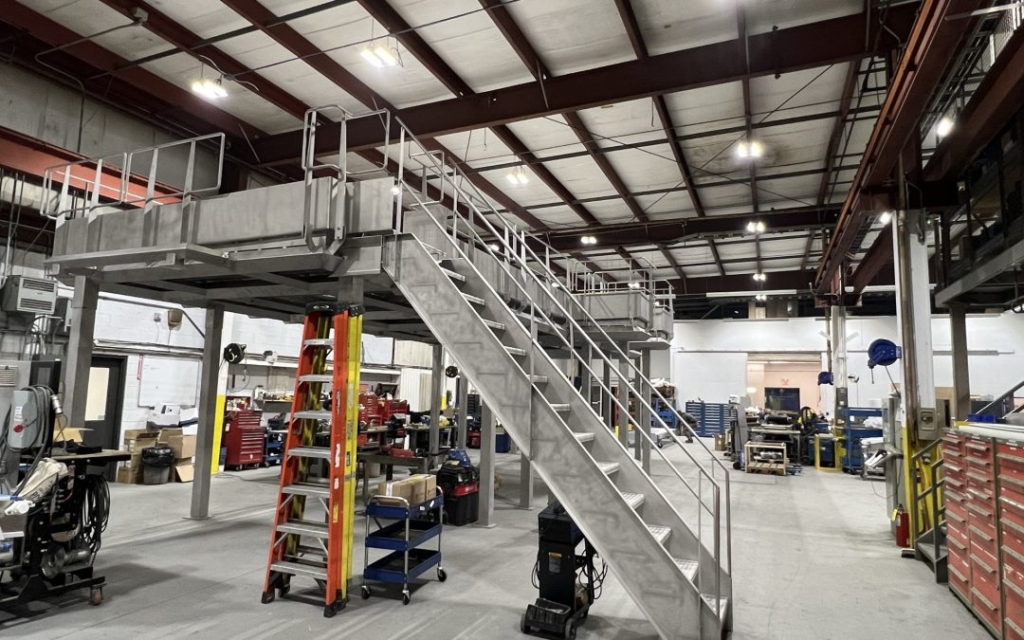
A prefabricated mezzanine is a pre-engineered steel platform that is constructed from standard structural elements and built off-site. The system is installed onsite using modular beams, columns, decking, and connection parts. They provide extra stories within existing warehouses, factories, and commercial buildings. Prefabricated mezzanine floors are not permanent building floors and are more easily moved.
How Pre-Engineered Mezzanines Work?
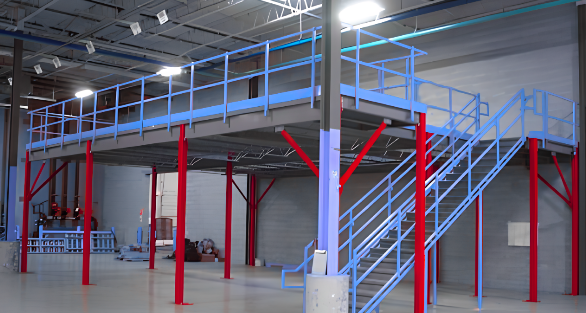
Platform loads are carried safely into the concrete floor below by structural columns. Beams are used to evenly distribute weight across the decking and the components of the supporting framework. The raised platform provides extra floor area with minimal construction.
Difference Between Traditional and Prefab Mezzanines
| Feature | Prefabricated Mezzanine | Traditional Construction |
| Construction Method | Modular and pre-engineered | Built entirely onsite |
| Installation Speed | Fast | Slower |
| Expandability | Easy to modify | Difficult |
| Relocation | Possible | Rarely practical |
| Business Downtime | Minimal | Higher |
| Cost Efficiency | Generally lower | Often higher |
| Flexibility | Highly customizable | Less flexible |
Main Components of a Pre Engineered Mezzanine
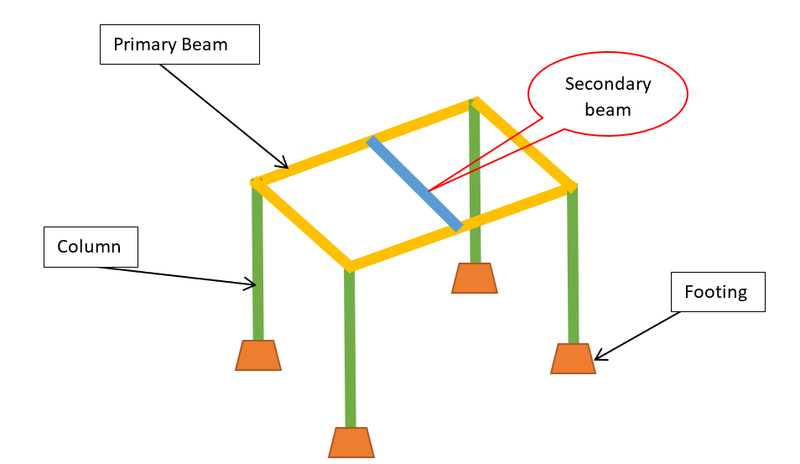
Structural Steel Columns
The vertical supports are carried by structural steel columns, which safely pass loads from the mezzanine level to the floor surfaces of the foundation below. Powder-coated galvanized finishes provide corrosion resistance, and engineered calculations guarantee long-lasting load-bearing performance in operation.
Primary and Secondary Beams
Concentrated mezzanine loads are efficiently distributed by primary beams to the columns, providing for overall structural system stability requirements. Secondary joists are used to join primary beams together to evenly support the decking material and to minimize the formation of structural stress in localized areas.
Decking and Flooring Systems
Mezzanine decking systems provide a long-lasting working surface to accommodate equipment, storage loads, and continual pedestrian movement. Slip-resistant flooring materials enhance the safety of workplaces, and tough finishes stand up to the daily rigors of industrial operations.
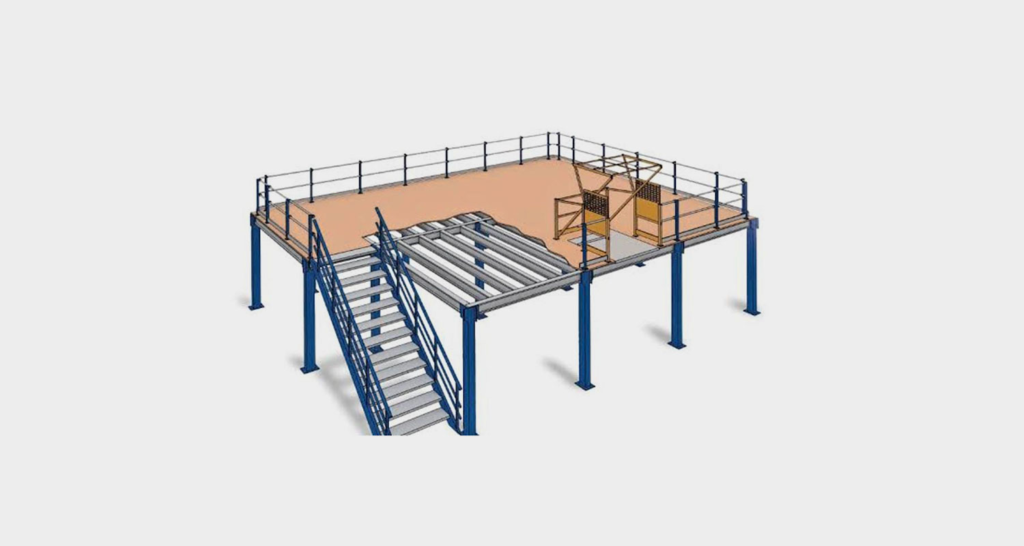
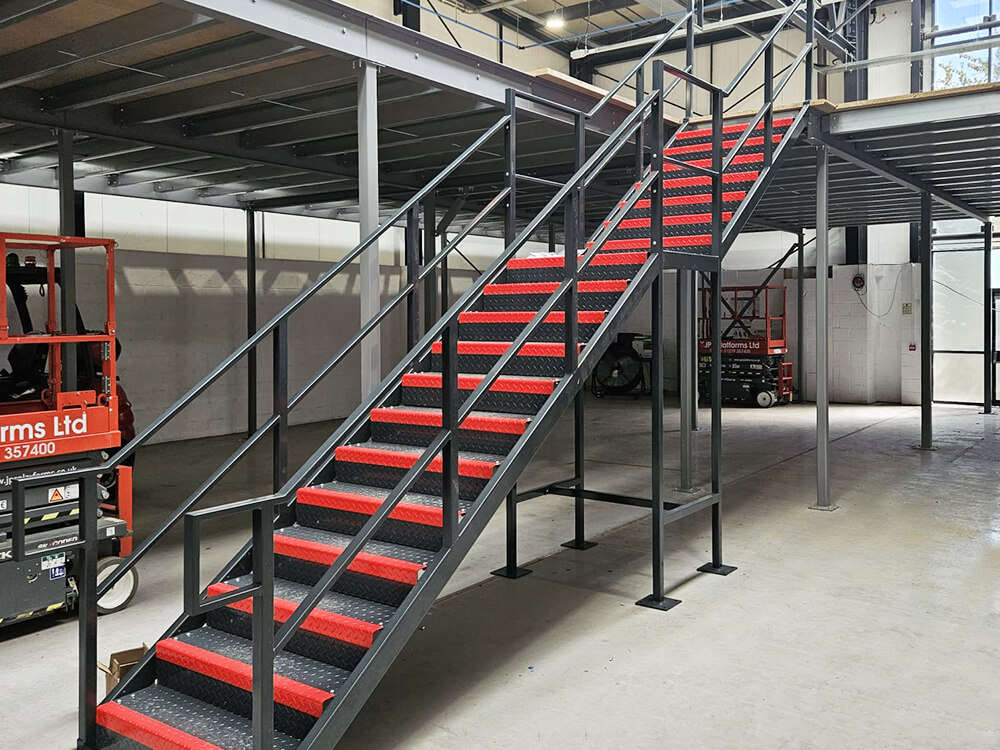
Staircases
Secure mezzanine access with OSHA-compliant staircases enhances employee movement and productivity, and emergency evacuation procedures. Properly located access points minimize operational traffic, enabling safe working practices and effective movement of material in and around facilities.
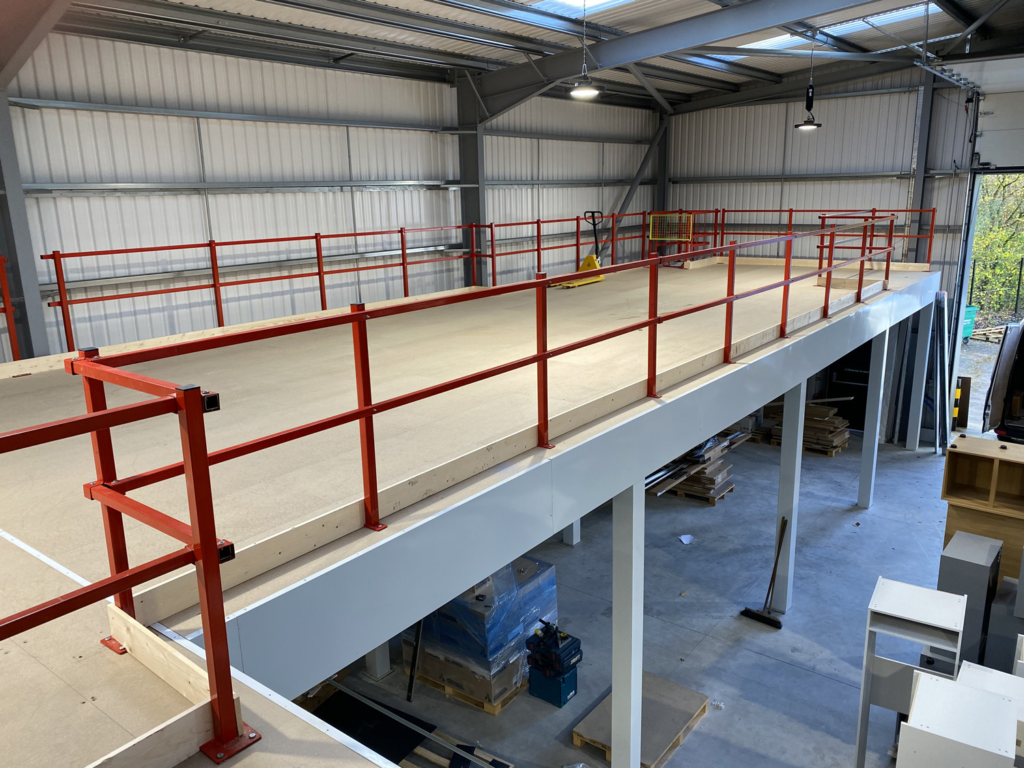
Handrails and Guardrails
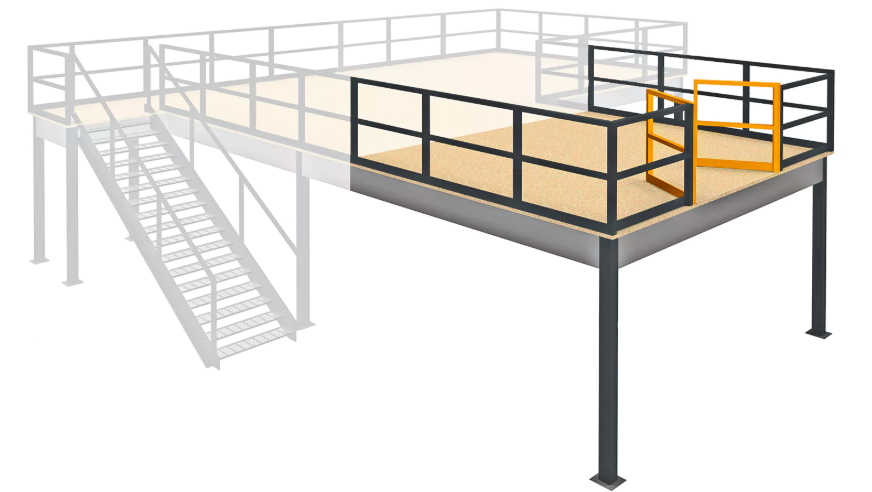
Workers working near the edge of the mezzanine platform are always protected from dangerous falls, thanks to handrails and guardrails. Durable steel railings improve workplace confidence while meeting essential industrial fall-protection safety regulations for compliance.
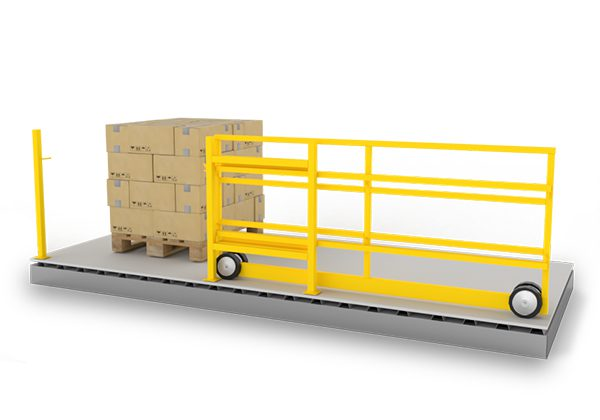
Gates and Material Handling Openings
Mezzanine openings are protected by sliding gates and swing gates to provide for safer loading and unloading of pallets. Pallet access systems can enhance material handling efficiency, greatly decreasing accidents that can occur during elevated inventory transfer activities.
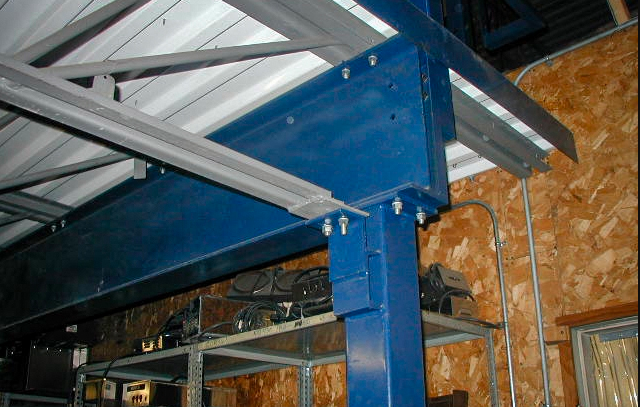
Connections and Fasteners
Bolt-together mezzanine connections make installation processes easier and quicker, and future structural modification requirements possible. Minimal welding minimizes installation disruptions and enhances flexibility, maintenance access, and long-term reliability of the structure.
Types of Prefabricated Mezzanine Systems
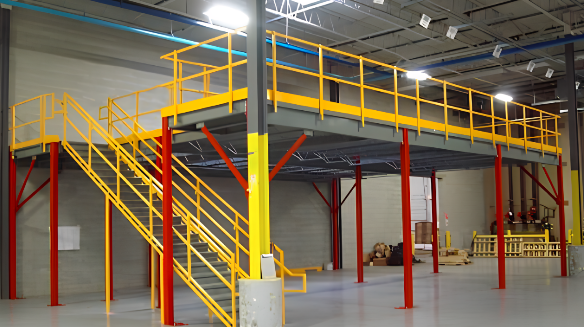
Prefabricated Steel Mezzanines
Structural steel mezzanines are heavy-duty elevated platforms for use in industrial storage expansion systems. These industrial storage mezzanines offer solutions to increase load capacity, multi-level configurations, and efficient utilization of warehouses. Perfect for the operations of manufacturing plants, logistics centers, automotive warehouses, and heavy industrial facilities.
Rack-Supported Mezzanines
Rack-supported mezzanines are constructed over a pallet racking storage system to extend and improve warehouse storage. They take full advantage of the vertical space, enhance picking speed, and substantially cut down on warehouse congestion. Application environments include ideal use in distribution centers, ecommerce warehouses, and high-density storage facilities.
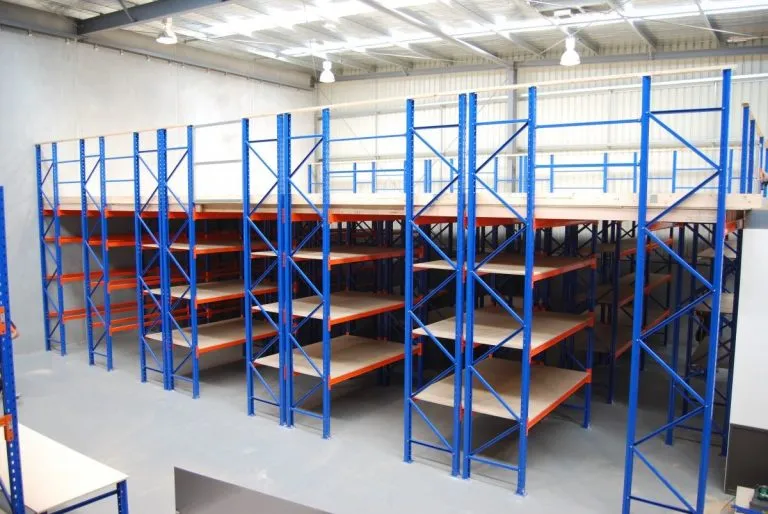
Shelf-Supported Mezzanines
Shelf-supported mezzanines are lightweight platforms that are erected on top of shelving systems for storage purposes and applications. They make efficient use of small inventory storage and enhance accessibility in retail environment operations. Suitable for retail stores, distribution centers, and light commercial warehouses.
Free-Standing Mezzanines
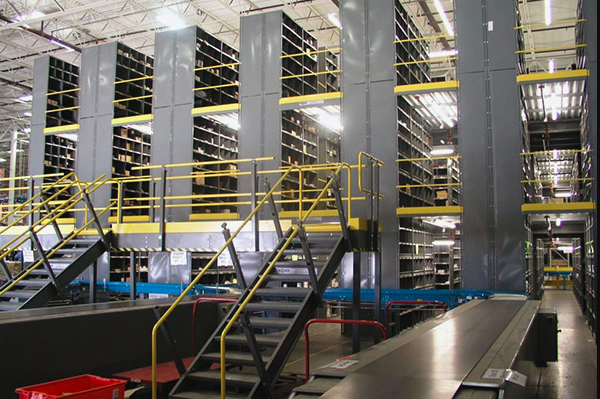
Free-standing mezzanines are structures not connected directly to the existing building structure. They provide flexible design, easy relocation, and adaptable multi-level configuration for facility needs. Perfect for flexible use areas in manufacturing plants, warehouses, and expanding industrial applications.
Modular Mezzanines
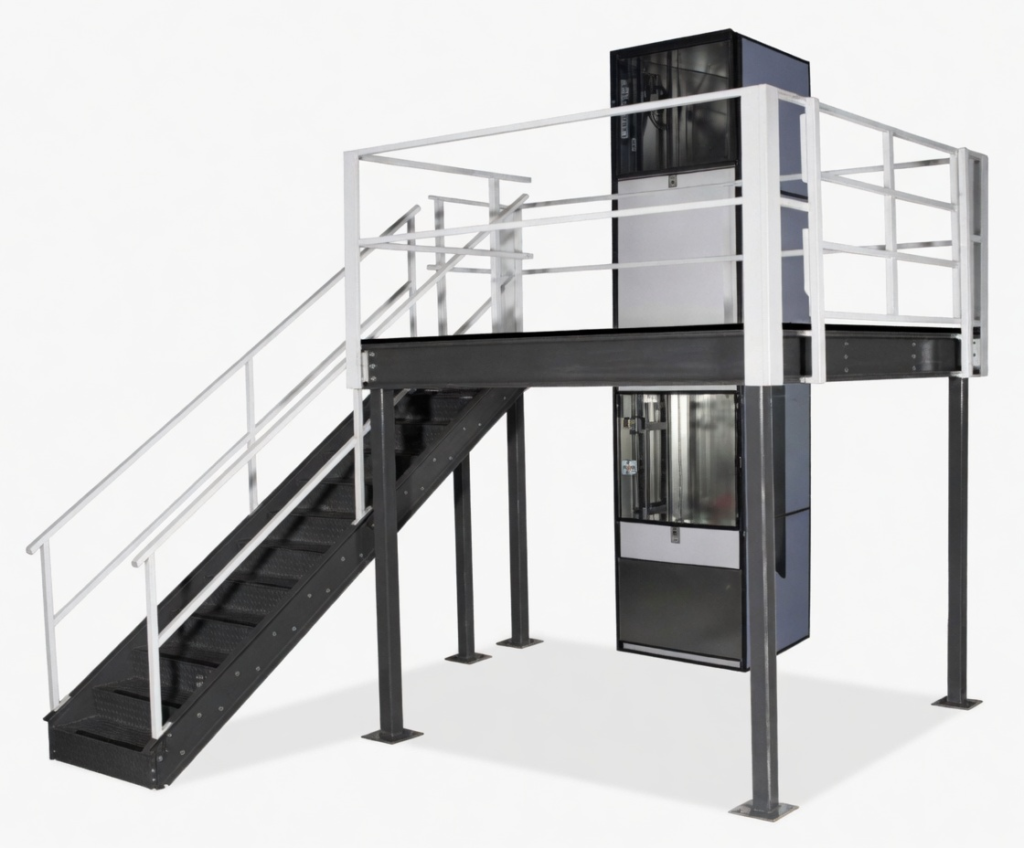
Modular mezzanine systems are pre-engineered systems that are flexible and adaptable to structural use and quick installation. They can be easily reconfigured, have scalable layouts, and deploy efficient warehouse optimization solutions for use in logistics hubs, retail warehouses, and manufacturing facilities where flexibility is needed in application environments.
Work Platform Mezzanines
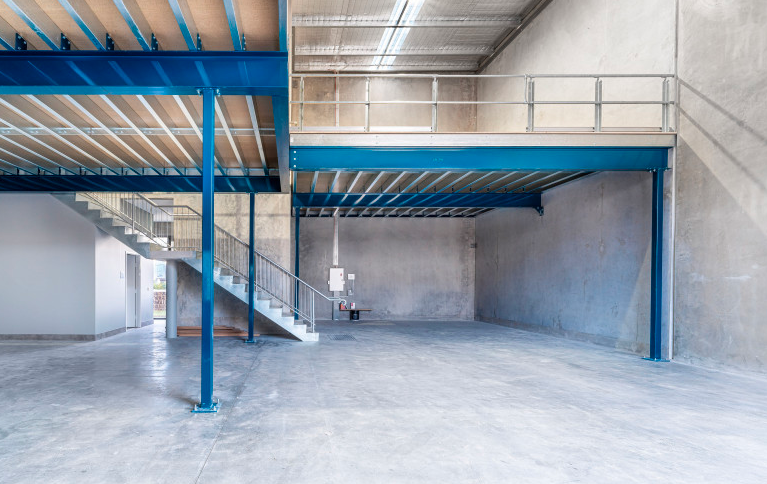
Work platform mezzanines are raised platforms for accessing equipment and for operations. They are helpful with machinery servicing, safety, and enhancing the productivity of industrial workflow. Industrial applications that are commonly used in manufacturing plants, heavy equipment facilities, and maintenance workshops.
Catwalk Mezzanine Systems
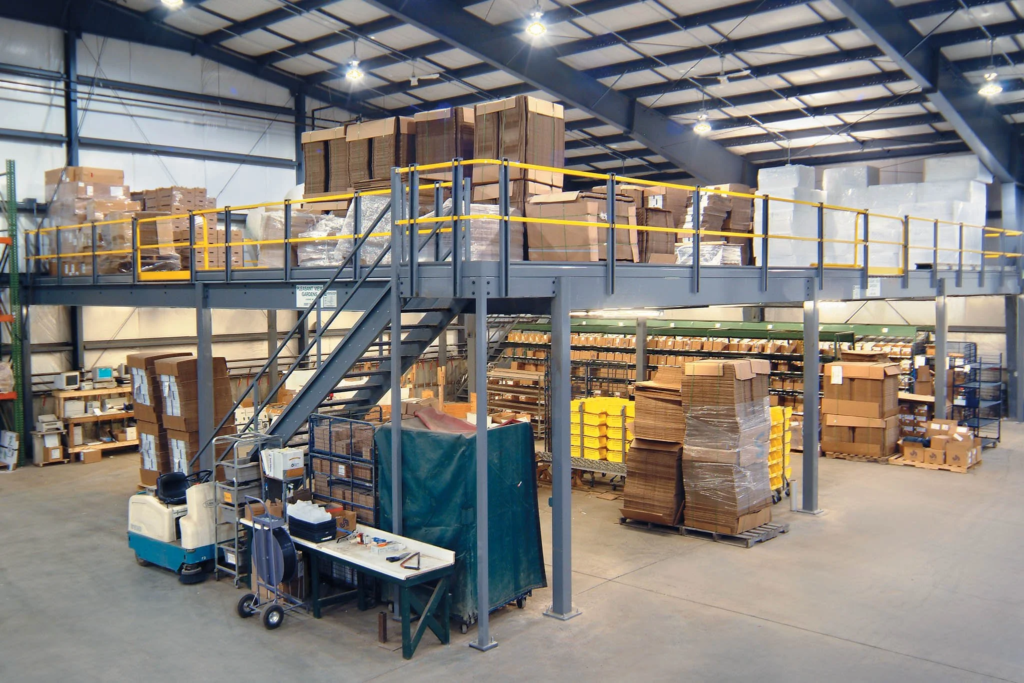
Catwalk mezzanine systems are narrow elevated walkways that are used for employee movement and access control. They enhance workflow, offer safe access, and make a huge difference in facility navigation systems. For traffic control management in busy warehouses, logistics centers, and manufacturing environments.
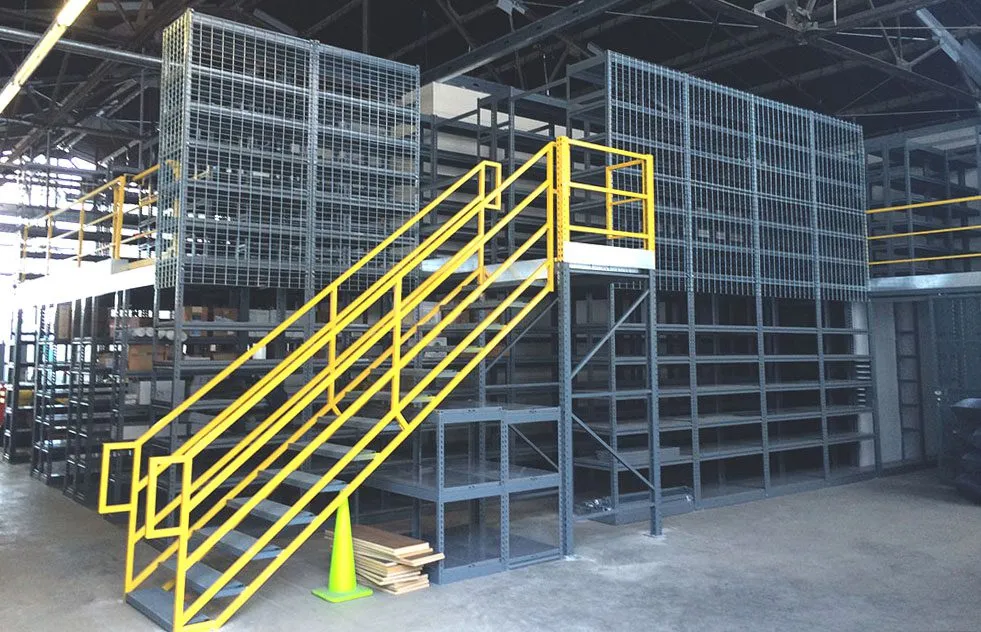
Common Prefabricated Mezzanine Floors Options
Steel Grating
Steel grating is open grid flooring that is used in mezzanine structures for ventilation and strength. It offers fire protection, drainage, and is suitable for heavy industrial storage applications, with minimal effort.
Diamond Plate Steel
Diamond plate steel flooring is a steel flooring pattern with raised patterns that provide high levels of slip resistance and durability. Typically found in high-duty situations where safe traction and long-lasting structural performance are important.
Plywood over the steel decking
Cost-effective mezzanine flooring for general storage systems is available in the form of plywood over steel decking. It provides a smooth surface for light industrial and warehouse uses.
Resin Deck Flooring
Resin deck flooring produces a smooth and durable surface for modern mezzanine applications. It is used extensively in office and light industrial applications where hygiene is important.
Concrete Decking
Concrete decking is a permanent type of mezzanine flooring that is capable of supporting heavy loads. Perfect for industrial plants where the strength and stability performance requirements are high.
Open Bar Grating With Anti-Slip Coating
Anti-slip coating is provided on open bar grating for greater safety in wet hazardous areas. It helps to keep the air flowing and to safeguard workers in industrial mezzanines.
Mezzanine Flooring Types and Best Applications
| Flooring Type | Key Features | Best Applications |
| Steel Grating | Ventilation, fire-friendly, durable | Industrial facilities |
| Diamond Plate Steel | Slip-resistant, heavy-duty | Manufacturing plants |
| Plywood Over Steel Deck | Affordable and versatile | Light storage |
| Resin Deck | Smooth, durable, clean finish | Offices and workspaces |
| Concrete Decking | High load capacity, long lifespan | Permanent heavy-duty installations |
| Open Bar Grating | Drainage and anti-slip benefits | Wet or hazardous areas |
Benefits of Prefabricated Mezzanine Systems
- Maximized Vertical Space: Prefab mezzanines systems make efficient use of the unused vertical space in the warehouse. This is more of a method that can be used to maximize the available space without any building-out process.
- Lower Expansion Costs: These systems will help to eliminate the need for expensive new buildings or extensive building addition projects. Overall costs of relocations and construction-related disruptions are saved by the businesses.
- Faster Installation: Prefabrication allows components to be manufactured off-site for quicker assembly and an on-site installation process. With minimal onsite construction, the operation can continue with minimal downtime and impact on the operation.
- Scalability and Flexibility: Prefabricated mezzanine systems can be expanded or reconfigured as needed in the future. They are easily adjusted to meet the evolving business requirements and operational growth needs over time.
- Relocation Advantages: These systems can be easily relocated again. This ensures that businesses have good long-term investment potential and flexibility of operation.
- Better Workflow Efficiency: Mezzanine structures help to increase warehouse organization and optimize internal traffic flow efficiency gains. This results in increased productivity and more efficient day-to-day running of the business as a whole, improvements that are achieved.
- Effective Space Segregation: Pre-engineered mezzanines are a good way to effectively divide offices, storage, and production areas within a facility. The clear segregation brings safety, organization, and overall workplace efficiency standards are maintained.
- Sustainability Benefits: Prefabricated systems minimize material waste and contribute to the overall efficient use of materials. They also attempt to minimize environmental impact by maximizing the reuse of existing buildings.
Applications of Prefab Mezzaniness
Warehouse Storage Expansion
Pre-engineered mezzanines are the best way to make efficient use of vertical space, increasing the storage capacity of the warehouse. They enhance inventory management and simplify order picking to boost warehouse performance efficiency.
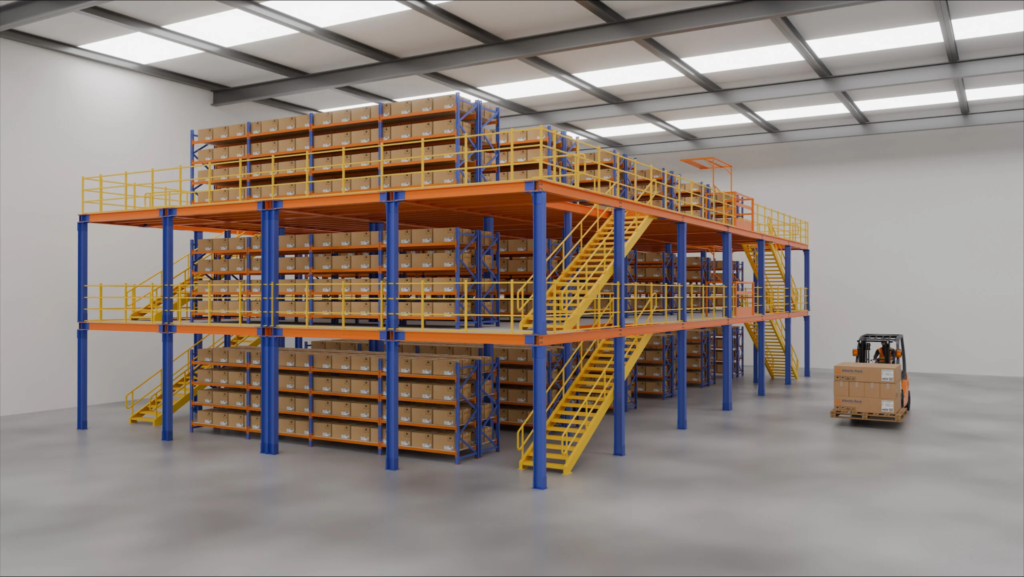
Manufacturing Facilities
Mezzanines are used to provide raised equipment platforms in manufacturing plants for better placement of machinery and safety. These buildings also offer extra production support areas, which substantially increase the efficiency of the production process.
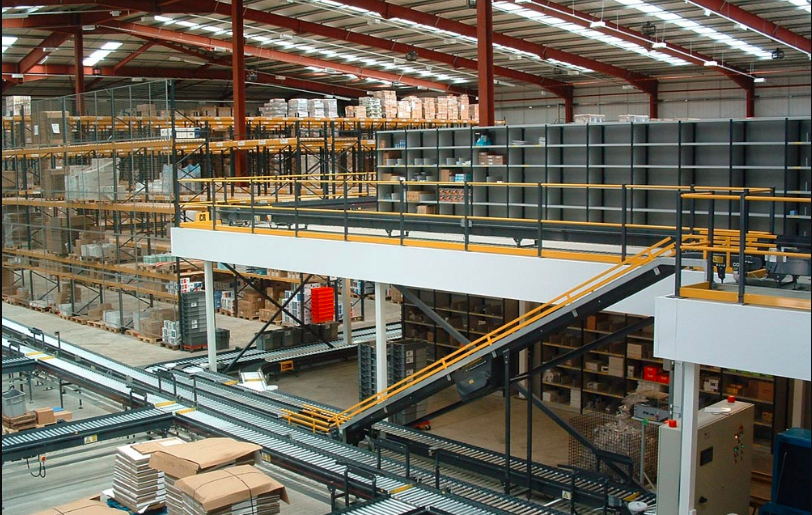
Distribution Centers
Mezzanines can lead to more efficient distribution center logistics and goods handling processes. They allow multi-level storage systems to increase capacity without expanding or moving buildings to be efficient.
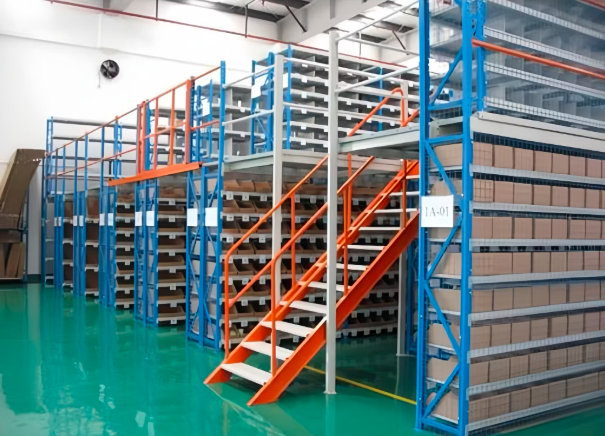
Integrating prefabricated mezzanine office facilities within warehouses
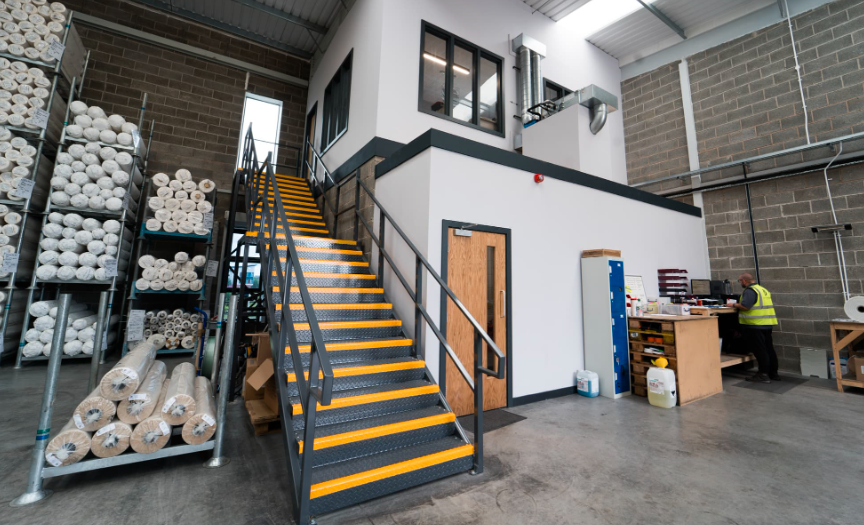
The benefits of pre engineered mezzanines are the ability to create administrative offices within the warehouse environment without disrupting operations. They also help to enhance the comfort and productivity of employees in conference rooms and break areas.
Retail & Commercial Spaces
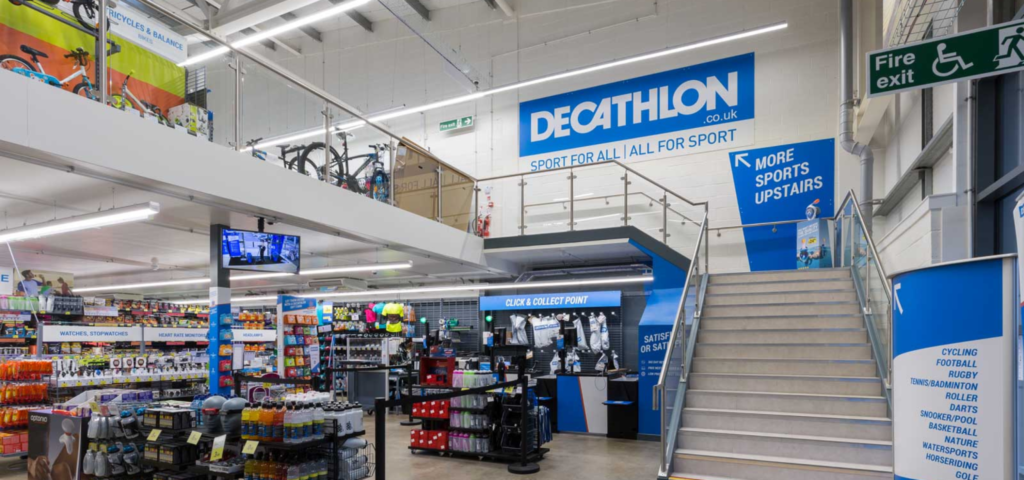
Mezzanines are used in retail settings to create extra levels of shelf space, promoting visibility and interaction with products to a great extent. They also offer storage expansion options, aiding businesses in managing their inventories more efficiently on a day-to-day basis.
Workshops and Maintenance Areas
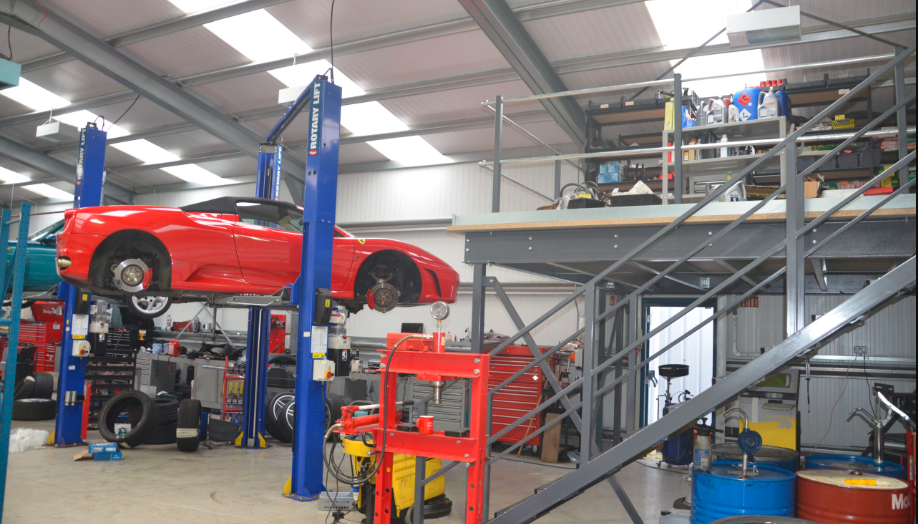
Mezzanines maximize the use of the space for tools, equipment, and maintenance to use the space effectively overall. This enhances workflow and leads to better organization of the work areas for technicians’ daily activities.
Conveyors and automation support
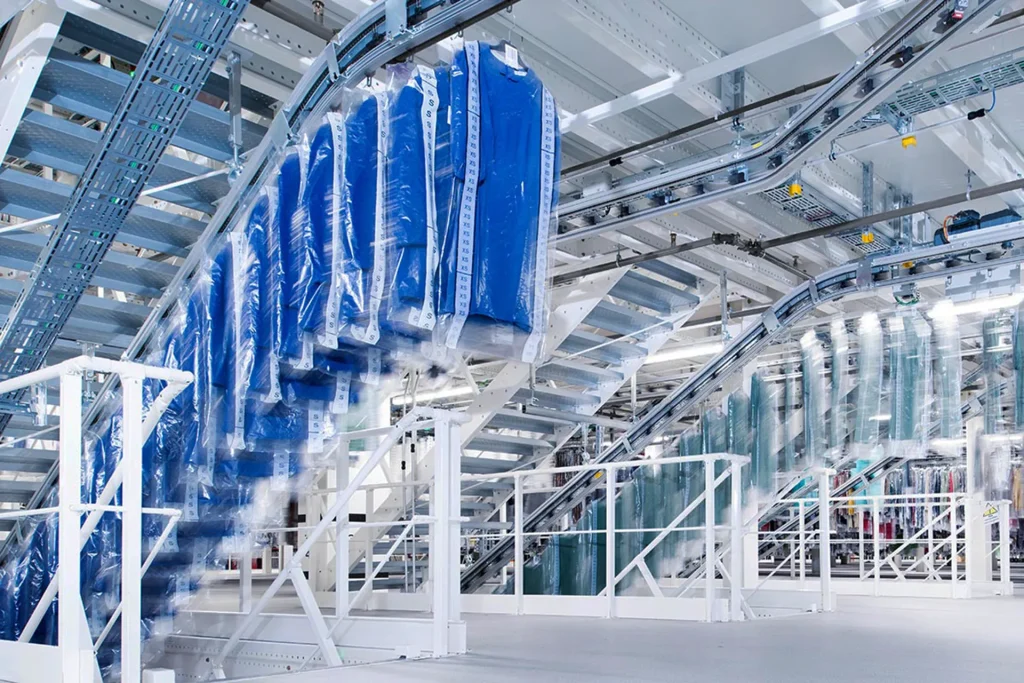
Mezzanines provide elevated integration points for automation infrastructure system efficiency gains and support conveyor systems. They enhance the automation systems in warehouses, which helps to achieve seamless material flow and better performance in operation control.
Equipment & Machinery Platforms
Prefabricated mezzanines are used for making elevated platforms for the safe operation of heavy equipment and industrial machinery systems. They offer safety and efficiency by keeping the machinery areas away from ground-level activity work areas.
Understanding Mezzanine Load Capacity
Mezzanine load capacity is the maximum weight the floor can safely support (in pounds per square foot or PSF). The appropriate load rating guarantees that the structure will be safe and that the mezzanine won’t fail when subjected to too much or unevenly distributed load. The capacity of office mezzanines is 50-75 PSF, light storage mezzanines is 125-250 PSF, and heavy-duty industrial is 300-500+ PSF. The load requirements will vary according to the purpose for which the equipment is used, the amount of traffic, and storage density. With proper engineering calculations, the risk of overload is avoided, and the structure is ensured to have long-term reliability and compliance.
Pre Engineered Mezzanine Systems Installation Process
Step 1: Initial Site Assessment
Before the design, technicians carefully measure the available space and accurately determine the conditions required for the installation of the mezzanine. Engineers assess floor conditions to ensure that they are strong and stable enough for future loading. The accurate assessment is crucial to ensure that the installation planning is done in a safe manner, which prevents costly mistakes on the structure later at the site.
Step 2: Engineering and Design Phase
CAD models are created to be able to visualize the mezzanine structure and create the design layout optimally. Engineers make structural calculations to ensure the load capacity is sufficient to meet safety standards and requirements effectively. The design phase is very well integrated with client requirements in terms of space efficiency and long-term durability.
Step 3: Fabrication Process
The components are produced off-site in a controlled environment that guarantees a high level of precision and uniformity. Quality control teams thoroughly check every component, ensuring a consistently high standard of production. On-site errors are minimized, and the overall efficiency of the project is increased due to the fabrication process.
Step 4: Site Preparation
The site preparation process starts with the clearing and leveling of the floor for smooth installation works. Adjustment of utilities is carried out in a careful manner to ensure that there is no interference during the process of executing the work in the mezzanine installation. By preparing properly, you can create a safer work environment and save a lot of time and money on installation and overall project efficiency.
Step 5: Assemble and install the parts
The first step is to put in columns and beams to create a strong structural framework system base. Decking installation comes after a stable and secure working platform for users’ safety compliance. Installation of safety devices, such as staircases and railings, for safe operation in the long term.
Step 6: Final Inspection and Testing
Load testing is performed to verify the structural strength and durability of the mezzanine system. Inspectors make sure that safety requirements are met and all standards are properly validated. Final approval verifies installation quality and guarantees that the mezzanine can be used immediately.
Factors that Determine the Cost of Pre-engineered Mezzanines
The price of prefabricated mezzanines is affected by several factors related to the structure and operation of the mezzanine. Final pricing decisions can be affected by size, load capacity, type of flooring materials, and customization. Installation costs include labor, equipment, and usually cost between $20 and $60 per square foot. Depending on the complexity and compliance, engineering and permit costs can be $5,000 to $25,000. Long-term savings and ROI enhance efficiency, maximize storage space, and minimize expansion and relocation expenses.
Prefabricated Mezzanines Customization Options
- Multi-Level Mezzanines: Prefabricated multi-level mezzanines efficiently expand to maximize warehouse space. These systems offer extra storage space, production workflow optimization, and space utilization.
- Integrated Office Systems: Integrated office systems within mezzanines offer comfortable, climate-controlled work spaces within warehouses. These offices help to enhance supervision, communication, and productivity, and ensure efficient industrial storage layouts design.
- Conveyor and Automation Integration: Conveyor and automation integration will enable the smooth material flow in the prefabricated mezzanine warehouse system. Efficient integration of robotics, sorting equipment, and smart logistics operations is possible with these systems.
- Space Utilization and Organization: Storage and Shelving Integration can aid in space utilization and organization in the warehouse. Custom layouts can be used to improve access to the inventory, minimize handling errors, and save time.
- Custom Gates and Access Systems: Custom gates and access systems ensure forklift traffic is kept safe and allow for efficient movement of pallets. They contribute to the enhancement of loading speed, safety control, and smooth traffic flow management in the warehouse.
- Specialized Surface Finishes: Specialized surface finishes (such as galvanized and powder-coated) will help give durability. In harsh warehouse environments, they safeguard mezzanine structures from corrosion, wear, and industrial damage.
How to Pick the Appropriate Pre-Engineered
Mezzanine
Identify Operational Goals
When considering any sort of mezzanine system for any facility, make sure that there is a clear definition of the operational goals. The best choice of structural design is determined by storage or office/production needs.
Assess Available Space
Calculate and evaluate space (ceiling height and space available on the floor). If sufficient clearance is provided, it will ensure a safe installation and process design for long-term efficient operation.
Determine Load Requirements
Thoroughly estimate load requirements, such as the weight of inventory and equipment distribution. The need for safe pallet storage, machinery, and dynamic operational loads requirements is a part of structural capacity.
Evaluate Future Growth Needs
Assess future growth requirements to allow for mezzanine scalability and adaptability in the future. Allow for expansion, extra storage levels, and changing operational demands to be accommodated and planned for effectively.
Compare material/flooring options.
Make comparisons between materials and flooring to consider strength, safety, and maintenance. There is a range of options for durability and performance levels of steel structures with different types of decking.
Review Supplier Experience
Look at supplier experience for delivery, installation, and after-sales support quality. The supplier’s experience and project portfolio reflect on the supplier’s credibility and reliability in performing well.
Make sure compliance and certifications are obtained
Check compliance and certifications to comply with OSHA standards and local regulations requirements. Once certified, the structure will be safe, accepted by the authorities, and provide long-term confidence for operation.
Drawing attention to some of The Common Mistakes to avoid
Not taking the load capacity needs into account.
Storage systems that are overloaded from the beginning are a safety hazard. It can be highly influential on structure, can cause damage, and, over time, cause costly operational disruption.
Underestimating Future Growth
Underestimation of future growth will limit warehouse scalability, efficiency planning, and cause issues with capacity. It restricts growth, resulting in costly re-design and operating delays.
Choosing Inadequate Flooring
Inappropriate flooring results in premature wear, and diminished load performance becomes an issue. Over the years, this can result in higher maintenance costs and inoperability.
Overlooking Safety Regulations
Compliance violations and growing workplace dangers risk escalating when safety regulations are overlooked. It can put the workers at risk for injury and have serious legal implications.
Hiring Inexperienced Contractors
There can be repetitive structural issues and poor workmanship due to unskilled contractors. This raises rework expenses and results in long-term operational inefficiencies and later issues.
Why a Leader for Custom Prefabricated Mezzanine Solutions?
Lracking is a mezzanine manufacturer that offers durable and flexible mezzanine constructions that can be customized to achieve the best use of warehouses for increased storage and efficiency. The company has more than 16 years of experience in the industry and provides comprehensive services, such as free layout drawings, precise quotations, quick production, safe shipping around the world, and professional instructions for installation. All mezzanine systems are made with top-quality materials and under strict ISO certified processes to ensure durability, safety, and long-term performance. Lracking also provides customized mezzanine solutions that are designed to fit the dimensions, workflows, and load-bearing capacity of a particular warehouse.
Conclusion
An effective and economical solution for the efficient use of the unused volume in commercial buildings, warehouses, and factories is to have prefabricated mezzanines. They offer flexibility, quick installation, scalability, and good load-bearing capacity when engineered properly. There are different types, flooring options, and customization features that can be tailored to the needs of the business. With safety and compliance as a design intention, mezzanines enhance workflow, minimize expansion costs, and facilitate growth. All in all, they’re a wise investment for modern area optimization.