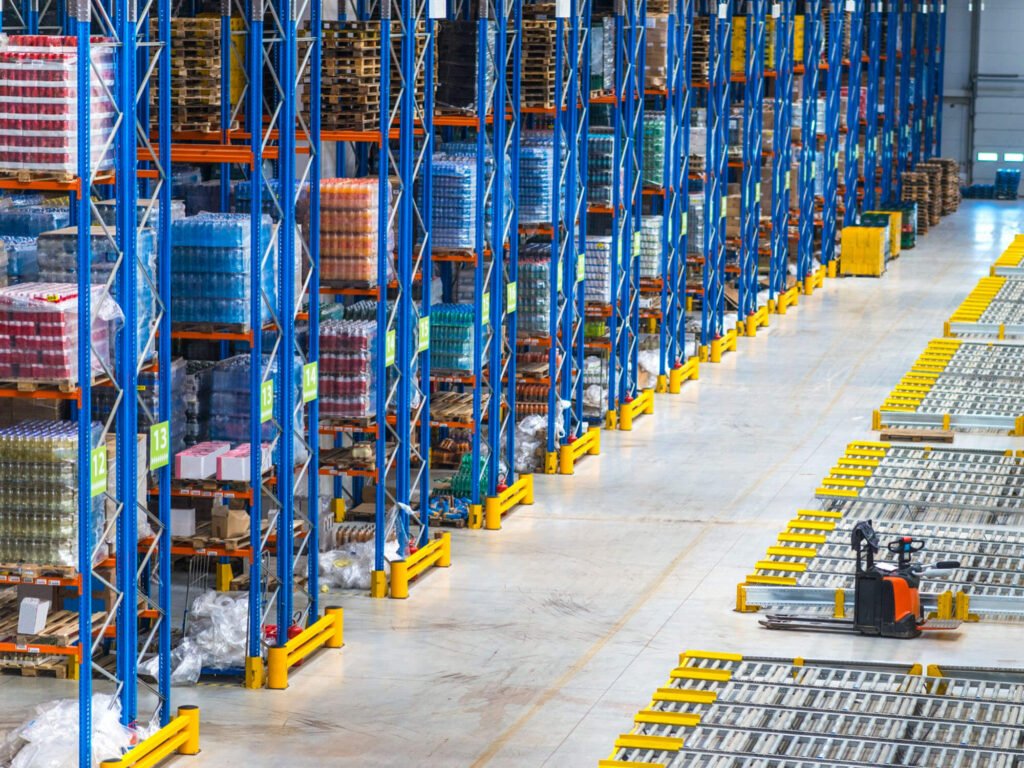
E-commerce order volumes, same-day delivery expectations, and rising SKU counts have pushed warehouses well beyond the point where conventional picking on ground-level pallet racking can keep up. When a facility needs to process thousands of individual orders per shift, each containing a handful of items pulled from a broad SKU range, the storage layout itself becomes a bottleneck. Pick modules — engineered multi-level picking systems that combine mezzanine floors, pallet racking, carton flow lanes, and integrated conveyors — are the format most commonly used to break through that bottleneck.
This guide explains what warehouse pick modules are, how they’re built, when they make sense, and what to consider when planning one for a specific operation.
What Are Warehouse Pick Modules?
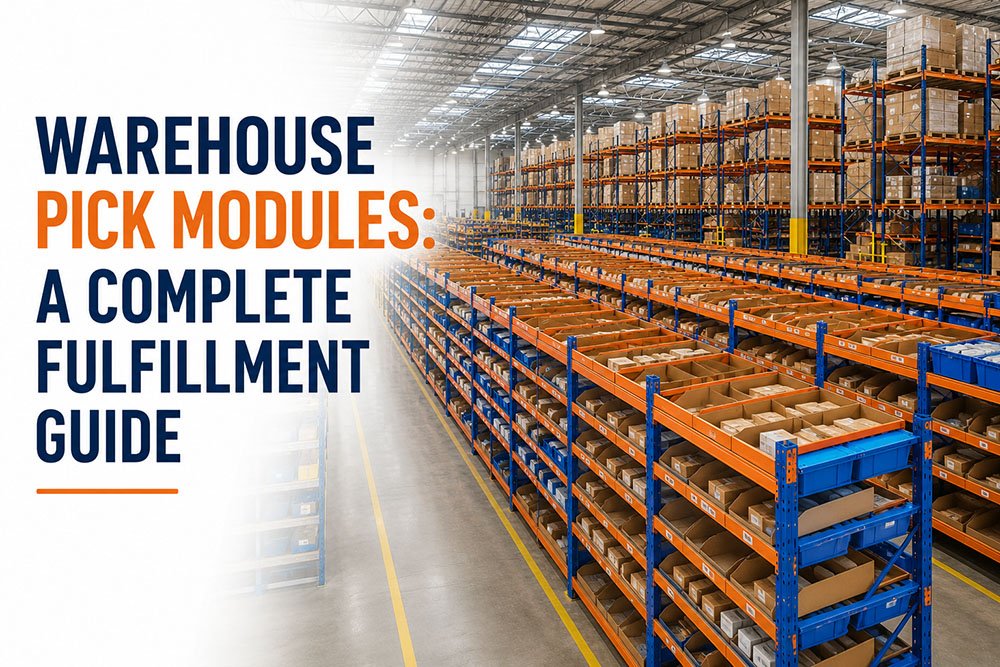
A warehouse pick module is an engineered, multi-level storage and picking system designed to support high-volume order fulfillment. Rather than a single shelving type, a pick module is a coordinated combination of structural and mechanical elements: mezzanine floors provide multiple working levels, pallet racking on the upper levels stores replenishment inventory, carton flow lanes present pick-ready cartons at each picking face, and conveyors transport picked items down through the module to consolidation, packing, and shipping areas.
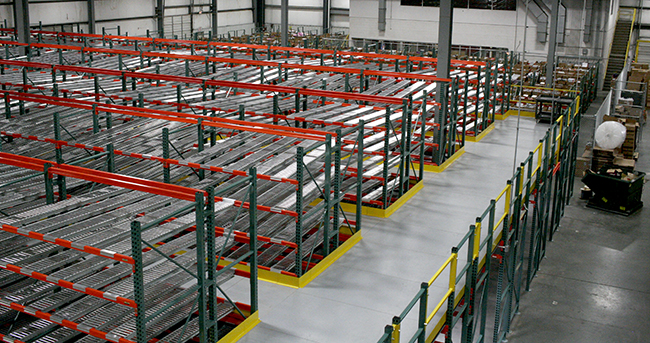
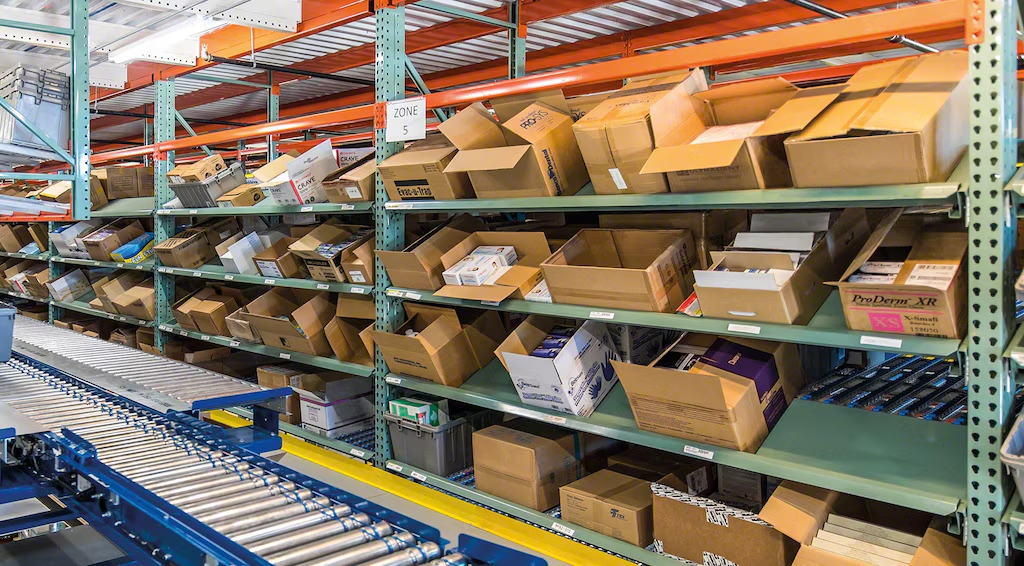
The core principle is separating replenishment from picking. Replenishment happens on the pallet-level rear of the module, where forklifts or reach trucks restock full cartons from behind. Picking happens on the face, where pickers select individual items from carton flow lanes that gravity-feed forward as front cartons empty. This design keeps pickers stationed at a compact working face rather than walking long aisles, and it keeps replenishment traffic entirely separate from picking traffic, allowing both to run simultaneously without interference.
Core components of a pick module:
- Mezzanine floor structure: Multi-level steel platforms providing two, three, or more picking levels within the same building footprint, with staircases, safety railings, and load-rated decking.
- Pallet racking (replenishment side): Standard pallet racking behind or above the picking face, holding full cartons or pallets that feed the pick lanes as inventory is drawn down.
- Carton flow lanes: Inclined roller or wheel track lanes that hold cartons on a gentle downward slope, allowing gravity to advance the next carton forward as the front one empties, ensuring first-in-first-out rotation.
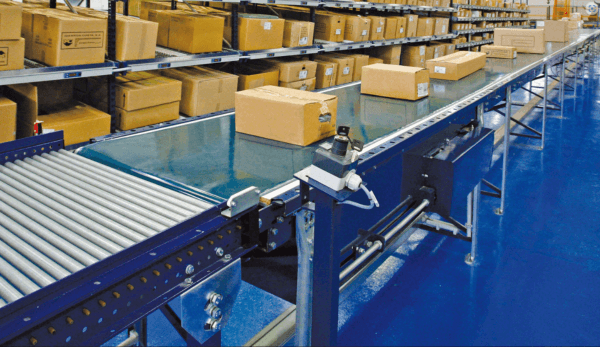
- Conveyors: Belt or roller conveyors integrated into each pick level, transporting picked items along the picking face, between levels via spiral or incline conveyors, and down to ground-level consolidation and packing zones.
- Pick-to-light or voice picking integration: Many modern pick modules include digital picking guidance systems that direct pickers to specific locations and confirm each pick, reducing errors and training time.
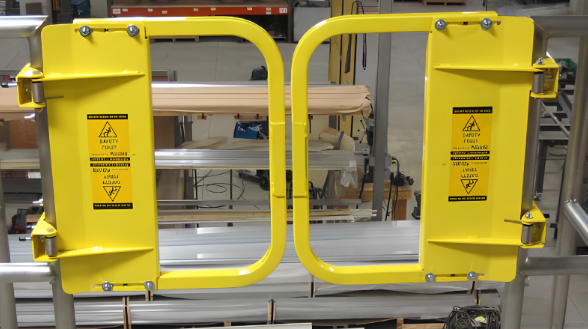
- Safety infrastructure: Guard rails, safety gates for pallet drop zones, and fall protection systems that comply with regulations for elevated working platforms.
Why Pick Modules Solve Problems That Standard Racking Cannot
Order volume outstrips single-level picking capacity. Warehouses processing thousands of orders per shift cannot rely on pickers walking long aisles between distant pallet racking bays. The travel distance alone consumes too much labor per order.
High SKU count spreads inventory too thinly. Facilities with tens of thousands of SKUs need picking layouts that keep active pick faces compact enough to reach quickly, while still holding sufficient replenishment stock behind them to avoid constant restocking interruptions.
Ground floor space runs out before storage capacity does. Even in facilities with substantial floor area, ground-level-only layouts eventually exhaust available space for both storage and picking activity. Pick modules use vertical space by stacking picking floors, not just storage levels.
Replenishment and picking compete for the same space. In conventional layouts, forklifts restocking racks and pickers pulling orders share the same aisles, creating bottlenecks and safety concerns during peak periods. Pick modules physically separate these workflows onto different levels or sides of the same structure.
Order accuracy degrades under speed pressure. As picking volume rises, error rates in conventional layouts tend to increase. Pick modules integrate digital guidance and structured pick paths that maintain accuracy at high throughput.
Common Pick Module Configurations
Not every pick module looks the same — the specific configuration depends on order profile, throughput targets, and available building height.
Single-level flow pick modules. A ground-level configuration with carton flow lanes fed from a pallet racking replenishment area behind. Suitable for smaller operations that need workflow separation but don’t have the height or volume to justify multiple levels.
Two-level pick modules. The most common configuration for mid-sized fulfillment operations, using a single mezzanine level above the ground floor to double picking capacity within roughly the same footprint.
Three-level and multi-level pick modules. Large fulfillment centers with substantial clear height often use three or more picking levels, dramatically increasing pick face density but requiring more sophisticated conveyor integration to move items between levels efficiently.
Zone-based hybrid modules. Some pick modules combine different picking technologies on different levels — carton flow for fast-moving SKUs, static shelving for slow-movers, and dedicated pallet-pick zones for full-case orders — within a single integrated structure.
Automated hybrid modules. In higher-throughput operations, pick modules increasingly integrate with automated systems such as radio shuttle racking for automated replenishment, or with automated conveyors and sorters for downstream order consolidation.
Pick Module Configuration Comparison
| Configuration | Levels | Typical Throughput | Best For |
|---|---|---|---|
| Single-level flow | 1 | Moderate | Smaller operations, entry-level fulfillment |
| Two-level | 2 | High | Mid-sized e-commerce, FMCG distribution |
| Three-plus level | 3+ | Very High | Large fulfillment centers, high SKU count |
| Zone-based hybrid | Varies | High to Very High | Mixed SKU velocity profiles |
| Automated hybrid | Varies | Very High | Peak-driven operations, labor-constrained markets |
Common Applications and Industries
E-commerce fulfillment centers. The primary application for modern pick modules. High order volume, high SKU count, and compressed shipping windows make pick modules almost essential for competitive e-commerce operations at scale.
Fast-moving consumer goods (FMCG) distribution. FMCG distribution centers handling case-picking for retail and convenience store deliveries use pick modules to combine full-case and split-case picking within a single integrated workflow.
Pharmaceutical distribution. Pharmacy distribution centers rely on pick modules for high-accuracy, batch-tracked picking, often with pick-to-light integration to support regulatory compliance and error reduction.
Apparel and footwear fulfillment. High-SKU apparel operations with seasonal turnover benefit from the reconfigurable pick face density that carton flow modules provide.
Book and media distribution. Traditional catalog for pick module design, since books and media are small, standardized in shape, and rely on high pick rates per order.
Automotive parts distribution. Aftermarket parts distributors handling wide SKU ranges and moderate-volume orders often use pick modules combined with cantilever or long-span racking for oversized items nearby. Related storage for irregular items is covered in this overview of cantilever racking systems.
Third-party logistics (3PL) shared fulfillment. 3PL operators serving multiple e-commerce clients within the same facility often use pick modules to segment client inventory while sharing conveyor and shipping infrastructure.
Pick Module vs Standard Picking Layouts
| Factor | Pick Module | Standard Ground-Level Picking |
|---|---|---|
| Vertical Utilization | High (multi-level) | Low (single level) |
| Picker Travel Distance | Compact, station-based | Longer, aisle-based |
| Replenishment / Pick Separation | Physically separated | Shared aisles |
| Order Accuracy Support | Integrated (pick-to-light, voice) | Manual, variable |
| Throughput Capacity | Very High | Moderate |
| Initial Project Cost | Higher (integrated system) | Lower |
| Ideal Order Profile | Many orders, few items each | Fewer orders, more items each |
| Best For | E-commerce, FMCG, pharma | General warehousing, low-volume ops |
For operations planning a pick module, the underlying mezzanine and pallet racking components should be considered together as part of the same integrated project rather than as separate purchases. This overview of mezzanine racking covers the structural elements that form the foundation of most pick module designs.
Expected Operational Improvements
Warehouses that deploy pick modules matched to their order profile typically see substantial improvements across several metrics:
- Higher orders picked per hour per picker, since travel distance between picks is reduced and gravity-fed lanes present items ready to grab
- Improved order accuracy, particularly when combined with pick-to-light, put-to-light, or voice-directed picking systems
- Reduced labor cost per order, as picker productivity increases without proportional headcount growth
- Better use of building cubic capacity, since pick modules use vertical space for both storage and picking, not just storage
- Separated replenishment and picking workflows, eliminating aisle congestion between the two activity types
- Faster order cycle times, since integrated conveyors move picked items to packing without manual transport
- Improved scalability during peak periods, as multi-level modules can absorb higher throughput than single-level layouts can
These improvements depend on matching the pick module configuration to actual order profile — SKU count, order volume, average items per order, and turnover velocity. Overbuilt modules waste capital, while underbuilt modules become bottlenecks quickly.
Project Considerations Before Planning a Pick Module
Building clear height. Multi-level pick modules require adequate unobstructed vertical space. Buildings with less than roughly 6 meters of clear height may not support cost-effective multi-level configurations, while buildings with 10 meters or more offer flexibility for three-level or larger designs.
Floor loading capacity. Pick modules concentrate significant load — from mezzanine structures, stored inventory, workers, and equipment — on the existing floor slab. Floor loading analysis is a required early step, and may indicate slab reinforcement or footing engineering before installation.
Order profile data. Actual order volume, average items per order, SKU count, and pick velocity distribution should drive module sizing. Assumptions about future growth should also be documented, since pick modules are difficult to expand meaningfully once installed.
Conveyor integration. Conveyors are integral to pick module operation, not optional add-ons. Integration planning should include how items move between levels, how orders consolidate at packing, and how peak throughput surges are absorbed.
Pick technology. Pick-to-light, voice picking, and put-wall systems all interact with the module’s physical design. Selecting the pick technology early ensures the module structure accommodates cabling, mounting, and workflow requirements.
Fire protection and building code compliance. Multi-level pick modules typically require in-rack sprinklers, defined egress paths, and compliance with codes governing elevated working platforms. Early consultation with a fire protection engineer is essential.
Worker safety infrastructure. Guard rails, fall protection at pallet drop zones, staircases meeting occupational safety standards, and lighting adequate for accurate picking all need to be designed into the module rather than added after installation.
Long-term facility commitment. Pick modules are significant capital investments that pay back over years of operation. Facilities with short-term leases or uncertain long-term occupancy should consider this before committing.
Frequently Asked Questions
What is the difference between a pick module and standard pallet racking? Pallet racking is designed primarily for storing palletized inventory retrieved by forklift, while a pick module is a multi-component system combining mezzanine floors, pallet racking, carton flow lanes, and conveyors, engineered specifically for high-volume individual item picking.
How many picking levels can a pick module have? Most pick modules use two or three levels, though larger fulfillment centers with substantial clear height can install four or more levels. The practical maximum depends on building height, floor loading, and how efficiently items can move between levels via conveyors.
Do pick modules require automation to work? No, pick modules can be operated manually with pickers, replenishment forklifts, and gravity flow lanes without automation. However, most modern pick modules integrate some form of pick technology — pick-to-light, voice picking, or conveyor-assisted transport — to maximize throughput and accuracy.
How much does a pick module cost to install? Pick module costs vary widely based on size, number of levels, conveyor integration, and pick technology, but they represent a significantly higher initial investment than conventional pallet racking of equivalent floor coverage. Project-specific quotes are essential, since costs depend heavily on facility conditions and configuration choices.
How long does it take to install a pick module? Installation timelines depend on module size and complexity, but typical projects move through design, manufacturing, mezzanine installation, racking and flow lane installation, conveyor integration, and commissioning over several months.
Are pick modules suitable for cold storage or specialized environments? Yes, though specialized environments require material and design adjustments. Cold storage pick modules use corrosion-resistant coatings, cold-tolerant lubricants in flow lanes, and equipment specified for low-temperature operation.
Can existing warehouses be retrofitted with a pick module? Yes, existing warehouses are frequently retrofitted with pick modules, though building clear height, floor loading, and fire protection infrastructure need to be assessed carefully before proceeding, since retrofit constraints often differ from new-build installations.
How do pick modules interact with warehouse management systems? Modern pick modules typically integrate with WMS platforms to direct pickers to specific locations, track picks in real time, and coordinate replenishment triggers as pick faces deplete. WMS integration is usually planned alongside the physical module design rather than added afterward.
Key Takeaways
- Warehouse pick modules are integrated multi-level picking systems combining mezzanine floors, pallet racking, carton flow lanes, and conveyors to support high-volume order fulfillment
- The core design principle is separating replenishment from picking, keeping pickers at compact working faces while forklifts restock from the rear or above
- Common configurations include single-level, two-level, three-plus-level, hybrid zone-based, and automation-integrated designs, each suited to different throughput and SKU profiles
- Pick modules are most commonly used in e-commerce fulfillment, FMCG distribution, pharmaceutical distribution, apparel, media, automotive parts, and 3PL operations
- Project planning should address building height, floor loading, order profile data, conveyor integration, pick technology, fire protection, and long-term commitment before proceeding
Conclusion
Pick modules represent one of the more capital-intensive warehouse storage investments, but for operations facing high order volumes, broad SKU counts, and tight fulfillment windows, they are often the most effective way to increase throughput without expanding facility footprint or headcount proportionally. Companies such as Lracking are commonly involved in projects where operators are designing integrated pick modules that combine structural mezzanines, pallet racking, and flow lane systems into unified fulfillment infrastructure, particularly in e-commerce, FMCG, and pharmaceutical environments where order profile complexity exceeds what conventional picking layouts can handle. For warehouses evaluating a pick module, a project-specific assessment of order profile, building conditions, and long-term throughput requirements remains the most reliable starting point for determining the right configuration and scale.