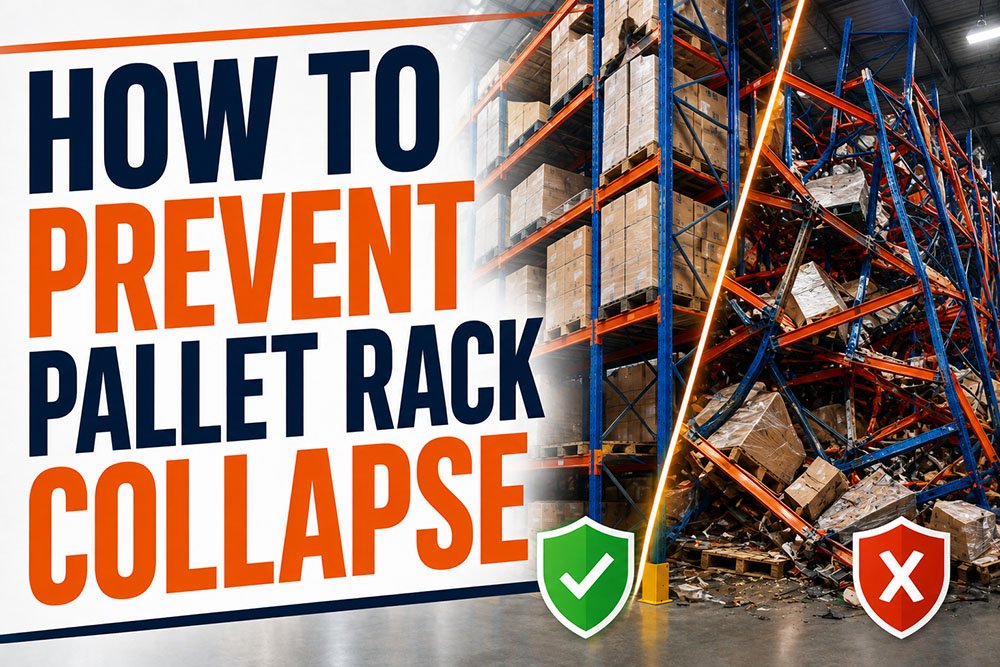
A warehouse rack collapse is one of the most serious operational events a facility can experience. Beyond the immediate risk to workers, a single collapse can destroy hundreds of thousands of dollars of inventory in seconds, halt operations for days or weeks during cleanup and reinstallation, trigger insurance claims and regulatory investigations, and cause lasting reputational damage. And unlike many warehouse hazards, rack collapse is largely preventable — the root causes are well documented, and the protective measures are established industry practice.
This guide covers why warehouse rack collapses happen, what warning signs precede them, and the practical steps warehouses can take to prevent them across design, installation, operation, and maintenance.
Why Warehouse Rack Collapse Prevention Matters
The financial and human cost of a rack collapse is significantly higher than the cost of preventing one. According to industry safety data, pallet rack collapses rank among the more serious causes of warehouse injuries and fatalities, with cumulative annual costs — including inventory loss, equipment damage, business interruption, legal liability, and worker injury — running into the billions of dollars across the industry. Yet the underlying causes are almost always identifiable in advance, if warehouses have the inspection routines and structural awareness to catch them.
Most rack collapses are not sudden, unexpected events. They are the endpoint of a slow sequence of small failures — a forklift impact that wasn’t reported, a load that gradually exceeded rated capacity as SKU mix changed, an upright that began leaning weeks before failure, safety hardware that was removed during a reconfiguration and never replaced. By the time a rack physically collapses, the warning signs have usually been visible for weeks or months. Prevention is fundamentally about seeing those signs and acting on them before failure occurs.
Current Challenges in Preventing Warehouse Rack Collapse
Inconsistent inspection routines. Many warehouses conduct rack inspections only when required by insurance or regulation, missing the ongoing damage that accumulates between formal inspection cycles.
Unreported forklift impacts. Operators sometimes fail to report minor forklift contact with racking, either to avoid scrutiny or because the damage appears cosmetic. These unreported impacts often develop into structural problems that surface only when the rack fails.
Load capacity drift as SKU mix changes. Racking installed for one load profile often ends up carrying heavier or differently distributed loads years later as inventory mix evolves, without a corresponding recalculation of capacity.
Improper reconfiguration. Beam heights are frequently adjusted to accommodate new load sizes without recalculating the resulting upright frame capacity, which changes with beam spacing.
Missing or damaged safety hardware. Beam safety clips, footplate anchors, row spacers, and column protectors are sometimes removed during maintenance or damaged in operation and never replaced.
Component substitution. Mixing components from different manufacturers, or replacing damaged parts with non-matching substitutes, can compromise the engineered load rating of the entire system.
Environmental factors. Seismic activity, floor settling, and temperature-related material stress can all affect rack stability over time, particularly in facilities without periodic structural review.
Root Causes of Warehouse Rack Collapse
Understanding what actually causes collapses is the foundation of prevention. Most incidents fall into a limited set of failure modes.
Overloading. Storing loads that exceed the rack’s rated capacity is one of the most common contributing factors. Overload can happen deliberately (ignoring load ratings) or accidentally (mispresumed pallet weights, uneven load distribution, or SKU changes that gradually shift the average load higher than the rack was designed to carry).
Forklift impact. Direct forklift contact with uprights, beams, or base plates is the leading cause of structural damage to warehouse racking. Even a low-velocity impact at a base plate can deform an upright enough to compromise its load-bearing capacity, and the damage may not be visible from a distance.
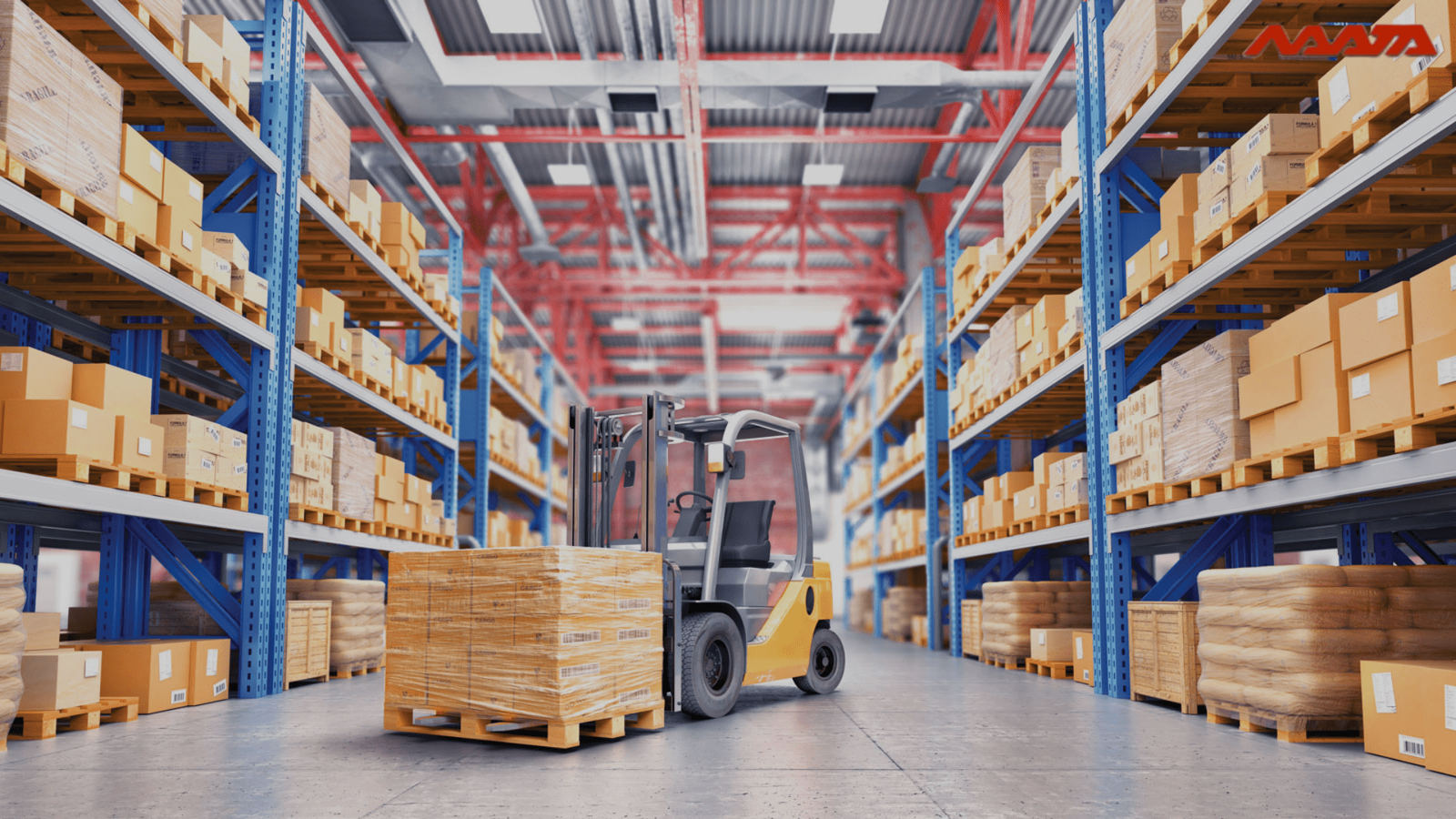
Improper installation. Racking installed without proper anchoring, level footings, or manufacturer-specified beam locking mechanisms is structurally compromised from day one. Do-it-yourself installations or installations by unqualified contractors are particularly prone to this failure mode.
Missing safety hardware. Beam safety clips (locking pins that prevent beams from being lifted out of their connectors during forklift operation), footplate anchors, and row spacers are all engineered components that contribute to structural integrity. When they’re missing, damaged, or incorrectly installed, the system’s safety margin drops significantly.
Component mismatch. Mixing components from different manufacturers, or using replacement parts that don’t match the original engineering specifications, can create load paths the system wasn’t designed to handle. This is a common issue in warehouses that have expanded or reconfigured racking over time.
Design or specification errors. Racking specified for the wrong load class, height, or use pattern is inherently vulnerable. Using drive-in racking for high-selectivity operations, for example, dramatically increases forklift contact frequency and collapse risk.
Environmental and structural factors. Seismic activity, floor slab settling, water damage to base plates, and long-term corrosion can all weaken racking gradually. Cold storage environments and coastal humidity accelerate these effects.
Cumulative fatigue. Even without a single dramatic cause, decades of continuous cyclical loading can produce fatigue-related failure. Racking installed 20 or 30 years ago and never inspected structurally may no longer meet its original load rating.
Warning Signs That Precede a Rack Collapse
Nearly every rack collapse is preceded by visible warning signs that were either not noticed or not acted upon. Training warehouse staff to recognize these signs is one of the highest-return prevention investments a facility can make.
Visible upright damage. Bent, dented, or deflected uprights are the most common warning sign. Any deflection greater than approximately 1/2 inch (13 mm) from vertical typically warrants immediate professional assessment.
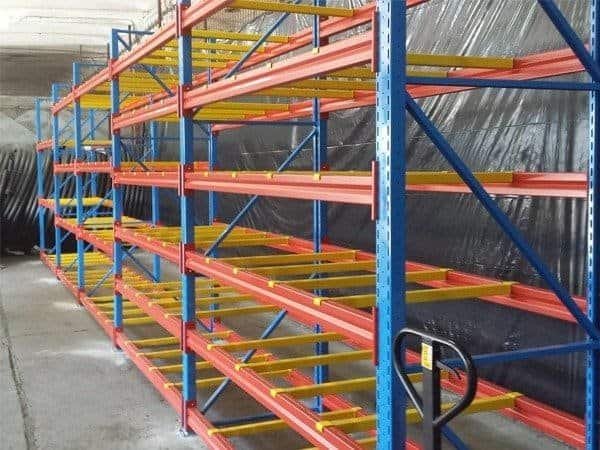
Base plate damage. Cracked, bent, or lifted base plates indicate that the upright has taken impact or that anchoring has failed. Base plate damage is particularly serious because the base is the load path to the floor.
Loose or missing anchor bolts. Anchor bolts that have loosened, sheared, or gone missing entirely compromise the connection between the racking and the floor slab.
Beam deflection. Beams that visibly bow under load, or that fail to return to level when unloaded, are showing signs of overload or fatigue. Persistent deflection is a leading indicator of eventual beam failure.
Missing safety clips or connectors. Beams that are not fully seated in their connectors, or that lack their safety locking pins, can be dislodged by forklift contact during loading operations.
Out-of-plumb uprights. Uprights that lean out of vertical alignment concentrate stress at weld points and connections, dramatically reducing safety margin. Small deviations may indicate slow structural drift; larger deviations require immediate action.
Rust and corrosion. Surface rust may be cosmetic, but structural corrosion — particularly at base plates, weld points, and beam-to-upright connections — indicates weakened structural integrity.
Cracks at weld points or connections. Any visible cracking at welds, connectors, or beam ends is a serious warning sign that requires immediate professional evaluation and typically component replacement.
Unusual noises or movement. Racking that creaks, sways, or shifts under normal load is signaling structural distress. This is one of the most immediate warning signs and warrants evacuating the area until professional assessment.
How to Prevent Warehouse Rack Collapse
Prevention is best approached as an integrated program across four areas: design and specification, installation, operation, and ongoing maintenance.
Design and Specification Prevention
Match the racking to the actual load profile. Racking should be specified based on realistic maximum load weights, load distribution patterns, and expected forklift traffic — not based on average conditions. Building in appropriate safety margin at specification time prevents overload from becoming a chronic issue as inventory changes.
Choose appropriate material and construction. For heavy loads or high-impact environments, structural racking with hot-rolled steel and bolted connections generally withstands forklift contact and heavy loads better than roll-formed alternatives. Material grade should be matched to the application, with higher-strength grades reserved for genuinely demanding loads.
Design for seismic and environmental conditions. In seismic zones, humid environments, cold storage, or other demanding conditions, racking should be engineered specifically for those conditions, not adapted from standard specifications after installation.
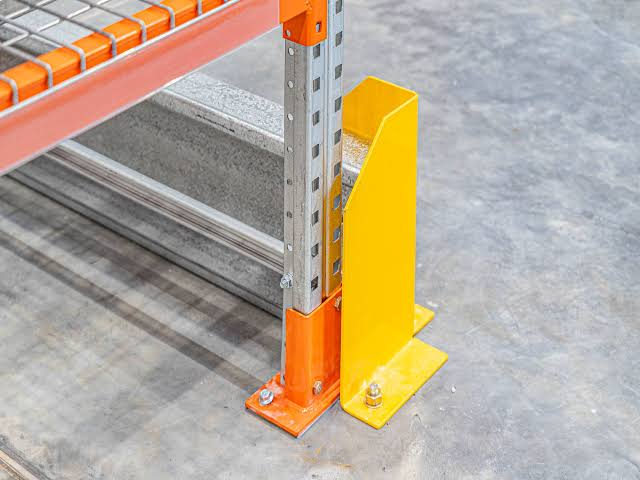
Include appropriate protection at the design stage. Column protectors, end-of-aisle guards, and row spacers should be planned as part of the initial racking design rather than added as an afterthought. Building protection into the initial layout is significantly more effective than retrofitting it later.
Installation Prevention
Use qualified professional installers. Racking should be installed by trained personnel following manufacturer specifications, not by general warehouse staff without specialized training. This is particularly true for taller racking, structural racking, and complex configurations.
Verify level installation and anchoring. All uprights should be plumb and level within manufacturer tolerances, and all base plates should be properly anchored to the floor slab. Post-installation verification should be documented rather than assumed.
Confirm safety hardware installation. Every beam safety clip, footplate anchor, and row spacer should be verified as present and correctly installed before the racking enters service.
Document installation for future reference. Load ratings, component specifications, and installation configurations should be documented and retained, so future modifications can be verified against the original engineering.
Operational Prevention
Post load ratings visibly. Load capacity ratings should be posted on every rack section, at picker eye level, in language and units warehouse staff can readily understand. General principles for verifying and communicating load ratings are covered in this guide to pallet racking weight capacity.
Train forklift operators thoroughly. Certified forklift training, including specific instruction on rack-adjacent operation, significantly reduces impact incidents. Refresher training on a regular schedule maintains skill levels and reinforces safety culture.
Enforce impact reporting. Warehouse policy should require immediate reporting of any forklift contact with racking, regardless of visible damage. Reporting should be treated as a safety obligation, not a disciplinary matter that operators want to avoid.
Keep aisles clear. Cluttered aisles increase the likelihood of forklift contact with racking by reducing maneuvering space. Housekeeping should be treated as a structural safety practice, not just cosmetic.
Enforce forklift speed limits. Reduced forklift speeds — particularly in aisles and near racking — significantly lower both impact frequency and impact severity.
Distribute loads evenly. Uneven pallet loading concentrates stress at specific points on beams, accelerating fatigue and increasing failure risk. Load distribution should be part of picker training.
Maintenance Prevention
Conduct regular visual inspections. At minimum, warehouse supervisors should conduct weekly visual walkthroughs looking for the warning signs described above. Formal annual inspections by qualified rack safety inspectors provide a more thorough structural assessment.
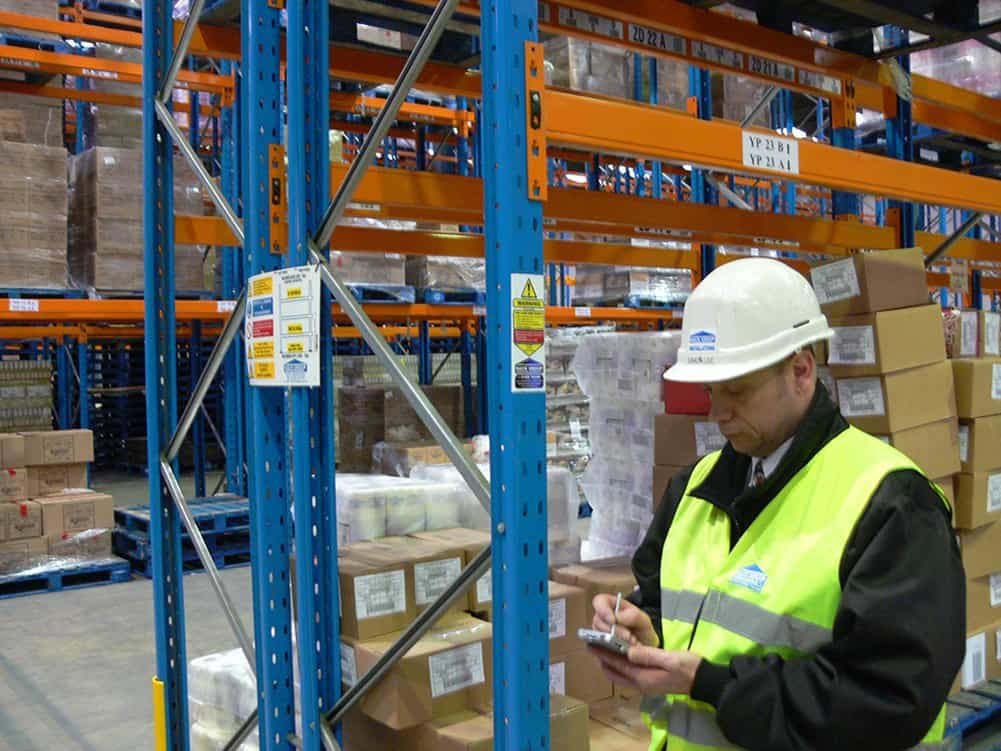
Perform immediate post-impact inspections. Any reported forklift contact should trigger an immediate inspection of the affected area, not a scheduled inspection at a later date. Detailed inspection protocols and requirements are covered in this guide to pallet racking inspection.
Repair or replace damaged components promptly. Damaged uprights, beams, and connectors should be repaired or replaced by qualified personnel — not patched, straightened in place, or left in service until convenient. Structural components generally cannot be safely repaired in the field; replacement is usually the correct response.
Maintain safety hardware inventory. Beam safety clips, anchor bolts, and column protectors should be kept in stock so replacements can be installed immediately when damage is found, rather than waiting for parts to arrive.
Recalculate capacity after reconfiguration. Any change to beam height, layout, or component substitution should trigger a recalculation of upright frame capacity to confirm the modified configuration still meets load requirements.
Warehouse Rack Collapse Prevention Checklist
| Prevention Area | Key Actions | Frequency |
|---|---|---|
| Design | Match rack to load profile and environment | Project design phase |
| Installation | Use qualified installers, verify level and anchoring | Installation |
| Load Rating Communication | Post capacity signs at each rack section | Ongoing |
| Forklift Training | Certified training with rack-specific instruction | Initial + annual refresher |
| Impact Reporting | Report all forklift contact regardless of visible damage | Ongoing |
| Housekeeping | Keep aisles clear of obstacles | Daily |
| Visual Inspection | Supervisor walkthrough for warning signs | Weekly |
| Formal Inspection | Qualified rack safety inspector assessment | Annual (minimum) |
| Post-Impact Inspection | Immediate assessment of impacted area | After every incident |
| Component Replacement | Replace damaged components before returning to service | As needed |
| Reconfiguration Review | Recalculate capacity after any layout change | Every modification |
Expected Operational Improvements from Prevention Programs
Warehouses that implement structured rack collapse prevention programs typically see improvements across several dimensions:
- Significantly reduced collapse incidence, since most root causes are addressable through routine practice rather than complex engineering interventions
- Lower insurance premiums, since documented safety programs and inspection records generally support more favorable insurance terms
- Reduced inventory loss, since even partial rack failures cause significant inventory damage that prevention avoids
- Higher operator confidence and morale, since visible commitment to structural safety supports broader warehouse safety culture
- Reduced regulatory exposure, since documented compliance with inspection and maintenance standards supports positive outcomes in OSHA or regional equivalent inspections
- Extended racking service life, since well-maintained racking often exceeds its expected lifespan, deferring capital replacement costs
- Improved business continuity, since preventing collapse avoids the multi-day or multi-week operational disruption cleanup and reinstallation require
Project Considerations for Building a Prevention Program
Assign clear accountability. Rack safety should have a named owner — typically the warehouse manager or a dedicated safety officer — rather than being distributed responsibility that no one specifically manages.
Establish inspection documentation. Written inspection records, damage reports, and repair logs create the audit trail that supports insurance, regulatory compliance, and continuous improvement.
Budget for ongoing maintenance. Preventive maintenance and periodic professional inspections should be planned as recurring operating expenses, not treated as discretionary spending.
Integrate rack safety into forklift training. Rack safety awareness should be part of standard forklift training programs, not treated as a separate topic.
Consider structural monitoring for critical installations. For high-value or high-risk installations, sensor-based monitoring systems that continuously track upright deflection and load conditions can catch issues between formal inspections.
Plan for reconfigurations. Any reconfiguration project should include structural engineering review, not just physical relocation of components.
Address environmental risks. In seismic zones, cold storage, or humid environments, prevention programs should include environment-specific considerations beyond standard practice.
Frequently Asked Questions
How common are warehouse rack collapses? Rack collapses are among the more significant causes of serious warehouse incidents, particularly for facilities with high forklift traffic, older racking, or inconsistent inspection routines. While large-scale catastrophic collapses are relatively rare, partial failures and near-miss incidents are considerably more common.
How often should pallet racking be inspected? Industry standards generally recommend visual inspections weekly, with formal inspections by qualified rack safety personnel at least annually. Any forklift impact should trigger an immediate inspection of the affected area, regardless of the regular inspection schedule.
Can a bent upright be repaired, or does it need to be replaced? Structural components with visible deformation typically require replacement rather than repair. Attempts to straighten bent uprights in the field generally do not restore the original load rating and can create hidden weaknesses that fail under load later.
What is the leading cause of pallet rack collapse? Forklift impact is the most common single contributing cause, particularly when impacts go unreported and damage accumulates over time. Overloading and improper installation follow as major causes, and most actual collapses involve a combination of factors rather than a single root cause.
Do I need column protectors on every upright? Column protectors are typically most valuable at end-of-aisle uprights, corner positions, and high-traffic zones. Protecting every upright in a large warehouse can be cost-prohibitive, but protection should be prioritized wherever forklift contact risk is highest.
Does insurance cover damage from rack collapse? Insurance coverage varies by policy and provider, but many policies condition coverage on documented compliance with inspection and maintenance standards. Facilities without such documentation may find coverage disputed or denied after an incident.
How does load rating work with reconfigured racking? Load ratings depend on beam height and configuration — adjusting beam levels changes the upright frame capacity, sometimes significantly. Any reconfiguration should trigger recalculation and re-posting of load ratings, not simply adjusting beam positions without engineering review.
Are there specific regulations for pallet rack safety? Most jurisdictions have applicable regulations, though specific requirements vary. In the United States, OSHA general duty requirements apply, and ANSI MH16.1 provides industry standards for racking. Other regions have equivalent standards such as EN 15635 in Europe or AS 4084 in Australia. Local regulations should be verified for each installation.
Key Takeaways
- Warehouse rack collapse is largely preventable through structured programs covering design, installation, operation, and maintenance
- Most collapses are preceded by visible warning signs — bent uprights, damaged base plates, missing safety hardware — that were either not noticed or not acted upon
- Forklift impact, overloading, improper installation, and missing safety hardware are the leading root causes
- Prevention requires clear accountability, documented inspection routines, immediate response to reported damage, and integration of rack safety into forklift training
- Investing in prevention consistently costs far less than responding to a collapse, both financially and in terms of worker safety
Conclusion
Preventing warehouse rack collapse is fundamentally a matter of building routine awareness of structural safety into everyday warehouse operations, rather than treating it as a specialized concern separate from daily activity. Warehouses that combine appropriate initial specification, qualified installation, consistent inspection routines, and prompt response to damage generally avoid the catastrophic outcomes that unmanaged racking can produce. Companies such as Lracking are commonly involved in projects where operators are working to strengthen their structural safety programs — including specification review, replacement of damaged components, and system-wide reconfiguration — particularly in facilities where past incidents or aging racking have highlighted the need for a more disciplined prevention approach. For warehouses assessing their own rack collapse risk, an honest evaluation of current inspection routines, forklift training, and structural documentation remains the most reliable starting point for identifying where prevention efforts will deliver the greatest safety and operational return.