
Selecting a warehouse racking solution is not only a question of storage density or floor space. It is also a question of how inventory needs to move through the facility. A warehouse storing fast-moving perishable goods has fundamentally different rotation requirements than one storing bulk raw materials or non-perishable spare parts. Matching the racking system to the correct inventory rotation method — FIFO, LIFO, or FEFO — is one of the most overlooked factors in warehouse storage planning, and getting it wrong can lead to spoilage, compliance issues, or unnecessary handling costs.
This guide first compares FIFO, LIFO, and FEFO as inventory rotation principles, then explains which method fits which warehouse scenario, before covering how to select a warehouse racking solution that supports the chosen strategy.
What Are FIFO, LIFO, and FEFO?
Before evaluating any racking format, it helps to define what each rotation method actually controls, since the three are often used loosely or interchangeably in warehouse discussions.
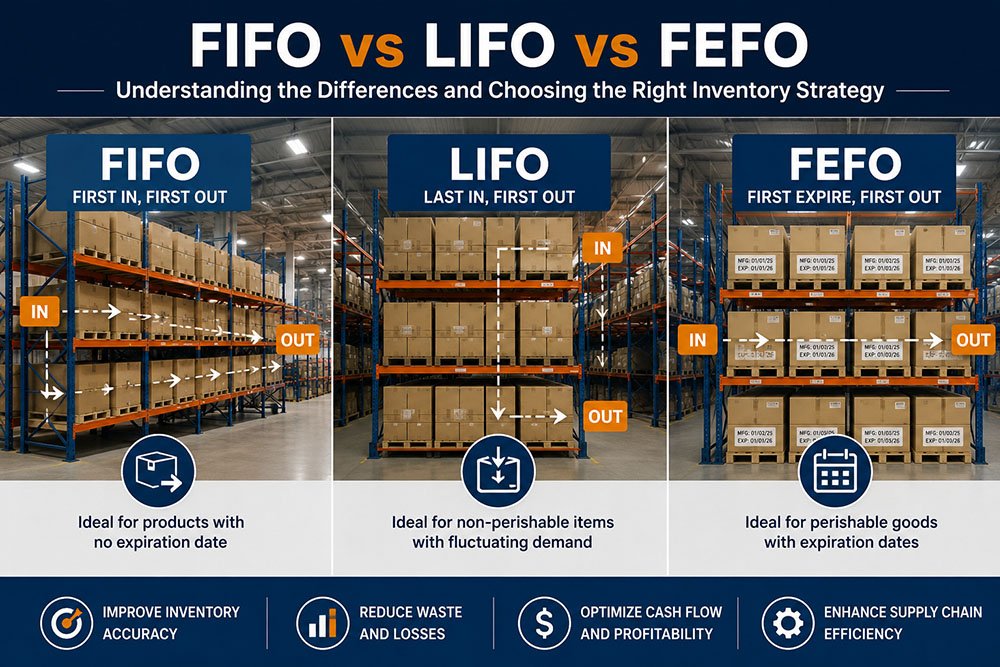
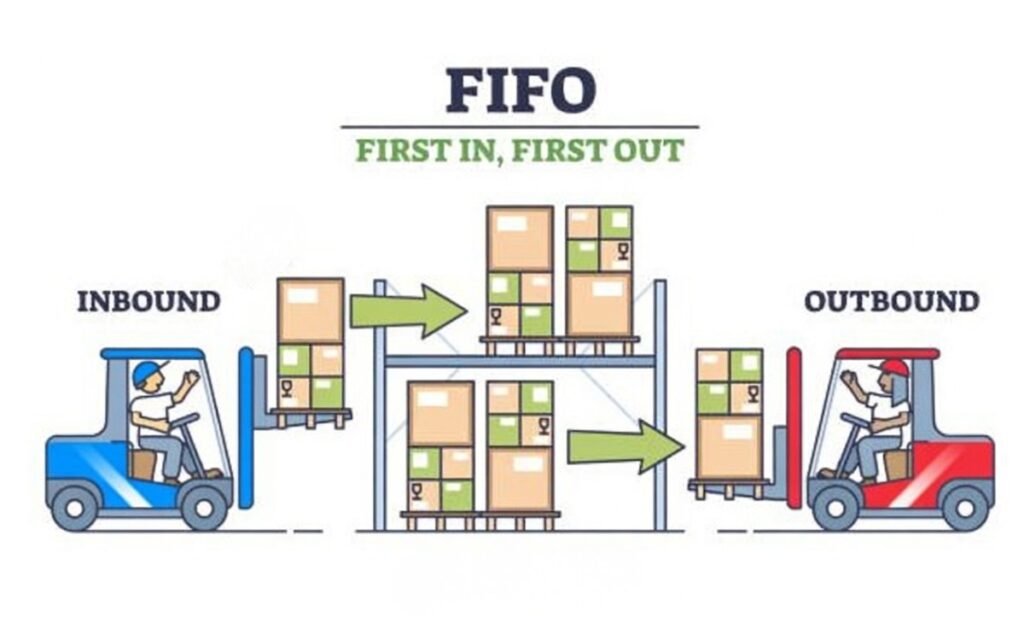
FIFO (First-In, First-Out) rotates inventory based on arrival sequence. The first units received into storage are the first units retrieved and shipped, regardless of expiry date. FIFO is the most widely used rotation method across general warehousing, since it provides a simple, consistent rule that limits how long any single unit sits in storage.
LIFO (Last-In, First-Out) retrieves the most recently stored inventory first. Older stock remains in storage longer, sometimes for extended periods. LIFO is generally reserved for non-perishable, homogeneous inventory where the sequence of retrieval has little impact on product quality or usability — bulk raw materials, non-perishable packaging stock, or commodities are common examples.
FEFO (First-Expired, First-Out) rotates inventory according to expiry or best-before date rather than arrival order. A pallet that arrived later but has an earlier expiry date will be picked before an older pallet with a longer shelf life. FEFO requires accurate batch and date tracking, since rotation decisions are driven by data rather than a simple physical sequence.
Comparing FIFO, LIFO, and FEFO
| Factor | FIFO | LIFO | FEFO |
|---|---|---|---|
| Rotation Basis | Arrival order | Reverse arrival order | Expiry or best-before date |
| Typical Product Type | Moderate to fast-moving, general goods | Non-perishable, bulk, homogeneous goods | Perishable or dated goods |
| Data Requirement | Low to moderate | Low | High — accurate batch and expiry tracking |
| Storage Density Impact | Moderate | High | Low to moderate |
| Common Industries | General distribution, retail, manufacturing | Construction materials, bulk commodities, non-perishable packaging | Pharmaceuticals, food and beverage, healthcare supplies |
| Primary Goal | Limit dwell time of any single unit | Maximize storage density and retrieval speed | Minimize expiry-related loss and ensure compliance |
When to Choose FIFO, LIFO, or FEFO
Choose FIFO when inventory has a general shelf life or quality consideration but does not require strict expiry-date tracking, when SKU turnover is moderate to high, and when the goal is to prevent any single batch from sitting in storage indefinitely. FIFO is a reasonable default for most general merchandise, manufacturing components, and retail distribution operations.
Choose LIFO when inventory is non-perishable or largely unaffected by storage duration, when storage density and retrieval speed matter more than rotation order, and when the warehouse handles bulk, homogeneous goods such as raw materials, aggregate, or non-perishable packaging stock. LIFO is generally not suitable for food, pharmaceutical, or any inventory subject to expiry-based regulatory requirements.
Choose FEFO when inventory carries a defined expiry or best-before date and regulatory or safety compliance depends on using older-dated stock before it expires. This applies most directly to pharmaceuticals, food and beverage products, and other date-sensitive goods where shipping an expired or near-expired unit creates compliance risk or safety concerns. FEFO requires more data infrastructure than FIFO or LIFO, so warehouses without reliable batch tracking should address that gap before committing to a FEFO-based layout.
In practice, the decision is rarely about which method is universally preferable — it depends on whether the inventory in question is date-sensitive, how much rotation control is operationally necessary, and how much storage density can be traded for that control. Once the appropriate rotation method has been identified for each inventory category, the next step is selecting a racking format that physically supports it.
What Problem Does Rotation-Based Racking Selection Solve
Many warehouses default to a single racking format across the entire facility without evaluating whether that format supports the rotation method their inventory actually requires. This mismatch creates recurring operational problems:
- Products that should move out first get buried behind newer stock, leading to spoilage or obsolescence
- Pharmaceutical or food operators struggle to meet expiry-based compliance requirements with a rack layout that was never designed for expiry tracking
- Warehouses storing bulk, non-perishable goods end up paying for accessibility and aisle space they do not actually need
- Manual workarounds — extra staff time, re-labeling, physical re-sorting — are used to compensate for a racking layout that does not match the rotation method
The underlying issue is rarely the rotation method itself. It is usually that the racking system was selected based on general storage density goals, without factoring in how inventory needs to flow through the facility over time.
Current Challenges in Matching Racking to Rotation Strategy
Confusing rotation method with racking type. FIFO, LIFO, and FEFO describe inventory movement principles, not physical rack designs. Multiple racking formats can support the same rotation method, and choosing the wrong one for a given method reduces its effectiveness.
Mixed inventory profiles. Many warehouses store a combination of perishable, fast-moving, and bulk non-perishable goods within the same building, making a single racking format an imperfect fit for all product categories.
Underestimating aisle and access requirements. Rotation methods that require separate loading and unloading access, such as many FIFO and FEFO configurations, generally need more aisle space than last-in-first-out formats, which affects overall storage density.
Overlooking expiry and batch tracking needs. FEFO in particular depends on accurate batch and expiry data, and a racking layout that does not support clear visual or system-based tracking undermines the rotation strategy regardless of the physical rack design.
Balancing density against accessibility. High-density formats often favor last-in-first-out movement, while formats built for strict rotation control typically sacrifice some storage density in exchange for accessibility and flow control.
Recommended Solution: Matching Racking Format to Rotation Method
For FIFO (First-In, First-Out): FIFO prioritizes moving the oldest stock out before newer stock, and is most effective with racking systems that physically separate loading and unloading points, or that provide full selective access to every pallet position. Selective pallet racking supports strict FIFO rotation because every pallet position is independently accessible, allowing operators to retrieve the oldest stock regardless of when newer pallets arrive. For higher-density FIFO applications, gravity flow or shuttle racking systems load from one end and discharge from the other, enforcing rotation automatically rather than relying on manual picking discipline. A dedicated overview of FIFO racking systems covers rack-level configuration options in more detail.
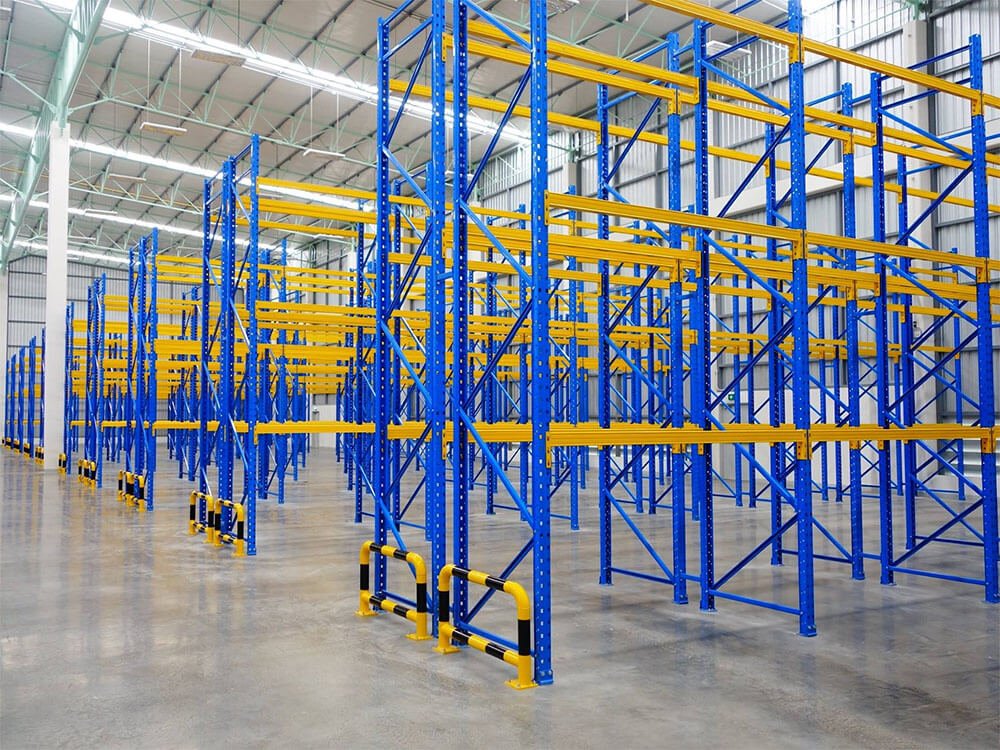
For LIFO (Last-In, First-Out): LIFO is generally suited to non-perishable, homogeneous, or bulk inventory where strict rotation is not a compliance requirement. Storage formats that load and unload from the same face — where the most recently stored pallet is also the first retrieved — naturally support LIFO. Double deep pallet racking is a common example, since pallets are stored two-deep and the front pallet is typically accessed first, trading some selectivity for higher storage density.
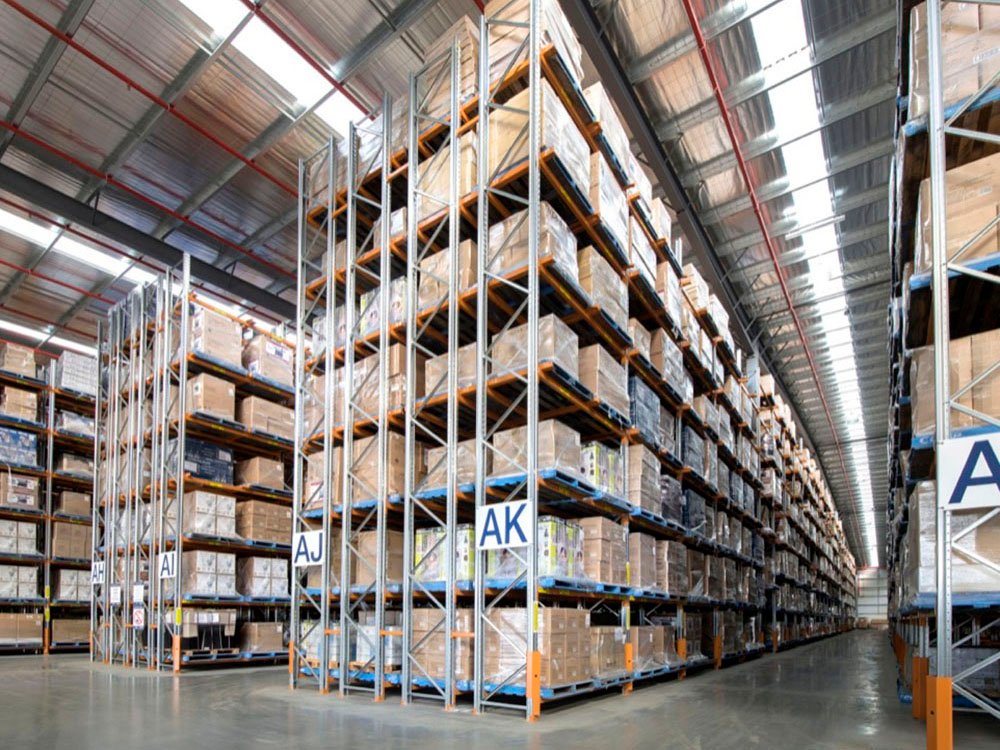
For FEFO (First-Expired, First-Out): FEFO is date-driven rather than sequence-driven, meaning the racking system must support clear batch visibility and flexible retrieval based on expiry date rather than arrival order. Selective racking with strong labeling and batch-tracking practices, often paired with a warehouse management system, tends to support FEFO more effectively than high-density formats that restrict access to specific pallets. Because FEFO depends heavily on data accuracy and visual tracking rather than a single rack design, warehouses evaluating this method should review the operational requirements covered in what FEFO involves before finalizing a layout.
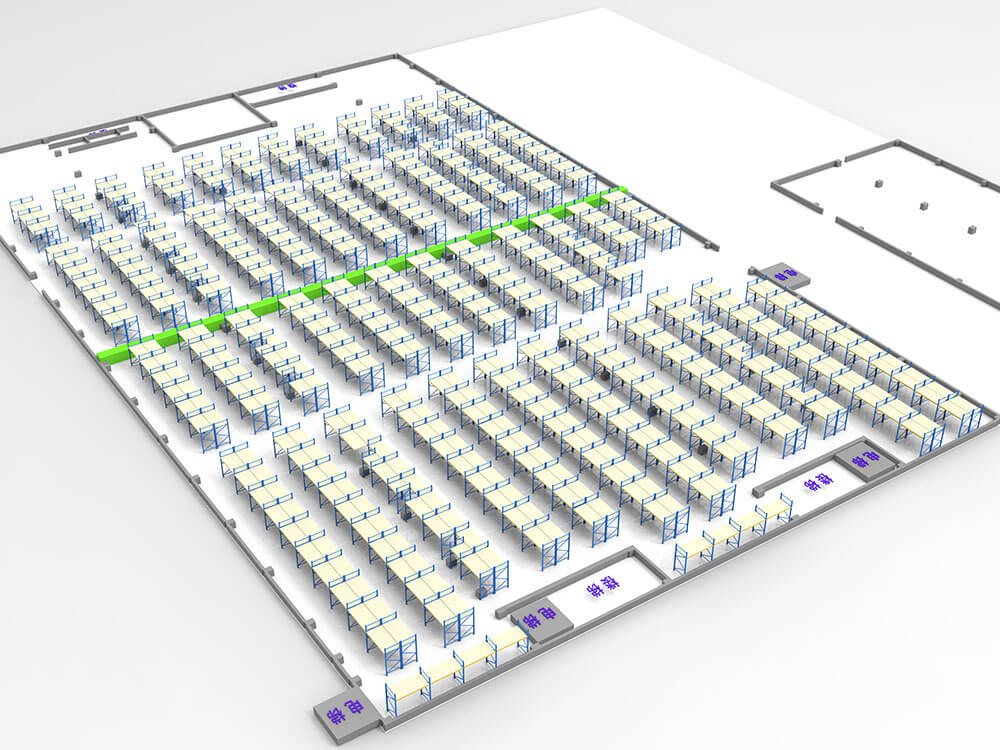
In practice, many warehouses use more than one racking format within the same facility, applying selective or shuttle-based racking to FIFO or FEFO zones and higher-density formats such as double deep pallet racking to bulk, non-perishable inventory that follows LIFO movement.
Zoning by rotation method rather than product category alone. Warehouses handling mixed inventory — for example, a food distributor storing both perishable dairy products and non-perishable dry goods — often benefit from designing distinct racking zones based on rotation requirements rather than applying a single format across the entire facility. A FEFO zone using selective racking with strong batch labeling can sit alongside a LIFO zone using double deep or drive-in racking for bulk, non-perishable stock, with each zone optimized for its own rotation demands rather than compromising between the two.
Automation and rotation enforcement. For operations with high SKU counts or strict compliance requirements, semi-automated or fully automated storage systems can enforce rotation more consistently than manual picking discipline alone, since the system physically controls which pallet is presented for retrieval. This reduces the risk of human error in FEFO environments where selecting the wrong batch has direct compliance or safety implications.
Racking Format Comparison by Rotation Method
| Rotation Method | Suitable Racking Formats | Storage Density | Access Requirement |
|---|---|---|---|
| FIFO | Selective pallet racking, gravity flow, shuttle racking | Low to Moderate | Separate load/unload points or full selectivity |
| LIFO | Double deep racking, drive-in racking | High | Single-face load and retrieval |
| FEFO | Selective racking with batch tracking | Low to Moderate | Full pallet-level visibility |
This comparison reflects general suitability rather than a fixed rule — actual selection should account for SKU mix, expiry sensitivity, and throughput requirements specific to each facility.
Expected Operational Improvements
Warehouses that align their racking format with the correct rotation method typically see measurable benefits:
- Reduced spoilage and obsolescence, particularly in food, beverage, and pharmaceutical operations where FIFO or FEFO compliance is critical
- Lower manual handling costs, since the rack layout itself enforces rotation rather than relying on staff discipline
- Improved regulatory compliance, especially for FEFO-driven industries subject to expiry-date reporting requirements
- Better balance between density and accessibility, since zones can be configured differently based on each inventory category’s rotation needs
- Fewer picking errors, as rack design that supports the intended rotation method reduces the likelihood of retrieving the wrong batch or pallet
These improvements depend on consistent operational discipline alongside the physical racking format — a well-matched rack layout supports rotation strategy but does not replace accurate labeling, batch tracking, or staff training.
Measuring the impact of rotation-aligned racking. Warehouses transitioning to a rotation-matched layout can track improvement through several practical indicators: the percentage of stock rotated within its intended cycle, the rate of expired or obsolete inventory written off, average pick-to-ship time for date-sensitive SKUs, and the frequency of manual corrections required to compensate for misrouted or out-of-sequence stock. Establishing a baseline for these metrics before reconfiguring the racking layout makes it easier to quantify the return on a rotation-focused storage project once the new layout is operational.
Factors to Consider When Choosing Between FIFO, LIFO, and FEFO
Before finalizing a racking layout based on rotation strategy, several factors typically need evaluation:
Inventory perishability and shelf life, which determines whether FEFO compliance is a regulatory requirement or an operational preference.
SKU variety and turnover rate, since high-SKU, high-turnover inventory generally favors selective, FIFO-friendly formats, while bulk, low-SKU inventory can often use higher-density LIFO formats.
Warehouse zoning strategy, since many facilities benefit from segmenting the warehouse into different rotation zones rather than applying one racking format throughout.
Batch and expiry tracking systems, particularly for FEFO applications, where a warehouse management system is typically needed to support the racking layout.
Forklift type and aisle width, since FIFO and FEFO configurations often require wider or separate access aisles compared to single-face LIFO formats.
Expansion planning, so that rotation-specific zones can be adjusted or expanded as product mix and inventory volume change over time.
Fire protection and code compliance, which may vary depending on racking density and configuration, particularly in cold storage or pharmaceutical environments.
Frequently Asked Questions
What is the main difference between FIFO, LIFO, and FEFO in a warehouse setting? FIFO rotates stock by arrival order, moving the oldest inventory out first. LIFO retrieves the most recently stored inventory first, typically for non-perishable or bulk goods. FEFO rotates stock based on expiry date rather than arrival sequence, prioritizing items closest to expiring.
Is LIFO the same thing as the LIFO accounting method used in finance? No. The LIFO accounting method used for inventory valuation and tax reporting is a separate financial concept. This guide refers specifically to LIFO as a physical warehouse rotation method describing which pallet is retrieved first, not how inventory cost is calculated on financial statements.
Does FEFO always require a warehouse management system? Not strictly, but accurate FEFO rotation depends on reliable batch and expiry tracking, which is significantly easier to maintain with a WMS than with manual tracking, especially as SKU count and pallet volume increase.
Is LIFO storage less expensive to implement than FIFO? LIFO-compatible formats such as double deep or drive-in racking often achieve higher storage density with less aisle space, which can reduce the footprint required per pallet position compared to fully selective FIFO layouts. Overall project cost still depends on the specific configuration and scale.
How does rotation method affect racking density? Formats supporting strict FIFO or FEFO rotation generally require more aisle space or separate load and unload access, which reduces storage density compared to LIFO-compatible formats that load and retrieve from a single face.
What industries most commonly require FEFO racking? Pharmaceutical, food and beverage, and healthcare supply operations most commonly require FEFO due to expiry-related compliance requirements, though any business handling perishable or dated inventory can benefit from it.
How long does it typically take to reconfigure a warehouse for a different rotation strategy? Timelines vary based on warehouse size and the extent of the reconfiguration, but projects typically move through inventory analysis, layout design, and phased installation over several weeks to a few months.
Should rotation strategy be decided before or after selecting a racking format? Rotation strategy should generally be identified first, based on inventory perishability, compliance needs, and turnover, since this determines which racking formats are suitable rather than the other way around.
Key Takeaways
- FIFO, LIFO, and FEFO are inventory rotation principles, not racking designs — multiple rack formats can support each method to varying degrees
- Selective, gravity flow, and shuttle racking generally support FIFO and FEFO rotation, while double deep and drive-in formats are typically better suited to LIFO
- FEFO depends heavily on accurate batch and expiry tracking, often requiring a warehouse management system alongside the physical racking layout
- Many warehouses benefit from zoning different racking formats for different inventory categories rather than applying a single rotation strategy facility-wide
- Rotation strategy should be identified early in the planning process, since it directly influences which racking formats are appropriate for a given warehouse
Conclusion
Choosing between FIFO, LIFO, and FEFO is ultimately a decision about how inventory needs to move through a facility, and the racking format selected should be a direct response to that decision rather than a starting point on its own. Warehouses that align rack design with rotation strategy tend to see fewer compliance issues, less spoilage, and more predictable handling costs over time. Companies such as Lracking are commonly involved in projects where operators need to reconcile storage density with strict rotation requirements, particularly across food, pharmaceutical, and mixed-SKU distribution environments. For warehouses uncertain which rotation method applies to their inventory, a project-specific evaluation of SKU turnover, shelf life, and compliance obligations remains the most reliable starting point for selecting the right racking format.