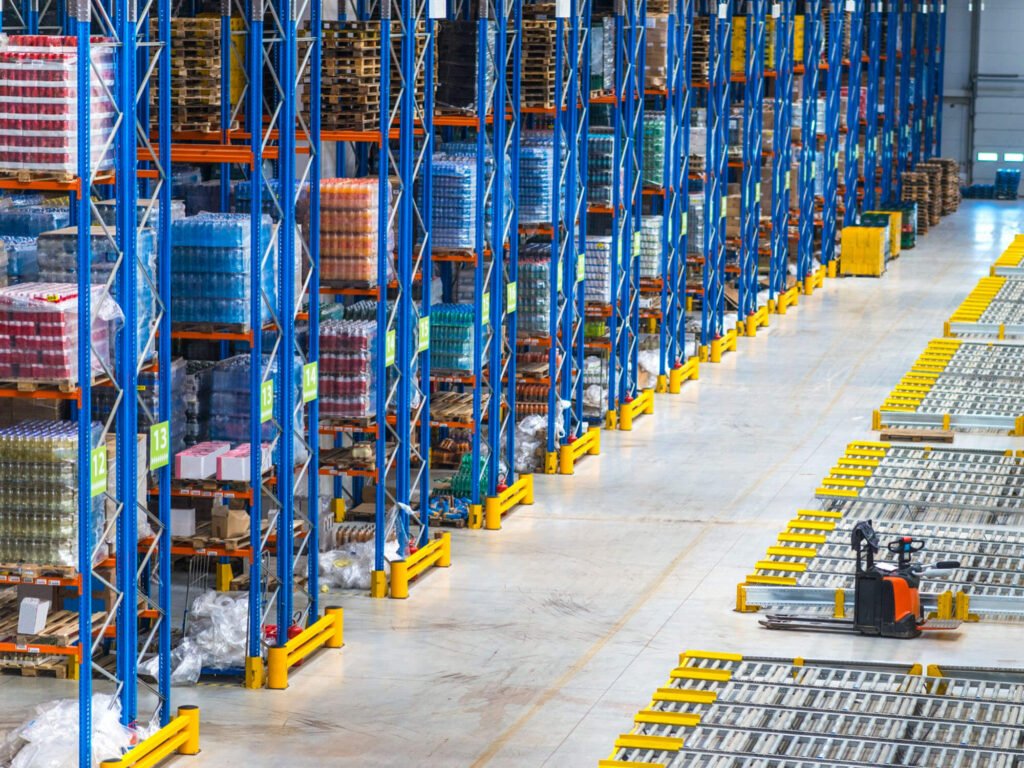
Today, warehousing is not just about storage, it’s about a strategic lever that directly contributes to supply chain competitiveness. In modern commercial warehouse logistics, labor, order fulfillment and safety costs can all be hidden, silent and intangible due to poor logistics warehousing design. All inefficient layout decisions cost thousands of dollars over many operating cycles. This guide provides you a practical and B2B oriented approach to design and redesign your logistics warehouse for maximum efficiency. It includes layout planning, storage systems, workflow optimization, technology integration as well as performance measures. Let’s get started!
Warehousing Logistics Meaning – Understanding Concept
Warehousing in logistics is responsible for planning, organizing and controlling product movements within a warehouse. It encompasses receipt, storage, inventory control, order assembly, delivery and maintenance of facilities. This role is not the same as a supply chain management role, which is responsible for the overall end-to-end product lifecycle. The warehousing logistics is limited to the in-warehouse operation and execution. In the end, it is all about smart design: layout, process flow and technology in harmony.
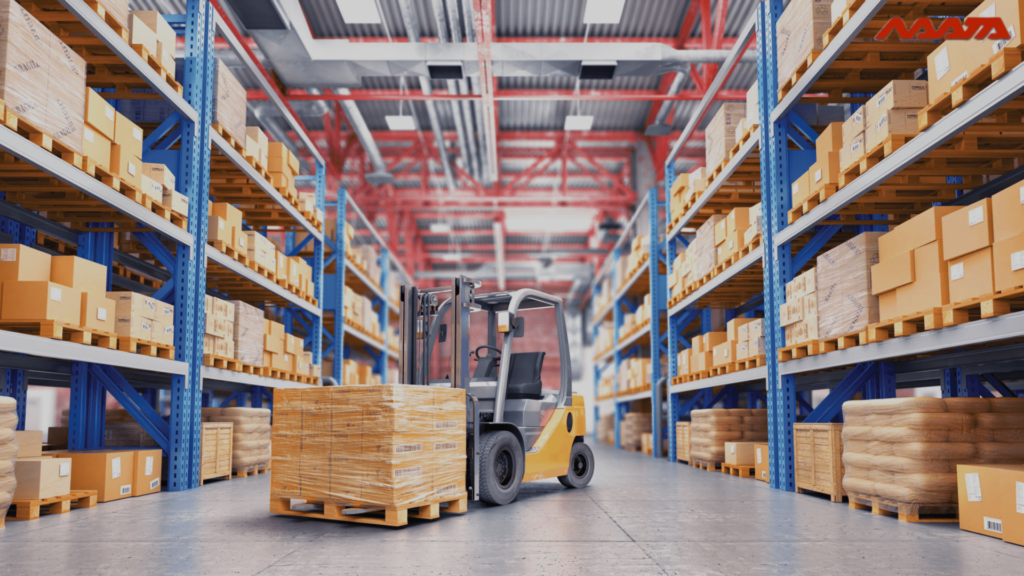
Why Logistics Warehousing Design Directly Drives Efficiency
Labor Costs Balloon When Layout Is Poor
With poor layout, workers are unnecessarily moving around long distances during shifts. The top labor cost driver in the warehouse is picking and travel time. Businesses lose money for every additional step that their employees take.
Throughput Bottlenecks Kill Delivery Commitments
Clogged aisles and inadequate staging areas significantly extend your entire order cycle. These delays are caused by the bottlenecks at receiving docks, which are reflected in outbound B2B shipments. You don’t want to upset supplier relationships you have been developing for years with missed delivery windows.
Smart Space Design Protects Capital
The lack of efficiency in floor plans forces businesses to take unnecessary additional leases at a cost. When designing a warehouse, it is important to maximize the use of available space, and this can be achieved by using a variety of storage methods and equipment. A three-year delay of expansion saves millions of dollars in unnecessary real estate expense.
Logical Zoning Reduces Costly Errors
With disorganized layouts, mis-picks and product damage are commonplace operations issues. Consistent and predictable zoning provides workers with clear pathways throughout the facility. With fewer mistakes comes less rework, less returns and higher margins per order.
Good Design Scales Without Proportional Cost Increases
A good warehouse design takes up expansion of volume without expansion of headcount or warehouse space. New product lines can be slotted in seamlessly and quickly with logical SKU. By designing for scalability from the ground up, companies can prevent problematic and costly operational retrofits.
Core Principles of Efficient Warehouse Layout Design
Optimize the Flow Path
Plan warehouse flow to make sense: receiving goes to put-away, storage, picking, packing, and shipping. Don’t use layouts that require forklifts and pickers to cross paths. The U-shaped, I-shaped and L-shaped flow models are all suitable for different operational setups.
Slotting and Storage Strategy
Locate high velocity products closer to packing and shipping for the greatest pick efficiency benefit. ABC analysis is used to classify inventory based on the frequency of picks, which will be used to make smarter slot assignments throughout. Correlate storage method (racking, shelving, bins) with product physical attributes.
Space Utilization and Cube Efficiency
Design up from the ground, utilizing full racking height within fire code and safety limits. Smaller aisles allow for a higher storage density, but require specialized, often more expensive material handling equipment, such as narrow aisle. Consider layout width of aisles carefully, with respect to equipment cost and aisle density requirements.
Zoning by Function and Product Type
Create distinct functional receiving, bulk storage, fast-pick, kitting, returns and shipping staging areas. For temperature controlled, hazardous and high value goods a specially compliant, clearly demarcated handling zone is required. When the zoning is done properly, there is no risk of cross-contamination and a significant amount of internal product movement is avoided.
Dock and Yard Design
Optimize the number of dock doors based on real inbound and outbound daily volume trends. Trailer queuing, congestion and high cost at peak times are caused by poor dock planning. Design yards to allow for a safe truck turning radius and effective staging. For broader industry guidance, consult MHI’s material handling resources.
Safety and Compliance by Design
Consider compliance requirements for aisle width, fire suppression clearance and emergency egress in initial design plans. Racking load rating signs must be used from the beginning and not as an afterthought. Upfront design of safety is always less expensive than fixing the non-compliant warehouses after they are commissioned.
Technology’s Role in Logistics Warehousing Design
Warehouse Management System (WMS)
A WMS is the working backbone of every modern warehouse. It controls the accuracy of inventory and provides smart putaway and picking strategies. The WMS continuously receives real-time data, which is used to make more intelligent decisions about layout refinement.

Automation and Material Handling Equipment
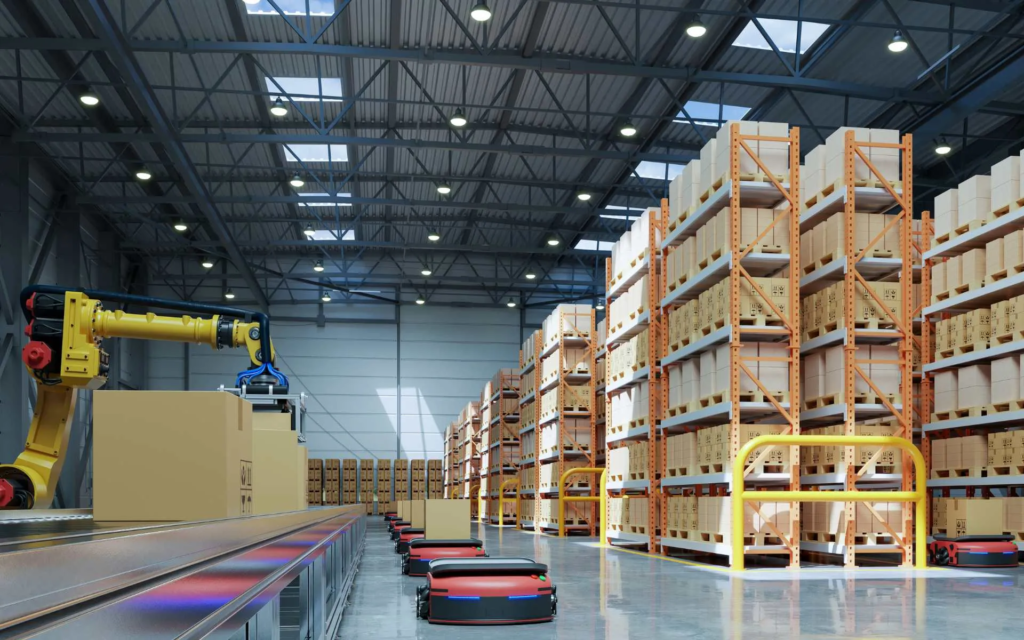
In high-volume warehouses, conveyors, AS/RS, and sortation systems can make a world of difference in throughput. But, automation can never be used to replace a validated process design. Technology on broken processes only increases inefficiency and costs.
Barcode/RFID and Real-Time Tracking
Barcode and RFID technologies have a direct impact on increasing the accuracy of inventory across all warehouse storage positions. Real-time tracking means no guesswork and helps to inform slotting decisions with data. With improved location visibility, picks are completed faster, there are fewer errors, and operational performance is improved overall.

Data Analytics and Iterative Layout Refinement
There is a need to actively use historical pick and travel data to inform decisions on warehouse design changes. When it comes to warehouse design, it’s never a one-and-done proposition — SKU mix and volume continually change. As your business needs change over time, analytics make sure you’re always set up for efficiency.

Step-by-Step Framework for Logistics Warehousing Designing for Efficiency
Step 1. Audit Current Operations
Before touching a single rack or shelf, map all the workflows that are already in place. Record the actual distance traveled by workers in each pick cycle. Know which is your top selling SKUs and candidly log the most busy times. It’s right under your nose and here are your biggest efficiency killers.
Step 2. Define Design Objectives
Don’t set ambiguous objectives, tie all decisions to business outcomes. Set clear goals for order cycle time decreases, such as from 4 hours to 2 hours. Establish a storage density improvement percentage that your facility is required to meet. Clearly stated goals ensure design decisions are in line with true operating needs.
Step 3. Classify and Segment Inventory
Get an immediate full ABC velocity analysis of your entire SKU catalog. A-items that move quickly are most likely to be near packing and shipping docks. Instead, slow-moving C-items should be stored in distant, high density storage areas. A well-done segmentation can save huge picker travel every day.
Step 4. Model the Flow Path
The meaning of which flow pattern makes sense depends on your dock configuration. U-shaped configurations are most effective if inbound and outbound are on the same dock wall. I-shaped flow suits are straight through, high volume, with separated receiving and shipping. Select a flow pattern before you place one square foot in any zone.
Step 5. Select Storage and Handling Systems
Correlate each storage and handling decision to each product. A solution for light, small and fast moving items would be very different from a solution for heavy, bulky palletized goods. Factor budget realistically but give preference to highest throughput capacity instead of lowest equipment cost. The wrong system decisions here lead to years of costly operational issues.
Step 6. Design Zones and Layout the Floor Plan
First assign floor space by function of operation and then consider aesthetics and preferences. For receiving, storage, picking, packing and shipping, each needs to be carefully calculated for dedicated square footage. Ensure adequate aisle width, safety clearances and approach to docks in all areas. A well zoned floor plan helps to eliminate congestion and significantly enhance the daily operational flow.
Step 7. Integrate Technology
Your physical layout and WMS logic should be a single integrated operating system. Set slotting rules, replenishment triggers and pick paths within the WMS to mirror the floor. Install bar code or RFID at each zone transition and receiving point. When applied properly, technology contributes to a good layout and creates a high-performing warehouse.
Step 8. Pilot, Measure, and Iterate
Do not roll out redesign throughout the facility at once. Start a phased rollout in a single zone and test KPIs carefully against baseline. Measure weekly order cycle time, pick accuracy, travel distances, and throughput rates. No planning session could ever determine slotting adjustments and layout refinements that will be identified through real operational data.
Common Logistics Warehousing Design Mistakes That Undermine Efficiency
Here are some common mistakes while designing logistics warehousing:
1. Designing Only for Today’s Volume
Make your layout 20–30% scalable. The plants erected for the current volume become the expensive bottlenecks within two to three years because of the seasonal peaks.
2. Ignoring Travel-Time
Look at slotting quarterly with actual velocity. Far from packing stations, high velocity SKUs silently suck the productivity of the pickers every single shift.
3. Underestimating Dock Door Requirements
Determine dock capacity based on peak trailer volume, rather than weekly averages. An inadequate receiving area is a single choke point in your total interior operation, no matter how well all the other parts of your interior are functioning.
4. Mixing Incompatible Product Handling Needs
Divide your floor into velocity, unit size and handling method segments. The daily congestion around manual pick areas created by the forklift operations can cause a delay in throughput and can be hazardous.
5. Over-Investing in Automation
Test your workflow before you invest in automation. Automation of a bad process results in quicker, more costly mistakes — technology should make good processes better, not replace them.
6. Neglecting Safety Clearances and Compliance
Bring in a licensed facility engineer at design, NOT inspections. The retrofits of fire suppression clearances, egress paths and load ratings in an operating facility are much more expensive than compliance at the front end.
Key Warehouse Efficiency KPIs
| KPI | What It Is | Why It Matters |
| Dispatch Cycle Time | Time required to process an order from start to finish | Each hour saved adds an hour to dispatch capacity each day |
| Picking Precision Rate | % of error-free picks | Mispicks lead to returns, reshipments, and chargebacks |
| Vertical Space Usage | Ceiling height actively storing inventory | Unused height is wasted rent per square foot |
| Stock Rotation Speed | Number of times inventory is sold and replaced per quarter | Slow rotation points to poor product-to-zone fit |
| Inbound Processing Time | Dock arrival to shelf-ready completion | Delays here back up receiving and stall replenishment |
| Cost Per Dispatched Order | Total labor divided by orders shipped | The more inefficient the layout, the more this number silently climbs every day |
| Delivery Commitment Rate | Orders meeting promised ship dates | Reflects whether warehouse design holds up under real pressure |
Sourcing Racking Systems for Your Warehouse Design
Once the layout and slotting strategy is decided upon, the next step is to find the storage equipment to cater to the design requirements. Lracking is a Dongguan manufacturer with over 16 years of experience, it can produce pallet racking, mezzanine floor, cantilever system with accurate dimension that can be used in the warehouses, free drawing design, accurate quotation and installation.
Conclusion
Efficient logistics warehousing design isn’t just a facility decision; it’s an ongoing strategic process that has a direct impact on operational costs, service levels, and long-term scalability. Before investing in automation or advanced software, the best efficiency improvements can be achieved by optimizing workflow, inventory slotting and functional zoning. Starting with a comprehensive operational audit and validating improvement efforts with KPI tracking can be beneficial for businesses. In the context of enhancing storage and warehouse logistics solutions, companies can rely on the know-how of storage solutions providers such as Lracking to make sure that their storage setups and warehouse design layouts are optimized for performance and growth.