Sub-optimal temperature control in the supply chain costs billions of dollars to businesses around the world each year. According to the data from FAO 2021, approximately 13% of the world’s food is lost in the post harvest and retail. According to WHO, as many as half of vaccines can be damaged by sub-optimal cold chain management. These figures should definitely raise the antennas of B2B operations leaders handling perishable products. This guide includes types, operations, industries served, technology and selection criteria and more. Let’s get started!
What Is Refrigerated Warehousing?
Refrigerated warehousing is a climate-controlled space that uses a closed-loop refrigeration system to actively pull heat out of the space and is heavily insulated. This process forms the foundation of refrigerated warehousing and storage, where compressors compress the refrigerant, condensers release heat outside, and evaporators continuously cool the interior storage space. Imagine a commercial refrigerator, on an industrial scale, safeguarding your whole product inventory. Cold storage, as opposed to ambient warehousing, ensures product integrity, meets critical regulations and guarantees continuity of the cold chain.
Benefits of Warehouse Refrigeration for B2B Operations
Extended Shelf Life
Microbial growth and enzymatic decay are greatly reduced at lower temperatures. Cold storage warehousing for perishables directly increases the shelf life of the products within the category of perishable products. Businesses benefit from extended distribution periods.
Lower Loss and Waste of Product
Refrigerated warehousing reduces spoilage rates for temperature sensitive inventories. This helps to make cost of goods sold more predictable. The exposure to write-off falls significantly.
Make Regulatory Compliance Easier
Certified cold storage providers have documentation in accordance with FDA, HACCP, WHO and GDP. This substantially reduces your internal compliance burden. Audits are much less intrusive.
Flexible Inventory Management
Third Party Cold Warehouses allow for stockpiling during busy periods and promotions. Businesses do not make capital investments in owned refrigerated facilities. Import cycle management is made easy.
Integrated Distribution Services
A lot of providers will include blast freezing, cross docking, kitting, repackaging and palletizing all in one. It simplifies vendor management by having all of these services in a single location. There is significant improvement in operational co-ordination.
Scalability
With 3PL cold storage, businesses can easily expand or contract storage capacity as needed during peak or troughs in demand. No investment is needed in new geographies due to no owned infrastructure. Financial risk to growth becomes less.
Supply Chain Resilience
Refrigerated warehouses serve as a buffer node in your supply chain. They minimize losses to customers before disruptions reach them. There is very strong continuity in operation.
Types of Refrigerated Warehouses
1. Refrigerated (Chilled) Warehouses
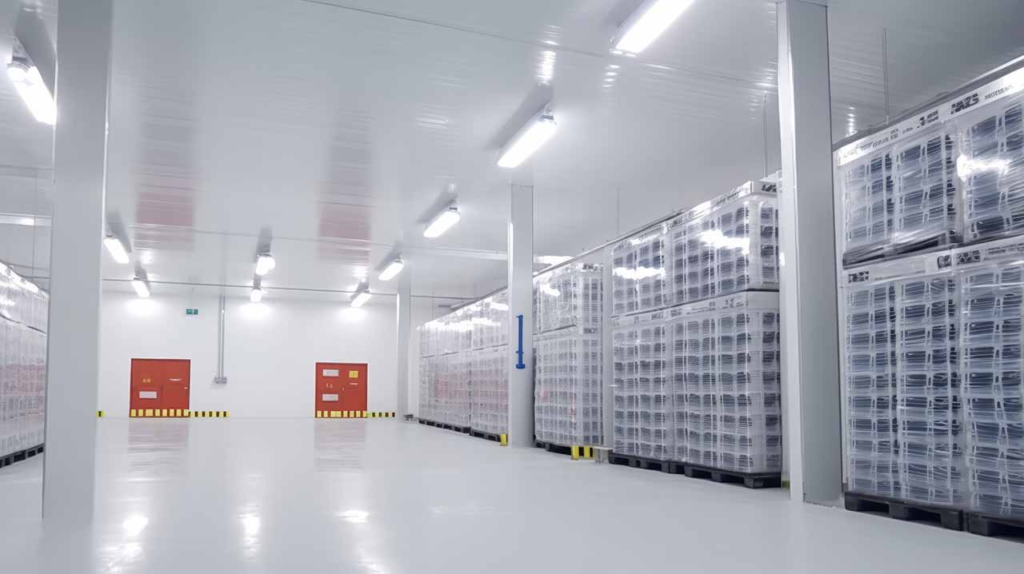
The chilled refrigerated warehousing systems are used for the storage of perishable items at 2°C – 8°C. Here fresh fruits, vegetables, milk and drinks are kept. These facilities provide bacteria with a reduced growth rate without freezing products.
2. Frozen Warehouses
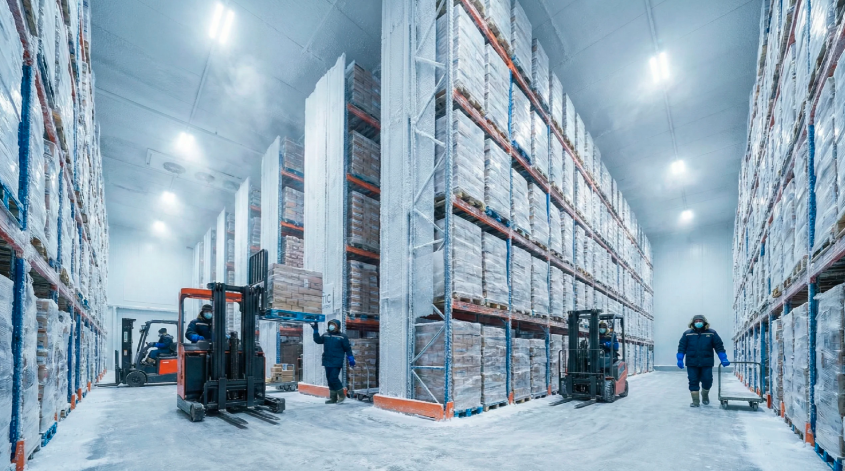
Frozen warehouses use a temperature of -15 to -25°C for long-term storage. These sub-freezing temperatures are needed for meats, seafood and ice cream. Integrity of the product is preserved during long storage and distribution periods.
3. Ultra-Low Temperature (ULT) Storage
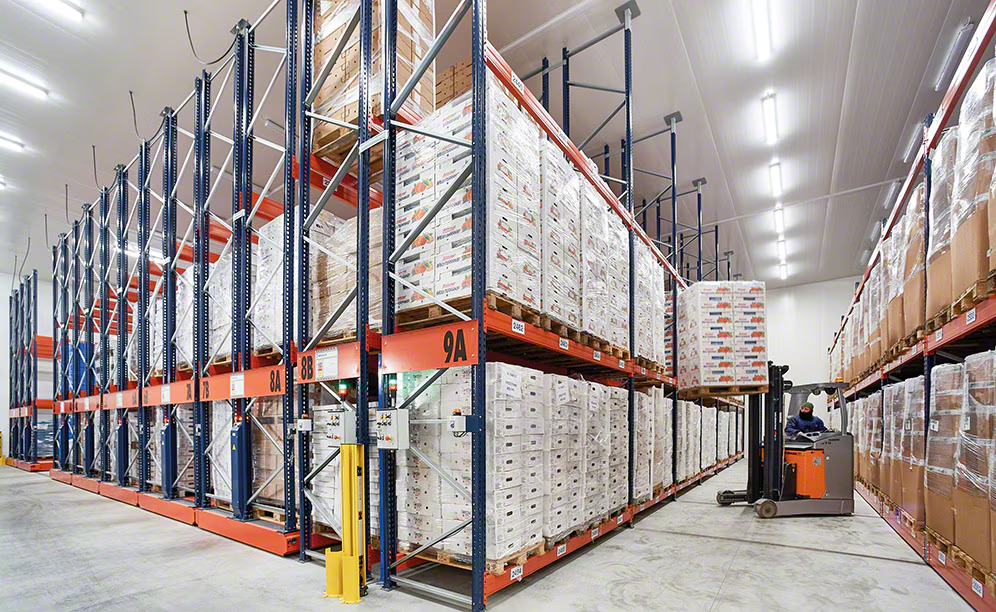
For materials with high sensitivity, ULT facilities achieve temperatures of −80°C or lower. This level of precision is required for vaccines, biologicals and pharmaceutical research samples. These high value products can be ruined forever by a small difference in temperature.
4. Blast Chillers / Shock Freezers
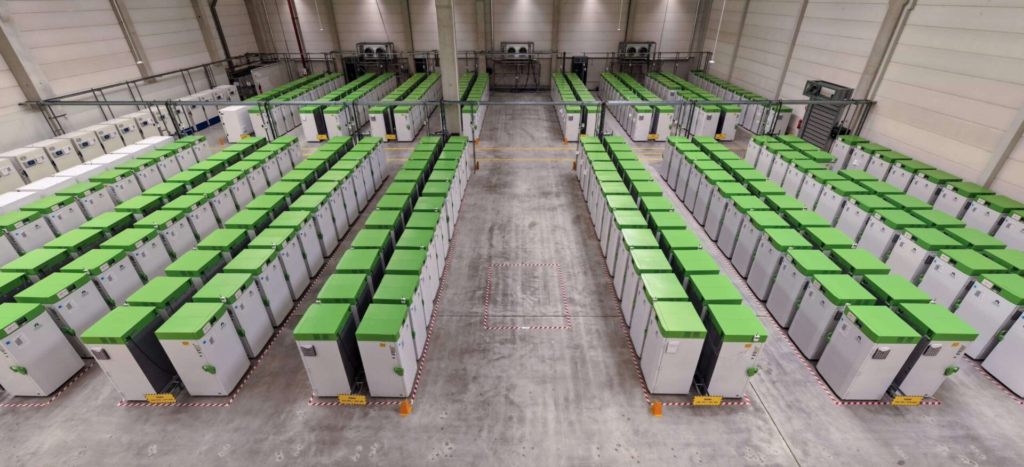
Blast chillers quickly reduce product temperatures directly from active production lines. This speed helps maintain the integrity of the cellular structure, texture and important food safety requirements. Ice crystal damage due to slow freezing can seriously affect the quality of products.
5. Controlled Atmosphere Warehouses
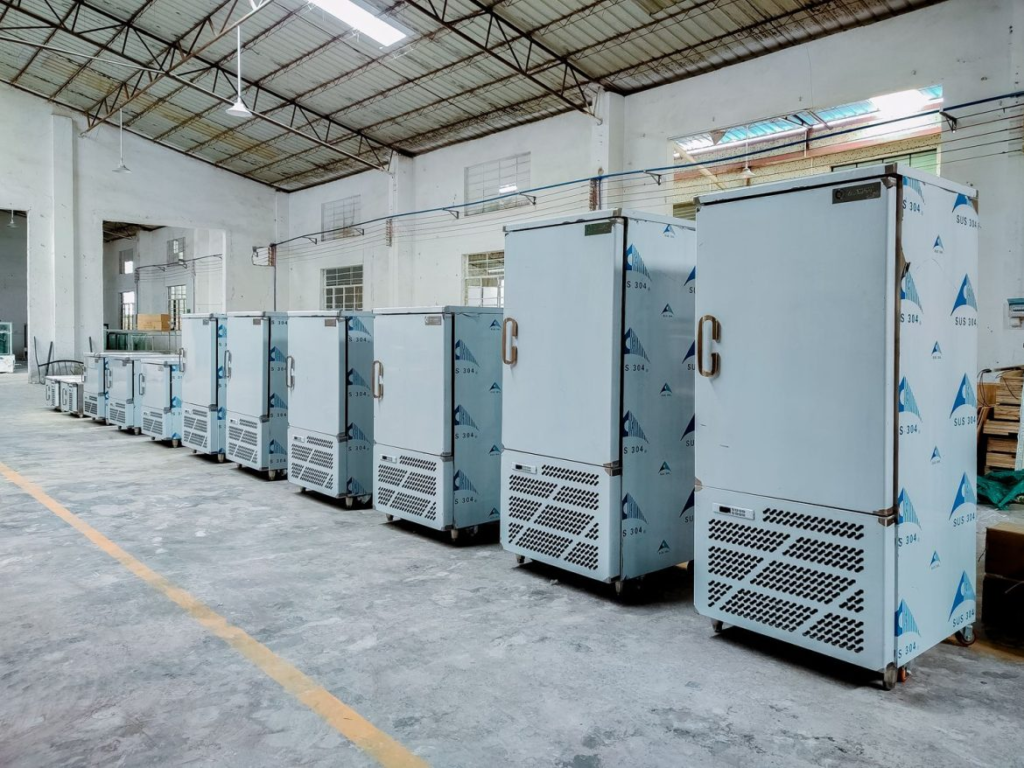
Besides the accurate temperature control, these facilities control oxygen, carbon dioxide and humidity. This multi-variable environment is required for certain fruits and vegetables to prolong their useful life. Inadequate atmosphere will speed up spoilage at proper temperatures.
6. Multi-Temperature / Hybrid Warehouses
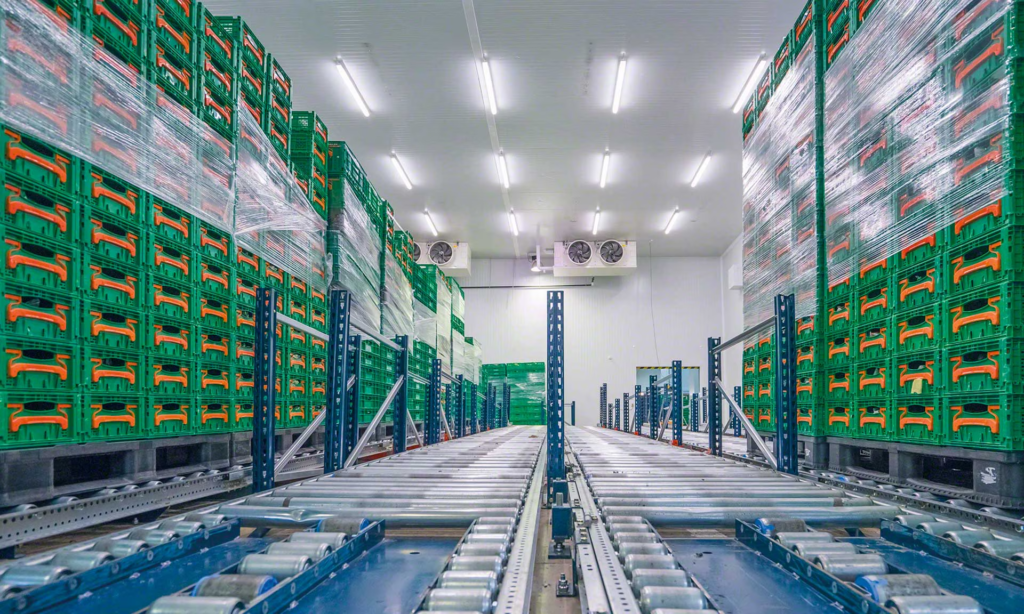
Hybrid facilities combine chilled, frozen and ambient zones all under a single roof. Companies with multiple SKUs centralize operations without separate warehouse agreements. This setup simplifies logistics and significantly lowers overall cold chain costs.
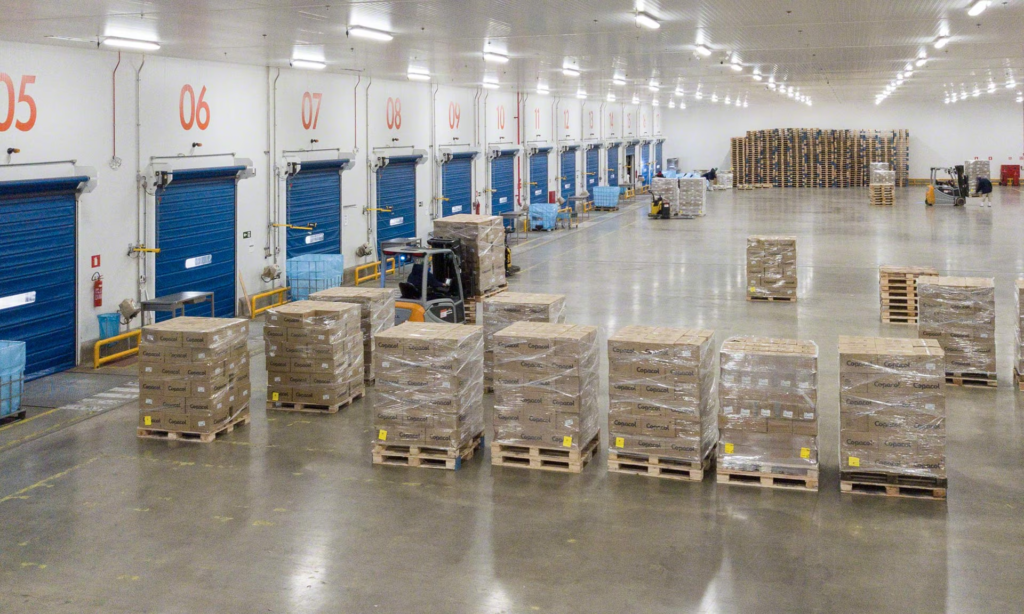
7. Automated Cold Storage
The robotics and AS/RS technologies perform well under the temperature-controlled conditions of refrigerated warehousing. IoT sensors constantly track the situation, and alert when something is going wrong, preventing product damage. Automation also takes workers out of the way of exposure to extreme temperatures. For broader industry guidance, consult MHI’s material handling resources.
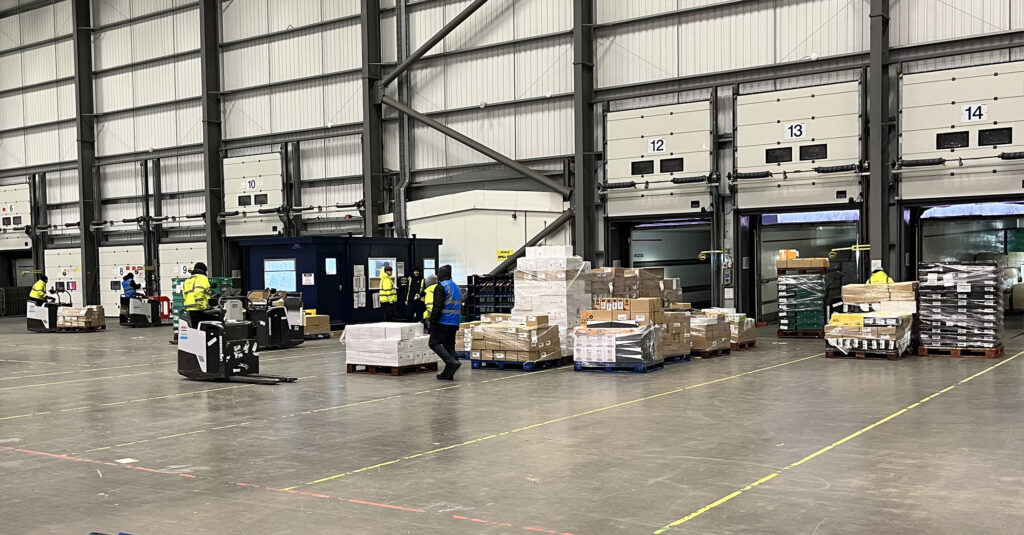
8. Platform / Flat-Bed Warehouses
They are dedicated to groupage and multi destination deconsolidation operations. Mixed temperature shipments are sorted and rerouted to various distribution systems efficiently. They play an important role as cross-docking hubs in larger cold chains.
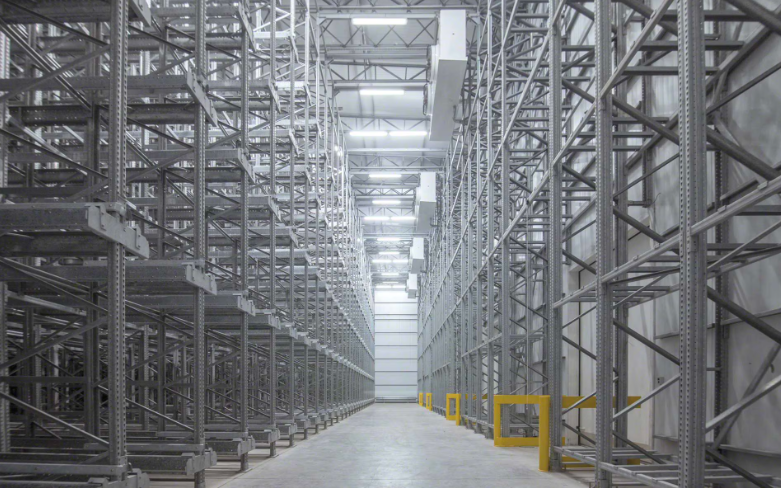
9. High-Bay Warehouses
High-bay facilities utilize vertical cubic space to the fullest with the use of tall racking structures and automation. Goods are retrieved without human intervention at height by fully automated cranes and shuttles. The high capital expenditure is counterbalanced by outstanding storage density and ROI in operation.
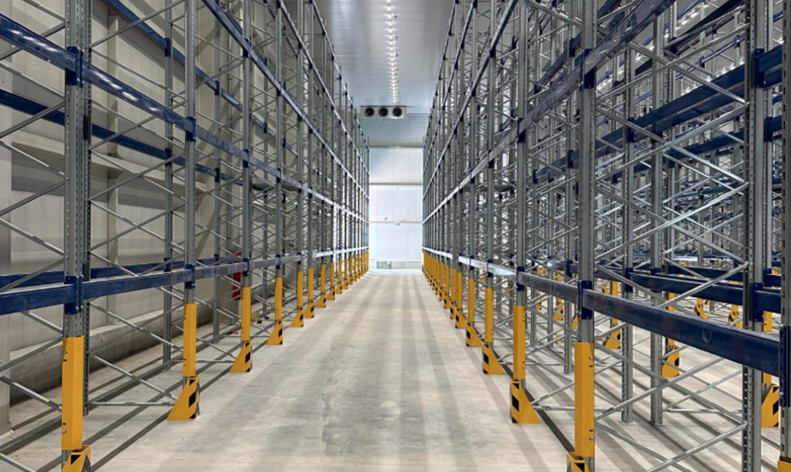
How are Refrigerated Warehouse Designs Built and Operated?
Building Envelope and Insulation
Refrigerated warehouse walls and ceilings are made of cam-lock polyurethane panels (4-6″ thick). Costly ground moisture intrusion is avoided by insulated concrete slabs with vapor barriers. These structural decisions are directly related to the protection of temperature sensitive inventory from external thermal interference.
Doors, Loading Docks, and Air Control
There are three types of forklift-compatible doors: overhead sectional, vertical lift, and bi-parting doors. Weather seals on loading dock outside stop cold air from escaping when the dock is in use. Warm-air infiltration is prevented between inbound and outbound movements by vinyl curtains over entrances.
Refrigeration Systems and Backup Power
Vapour Compression Systems are widely used in cold storage facilities, as they have a lower initial installation cost. A refrigerated warehousing system should have vapour absorption systems, which have lower operating costs in the long term but higher up-front costs. Back-up generators and extra refrigeration systems ensure proper temperatures in the event of a power outage.
Regulatory Compliance and Certification Requirements
Seismic load, snow load and fire suppression requirements are determined by local building codes. Food and drug storage is required to have FDA, HACCP and pharmaceutical GDP/GMP certifications. As a fundamental part of regulatory compliance, operators are required to make a continuous record of storage conditions.
Cold Storage Temperature Zones by Product Category
| Temperature Zone | Range | Typical Products | Storage Purpose |
| Positive Chill | 0°C to +10°C | Fresh produce, dairy, meat, cut flowers, certain pharma | Short- to medium-term freshness preservation |
| Standard Refrigerated | +2°C to +8°C | Beverages, eggs, ready-to-eat meals, vaccines | Regulatory compliance and shelf-life extension |
| Frozen | −15°C to −25°C | Meats, seafood, frozen vegetables, ice cream | Long-term preservation; halts bacterial growth |
| Deep Frozen | −25°C to −35°C | Industrial-scale frozen food stockpiling | Extended storage for large-volume perishables |
| Ultra-Low Temperature (ULT) | −60°C to −80°C | mRNA vaccines, biologics, blood plasma, research samples | Prevents protein degradation; critical for biotech |
| Controlled Atmosphere | Variable (+1°C to +8°C) + CO₂/O₂ control | Apples, pears, avocados, certain vegetables | Slows ripening; extends seasonal shelf life |
| Blast / Shock Freezing | −35°C to −45°C (rapid) | Baked goods, fresh meats post-production | Fast freezing locks in quality before long-term storage |
The Role of Warehouse Refrigeration Systems in Cold Chain Stability
The cold chain is the unbroken logistics from producers to end users, where temperature is controlled at all stages. This chain is supported by refrigerated warehouses, which provide a buffer against port congestion, rerouting due to geo-political tensions and other seasonal bottlenecks. IoT sensors, automated climate systems and backup generators ensure that the conditions are precise, 24 hours a day, and the advanced insulation reduces temperature swings when trucks dock.
Compliance documentation safeguards cross-border cargo integrity all along. Refrigerated warehouses can buffer production from demand and absorb peaks and troughs, beyond managing disruption. From the intercontinental ocean going movement all the way to the last mile, reefer containers, ships and trucks provide temperature-controlled transport.
Technology and Automation in Modern Cold Storage Warehouse Designs
Here are some of the most advanced technologies and automation systems that a modern refrigerated warehousing system should have
Internet of Things & Sensor Technology
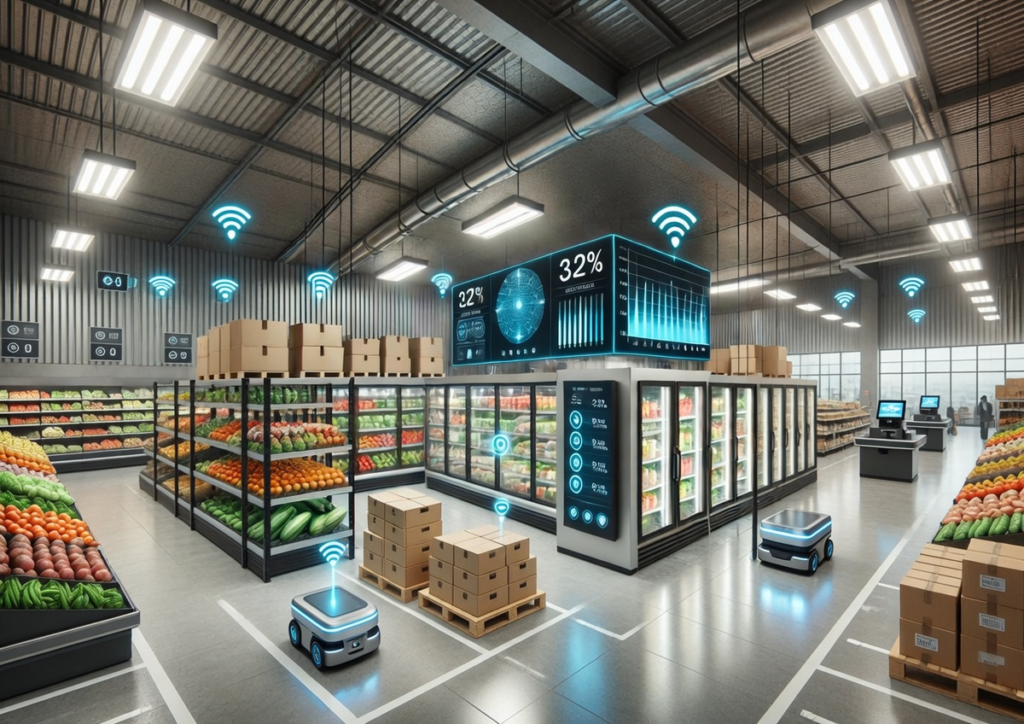
The temperature and humidity of each zone in the facilities are monitored continuously by wireless sensors. Each pallet has its own sensors allowing for location-specific condition tracking. Real-time data transmissions are sent to centralized systems, providing immediate visibility into operations. Staff are alerted immediately of any deviation in parameters through an automated SMS alert or mobile app.
Cloud-Based Monitoring Systems
Historical temperature data is stored on cloud platforms, allowing for predictive maintenance and trend analysis. In the event of equipment failure, response times are cut down dramatically with remote technician diagnostics. Complete audit trails automatically meet FDA, HACCP and GDP regulatory documentation requirements.
Warehouse Management Systems (WMS)
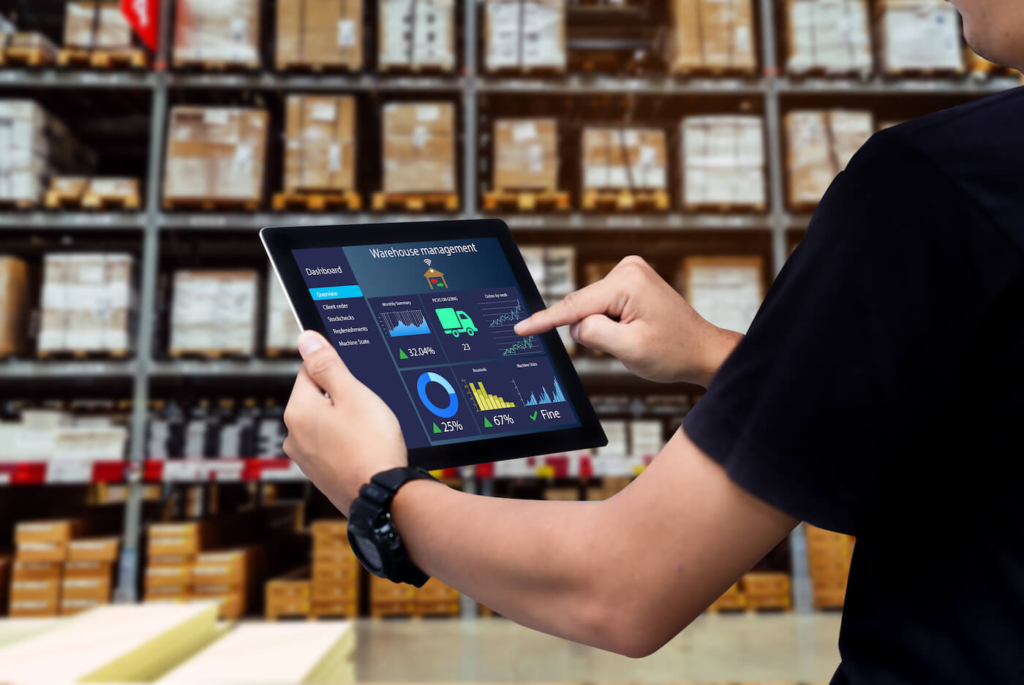
WMS systems provide FIFO and FEFO stock rotation, which helps to avoid product expiration losses that can be costly. A seamless integration between ERP and transport management removes data silos across the supply chain. Automated Inventory tracking minimizes human error and significantly increases the accuracy of picking in the cold environments.
Automation and Robotics
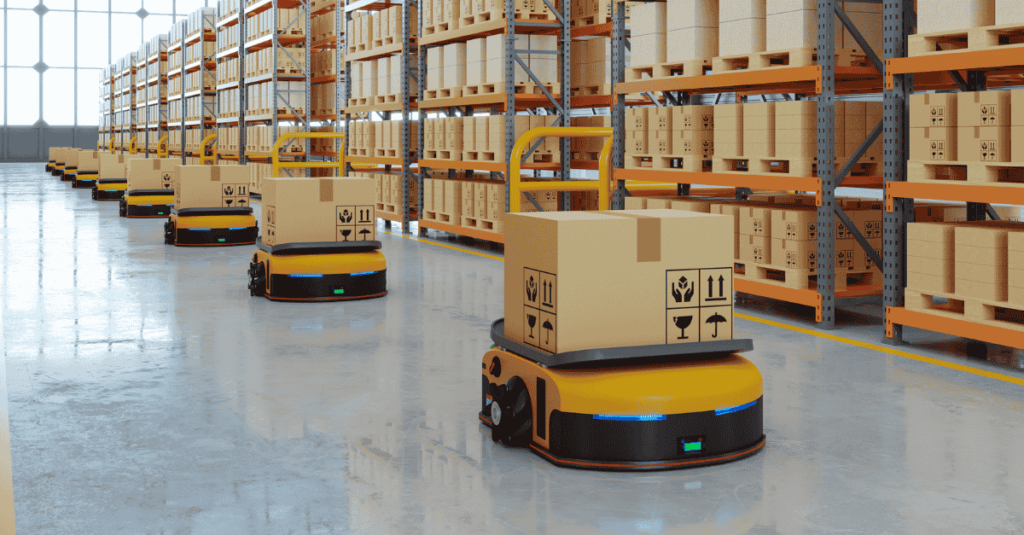
A modern refrigerated warehousing system has AS/RS technology that eliminates workers from extreme cold environments and ensures steady throughput. Goods are conveyed from storage to loading docks automatically and without human intervention with AGVs. Order picking and pick-to-light systems significantly enhance order accuracy within chilled environments. High-bay automated warehouses are most effective at utilizing the vertical space, which is often the most important consideration when evaluating the cost of a new warehouse.
Energy Efficiency Innovations
The high performance polyurethane insulation panels drastically lower thermal transfer and refrigeration workload. Solar assisted refrigeration systems reduce the dependence on the grid and their long term operational energy costs. Variable speed compressors automatically change their output to use just what is required. Energy Management Systems (EMS) optimise cooling cycles strategically, which consistently saves on high cost peak electricity.
Cold Warehousing – Key Challenges
- High Energy Costs: Refrigeration is a very high electricity user during its normal daily operations. Operating costs are frequently a large portion of the energy costs, making efficient design essential in freezer and cold storage construction. Effective systems are useful in managing utility expenditures.
- Temperature Excursions: Openings to the outside impact the consistency of the internal temperature. Unexpected changes in temperature can be caused by equipment failures. Sensitive inventory quality is at risk because of power outages.
- Regulatory Compliance: The food and pharmaceutical industry has stringent storage standards. Different jurisdictions around the world have different documentation requirements. Penalties could be imposed for non-compliance.
- Labor Safety Challenges: Workers are at risk of health problems due to extended cold exposure. Wearing protective clothing makes wearers more comfortable and safer. Automation decreases the amount of labor that is required.
- Infrastructure Expenses: Some special insulating materials are needed for cold storage construction. Refrigeration plants can be a major cost driver for a project. Structural design of floor systems needs to be improved.
- Perishability and Inventory Loss: Some products are sensitive to temperature and will be spoilt if not handled properly. Small disturbances can destroy whole batches. Losses in products have a direct impact on profitability.
- Technology Integration: Modern facilities are built on digital platforms and are interconnected. Continuous monitoring activities are supported by sensor networks. Continuous maintenance needs specific information technology resources.
How to Choose the Right Warehouse Refrigeration Partner
Effectively Map Cold Chain Requirements
Before choosing a warehouse provider, examine the temperature zones that are required. Make estimations of volumes and seasonal demand changes. Do a detailed review of industry compliance requirements.
Assess Strategic Location Compatibility
Locate facilities close to suppliers, customers and transportation. The closer you are to transit, the more efficient it is. Improved connectivity helps to minimise delays and logistics costs.
Check Technical Infrastructure Capabilities
Check for temperature zones and backup systems. Analyze equipment redundancy and monitoring technologies. A good infrastructure reduces disruption and loss of products.
Thoroughly Check Industry Certifications
Check certifications applicable to products and regulations. Ask for auditing trail for validation. Compliance standards enhance quality assurance and customer confidence.
Discuss Inventory Visibility Systems
Make sure that the warehouse software is compatible with current platforms. Real time tracking enhances transparency and traceability. By having accurate data, inventory and planning decisions are improved.
Determine the Value-Added Services
Identify other services which feed into your supply chain. Blast freezing and kitting enhance flexibility. Combining operations makes it easier to manage and distribute.
Understand Service Agreements Carefully
Know what to do in case of temperature excursions and emergencies. Explain payment conditions and time of response. The risk and uncertainty of operation in strong agreements is reduced.
Evaluate Financial Strength and References
Work with seasoned and well-established operators. Ask for references from other companies in the same industry. However, proven performance makes it reliable and consistent for long service.
Optimizing Your Cold Storage Layout with the Right Racking System
Temperature control is only part of efficient refrigerated warehousing: the layout of the interior is just as important. The correct pallet racking system can maximise the useful cubic space, ensure that the FIFO policy is followed and be able to cope with the structural requirements of the cold environment. When you work with a manufacturer with many years of experience, such as Lracking, who have been in the manufacture of warehouse storage solutions for 16+ years and are CE/ISO certified, your racking infrastructure is designed to your facility’s size and load requirements.
Conclusion
Refrigerated warehousing has emerged as a key element in the modern B2B supply chain. The sector will continue to be transformed through 2030 with automation, compliance and sustainability. Factors to consider when selecting a cold storage partner include integration options, visibility, and regulatory compliance. In this context, companies like Lracking come in with their offerings of racking solutions that maximize storage space and enhance operational efficiency. Cold storage warehousing will be even more vital as the need for global cold chain operations grows.