Any warehouse operator sourcing pallet racking for installation in Australia or New Zealand eventually encounters AS4084. It appears in supplier quotations, insurance policy conditions, workplace health and safety requirements, and building code references, often without clear explanation of what it actually is or why it matters. For buyers navigating a racking procurement decision — particularly those sourcing internationally — understanding AS4084 is essential to distinguishing genuinely compliant suppliers from those that merely reference the standard in marketing materials.
This guide explains what AS4084 covers, why compliance matters, and how buyers can verify a supplier’s actual compliance before committing to a project.
What Is AS4084?
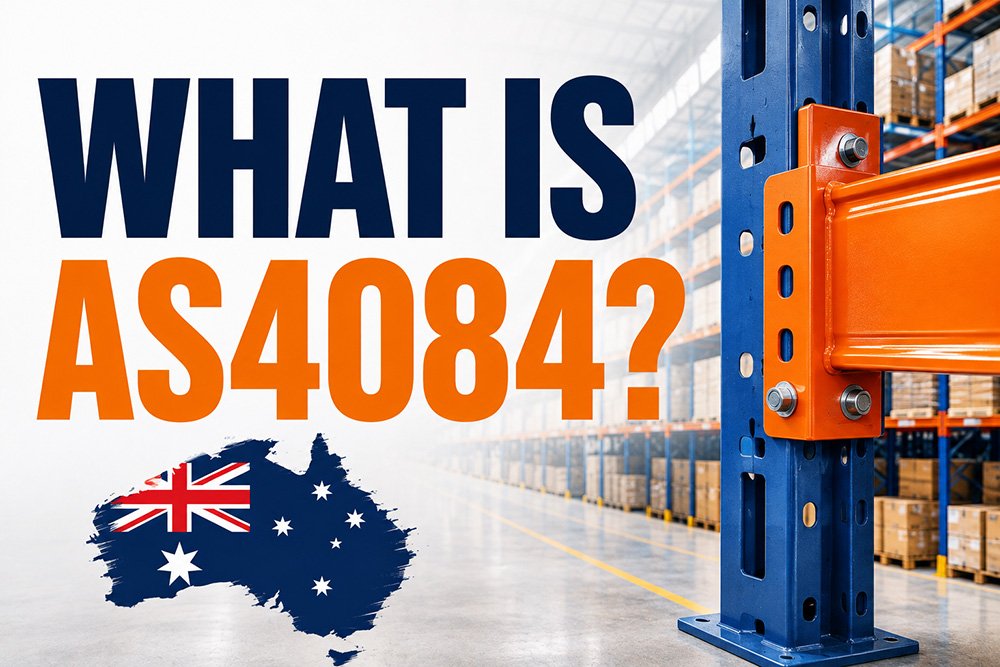
AS4084 — officially titled AS 4084 “Steel storage racking” — is an Australian Standard that specifies the minimum design, construction, and testing requirements for adjustable steel storage racking systems used in commercial and industrial applications across Australia and New Zealand. The standard is developed and maintained by Standards Australia. The current edition is split into AS 4084.1:2023 for design and AS 4084.2:2023 for operation and maintenance; together they supersede the earlier AS 4084-2012 edition.
AS 4084.1 principally applies to adjustable selective pallet racking. Its stated scope excludes drive-in and drive-through racking, cantilever racking, mobile racking, and low-rise hand-loaded shelving; those systems require the appropriate project-specific design references. The standard covers engineering principles, load calculations, structural testing, installation, operation, inspection, and maintenance within its defined scope.
AS4084 is not a voluntary marketing certification. It is the reference standard cited in Australian and New Zealand workplace health and safety regulations, building codes, and insurance requirements. Racking installed in these markets that does not meet AS4084 requirements may face regulatory action, insurance coverage disputes, or refusal of installation approval by facility authorities.
What AS4084 covers in practice:
- Design methods for uprights, beams, connectors, and base plates under expected loads
- Structural testing procedures for individual components and assembled systems
- Load capacity determination based on both engineering calculation and physical testing
- Requirements for seismic design in earthquake-prone regions of Australia and New Zealand
- Installation tolerances, including plumbness, straightness, and floor flatness requirements
- Documentation and labeling requirements, including load capacity signage
- Post-installation inspection and maintenance provisions
Why AS4084 Compliance Matters for Buyers
For warehouse operators in Australia and New Zealand, AS4084 compliance is not a technical curiosity — it has direct operational, legal, and financial implications that surface across the racking’s full lifecycle.
Workplace health and safety compliance. Racking installations in Australia are subject to Work Health and Safety (WHS) regulations, and equivalent legislation applies in New Zealand. In practice, WHS regulators expect racking to be designed and installed to AS4084 or a demonstrably equivalent standard. Facilities using non-compliant racking may face enforcement action, particularly following incidents.
Insurance coverage terms. Many Australian and New Zealand insurance providers reference AS4084 compliance in their policy conditions for warehouse and storage facilities. Racking that cannot be documented as compliant may face coverage limitations, higher premiums, or coverage disputes in the event of a claim.
Building code and consent requirements. Building approvals for new warehouses or significant racking installations often require documented compliance with recognized structural standards. AS4084 is the primary reference for pallet racking in this context.
Consequences of collapse or failure. In the event of a rack collapse or worker injury, AS4084 compliance becomes a central factor in regulatory investigation, insurance response, and any legal proceedings. Documented compliance supports the operator’s position; its absence does the opposite.
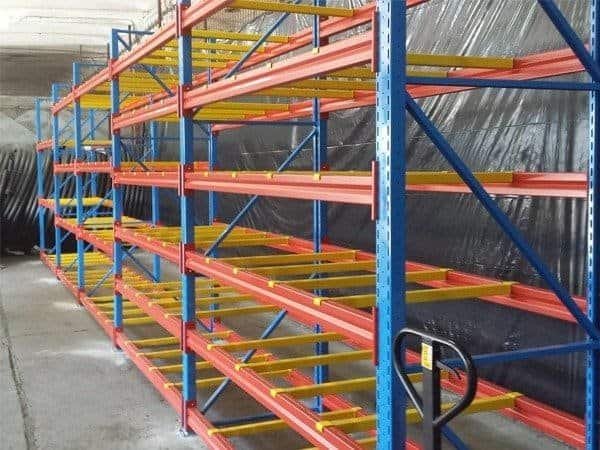
Long-term structural reliability. Compliance with AS4084 provides reasonable assurance that the racking has been engineered and tested for the loads it will carry over its service life, reducing the likelihood of premature failure or unexpected structural issues.
For buyers sourcing racking internationally, this creates a specific verification challenge: overseas suppliers may claim AS4084 compliance without having actually engineered and tested their products to the standard’s requirements. Distinguishing genuine compliance from marketing claims is essential.
Current Challenges Buyers Face with AS4084 Verification
Marketing claims without documentation. Many international suppliers reference AS4084 in their marketing materials, but the level of actual testing, engineering, and documentation behind those claims varies dramatically between suppliers.
Confusion between compliance and certification. AS4084 itself does not issue a certification — compliance is demonstrated through engineering documentation, testing reports, and third-party structural assessments. Some suppliers present ISO 9001 or general “AS4084 compliant” language as though it were formal certification, when it isn’t.
Component-level vs system-level compliance. A supplier may test some components to AS4084 requirements while not testing others, then market the overall system as “AS4084 compliant.” Genuine compliance covers the full engineered system, not just individual parts.
Inconsistent understanding of what compliance requires. Some suppliers, particularly those new to Australian and New Zealand markets, may not fully understand the standard’s testing and documentation requirements, leading to sincere but inaccurate compliance claims.
Version confusion. The 2023 update introduced changes from the 2012 edition. Suppliers referencing older compliance without updating for the current version may be technically out of date, particularly for new installations.
How to Verify AS4084 Compliance Before Purchase
Request full engineering documentation. Genuine compliance is supported by engineering calculations, structural test reports, and load charts specific to the products being supplied. Buyers should request these documents rather than accepting general compliance statements. Verifying documentation depth also connects to broader supplier evaluation practices covered in this guide to rack manufacturing process quality.

Confirm third-party testing. AS4084 testing is generally conducted by independent laboratories or engineering consultancies, not by the manufacturer itself. Buyers should ask which third-party organization conducted the testing and request access to the actual test reports.
Check the standard version. Ensure the compliance documentation references AS 4084:2023 (or the current version at the time of purchase), rather than an outdated edition. Older certifications may not reflect current design and testing requirements.
Verify component consistency. Compliance applies to the specific components supplied. Buyers should confirm that the racking delivered matches the tested and certified configuration, particularly for critical elements such as uprights, beams, base plates, and connectors.
Request load capacity documentation. Compliant suppliers provide clear load charts specifying maximum beam loads, upright frame capacities, and connection ratings under various configurations. Vague or absent load documentation is a warning sign.
Assess supplier engineering support. Genuine AS4084 compliance typically comes with the ability to provide project-specific engineering advice, load calculations for the specific installation, and documentation buyers can present to insurers, WHS regulators, or building authorities. Suppliers who cannot provide this level of support may not have the engineering depth their marketing suggests.
Verify manufacturer’s track record in Australia or New Zealand. Suppliers with a demonstrated history of AS4084-compliant projects in Australia or New Zealand generally offer more reliable compliance than those newly entering the market. References from existing installations in these markets can be valuable verification. Broader manufacturer evaluation criteria beyond regional compliance are covered in this guide to selecting heavy-duty pallet racking manufacturers.
Consider structural material specifications. AS4084 compliance interacts with material specifications, particularly for heavy-duty applications. This overview of structural racking covers material considerations relevant to compliance in demanding installations.
AS4084 Compliance Verification Checklist
| Verification Step | What to Request | Warning Sign |
|---|---|---|
| Engineering documentation | Full engineering calculations and drawings | Only marketing brochures provided |
| Third-party test reports | Independent laboratory test reports | Manufacturer self-testing only |
| Standard version | AS 4084:2023 documentation | References to older editions only |
| Load charts | Beam, upright, and connection load ratings | Vague or absent load documentation |
| Component consistency | Confirmation of tested configurations | Mixed or substituted components |
| Engineering support | Project-specific calculations available | Only generic responses to technical questions |
| Australia/NZ references | Documented installations in these markets | No references outside the supplier’s home market |
| Material specifications | Steel grade and coating documentation | Undocumented material sourcing |
Expected Benefits of Choosing an AS4084-Compliant Supplier
Warehouses that verify AS4084 compliance thoroughly before purchase typically see:
- Simplified regulatory approval, since documented compliance supports building consent applications, WHS compliance, and workplace safety audits
- More favorable insurance terms, since compliant installations reduce insurer risk exposure and often qualify for standard policy conditions rather than restrictive terms
- Reduced legal exposure, since documented compliance strengthens the operator’s position in the event of a collapse, injury, or other incident
- Longer expected service life, since compliant racking has been engineered and tested for its intended loads rather than relying on general assumptions
- Fewer post-installation issues, since compliant systems arrive with matched components, verified load capacities, and clear installation documentation
- Better resale or reuse value, since documented compliance supports future racking transactions if the facility changes ownership or use
Project Considerations Beyond Basic Compliance
Seismic requirements in relevant regions. Parts of Australia and much of New Zealand are seismically active, and AS4084 includes provisions for seismic design in these regions. Buyers should confirm the racking design accounts for seismic loading at the specific installation location.
Installation quality. AS4084 compliance covers design and manufacturing, but installation quality affects whether the compliant racking actually performs as designed. Qualified installers familiar with AS4084 installation tolerances significantly reduce the risk of installation-related issues.
Ongoing inspection and maintenance. AS4084 compliance is not a one-time event — the standard includes provisions for post-installation inspection and maintenance. Buyers should plan for ongoing inspection routines to maintain compliance over the racking’s service life. General inspection principles applicable across regions are covered in this guide to pallet racking inspection.
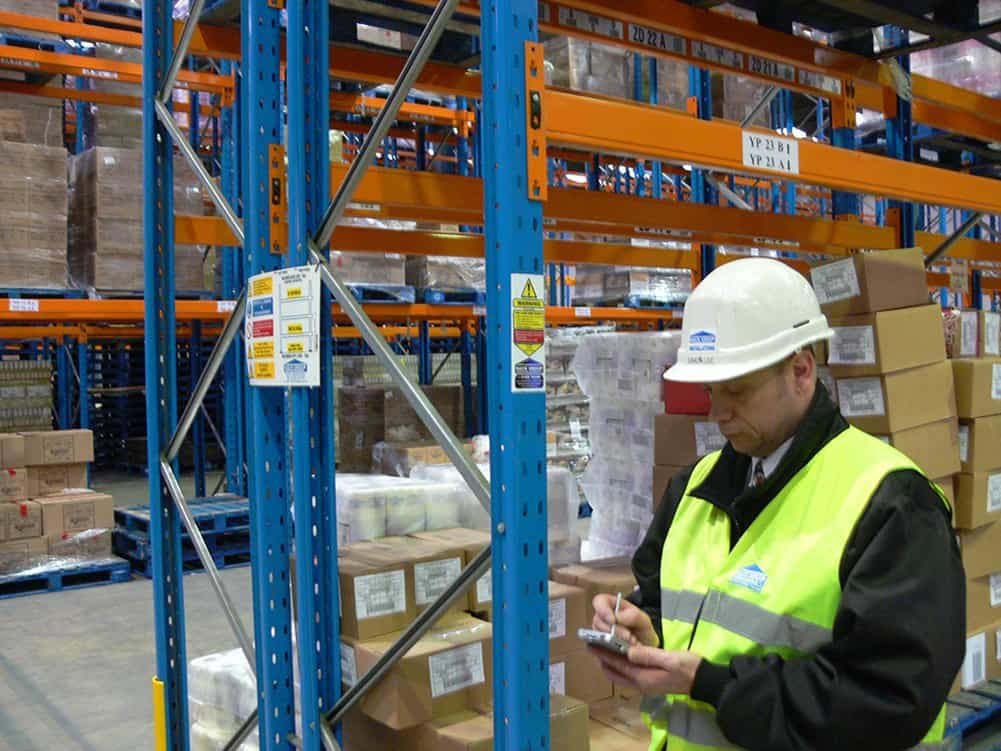
Load rating signage. Compliant installations require visible load rating signage on the racking itself, which supports both regulatory compliance and daily operational safety.
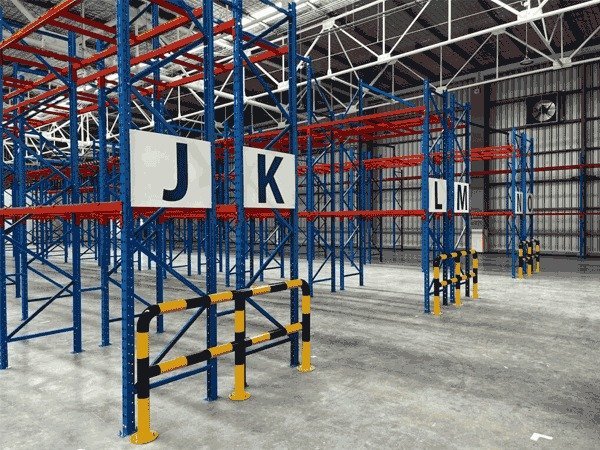
Modifications and reconfiguration. Compliance applies to specific tested configurations. Modifications to beam heights, component substitutions, or layout changes should be reviewed against the original engineering to confirm continued compliance.
Documentation retention. Engineering documentation, test reports, load charts, and installation records should be retained for the life of the racking, since they may be required by insurers, regulators, or building authorities at any point.
Consistency across multi-site operations. For operators with multiple facilities across Australia and New Zealand, standardizing on a consistent compliant supplier simplifies documentation, spare parts sourcing, and regulatory management across sites.
Frequently Asked Questions
Is AS4084 mandatory for pallet racking in Australia? AS4084 is not directly legislated as mandatory in the sense of a specific statute, but Work Health and Safety regulations effectively require racking to meet a recognized structural standard, and AS4084 is the primary Australian reference. In practice, AS4084 compliance is expected by regulators, insurers, and building authorities.
Does AS4084 automatically apply in New Zealand? AS 4084 is an Australian Standard, not a jointly designated AS/NZS standard. It may be specified for New Zealand projects, but buyers should confirm the applicable New Zealand building, workplace safety, seismic, and engineering requirements with a qualified local professional.
What is the difference between AS 4084:2012 and AS 4084:2023? The 2023 edition updates design methods, testing procedures, and other technical requirements based on developments in international racking standards and industry practice since the 2012 release. Buyers of new racking should generally look for compliance with the current 2023 edition rather than the older version.
Can international manufacturers meet AS4084 requirements? Yes, many international manufacturers — including those based outside Australia and New Zealand — produce AS4084-compliant racking, particularly those with established export operations to these markets. Buyers should verify compliance through documentation rather than assuming based on marketing claims.
How do I know if my existing racking is AS4084 compliant? Older installations may or may not be documented as compliant. If documentation isn’t available, a qualified structural engineer can assess whether the existing racking meets AS4084 requirements, which may involve inspection, testing, or engineering calculations depending on the situation.
Is there a certificate that shows AS4084 compliance? AS4084 itself does not issue a formal certificate. Compliance is demonstrated through engineering documentation, third-party test reports, and structural assessments — collectively referred to as compliance documentation rather than a single certificate.
Does AS4084 compliance affect insurance premiums? Insurance treatment varies by provider, but compliant installations generally receive more favorable terms than undocumented racking, and compliance is often a condition of standard coverage rather than restrictive terms. Specific implications should be confirmed with the operator’s insurance provider.
How does AS4084 compare to other international racking standards? AS/NZS 4084 shares principles with international standards such as FEM (Europe), EN 15512 (Europe), and RMI/ANSI MH16.1 (United States), though specific requirements differ. Racking compliant with one standard is not automatically compliant with another, so buyers installing across multiple regions should confirm compliance with each applicable standard.
Key Takeaways
- AS4084 is the Australian and New Zealand standard for steel storage racking design, testing, and installation, currently in its 2023 edition
- Compliance is expected by workplace health and safety regulators, insurers, and building authorities across Australian and New Zealand markets, with real consequences for non-compliance
- AS4084 compliance is demonstrated through engineering documentation and third-party test reports, not through a single formal certificate
- Buyers should verify compliance through requesting documentation, confirming third-party testing, checking the standard version, and verifying that the supplied racking matches the tested configuration
- Beyond initial compliance, ongoing inspection, maintenance, and proper installation are essential to maintaining compliance over the racking’s service life
Conclusion
AS4084 is best understood by buyers not as a technical detail but as the practical framework that determines whether racking installed in Australia or New Zealand will satisfy the regulators, insurers, and workplace safety expectations that operators must navigate. Warehouses that treat compliance verification as a core part of supplier selection — requesting engineering documentation, confirming third-party testing, and verifying that delivered products match tested configurations — generally avoid the costly issues that surface when compliance turns out to be based on marketing claims rather than actual engineering. Companies such as Lracking are commonly involved in projects supplying Australian and New Zealand warehouses, where operators need documented AS4084 compliance to support regulatory approval, insurance coverage, and long-term operational safety. For buyers evaluating racking suppliers for these markets, requesting complete compliance documentation before purchase remains the most reliable way to confirm that the racking delivered will actually meet the standards local requirements demand.