In today’s B2B supply chains, furniture warehousing has fallen under the radar as one of the most complicated operational challenges. Whether you are a manufacturer, wholesale, retail or a hospitality supplier, you’re relying on critical storage, handling and distribution of large products. With the rise of furniture ecommerce, the stakes are high, and customers expect zero damage and white-glove delivery. Businesses are also increasingly choosing flexible 3PL partnerships to expensive owned warehouse facilities due to supply chain disruptions. This guide discusses the warehousing operations for furniture, cost, and strategy from a number of different perspectives for serious B2B decision makers.
What Makes Warehousing of Furniture Different from General Warehousing?
Bulk and Irregular Dimensions
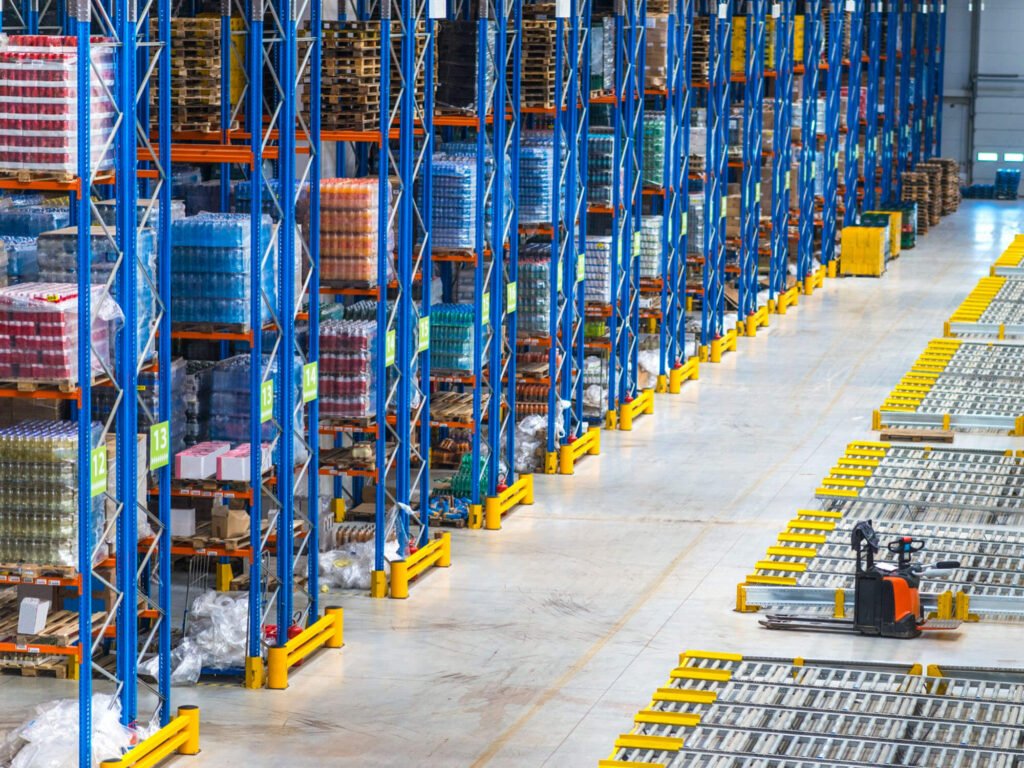
Furniture is not normally pallet friendly. Sofas, wardrobes and dining tables refuse to be standardized. Here is where standard racking systems have a tendency to fail. The shelving, floor space and flexible layouts of warehouses must be customized to meet the needs of oversized and awkwardly shaped inventory.
Low Density, High Cube Utilization
Furniture takes up a lot of space but isn’t very heavy. This results in a mismatch between cubes and weight. Warehouses charge by the space, not by the weight. To stay cost-effective, operators need to go to the extremes to maximize cubic footage, not just square footage.
Fragility and Finish Sensitivity
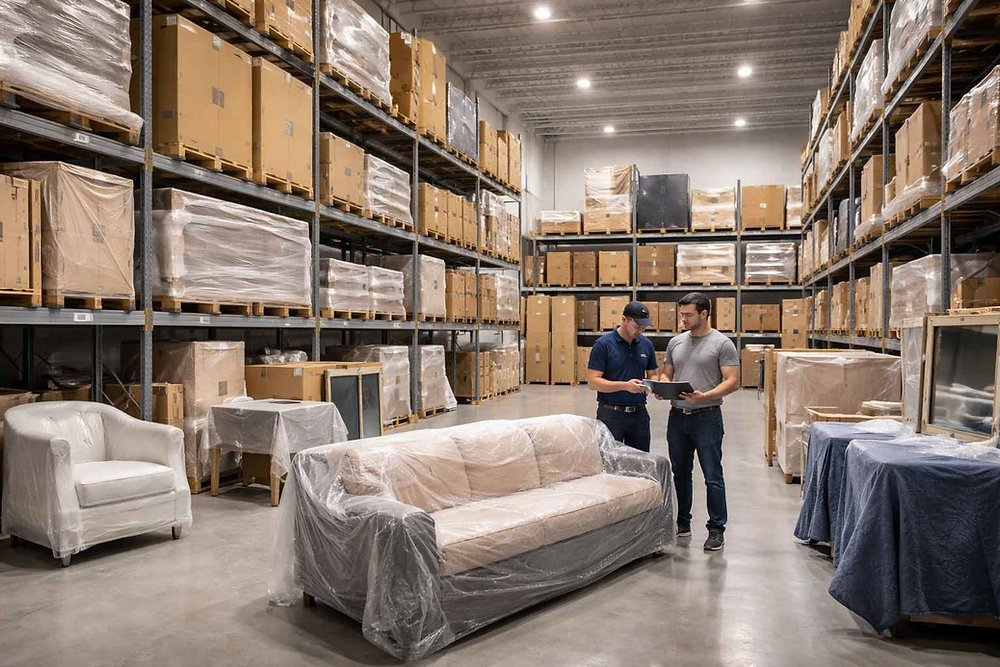
Upholstery stains easily, wood veneer scratches under pressure and glass breaks easily. Handling involves additional care than boxed goods. Staff should be trained on padding, wrapping and careful stacking to avoid expensive surface damage.
Assembly State Variability
In furniture warehousing, flat-pack furniture is easy to pack and stack. Complete components take up much more space. Both kinds are typically carried out in warehouses at the same time. This is a dual handling method which requires different storage practices, equipment, and labour systems.
White-Glove and Final-Mile Handling
For B2C furniture brands, superior delivery experiences are essential. White-glove service is the assembly, placement and removal of packaging. This means having trained crews, not regular freight handlers. These brands require special last-mile coordination services from warehouses.
Returns Complexity
There are high rates of damage during furniture return. The cost of reverse logistics is much higher than the average retail cost. Items require inspection, refurbishment or decisions on liquidation. Warehouses need to develop specific space for this complicated reverse process.
Core Components of a Furniture Warehousing Operation
Receiving and Inspection
All incoming shipments are reviewed against the ASN prior to placing on the floor. Inspectors check for crushed corners, torn upholstery and shipping damage. Any discrepancies are recorded as soon as they occur. Photos and notes prevent future claims issues with carriers or vendors.
Storage Systems
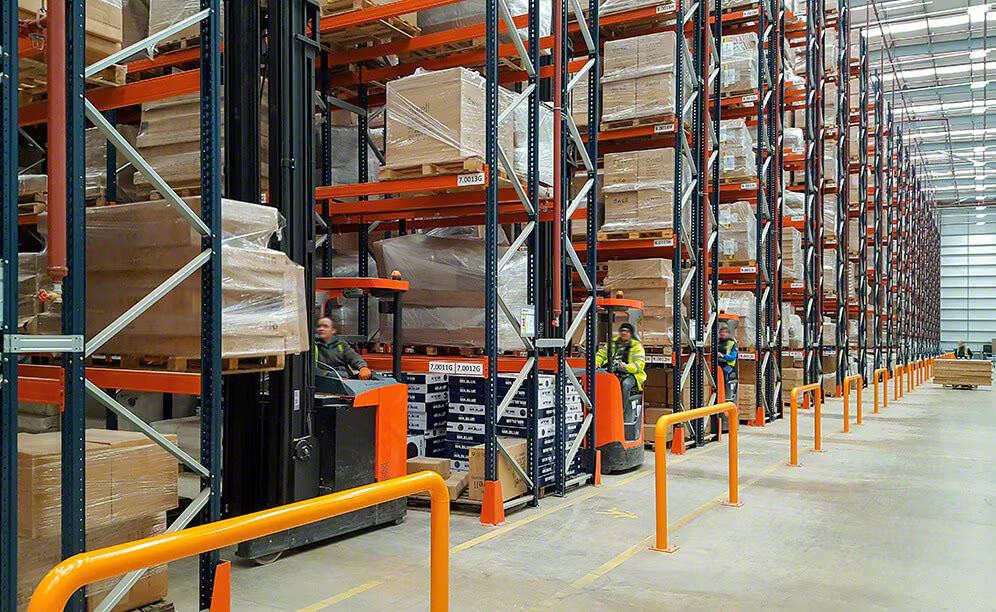
Bulk floor stacking is for items that are boxed and require a lot of storage, such as mattresses. Cantilever racks are used for long items such as sofas, headboards and dining tables. The drive-in racking system is designed for the maximum density of slow moving SKUs. In small warehouses, flat-packs frequently go up, which saves floor space.
Inventory Management
Furniture warehouses keep track of SKUs to fabric batch numbers. It’s important for upholstery that has subtle color variations. A WMS records cubic dimensions, not just quantities of units. The multi-box items are connected, ensuring kitting accuracy during fulfilment.
Order Fulfillment and Kitting
Many furniture orders are sent as collections and not individual boxes. A dining set could be four separate cartons. Kitting guarantees no damage to parts and everything comes together. Some furniture warehousing providers also offer light assembly, which helps to eliminate customer setup hassle. In contract environments, this can also support furniture warehouse reorder workflows by ensuring replacement parts, replenishment items and recurring commercial orders are picked accurately.
Outbound Logistics
White-glove delivery involves putting up and setting up the product inside the house. Bulk and weight are the primary reasons why furniture shipping is largely LTL. Carriers need to know dimensional freight class guidelines. Last-mile partners are frequently experts in transporting oversized and fragile items.
Types of Warehousing Models for Furnitures
Dedicated Furniture 3PL (Third-Party Logistics)
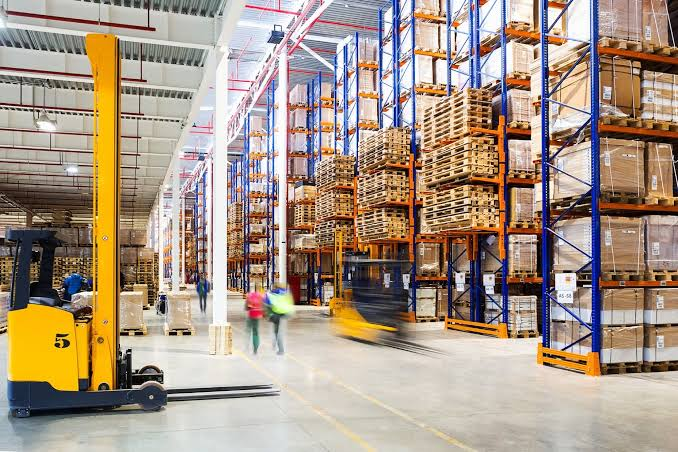
These buildings have clear heights of 30-40 ft and large column spacing. Full container unloading is efficient in dock height bays. Furniture specific equipment and trained handling staff are used by operators. Value-added services, such as kitting, are typically part of a contract. This model is ideal for importers, mid-market brands and retailers without distribution networks.It also applies directly to office furniture warehousing operations, where component-level tracking and serialized kitting demand a higher standard of specialized infrastructure than a general 3PL can provide.
In-House Private Warehousing
Brands operate their own facilities when they feel that they can sustain the overhead. This usually starts to become possible at a company’s $50–100M annual revenue level. The primary benefit is direct control of the quality standards. This is followed by custom IT integration and brand-specific SOPs. But the inflexibility of the capacity and high capex restrict scalability.
On-Demand / Shared-Space Warehousing
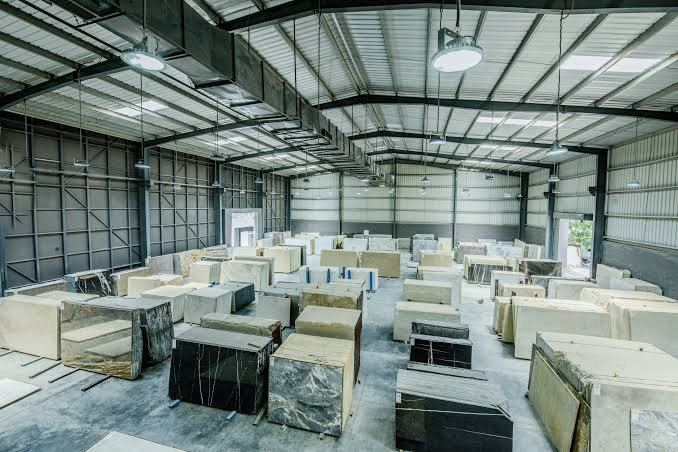
Flexe and Stord are marketplace platforms that provide flexible warehouse access. Payment by brands is on a per pallet or square foot basis. This is suitable for inventory surges or overflows in seasonal periods. It’s also great for geographic expansion pilots before signing on for the long haul. As a main model, it’s weaker because of the equipment specialization needs.
Port-Adjacent and Inland Drayage Warehousing
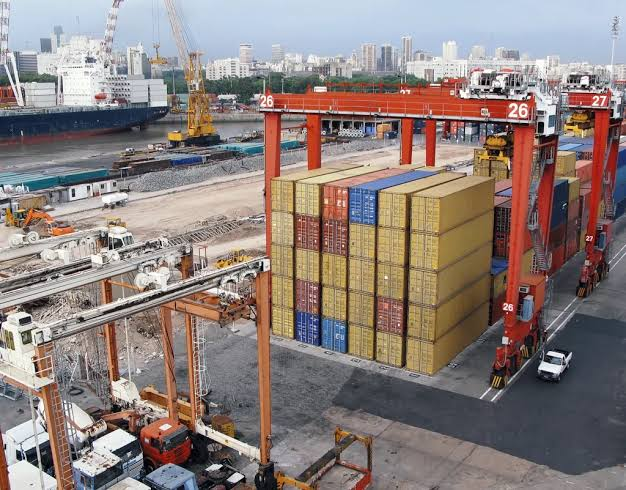
It is the facilities near large ports such as Los Angeles and Savannah that are most important. They are deconsolidation centres post container arrival. Newark also serves as this hub for goods coming in from the East Coast. These hubs are the main points of call for importers for FCL and LCL. This infrastructure is critical to Asia and Europe routes.
Furniture Categories and Storage Methods Compared
The way products are stored in furniture warehousing should be correlated with the velocity of the SKU, size of the product, handling demands, and cost considerations. For fast-moving goods, high-density racking might be utilized, and oversized or fragile furniture needs custom storage. Several of the main furniture classes and storage techniques are listed below:
| Furniture Category | Storage Method | Orientation | Handling Requirements | Env. Conditions | Operational Risks | Environmental Risks |
| Flat-pack / KD | Drive-in or push-back pallet rack | Horizontal, stacked | Barcode scan per carton; FIFO rotation; SKU segregation by variant | RH 40–60%; no direct sunlight on MDF edges | Pick errors, mis-labeling | Edge swelling, delamination |
| Solid wood casegoods | Palletized floor or wide-span pallet rack | Upright on pallet; no floor contact | Padded forks or clamp attachment; blankets between units; no surface stacking | RH 45–55%; temp 60–75°F; no HVAC vents overhead | Surface scratches, corner chips | Warping, cracking, mold |
| Upholstered seating | Cantilever rack (padded arms) or floor bays | Upright, legs down; never inverted | Breathable covers only; no plastic wrap; 6 in. floor clearance | RH <60%; dehumidification in humid facilities | Fabric snags, frame pressure marks | Mold/mildew, fading, odor absorption |
| Glass and mirror | Near-vertical A-frame racks; protected zone | Near-vertical (5–10° lean); never flat | 2-person lift minimum; suction handles; foam interleaving; traffic barriers | Stable temp; isolate from dock vibration | Breakage, injury risk | Thermal stress cracking |
| Office / modular systems | Bin shelving + pallet rack hybrid | Per component; panels vertical | Component-level WMS tracking; kit manifests; finish segregation; serial logging | Standard ambient; ESD protection for tech-integrated pieces | Missing components, incorrect kitting | Surface corrosion (metal frames) |
| Outdoor / garden | Covered, ventilated rack or pallet storage | Upright; cushions stored separately | Rust-inhibiting liners; UV covers; cushions logged separately from frames | Covered but ventilated; avoid salt-air near coastal ports | Set/component separation, cushion mismatch | Corrosion, UV fading, resin brittlenes |
Technology and Systems in Modern Warehousing for Furniture
WMS Platforms with Dimensional Weight Calculations
For furniture warehousing, WMS platforms that can handle cubic calculations, not just weight-based, are essential. There are standard systems that underestimate the space requirements of large, oddly shaped objects. Dimensional weight logic assists in assigning storage and pricing correctly for SKUs.

Barcode and RFID Tracking for High-Value Items
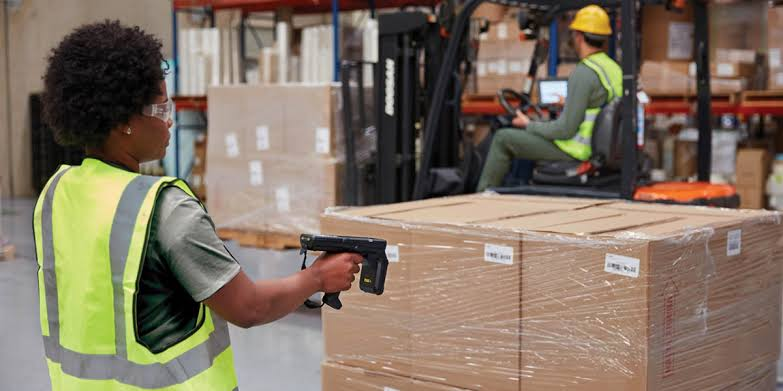
Barcodes are not enough to effectively track serialized furniture pieces. Real-time location update without manual scanning by RFID tags. This minimizes lost inventory, expedites audits and safeguards high dollar upholstered or designer items.
E-Commerce Platform Integration
For Hybrid B2B/B2C sellers operating across multiple furniture warehouse locations, easy WMS integration with Shopify and BigCommerce is essential. This integration updates inventory, avoids overselling and routes orders automatically. It also enables speedy fulfilment for both wholesale and retail.
Automated Storage and Retrieval Systems
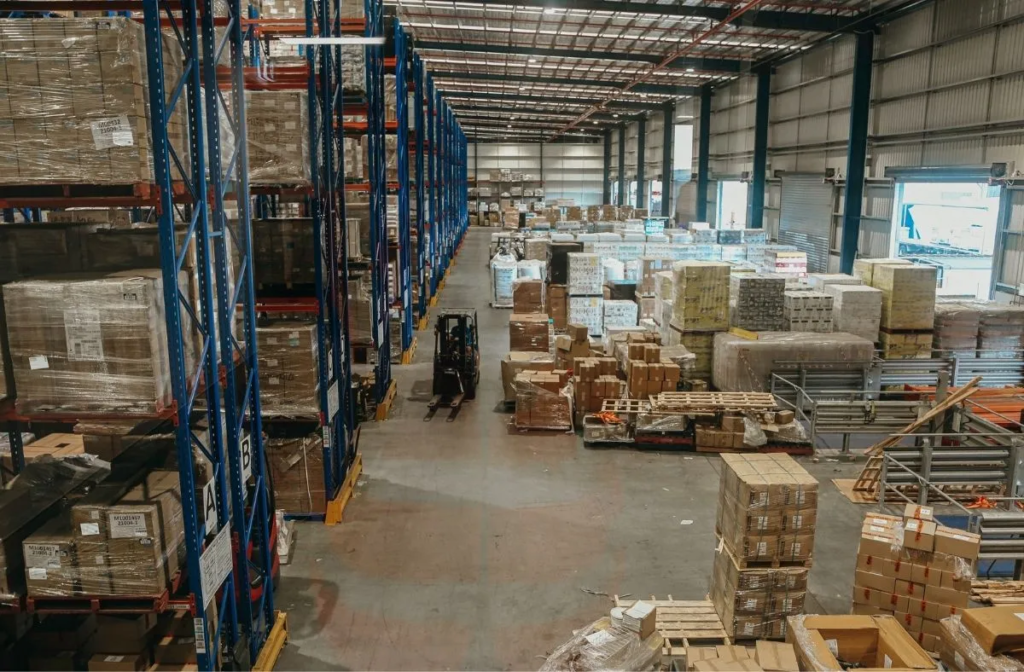
In the warehousing of furniture, AS/RS systems are still limited due to the bulk and irregular shapes of furniture. It can increase the vertical space use markedly if applied. Volume, long-term warehouse leases and SKU consistency are all critical factors for ROI.

Real-Time Inventory Visibility API/EDI
B2B clients want live inventory data via API or EDI connections. This transparency helps in making informed purchasing decisions and eliminates unnecessary delays in communication. It also helps to increase the trust between warehouses and wholesale buying partners.

Demand Forecasting for Seasonal Fluctuations
Demand for furniture can surge during certain periods of the year, such as holidays and back-to-school times. In furniture warehousing, forecasting tools are used to analyse past sales and predict inventory requirements. This reduces over-stocking expenses and eliminates stock-outs during busy periods.
Typical Warehousing for Furniture Cost Components
| Cost Category | What It Covers | Typical Billing Basis | Notes for B2B Buyers |
| Storage Fees | Storage space that is used for stock keeping. | Per pallet, per square foot, or per cubic foot per month. | Furniture is often billed by volume rather than weight. |
| Receiving/Inspection Fees | Unloading, quality control checks, and damage documentation. | Per unit or per container/truckload. | A major concern for vendors with freight-damaged inventory. |
| Pick & Pack/Kitting | Order assembly and multi-box kitting. | Per order or per unit. | Multi-component furniture sets typically incur higher handling costs. |
| Outbound Freight | LTL, FTL, and white-glove delivery services. | Per shipment, per mile, or per delivery. | White-glove delivery can add approximately 20–40% to standard delivery costs. |
| Returns Processing | Inspection, refurbishment, restocking, or liquidation of returned products. | Per unit. | Furniture returns are generally more expensive due to damage-related issues. |
| Value-Added Services | Light assembly, labeling, and custom packaging. | Per service or per unit. | Often negotiable within high-volume contracts. |
| Technology/EDI Fees | WMS access, system integration, and reporting tools. | Fixed monthly fee or per-transaction fee. | Costs vary significantly depending on the capabilities of the 3PL provider. |
Key Challenges in Furniture Warehousing
Damage Rates & Claims Management
Furniture is the most damaged category of goods in freight. Chipping edges, tearing of fabric, and cracking of glass during handling. Claims are time-consuming and gradually erode margins.
Space Cost Inefficiency Due to Low-Density Storage
Furniture has a very high volume to weight ratio. Warehouses charge for space and not pounds. Lower stacking density will lead to higher storage cost per unit.
Labor-Intensive Handling
Two-person lifts are frequently needed for sofas and wardrobes. Non-standard shapes pose challenges for typical fulfillment conveyors. This increases the labor costs and reduces the throughput considerably.
Reverse Logistics & Refurbishment
Furniture that has been returned should be inspected prior to resale or liquidation. When damaged pieces need to be refurbished, it costs more and slows down inventory turnover. Many returns are just reduced or even discarded completely.
Seasonal Demand Spikes
Capacity gets quickly stretched during back to school and Q4 home goods seasons. Furniture Warehousing operations have to be flexible and adapt to change in both labour and space requirements on the fly. If this is not done well, deliveries are missed, and clients are unhappy.
Best Practices for B2B Furniture Brands and Wholesalers
Conduct SKU Velocity Analysis
Monitor the velocity of products and slow-moving items. Near shipping docks, fast movers require easy access. Slow movers can be stored in denser, less accessible storage. This analysis eliminates unnecessary space and handling costs by a large order of magnitude.
Negotiate Dimensional Pricing
Furniture takes up space, not mass. Flat per pallet charges may be excessive for low density products. Advocate for pricing by cube foot rather. This will make certain that charges correspond with the actual space used and not arbitrary assumptions.
Create Damage Claims SLAs
There is a higher damage rate on furniture than other items. Establish clear accountability in advance of contractual issues. Establish response time, documentation requirements and reimbursement policies. This helps to maintain margins and build long-lasting warehouse relationships.
Use Multi-Node Warehousing
Single-warehouse models often delay regional delivery. Brands searching for a warehouse for furniture near me quickly discover that proximity alone is not enough without the right handling capabilities and network coverage. Holding stock in multiple locations reduces transit time. Customers have quicker expectations of delivery times than ever before. Last-mile freight costs are also significantly lower with regional nodes.
Invest in WMS Integration
Real-time visibility helps foster trust with B2B customers. Integrated systems give visibility of stock and order status, in real time. This helps to decrease support calls and manual reconciliation efforts. Transparency is no longer a cost of doing business; it’s an asset.
Plan Returns Processing Capacity
Furniture returns need to be inspected, refurbished or liquidated. This is an operational fact that forward fulfillment alone does not account for. Have dedicated area and personnel for reverse logistics in particular. Damages margins and customer satisfaction through Reactive returns.
Emerging Trends Reshaping Warehousing for Furnitures
Several converging forces are fundamentally restructuring how furniture warehousing operates, competes, and scales across modern supply chains.
Automation
AS/RS systems are making inroads into oversized goods handling – albeit lagging behind other industries – furniture. The uniform dimensions of flatpack SKUs are most advantageous. Even bulky upholstered products are still too difficult to fully automate and manual handling is still important today.
AI-Driven Demand Forecasting
Predictive models now place inventory more wisely throughout various nodes rather than one hub. This helps reduce stockouts when demand is high and reduce excess carrying costs. Improved forecasting results in a lower overall amount of dead stock in warehouses.
Multi-Node Distributed Inventory
The hub-and-spoke network with regional nodes is replacing single mega-DCs. Micro-fulfillment centres are located nearer to customers, reducing last-mile delivery timelines. This change also cuts down on the costs of freight associated with long haul shipping.
Near-Shoring Impact
Changes in sourcing patterns are changing the face of US warehouse geography. Now the border crossings, such as Laredo and El Paso, are more important. East Coast ports also become relevant and realign distribution patterns throughout the country.
B2B Portal Expectations
Now, wholesale buyers require real-time available-to-promise information on self-service portals. Order tracking and damage documentation are expected, not a bonus. Greater WMS transparency has become a key differentiator for competitive furniture warehousing providers.
Choosing the Right Partner for Warehousing of Furniture: Evaluation Criteria
The vendor selection process minimises operational risks and the likelihood of a warehousing partner not being able to accommodate growth. Assess facility certifications and compliance, such as fire code requirements, engineered racking certifications, ISO standards and safe storage practices. When combined with certified pallet racking and mezzanine systems, it can be the key to maximizing storage space while ensuring safety and efficiency in operations.
Evaluate furniture-specific expertise, technology, quality of labor, geographical reach, scalability and insurance coverage. Warehousing partners like Lracking who use companies that have the expertise to customize pallet racking, mezzanine flooring, certified manufacturing and support for warehouse design may provide a more robust platform for bulky furniture inventory and future expansion.
Conclusion
The furniture warehousing infrastructure, furniture handling procedures, technology and cost models are significantly different from those of general warehousing. The optimal approach for manufacturers, wholesalers, retailers and commercial furniture suppliers is dictated by the nature of the SKUs, growth goals and service level requirements and not just cost. With the growing trend towards hybrid in-house and 3PL models, investments in efficient storage are also crucial. Provided by companies like Lracking, solutions like customized pallet racking and mezzanine flooring can be used to maximize space utilization, enhance operational efficiency and enable scalable long term growth for warehouses.